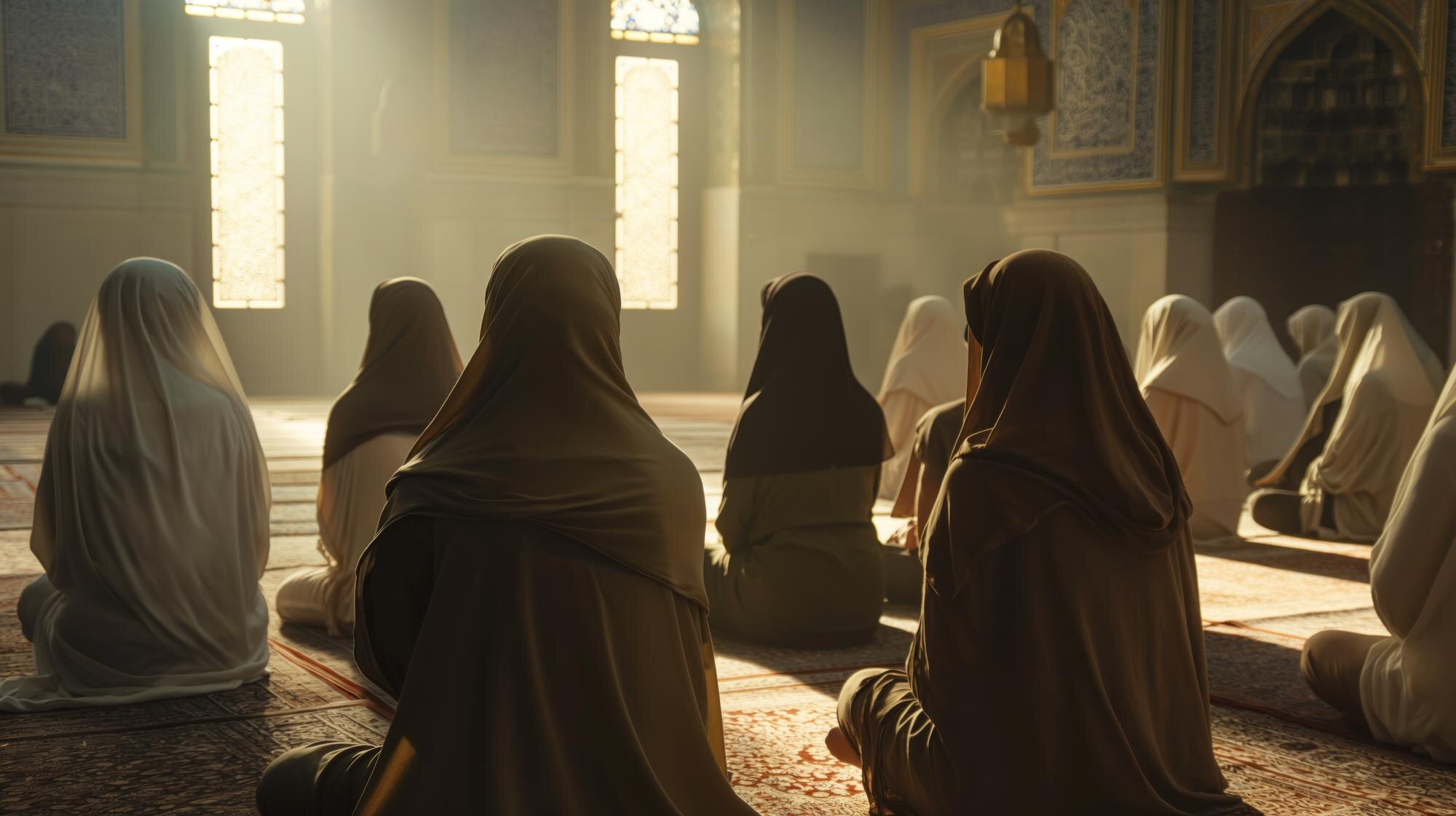
Somewhere between travelling with a reluctant husband and going entirely alone sits an option that has quietly become one of the most popular ways for women to make Umrah: the women-only group. A coach of sisters, a female guide who has answered every awkward fiqh question a hundred times, a roommate who understands why you’re crying at two in the morning — for many women this is not a compromise between family travel and solo travel but the best of both, and the market has grown accordingly since Saudi Arabia dropped the mahram requirement in 2022.
This guide covers both halves of that experience honestly: how the women’s-group market looks as of mid-2026 and how to vet an operator before you pay, and then the smaller, funnier, occasionally maddening business of sharing a hotel room with women you met at the airport — the bathroom rota, the air-conditioning negotiations, the snorer nobody warned you about.
The women’s-group market as of mid-2026
What began as a handful of experimental departures after the 2022 rule change has matured into a genuine sector. Licensed operators in Britain, North America, South Asia and the Gulf now run dedicated women-only Umrah departures through the season, and the better ones are built around a female scholar or experienced guide — sometimes called a mutawwifah — rather than merely being a standard package with the men filtered out. Several well-known female teachers and Islamic institutes now lead annual women’s trips, combining the rites with structured classes on the seerah and on fiqh as it applies to women; other groups are lighter-touch, offering escorted logistics and companionship without the teaching programme. Group sizes run from intimate parties of ten or fifteen to coachloads of forty or more, and the difference matters more than the brochures admit.
Read the label carefully, though, because “women-only” covers two different products. Some departures are female from the airport onwards — every traveller, guide and coordinator a woman, with men limited to drivers and hotel staff. Others are ordinary mixed departures with a women’s section and a female facilitator attached, which can still be excellent but is a different experience: classes may be delivered by a male scholar with questions relayed, and coaches and dining are shared. Neither is wrong, but women booking specifically for the freedom of an all-female environment have been disappointed by the second kind, so ask the operator plainly which one they are selling.
Prices vary with season, hotel distance and room occupancy, but as a rough sense of the market in mid-2026, women-only packages from the UK and US commonly land in the region of USD 2,000 to 3,500 per person for a ten-to-fourteen-day trip in shared rooms, with premium departures — five-star hotels close to the Haram, twin rather than quad occupancy — running higher. Treat any figure dramatically below the market with suspicion rather than delight; the reasons why are covered in our guide to choosing an Umrah package.
What a good group actually gives you
The first thing worth paying for is the guide herself. Umrah raises questions that many women hesitate to put to a male scholar through a curtain: how menstruation affects tawaf and what to do if your dates shift mid-trip, the practicalities of ihram for women, hygiene management across long days of worship. A knowledgeable woman who answers these plainly, on the spot, removes a burden that first-time pilgrims otherwise carry silently for the whole journey. The second is logistics tuned to women’s realities: a leader who knows which gates lead to the women’s prayer sections, how the women’s Rawdah slots work and how to get the whole group booked into one — a genuine art, covered in our guide to visiting the Rawdah as a woman — and which departure times spare you the worst of the crowds.
The third is the quieter stuff. Safety in numbers is real, if sometimes overstated — Makkah and Madinah are already unusually safe for women — but the deeper value is having someone whose job is to notice: that you’ve gone quiet, that you’re limping, that you didn’t come down for breakfast. Good groups also handle roommate matching with some care, pairing women by age, language or pace rather than alphabetically, and that single administrative kindness shapes the trip more than the hotel’s star rating does.
Vetting a group before you pay
Because the sector has grown quickly, quality ranges from superb to shambolic, and the vetting is on you. Start with the legal basics: the operator should hold the licences required in your home country — ATOL protection for UK flight packages, for instance — and should be working with Saudi-authorised partners, since visas now run through verified Nusuk bookings. Then vet the person, because a women’s group is only as good as the woman leading it. Ask who she is by name, what her background in fiqh actually is, how many times she has led groups, and whether she travels with the group throughout or merely waves it off at the airport; ask, too, who steps in if she falls ill mid-trip, because the good operators have an answer ready. Ask for the numbers: how large the group will be, how many guides accompany it, what the room occupancy is. And ask for the paperwork: refund and cancellation terms in writing, a full itinerary, and exactly what is and isn’t included. An operator who answers these questions readily is showing you how they’ll behave when something goes wrong in Makkah; an operator who bristles is showing you the same thing.
The single best check remains other women. Ask the operator for references from previous travellers and actually ring one or two — ask about the pace, the organisation, how the leader handled the day the plan fell apart. Every trip has that day. The difference between a good group and a bad one is what happened next.
The cost question: shared room or private?
Room occupancy is the biggest lever in any package price. Quad sharing is the budget backbone of group travel; twin sharing typically adds a meaningful premium; and a private room usually carries a single supplement that can add anywhere from a few hundred to well over a thousand US dollars depending on hotel and season, since hoteliers price rooms, not beds. Whether that premium is worth it is a genuinely personal calculation. If you sleep lightly, guard your privacy closely or know yourself to need decompression time, the supplement may be the best money of the trip. If your budget is tight, sharing frees funds for a hotel closer to the Haram — and proximity, most veterans will tell you, matters more to the experience than solitude does. There is no wrong answer, only an honest one.
Choosing roommates, when you can
Where operators offer roommate matching, use it thoughtfully. Age matters less than rhythm: a sixty-year-old and a twenty-five-year-old who both want to be in the Haram before Fajr will room together beautifully, while two women of identical age with opposite body clocks will grind on each other for a fortnight. If you get a preferences form, be truthful about the unglamorous things — whether you snore, whether you’re an early riser, how you feel about lights and noise — because the form is only as useful as its honesty. Travelling with a friend and sharing with her is the obvious comfort option, with one caveat from long experience: even dear friends benefit from the ground rules below, because a hotel room in Makkah tests friendships that dinner parties never do.
The etiquette of a shared room
Every well-shared room rests on one conversation, held kindly, on the first evening — before anyone is sleep-deprived enough to have it badly. Ten minutes covers everything: bathroom order in the crush before Fajr, temperature, lights, quiet hours, and where everyone’s things will live. It feels faintly ridiculous to negotiate an air-conditioning treaty with a stranger from another continent. Do it anyway. The rooms that go wrong are almost never wrecked by malice; they’re eroded by small, unspoken irritations that a first-night conversation would have dissolved.
Prayer schedules and the pre-Fajr bathroom
The half hour before Fajr is the pinch point of the entire arrangement: everyone wants wudu at once. Agree an order the night before, keep your slot brisk, and do what preparation you can outside the bathroom. If your personal worship schedule runs later or earlier than the room’s — you love the deep-night tawaf, your roommates don’t — that’s entirely workable with a little stagecraft: lay out your clothes before sleeping, use your phone torch rather than the ceiling light, and learn to leave a room like a burglar, silently and without drama.
The air-conditioning wars
Saudi hotel rooms are refrigerated by default, and every shared room in the Kingdom eventually splits into the freezing faction and the boiling one. The fair settlement is layered: set the thermostat to a middle temperature, and let the cold sleepers take the beds nearer the unit while the warm ones pile on the spare blankets housekeeping will happily bring. Pack for the compromise — a light shawl doubles as a blanket layer — and accept that nobody gets their perfect temperature in a quad. Nobody gets their perfect anything in a quad. That is, in its way, part of the curriculum.
Snoring diplomacy
Someone in the room will snore. It may be you — roughly nobody believes it’s them, and roughly everybody is sometimes wrong, especially when exhausted, dehydrated and sleeping on their back after twenty thousand steps. The diplomacy runs both directions: the snorer’s side of the bargain is to accept the news gracefully and try the easy fixes, and the sufferer’s side is earplugs — pack two pairs, because you will lose one — and the charity of remembering that nobody snores at anyone. Foam earplugs, an eye mask and a white-noise app solve ninety per cent of shared-sleep problems for the price of a sandwich.
Privacy, calls home and the shared fridge
Privacy in a quad is a courtesy everyone manufactures for each other. Change in the bathroom; give a roommate on a video call to her children the room for ten minutes, or better, take your own calls in the lobby, where the wifi is stronger anyway. Keep belongings contained — a suitcase that stays zipped and a corner that stays yours — and split the minibar fridge into shelves or corners on day one, labelling nothing but claiming clearly, because four women’s yoghurts, medications and zamzam bottles will otherwise merge into one contested ecosystem. Valuables go in the safe as a matter of routine, which protects trust as much as property.
One last modern courtesy: alarms. Four phones set to four wake-up times can shred a night’s sleep for everyone, so agree who is waking when, use a vibrating alarm under the pillow if you rise earliest, and never hit snooze in a shared room — it is the single most resented button in Makkah.
Introvert survival in a shared room
If a fortnight of constant company sounds harder to you than the tawaf itself, plan for it rather than hoping you’ll cope. The Haram itself is the introvert’s refuge: hours of legitimate, expected solitude in the middle of a crowd, where nobody will ask if you’re alright because worship is the point. Build one solo block into each day — a slow breakfast after the others leave, a corner of the mosque with your Quran — and say plainly and pleasantly that you go quiet when you’re tired, so nobody reads withdrawal as offence. Headphones on is a universally understood embassy of silence. Most roommates respect a stated need far more readily than a sulked one. And if you know the honest answer is that any shared room would cost you the trip, pay the single supplement without guilt; for some temperaments solitude is a need, not a luxury.
When friction comes anyway
Some friction survives all the planning, because everyone in the room is exhausted, emotionally raw and running on four hours’ sleep in a spiritually overwhelming place. Deal with it early and small: a private word — never a performance in front of the others — framed around the specific thing rather than the person. Not you’re so inconsiderate, but would you mind using the torch when you come in late? Most conflicts end there, slightly embarrassed on both sides. If one genuinely doesn’t — a real mismatch, a boundary repeatedly ignored — take it to the group leader quietly and ask about a room change; brokering exactly this is part of her job, and a good operator will handle it without ceremony. What you should not do is spend your Umrah rehearsing grievances in the one city on earth where forgiving someone is easiest. The room is temporary. What you carried home from it needn’t be.
Packing for shared spaces
A few items earn their weight only when you share: earplugs and an eye mask; a multi-way extension lead, because four women share two sockets; flip-flops for the bathroom; a lightweight robe or full cover-up for moving around the room comfortably; a small padlockable pouch or case for valuables; and your own towel hook or magnetic hanger, which sounds absurd until you’ve seen four wet towels fight for one rail. Label your phone charger — every charger in the Kingdom is identical and every roommate is certain that one is hers. The full checklist, ihram-friendly clothing included, is in our women’s packing guide.
The friendships, and what to do with them
Ask women about their group Umrah years later and they rarely lead with the hotel; they lead with the people. Something about shared exhaustion and shared awe compresses years of friendship into a fortnight, and the woman who held your bag during tawaf has seen you more honestly than colleagues of a decade. Be deliberate about keeping what you’ve built: swap numbers before the airport rather than at it, let the group chat live on past the flight home, and consider the small tradition many groups keep of an annual reunion dinner — often the seed of the next trip together. If the group route has served you well, the same operators run repeat departures every season; and if it has taught you enough confidence to consider travelling alone next time, or you’re still weighing the options, our comparison of group versus independent travel will help you choose. Either way, book early: the best women-only departures, like the best roommates, are spoken for months in advance.



Leave A Comment