
Almost every mistake women make on Umrah is made out of love. The suitcase packed for every imaginable weather, the refusal to sit down, the new abaya bought specially for tawaf — each one grows from a sincere heart straining to give this journey everything. But sincerity without information has a way of working against itself, and the same handful of missteps catches thousands of well-meaning women every single season. Notice, as you read, that hardly any of them are failures of devotion; nearly all are failures of planning, and planning can be fixed in an afternoon. What follows isn’t criticism — it’s the list a kind older sister would hand you before you fly: eleven predictable traps, why each one happens, and the simple fix for every one of them.
1. Wearing the niqab or gloves in ihram
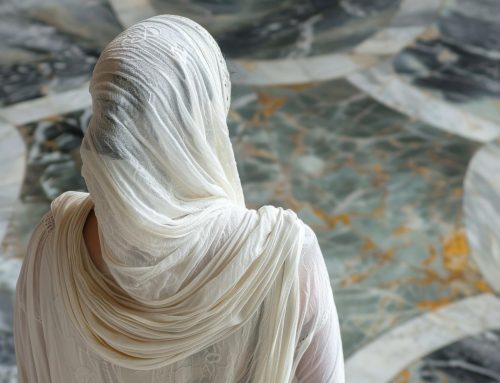
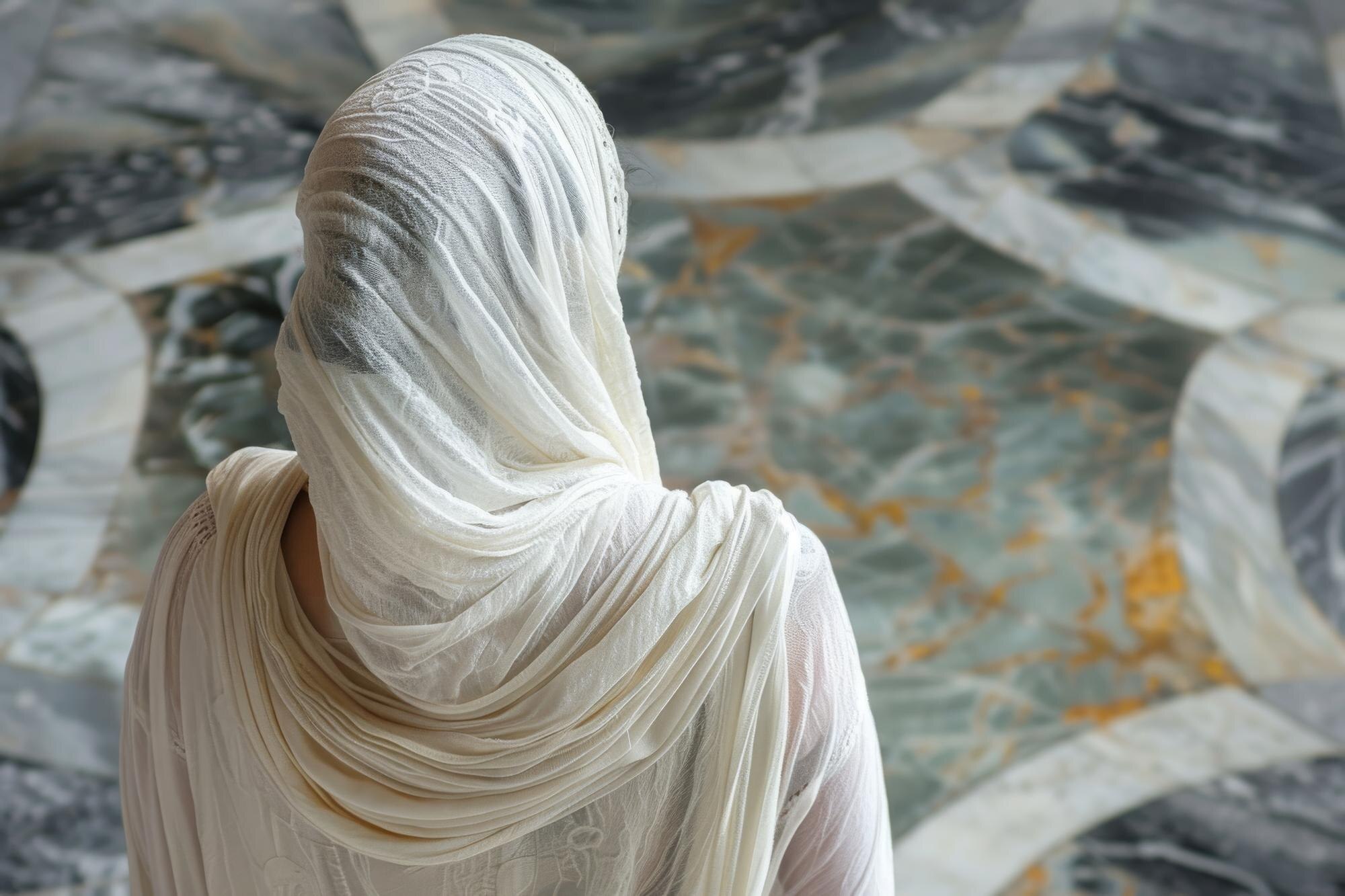
This is the mistake made by the most devout women, which is exactly why it deserves the gentlest correction. The instinct runs: more covering means more piety, and there’s no place on earth where I want to be more modest than here. But an authentic hadith in Sahih al-Bukhari records the Prophet (peace be upon him) instructing that a woman in ihram does not wear the niqab — the fitted face veil — nor gloves. The state of ihram has its own dress rulings, and for women the face and hands remain uncovered as a matter of the rite itself, not as a concession or an oversight.
The fix is straightforward, and it has a lovely precedent. If you normally veil your face and feel exposed before non-mahram men, many scholars — drawing on the reported practice of the Prophet’s own wives — permit draping a loose cloth, such as the edge of your khimar, down over the face when men pass, so long as it isn’t a fitted, tied veil. Hands simply stay bare; carry hand cream (unscented — more on that shortly) rather than gloves if dry skin bothers you. The full picture, including the differences between the schools, is in the guide to women and ihram clothing, and if your usual practice makes this feel genuinely difficult, take your own case to a scholar you trust rather than a group chat.
2. Buying a marketed ‘women’s ihram set’
Walk through any Islamic shop or scroll any pilgrimage website and you’ll find them: two-piece ‘ihram for women’ outfits, sometimes at surprising prices, implying that a special garment is required. It isn’t. Men have prescribed ihram clothing — the two unstitched white cloths — but a woman’s ihram is simply her ordinary modest clothing: loose, opaque, covering what is always covered, free of adornment that draws the eye. The abaya already hanging in your wardrobe almost certainly qualifies, and the one you’ve worn a hundred times will behave far more predictably through eight hours of rites than anything with a shop tag still on it.
The mistake happens because marketing fills the space that knowledge leaves empty, and a nervous first-timer would rather over-buy than get it wrong. The fix is to spend the money on comfort instead: a soft, breathable abaya you’ve already worn and washed, in a fabric that survives a long hot day, will serve your worship far better than a stiff polyester ‘set’ worn for the first time on the most physically demanding day of your trip.
3. Believing white — or black — is required
A close cousin of the ihram-set myth. Some women arrive convinced they must wear white to mirror the men; others believe black is the only acceptably modest colour. Neither is a requirement. A woman in ihram may wear any colour, provided the clothing is modest and unadorned — and there’s real practical wisdom in choosing something else entirely. In the sea of white-clad men and black-clad women around the Ka’bah, a muted blue or green abaya makes you far easier for your companions to spot when the crowd swallows the group, and lighter colours are noticeably kinder under the Saudi sun. The correction here costs nothing: wear what is modest, comfortable and already familiar, in whatever colour serves you best.
4. Scented products in ihram — the wipes trap
Every woman knows perfume is off-limits in ihram. What catches hundreds out is everything else: the facial wipes in the handbag, the hand sanitiser, the lip balm, the miniature hotel toiletries, the ‘fresh scent’ deodorant applied on autopilot at dawn. Wet wipes are the classic trap — they feel like hygiene rather than fragrance, they’re exactly what you reach for on a sweaty pilgrimage, and the standard supermarket ones are perfumed.
The fix is a single shopping trip before you fly: unscented wipes, unscented sanitiser, unscented moisturiser and lip balm, fragrance-free deodorant, and a plain soap. Read labels rather than trusting the word ‘sensitive’, which sometimes still hides fragrance, and pack these in a separate pouch so the scented everyday versions never sneak into the ihram bag by habit. And if you realise mid-ihram that you’ve used something scented without knowing, don’t spiral — many scholars hold that a genuinely unknowing slip carries no penalty, but the right move is to stop using the product and ask a knowledgeable person about your specific case rather than assuming the worst or, just as unwisely, assuming nothing.
5. Packing for every possibility
The most visible mistake at any airport gate full of pilgrims: the woman wrestling a case she can barely lift, packed for weather that won’t come and occasions that don’t exist. It happens out of anticipation — this trip matters so much that being caught without something feels like failure. The cost lands at every transition: the check-in scale, the Haramain train luggage limits, the hotel lift queue, the coach hold. And it starts the journey in a posture of struggle rather than lightness.
Here’s the truth that dissolves the anxiety: Makkah and Madinah are cities of shops and pharmacies, and almost anything you forget can be bought within a ten-minute walk of your hotel, usually cheaply. Laundry deserves a mention too — hotels and the small pressing shops around both mosques wash and return clothes quickly and inexpensively, which means a week’s worth of outfits genuinely covers a fortnight. Pack the tested essentials — the complete, ruthless breakdown is in the guide to what women should pack and wear — and let the destination supply the contingencies. A half-empty case also happens to be the only kind with room for Zamzam and gifts on the way home.
6. Ignoring cycle timing until it’s too late
This one happens through shyness, and it costs more than any other planning error. A woman books ten days in the holy cities without once checking her calendar, arrives, and finds her period begins the night before her Umrah — with the rulings, the options and the emotions all crashing in at once, unresearched. None of that distress was necessary, and none of it is rare: ask any group leader and she’ll tell you it happens on every single trip.
The fix is to treat your cycle as a planning input from the day you book. Map your expected dates against the itinerary; if they collide, you have real options — from arranging the Umrah for the clear window of your trip to discussing cycle-delaying medication with a doctor well in advance, a route many women take and many scholars permit. And know the rulings before you go, because a menstruating woman is barred from far less than most assume: tawaf waits, but dhikr, du’a and nearly everything else remain open to her. The complete, reassuring detail is in the guide to menstruation and Umrah. Read it even if you’re confident of your dates; cycles have a documented sense of mischief around long-haul travel.
7. Getting taqsir wrong
The rite that releases you from ihram is, for women, taqsir — shortening the hair — and it’s done wrong constantly, in both directions. Some women snip a single strand, which most scholars consider insufficient. Others, misled by well-meaning relatives, hack off far more than needed, or let an unrelated person do it in public view. The sound practice is simple: gather the hair and cut about a fingertip’s length — roughly the last joint of a finger — from the ends, taking it from across the hair rather than one lonely strand. A fingertip from the ends: not from the front, not a fistful, not one hair.
Do it somewhere private — your hotel room is ideal — with a small pair of scissors packed for the purpose, cut by your own hand or a mahram’s or another woman’s. Since your hair stays covered in public, there’s no cause to do it on the street outside the barber shops, whatever you see others doing. And if you’re worried about what weeks of covering and hard water will do to your hair more generally, the guide to hair care during Umrah covers the practical side kindly.
8. Leaving the Rawdah permit too late
Every season, women land in Madinah planning to ‘sort out the Rawdah when we arrive’ — and discover that entry runs entirely on pre-booked Nusuk permits, that slots are released only days ahead and vanish in minutes, and that, as of mid-2026, each person gets one booking in every 365-day period. For some, the window closes before they ever knew it existed, and the loss stings for years afterwards.
The fix costs ten minutes at home: set up your Nusuk account before you fly, link any companions to one profile, and book the moment your dates allow — choosing a slot early in your Madinah stay so a delay can’t erase it. The step-by-step mechanics are in the guide to booking your Rawdah visit, and what the visit itself is like for a woman — the staged entry, the brief minutes inside, the etiquette — is covered in the chapter on women’s prayer areas and the Rawdah. If no slot ever appears, your Umrah remains whole; the visit is a virtue, not an obligation. But don’t let the reason you missed it be that nobody told you to book.
9. Under-drinking to avoid the toilets
Quietly, this may be the most physically dangerous mistake on the list. The logic feels airtight: the toilet blocks are outside the mosque, the queues for the women’s facilities can be long, wudu is a production in an abaya — so drink less, and the problem disappears. Except the problem doesn’t disappear; it relocates. Restricting fluids in fierce heat, while walking many kilometres a day, is a well-worn road to dehydration, headaches, dizziness and urinary tract infections — and a UTI in a foreign country, mid-pilgrimage, is a misery that dwarfs every toilet queue you were avoiding. Pharmacists in both cities will tell you they see it constantly, and almost always in women who thought they were being sensible.
Drink steadily and normally — the Zamzam coolers stand in every direction for a reason — and consider a few electrolyte sachets in the summer months, when sweat takes more than water from you. Then solve the actual problem with logistics: on day one, scout the women’s facilities nearest your usual gate, note the quieter blocks, go before prayers rather than after when the queues surge, and keep your wudu where possible so trips serve two purposes. Your body is the vehicle for every rite you came to perform; running it dry to save twenty minutes is a trade no one wins.
10. Fashion footwear on marble
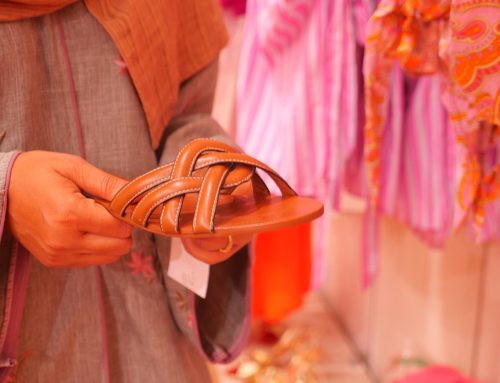
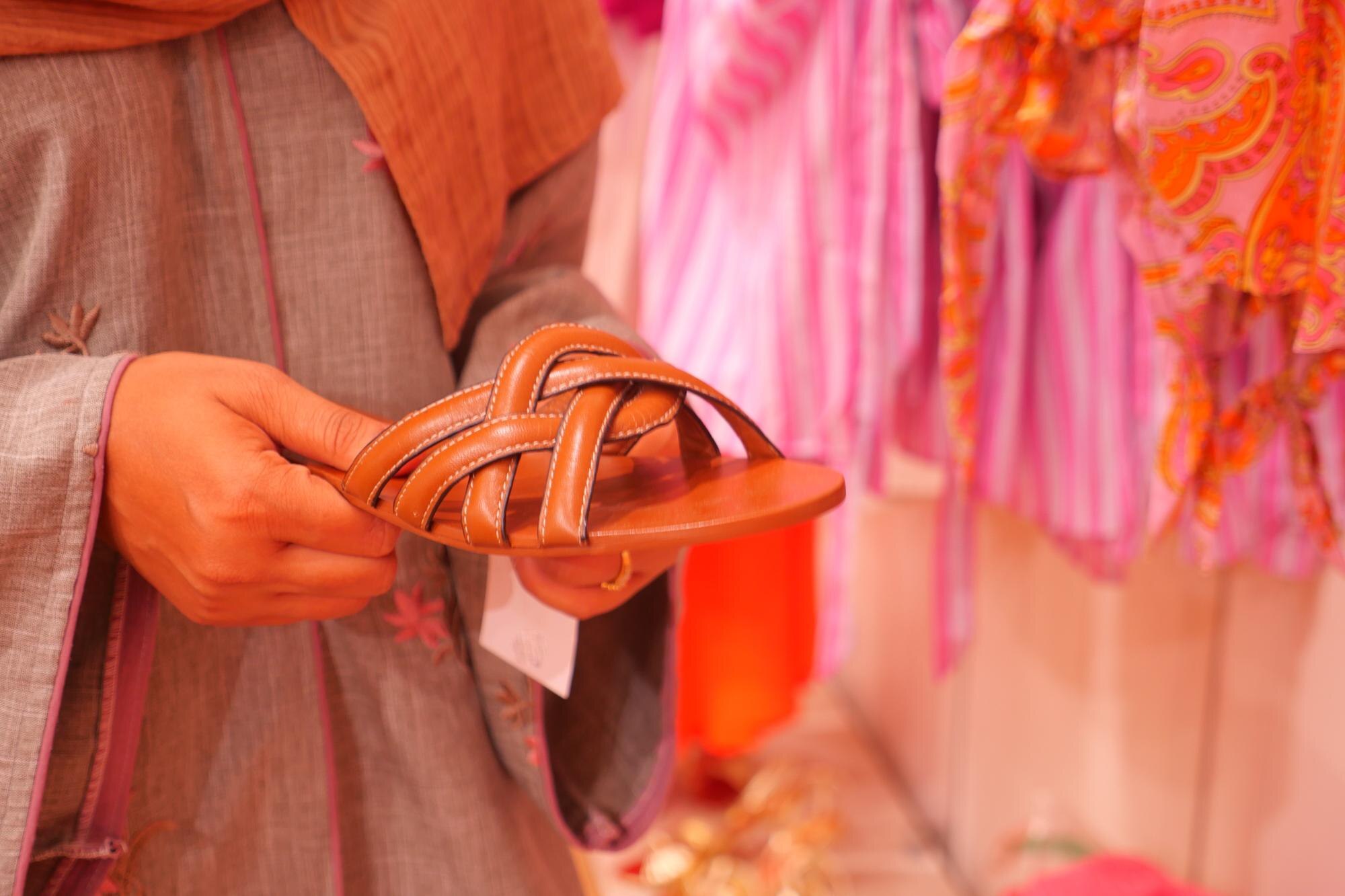
New shoes for a special journey — the instinct is ancient and completely understandable. But embellished sandals, thin ballet flats and anything with a heel meet their match in the holy cities, where you’ll cover distances that surprise everyone: long tawaf circuits, the full length of sa’i, and kilometres of polished marble between hotel, gates and prayer halls, much of it barefoot-adjacent as shoes come on and off at every entrance. The result walks into every pharmacy in Makkah nightly: blisters, arch pain, and a pilgrim reduced to shuffling by day three.
The fix: cushioned, supportive, slip-on sandals or shoes, bought weeks ahead and properly broken in at home — nothing new leaves for Umrah on your feet. Add a drawstring shoe bag so your pair stays with you inside the mosque instead of vanishing from a rack, and a pair of socks for the sun-heated courtyard marble, which in summer gets hot enough to make you regret bare feet within seconds. Save the beautiful sandals for the walima photos when you’re home.
11. Burning out on day one
The final trap swallows the most eager. You land, drop the bags, perform Umrah on arrival, pray every prayer in the Haram, stay for half the night, rise for tahajjud — and by the third day you’re ill, aching and hollow, worshipping on stubbornness alone. It happens because the heart writes cheques the body is expected to honour, and because sitting in the hotel feels like wasting sacred time. Jet lag makes it worse: that first-night surge of energy is often your body clock lying to you, and the debt gets collected with interest two days later.
Rest taken so that you can worship well is itself part of the worship, and the pilgrims who finish strong are the ones who paced the start. Build one genuine rest block into every day — sleep after Dhuhr is practically a local institution — eat proper meals at proper times, and choose the quieter hours for your longest worship; the guide to dealing with crowds shows how much gentler the same rites feel at the right time of day. A steady eight days beats a spectacular two followed by six in bed, every single time.
The night before you fly
Nearly every trap above is disarmed in a single evening at home. So take one: check your abayas are modest, comfortable and familiar rather than new and special; strip the perfumed products out of the toiletry bag and replace them with unscented twins; weigh the case and then remove a third of it; look at your calendar honestly and read the menstruation guide regardless; confirm the Nusuk account works and the Rawdah slot is booked; drop the scissors, the broken-in sandals, the socks and the shoe bag into the case; and write yourself one line for the fridge door — drink the water, take the nap. That’s the whole insurance policy, and it costs an evening.

Leave A Comment