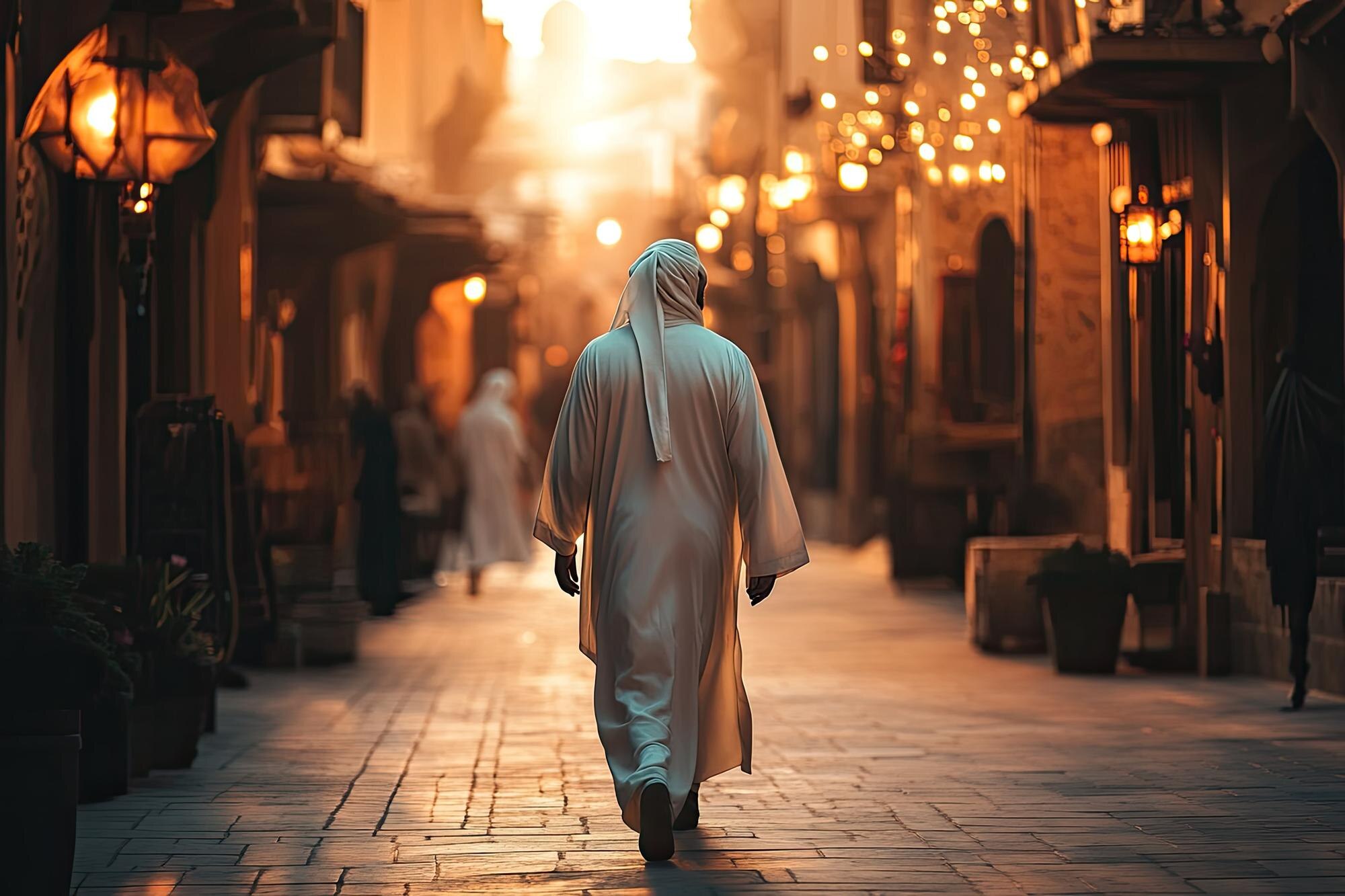
Let’s name the tension honestly, because every modern pilgrim feels it and hardly anyone says it aloud. You have crossed the world to stand before the Ka’bah, and in your pocket is a device engineered to pull your attention somewhere else. The urge to photograph the moment isn’t vanity — it’s love, mostly: the wish to show your mother, to keep something of a day you’ve waited decades for, to let the people who couldn’t come feel that they did. And yet ask pilgrims a year later what they regret, and one answer recurs with striking consistency: not the photo they failed to take, but the rite they watched through a screen. This chapter is about holding both truths — that sharing a blessing is generous, and that living it comes first — and about the practical rules, written and unwritten, that govern phones in the two most sacred buildings on earth.
What’s actually prohibited, and what’s merely frowned on
Start with the rules as they stand, because they’ve moved in recent years and much of what circulates online is out of date in one direction or the other. Photography restrictions at the Grand Mosque and the Prophet’s Mosque are not new — formal curbs date back to 2017, and the Ministry of Hajj has issued repeated reminders since, urging pilgrims to avoid selfies, long filming sessions and anything that blocks the flow of worshippers. Ahead of the 2026 Hajj season, a wave of articles claimed Saudi authorities had imposed a complete ban on all photography, phones included, inside both mosques. That specific claim didn’t hold up: fact-checkers traced it to unverified social media posts rather than any ministry announcement, and no blanket ban was in force when Hajj 2026 actually took place in late May. What did apply, and still applies, is the graduated framework that’s been building since 2017: personal phone photos are tolerated provided they don’t disrupt worship or block movement, professional cameras and tripods can be turned away at the entrance gates, drones are strictly prohibited for anyone without government authorisation, and filming other worshippers without consent — or filming security personnel — crosses a real line rather than a soft one. The safest reading is still the one this guide has always given: photography inside the mosques is a concession granted to the respectful, not a right held by the visitor. Rules like this do get revisited season to season, so a quick check shortly before you travel costs nothing.
What enforcement looks like on the ground is more consistent than the headlines. Certain things reliably attract a guard’s intervention: tripods, ring lights and anything resembling a production setup; standing still to film on the mataf while thousands flow around you; filming worshippers up close, especially women; extended live-streaming; and photography anywhere staff have said no. A quiet, quick photo of the Ka’bah from a still spot at the edge, by contrast, has generally been tolerated in ordinary seasons. The rule of thumb that keeps you on the right side of both the regulation and the spirit: be brief, be still, be unobtrusive — and if a member of staff gestures at your phone, lower it immediately and without argument. They are enforcing the prayer-space’s dignity on behalf of a million people at once, and arguing your case in a doorway is a poor use of anyone’s pilgrimage.
The Prophet’s Mosque runs on the same principles with one sharper edge: the Rawdah. Entry is by timed Nusuk booking, the space is small, the minutes are few and the queue behind you is long — and photography there has been actively discouraged for years, with attendants moving visitors along briskly. A phone raised for a selfie in the Rawdah is the fastest way to be moved along faster still. Spend your allocated minutes on the prayers you came for; the green carpet photographs poorly, and the moment doesn’t need a picture to survive.
Other people’s worship is not your content
Beneath the regulations sits a principle older than any of them, and it decides most cases on its own: the people around you have a right not to appear in your footage. The Haram is full of human beings in their most unguarded state — weeping in sujood, hands raised in a du’a that carries twenty years of private grief, faces undone in a way they would never willingly show a stranger. A camera swept across a prayer hall captures dozens of such moments and, once posted, shows them to an audience their owners will never know about and never consented to. This is a real harm dressed up as an innocent habit. Women in worship have a particularly strong claim here — many have made careful choices about who sees them and how, and a stranger’s vlog overrides all of it without a second’s thought.
The practical discipline is framing. Point the camera at architecture, at calligraphy, at the geometry of the courtyards and the minarets against the sky — not at faces. Before you post anything, look at the background: if a stranger is identifiable in a vulnerable moment, crop them out or delete the shot. And apply the oldest test of adab there is: you would not want your own tears at the Multazam to become the emotional beat in someone else’s reel. Extend precisely the dignity you’d ask for.
The intention question, kept private
There’s a word for worship performed with one eye on the audience, and Muslims have been warned about it since the beginning — riya, the quiet corrosion of doing a good thing to be seen doing it. Social media didn’t invent the problem, but it built an amplifier for it, and pilgrimage content sits at the sharpest edge: the same post can be a sincere expression of gratitude or a performance of piety, and the difference lives entirely in a place only you can inspect. This guide won’t preach at you about it, because intention-checking is private work and nobody else’s verdict matters. One gentle, practical suggestion only: notice what you find yourself doing in the hour after posting. If you’re at peace and back in your worship, the post was probably what it claimed to be. If you’re refreshing to watch the numbers climb in the shadow of the Ka’bah, that’s information — not condemnation, just information — and the kindest response is usually to put the phone in the bag for the rest of the day.
The working protocols
Principles need habits to live in, so here are the ones seasoned pilgrims converge on. They’re few enough to memorise on the flight.
- Silent, always. Not vibrate — silent, from the moment you enter until you leave. A ringtone during prayer in the Haram disturbs thousands of people simultaneously, and it happens hundreds of times a day because vibrate felt like enough.
- No calls on the mataf. Tawaf is a rite, not a commute. Speaking to your cousin in Bradford while circling the Ka’bah diminishes the rite and distracts everyone within earshot. Calls wait until you’re outside; so do voice notes.
- The three-photos rule. On any given visit, allow yourself a small, deliberate number of photographs — three is a good discipline — taken from a still spot at the edge, and then put the phone away entirely. The limit isn’t magic; it converts an open-ended temptation into a completed task.
- Phone away at the iqamah. When the call to stand for prayer sounds, the phone goes into the bag — not the pocket where it presses against your thigh mid-sujood, the bag. Nothing on that screen matters more than the next ten minutes.
- Film nothing you’re currently performing. If your hands are doing a rite, they’re not holding a camera. Someone else may take a picture of you at a respectful distance if you want one; you don’t document yourself mid-worship.
On live-streaming your tawaf, assessed honestly: it fails on nearly every count at once. It requires holding a device up for half an hour in a dense moving crowd (a hazard and an obstruction), it films hundreds of non-consenting worshippers, it fixes your attention on an audience precisely when it belongs elsewhere, and it’s squarely the kind of activity the tightening regulations target. If people at home want to see the tawaf, official broadcasts stream the mataf beautifully around the clock. Let them watch that, and let your own circuits belong to you.
Two smaller habits round out the protocols. Walking while scrolling is a hazard everywhere and doubly so here — polished marble, sudden wheelchairs, currents of people who can’t stop behind you — so stand still at the edge for anything the phone genuinely needs. And keep sound entirely to yourself: no speakerphone, no voice notes played aloud, no lecture audio leaking from a half-seated earbud. The Haram’s soundscape — recitation, footsteps, the murmur of du’a in a hundred languages — is part of what you travelled for, and part of what everyone around you travelled for too.
Children, screens and the long wait
A word for parents, because the calculus is different when you’ve a seven-year-old beside you and forty minutes until the prayer. A child quietly occupied by a screen is not committing an offence against the sanctuary, and a parent who deploys the tablet strategically — silent, brightness down, headphones off (nothing audible, ever) — so that the family can remain for a prayer they’d otherwise have to skip has made a defensible trade. Two cautions, though. First, what children see around them teaches them what a mosque is; a childhood memory of the Haram as the place where everyone stared at phones is a real cost, so intersperse the screen with the actual place — walk the courtyards, count the lanterns, watch the birds circle the minarets. Second, the moment of prayer is absolute for children old enough to stand in the row: screens off and away, same as yours. The sanctuary’s quiet corners, where a restless child disturbs least, are mapped in our guide to finding quiet places for worship. A practical compromise many families settle on: screens permitted during the long courtyard waits, never inside the prayer halls themselves — a line children grasp quickly, because the threshold makes it visible.
Using the phone for worship is not the problem
None of this chapter is an argument against the device itself, and one modern habit deserves an explicit defence: the du’a list on the phone. If your list of people to pray for, compiled over months from every friend who whispered “remember me there”, lives in a notes app, then consulting it at the Multazam is not a lapse of etiquette — it’s the phone doing exactly what a tool should. The same goes for the Qur’an app during your waiting hours, the dhikr counter, the prayer-times app that got you there early enough for a good row. The etiquette line was never phone visible versus phone hidden; it’s attention on worship versus attention on audience. A pilgrim reading Qur’an from a screen is reading Qur’an. The apps worth setting up for exactly these uses are collected in our guide to essential apps for pilgrims — and if family at home worry when you go quiet for hours, agree a check-in rhythm in advance rather than answering messages on the mataf; our chapter on staying findable covers how.
The photography that honours the place
Because refusing every photograph isn’t the answer either, it’s worth describing what respectful photography actually looks like — it exists, and it produces better images anyway. Architecture, always: the mosques are among the most photogenic buildings on earth, and a shot of the Madinah umbrellas opening at dawn breaks no rule and troubles no soul. Your own family, with their consent, in the outer courtyards where you’re not blocking flow — the picture of your parents against the minarets will mean more in thirty years than any crowd shot. Empty spaces at unsociable hours: pilgrims who walk out at 3am find courtyards nearly bare, light that photographs like a gift, and the freedom to take their time without inconveniencing a single worshipper. And the view from the upper floors, where a still photographer obstructs nobody. If a stranger hands you their phone and asks for a picture with the minarets behind them — and someone will — that small service in a courtyard breaks no rule and is its own quiet kindness; just keep the exchange out of the moving crowds. What links all of these: nobody’s privacy is violated, nobody’s path is blocked, and the camera comes out in the pauses of the journey rather than during its rites.
Share the album, not the broadcast
Finally, the rhythm of sharing — and the simplest upgrade available to any pilgrim: post after, not during. The running commentary (airport, hotel, first sight, live from tawaf) fragments your own attention all journey long, spends your most sacred hours composing captions, and pressures you to perform an experience you haven’t finished having. The album shared after you return home does everything the broadcast claims to do — it moves people, it stirs longing in those who haven’t been, it thanks the ones who prayed for your journey — and it does it with photographs you chose calmly, moments you actually lived first, and strangers’ faces checked before posting. Many pilgrims go further and keep one thing back permanently: a du’a, a moment, a photograph that stays between them and their Lord, unposted on principle. Some log out of the noisiest apps for the duration of the trip, or move them off the home screen — not as penance, but the way you’d silence a phone before entering a lecture: a courtesy to your own attention. Carrying the journey’s stillness home intact is a subject of its own, taken up in our chapter on preserving the spirit of Umrah.
So make the decisions now, before you stand blinking in front of the building itself, because the moment is a poor negotiator. Decide your photo limit and your posting rhythm on the plane. Set the phone to silent as the Haram comes into view and leave it that way for the trip. Tell the family at home when you’ll check in, so silence never reads as trouble. Put the du’a list where you can find it and the camera where you have to think before reaching for it. Then walk in with your eyes up — the screen will still be there when you come out, and the Ka’bah, for these few days, is actually in front of you.
Leave A Comment