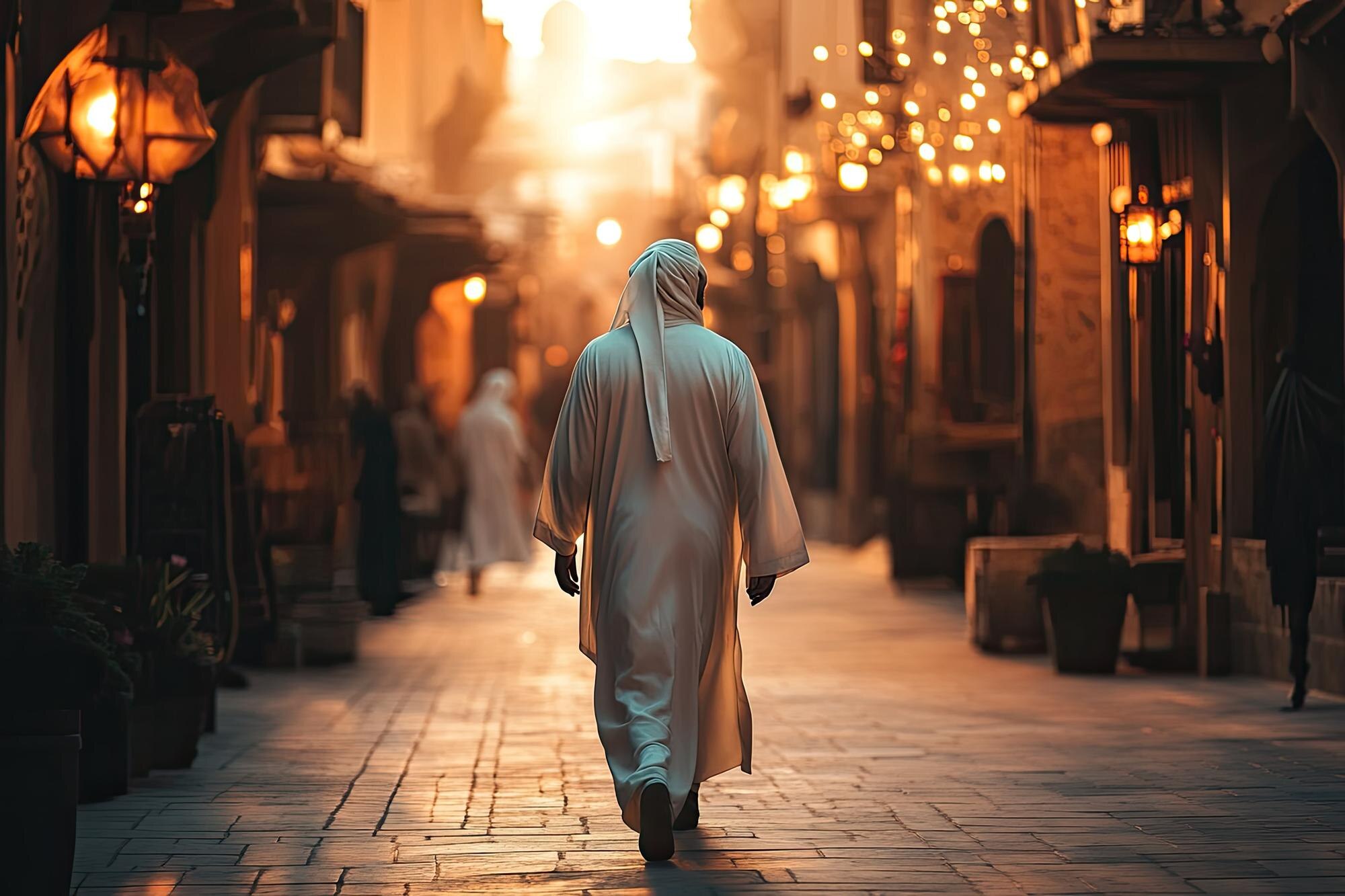
For most pilgrims, travelling to Madinah is a journey toward rest as much as toward reward. Whether you’re arriving fresh from abroad or moving on from Makkah after your Umrah, the move to the city of the Prophet (peace be upon him) carries its own quiet feeling — and the practical question of how to get there comfortably and affordably deserves real thought, because the choice you make decides how much energy you carry into the Prophet’s Mosque and your visit to the Rawdah. This guide pulls every route together: the train, the buses, the road, the two airports, and the one detail travellers most often get wrong — what happens at the Miqat when you leave Madinah for Makkah.
Madinah First or Madinah After?
The order in which you visit the two holy cities is one of the biggest planning calls you’ll make, and it feeds straight into transport. There’s no religious obligation to visit Madinah at all as part of Umrah, and no fixed sequence; both arrangements are perfectly valid. What changes is the practical and emotional shape of the trip.
Starting in Madinah lets you rest before the demands of ihram and the rites in Makkah. You land at a smaller, calmer airport, you settle into a gentler city, and when you’re ready you travel south and enter ihram at Dhul Hulayfah — known locally as Abyar Ali — the Miqat for anyone travelling from Madinah, which our Miqat and ihram guide covers in detail. Visiting Madinah afterwards gives you a wind-down instead: with your Umrah behind you, you arrive to a slower, more reflective stretch of the trip, no rites left to perform, just the peace of the Prophet’s city. Plenty of pilgrims find that closing visit deeply moving for exactly that reason. Either way, the routes below are the same — only the direction changes.
From Makkah to Madinah
The journey most pilgrims are planning for is the roughly 450-kilometre hop between the two holy cities. You have three realistic options: the high-speed train, a direct intercity bus, or a private car. For most travellers the train has rewritten the maths entirely, but each option earns its place in certain situations.
The Haramain train: the default to beat
The Haramain High-Speed Railway covers Makkah to Madinah in around two hours and twenty to thirty-five minutes depending on how many stations the service calls at, running at speeds of up to 300 km/h in air-conditioned comfort with prayer areas and free Wi-Fi on board. Fares are dynamic, so the same seat costs different amounts on different days: as of mid-2026, economy on this route commonly runs from around SAR 85 on quiet dates up to SAR 150–200 in busy periods, with business class typically in the SAR 250–300 range when demand is high. Book at sar.hhr.sa or through the HHR app, and book early — popular departures around weekends, Ramadan and school holidays sell out days or weeks ahead.
Two practical notes before you commit. First, the stations sit outside the city centres: Makkah’s station is in the Rusayfah district, a drive of fifteen to twenty-five minutes from the Haram depending on traffic, and Madinah’s station sits on the ring road a similar short drive from the Prophet’s Mosque — so budget for a taxi at each end and add that to your door-to-door time. Second, luggage is limited to one large case of up to 25 kg plus one hand item per passenger, which matters if you’re hauling gifts and Zamzam. The full picture — classes, booking screens, station layouts, family seating — is in our dedicated Haramain railway guide.
By bus: cheap, direct, and slower
The classic budget route between the cities is the intercity coach. SAPTCO, the national bus operator, stopped running its own direct Makkah–Madinah service a few years ago, and the direct route is now operated by companies such as Darb Alwatan, running from the Makkah bus station at Jarwal — north-west of Masjid al-Haram — to the Madinah bus station north-east of the Prophet’s Mosque. As of mid-2026, expect to pay in the region of SAR 85–95 for a standard adult seat and around SAR 100 for the VIP service, with children travelling at half fare. The standard journey takes roughly six hours with stops; the VIP coach runs closer to five, pausing only for prayer and rest breaks.
The bus wins on three counts: it’s the cheapest way between the cities, the terminals sit far closer to the two mosques than the train stations do, and there’s no meaningful luggage limit. It loses on time — roughly double the train — and comfort over a long desert run. For a pilgrim on a tight budget with heavy bags, it remains a genuinely sensible choice rather than a consolation prize.
By private car or taxi: door to door
The drive between Makkah and Madinah takes about four to four and a half hours on the modern highway. A pre-booked private sedan or a long-distance ride through Careem or Uber typically costs somewhere between SAR 400 and SAR 600 as of mid-2026, rising to SAR 700 or more for a larger GMC or family van, and seasonal demand pushes everything up. That sounds steep next to a SAR 85 bus seat — but split four ways among a family, with door-to-door service, no luggage limits, full control over timing and the freedom to stop for prayer and food at your own pace, it’s often the least stressful option for groups. It’s also the only option that lets you make ziyarat detours en route, which we’ll come to. For how ride-hailing works day to day in the holy cities, see our guide to taxis, Uber and Careem.
From Jeddah Airport to Madinah
Many pilgrims land at Jeddah’s King Abdulaziz International Airport but plan to start in Madinah. You have three ways forward, and the train is usually the best of them.
The Haramain railway has a station inside the airport itself, at Terminal 1, so if you land at the new terminal you can walk to the platforms without leaving the building; from other terminals a short shuttle or taxi ride gets you there. Direct trains run from the airport station to Madinah in a little under two hours, and fares flex with demand the same way they do on the Makkah leg. Check the timetable against your landing time before you rely on it: services thin out late at night, and immigration plus baggage can easily absorb ninety minutes after a busy arrival. Our Jeddah airport guide walks through the terminal-by-terminal details.
By road, a private taxi or app ride from Jeddah to Madinah is a four-hour-plus motorway run and costs several hundred riyals — usually only worth it for late-night arrivals after the last train, or for families with mountains of luggage. Coaches also run the route cheaply, though schedules from the airport itself are less convenient than from the city bus terminals. If you land after midnight, an airport hotel nap followed by a morning train often beats all of the above.
Flying Straight into Madinah
If your itinerary allows it, the simplest arrival of all is a direct flight to Prince Mohammad bin Abdulaziz International Airport, Madinah’s own gateway. It’s a smaller, noticeably calmer airport than Jeddah, immigration tends to move quickly, and the hotel district around the Prophet’s Mosque is only about twenty to thirty minutes away by road. Airport taxis post their fares outside the terminal — typically somewhere between SAR 40 and SAR 100 depending on where in the city you’re headed, as of mid-2026 — and Careem and Uber both pick up from marked zones. This is one of the strongest practical arguments for going Madinah-first: your most tiring international flight is followed by your easiest ground transfer, and you arrive at your hotel with something left in the tank. The full walkthrough is in our Madinah airport guide.
Leaving Madinah for Makkah: the Miqat at Dhul Hulayfah
Here’s the detail that changes everything about the southbound journey. If you’re travelling from Madinah to Makkah intending to perform Umrah, you must enter ihram no later than Dhul Hulayfah (Abyar Ali), the Miqat the Prophet (peace be upon him) appointed for the people of Madinah. It sits only about 18 kilometres from the Prophet’s Mosque — which means it arrives very early in your journey, and each mode of transport handles it differently.
On the train
The train does not stop at the Miqat, and it crosses the boundary within minutes of leaving Madinah at speed. The established practice, confirmed by the operator’s own guidance to pilgrims, is simple: shower and put on your ihram garments at your hotel or at the station before boarding, then make your intention (niyyah) for Umrah when the train approaches the boundary — an announcement is made on board, usually seven to ten minutes after departure, in Arabic and English. Begin your talbiyah then. Don’t plan to change on the train; the toilets exist, but wrestling with ihram garments in a moving cubicle while the Miqat races past is a recipe for exactly the mistake you’re trying to avoid. Dressed before boarding, intention at the announcement — that’s the whole method.
By bus or car
Road travellers have it easier, because the highway passes directly by the Miqat and stopping is the norm. The Dhul Hulayfah mosque complex is large and well set up for pilgrims, with bathing facilities, wudu areas, shops selling ihram garments, and space for the two rak’ahs many pilgrims pray before setting off. Coaches on the Makkah route routinely stop there so passengers can change and make their intention; if you’re in a private car, simply ask the driver — it’s an expected request, not an imposition. Many pilgrims still prefer to bathe and dress at their Madinah hotel and use the Miqat stop only for the intention and prayer, which keeps the stop short. Whatever you do, don’t pass the boundary without ihram if Umrah is your purpose; the rules and remedies are in our Miqat guide.
Luggage, and Who Carries It
Think about your bags before you choose your mode. The train’s one-case-plus-hand-luggage allowance is enforced at airport-style security scanners, and by the second half of a trip most pilgrims are carrying more than they arrived with — dates from Madinah, gifts, books, Zamzam. Coaches and private cars carry what fits. A family of four with six weeks’ worth of shopping will board the train only with planning: courier the excess (the stations offer a courier service), or take a van for that leg instead. Zamzam water follows its own rules everywhere — sealed five-litre boxes for flights, and don’t assume loose containers are welcome on the train. Our packing guide helps you keep the problem small in the first place.
Women Travelling Alone
Saudi regulations have allowed women to perform Umrah without a mahram since 2021, and as of mid-2026 a woman aged eighteen or over can book every leg of this journey herself — train seats, buses, taxis, hotels — without anyone’s permission. Scholars differ on the fiqh of a woman travelling without a mahram: the majority position historically requires one for journeys of this length, while other scholars permit travel in safe, trusted company on secure routes, a condition modern group travel to the Haramain arguably meets. That decision belongs to you and the scholars you trust; the logistics, at least, are straightforward.
Practically, the train is the most comfortable solo option — allocated seating, bright stations, staff everywhere, and no negotiation with anyone. In taxis, ride-hailing apps beat street cabs for a woman alone because the driver, car and route are all logged; sit in the back seat, which is the norm, and share your live trip status with family through the app. If your Madinah plans include the Rawdah, book your slot before you travel — our guides to booking a Rawdah slot and to the women’s Rawdah visit cover the timing and the separate women’s sections.
Ziyarat Stops En Route
The historic route between the cities passes places dear to Muslim memory, and a private car is the only mode that lets you visit them. The most significant is Badr, the site of the first great battle of Islam, which lies off the coastal highway roughly midway through an extended route between Makkah and Madinah; visiting adds a couple of hours and needs a driver who knows the way and daylight to see anything. Closer to Madinah itself, most of the famous ziyarat sites — Quba Mosque, Uhud, the Qiblatain Mosque — are day-trip visits from the city rather than en-route stops, so don’t burden the intercity journey with them. If ziyarat matters to you, plan it as its own half-day with a local driver rather than bolting it onto a transfer day when everyone is tired and the luggage is packed. Elderly companions in particular will thank you for splitting the two — our guide to Umrah with elderly pilgrims is blunt about how much a combined travel-and-touring day takes out of them.
Booking It: a Simple Sequence
Pull it together in this order and the whole journey tends to fall into place. Fix your city order first — Madinah-first or Makkah-first — because everything hangs off it. Then book the intercity leg before you fine-tune anything else: train seats at sar.hhr.sa as soon as your dates firm up, since fares climb and popular timings vanish; bus or car can wait a little longer. Match your arrival transfer to your landing time honestly, allowing at least ninety minutes from touchdown to kerb at Jeddah and less at Madinah — our guide to the airport-to-Makkah transfer shows the same logic applied northbound. Save your Madinah hotel as a map pin, not a name, because hotel names around the Haram repeat endlessly. And if you’re heading south to Makkah for Umrah, pack your ihram towels at the top of your hand luggage the night before — whether the Miqat comes as a station announcement or a highway stop at Abyar Ali, it comes quickly, and the pilgrims who glide through it are the ones who dressed for it before they set off.
Leave A Comment