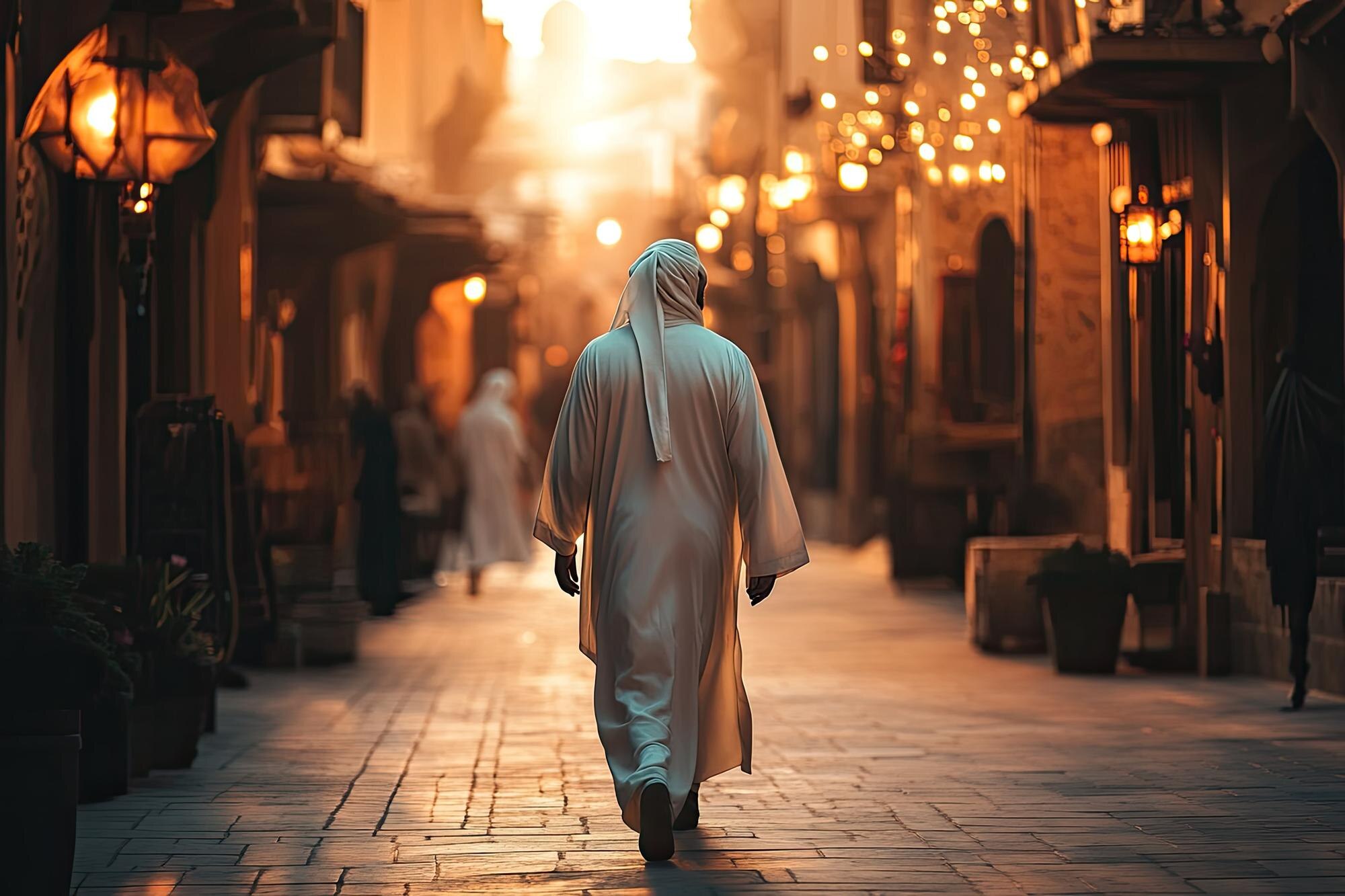
You don’t expect an airport to feel gentle, and yet Prince Mohammad bin Abdulaziz International Airport (MED) is about the kindest doorway into this journey you could ask for. Step off the plane after hours in the air and the first thing you notice is the calm: a single, handsome, light-filled terminal, queues that move, staff who have seen a million tired pilgrims and treat them accordingly. Where Jeddah processes the world in bulk, Madinah receives it in manageable waves — and if you’ve chosen to begin your Umrah in the city of the Prophet (peace be upon him), that difference sets the tone for everything that follows. This guide covers the airport’s layout, who flies there, the arrival flow, getting into the city, one persistent misconception about the railway, and what to expect when you depart.
Why Landing in Madinah First Is a Quiet Masterstroke
The single biggest advantage of a Madinah arrival has nothing to do with the airport and everything to do with geography: Madinah lies outside the Miqat boundaries, so you do not enter ihram before landing. No changing into the white garments in a cramped aircraft lavatory somewhere over the Red Sea, no anxiety about the captain’s Miqat announcement, no managing the restrictions of the sacred state through immigration queues and baggage halls. You land as an ordinary traveller, sleep off the jet lag in a proper bed, spend unhurried days praying in the Prophet’s Mosque — and then, when you’re rested and ready, travel toward Makkah and enter ihram calmly at Dhul Hulayfah (Abyar Ali) on the edge of the city, the very Miqat the Prophet (peace be upon him) himself used. The Miqat guide walks through that stop in detail.
For first-timers, older pilgrims, families with small children and anyone who tires easily, this sequencing is a genuine kindness to the body: you reach the most physically demanding rites of the journey with something left in the tank. It also front-loads the easier logistics — Madinah’s airport-to-hotel run is a fraction of the Jeddah–Makkah haul — and it means your Rawdah appointment, booked through Nusuk, can be scheduled for your rested days rather than squeezed around a Makkah timetable; the guide to booking permits on Nusuk covers how. None of this makes Jeddah-first wrong — flight prices and schedules sometimes decide for you — but if the fares are close, Madinah-first is the itinerary experienced pilgrims keep recommending for a reason.
The Airport at a Glance
Prince Mohammad bin Abdulaziz International sits about 15 kilometres northeast of the city centre — call it 20 to 30 minutes from the hotels around the Prophet’s Mosque, depending on traffic. It’s operated by the TAV-led Tibah consortium, was the first Saudi airport developed under a public-private partnership, and has collected a shelf of regional service awards since its modern terminal opened in 2015 — which tallies with what passengers actually experience: clean, efficient, legible. The main terminal handles both international and domestic operations, with a smaller older facility pressed into service for some seasonal and charter traffic in the biggest peaks; unless your operator tells you otherwise, assume the main terminal.
The route map is broader than many pilgrims expect. As of mid-2026 the airport connects to roughly a hundred destinations on around thirty airlines, heavily weighted toward the pilgrim world. Saudia is the biggest operator, flynas and flyadeal both maintain substantial bases here, and the international roster includes Turkish Airlines from Istanbul, EgyptAir from Cairo, IndiGo from India, and services from the Gulf hubs — Dubai, Doha, Kuwait — alongside seasonal and year-round links to Jakarta, Kuala Lumpur, Karachi, Lahore and a swathe of North African cities. From Europe and North America you’ll usually connect once — Istanbul, Cairo, Dubai or Jeddah — though direct options from major Muslim-market cities keep growing. Domestically, shuttle-frequency flights link Madinah with Riyadh, Jeddah and Dammam.
Through Immigration and Baggage
The arrival sequence is the same as at any Saudi entry point — immigration, baggage, customs — but at Madinah it usually happens faster. Biometric capture and e-gates handle much of the flow, and even when several international flights arrive together the hall rarely develops Jeddah-scale queues. Keep your passport, visa or Nusuk confirmation, and any required vaccination certificate reachable in your cabin bag; the meningitis (MenACWY) certificate is the one most commonly asked for on pilgrim routes. The full detail of officers’ questions, e-gate eligibility and the SAR 60,000 cash declaration threshold lives in the immigration and customs guide, and the broader gate-to-kerb sequence in the airport procedures guide.
Since you’re not in ihram, baggage is just baggage — no sacred-state complications, no garments to protect. Even so, arrive at the carousel with a plan: count your bags before leaving the hall, because the excitement of arriving in the Prophet’s city has left more than one pilgrim discovering at the hotel that a suitcase is still circling the belt. Trolleys are free, porters are available for small tips, and wheelchair assistance — pre-booked through your airline — works smoothly here. If your flight into Madinah is disrupted en route, the guide to delays and cancellations covers your rights and the order in which to fix things.
SIM Cards, Money and First Needs
The arrivals level has the essentials without the sprawl. Telecom counters from the main Saudi operators — STC, Mobily, Zain — sell tourist SIMs and eSIMs against passport registration; queues are shorter than Jeddah’s, though an international eSIM activated before departure remains the smoothest option, letting you order a Careem or open Nusuk the moment you switch off flight mode. Currency exchange counters and ATMs sit in the same stretch; rates at any airport are mediocre, so change a small cushion and rely on cards — Saudi Arabia is close to fully cashless, and contactless payment works from the airport coffee shop to the smallest date stall in the old market. Prayer areas with ablution facilities, cafes, and a pharmacy round out the terminal; you’re never more than a few minutes’ walk from any of them, which is precisely the luxury Madinah’s scale buys you.
Getting into the City
The transfer into Madinah is short, cheap and blessedly simple compared with the Jeddah–Makkah run. Official taxis wait at a marked rank outside arrivals with fares displayed on a board — as of mid-2026 a sedan to the central hotel district around the Prophet’s Mosque costs about SAR 70, larger vans for families and luggage up to roughly SAR 150, and the drive takes 20 to 30 minutes. Careem and Uber both operate from the airport with designated pickup points and typically undercut the rank slightly at quiet times, with the usual app advantages of a fixed upfront price and cashless payment; the taxis and ride-hailing guide covers the mechanics. A budget shuttle bus also links the airport with the city centre for around SAR 10–12 per person, running every half hour or so — genuinely economical, but with luggage after a long-haul flight, most pilgrims find the taxi’s door-to-door service worth the difference. Many Umrah packages include a group transfer; if yours does, confirm the meeting point inside arrivals before you travel, and expect a short wait while the group assembles.
Whatever you ride, give the driver your hotel’s exact name and, ideally, a dropped map pin. The hotel towers around the Prophet’s Mosque cluster densely and their names blur together — there are several near-identical “Al-Madinah” prefixed properties within a few hundred metres of each other — and a precise pin saves you a hot walk with suitcases. The full comparison of every route into the city, including from Jeddah, is in the guide to getting to Madinah.
Pre-booked private transfers deserve a mention too. Several licensed operators sell fixed-price airport pickups online, with the driver tracking your flight number and waiting in arrivals with a name board — typically a little dearer than the rank, but valuable if you’re landing late at night with children, or simply want one less decision at the end of a long day. Book with an operator that confirms the vehicle type in writing, give them your flight number rather than a landing time, and reconfirm the day before you fly.
One Important Correction: The Train Does Not Stop at the Airport
A misconception worth killing before it costs you time: unlike Jeddah, Madinah’s Haramain railway station is not at the airport. The high-speed rail station sits within the city, in the Knowledge Economic City development on the Hijrah Road side of town, a few kilometres from the Prophet’s Mosque and a separate taxi ride from the airport. If you’ve just landed and plan to take the train somewhere — or, more commonly, when you later travel on to Makkah — you’ll go from your hotel to that city station, not back out to the airport. Trains from Madinah reach Makkah in about two and a half hours, with fares as of mid-2026 typically in the SAR 130–180 range for economy and SAR 200–280 for business depending on demand and season; the Haramain railway guide has the schedules, classes and luggage rules. For pilgrims making the classic Madinah-to-Makkah move, the train competes with road transport — and either way you’ll stop or pass Dhul Hulayfah for ihram, which the Miqat guide explains for both modes.
Timing, Night Arrivals and the Rawdah Clock
Madinah receives arrivals around the clock, and a night landing here is even easier than at Jeddah: the fixed-fare taxi rank runs all night, the hotel district is 25 minutes away, and the Prophet’s Mosque itself never really sleeps — pilgrims flow in for Tahajjud and settle in ahead of Fajr, so arriving at 3 a.m. doesn’t strand you the way it might in an ordinary city. Two timing thoughts are worth building into your plan. First, traffic around the Mosque thickens sharply in the half hour before each prayer and the roads closest to the courtyards can close to vehicles, so a driver may drop you a couple of hundred metres from the door at those moments — no disaster, just worth expecting with luggage. Second, think about your Rawdah appointment before you fly: slots on Nusuk are released in advance and the convenient times go quickly, so book once your flights are fixed rather than after you land — but leave a sensible buffer after your arrival time, because if a flight delay makes you miss the slot it simply expires. A morning arrival with a Rawdah slot the following day is the comfortable pattern; a slot four hours after a long-haul landing is asking a jet-lagged body for trouble.
Travelling with Elderly Pilgrims or Children
If your group includes an elderly parent, a pregnant traveller or small children, Madinah’s scale is your friend, but a little pre-arrangement makes it better still. Book wheelchair assistance through your airline at least 48 hours before departure — the service here is well staffed and will take a passenger from aircraft door to the taxi kerb. Walking distances inside the terminal are modest by international standards, but after a long-haul flight even modest distances count, so don’t be shy about using the assistance you’ve booked. At the kerb, choose the van or a larger Careem rather than squeezing a tired family into a sedan with luggage on laps; the difference is a few tens of riyals on a short fare. And if the little ones are asleep on arrival, resist the urge to march everyone straight to the Mosque — the visit will be sweeter after rest, and unlike in Makkah, no rite is waiting on a clock. Paying slightly more for comfort at this stage isn’t extravagance; it protects the stamina and dignity of the people you brought with you, which is precisely what the journey asks of you.
Departing Through Madinah
Flying home from MED at the end of your trip — the reverse of the classic itinerary, for those who did Makkah first — is as painless as arriving. Check-in for international flights opens around three hours before departure and rarely develops the queues Jeddah manages in peak season, though Ramadan departures deserve the full three-hour margin. Zamzam water is available at the airport through the official sales service: factory-sealed 5-litre containers sold against your boarding pass or passport, the only form airlines accept for checked carriage. Buy at the airport counter rather than carrying bottles from the city, confirm your airline’s Zamzam policy in advance — many pilgrim-route carriers take one sealed box free on top of the baggage allowance, but not all — and factor the box into your trolley logistics. The packing guide helps with the arithmetic of dates, gifts and water against your allowance. Security and emigration are efficient; you’ll typically have time for a final unhurried prayer in the terminal musalla before boarding.
One planning note for those departing Madinah toward Makkah by air: the short MED–JED domestic hop crosses the Miqat in flight like any other approach to Jeddah, so if you’re flying rather than taking the train or road, you’ll need to be in ihram before that flight passes the boundary — in practice, most pilgrims simply wear it from the airport. It’s one more reason the overwhelming majority make the Madinah–Makkah journey overland instead.
Your First Hour, Well Spent
Here’s the shape of a good Madinah arrival: clear immigration without rushing anyone including yourself, count your bags at the carousel, pick up connectivity if you don’t already have it, and take the fixed-fare taxi or a Careem straight to your hotel with a map pin set. Shower, eat, sleep if your body asks for it — there is no ihram clock running and the Mosque is open to you around the clock. When you walk to the Prophet’s Mosque for your first prayer, you’ll do it rested, and you’ll understand why so many pilgrims call the Madinah-first itinerary the gentlest beginning this journey has. The days ahead — the Rawdah appointment, the ziyarah sites, and eventually the road to Makkah — each have their own guides; the only job of arrival day is to land softly, and this airport is built for exactly that.
Leave A Comment