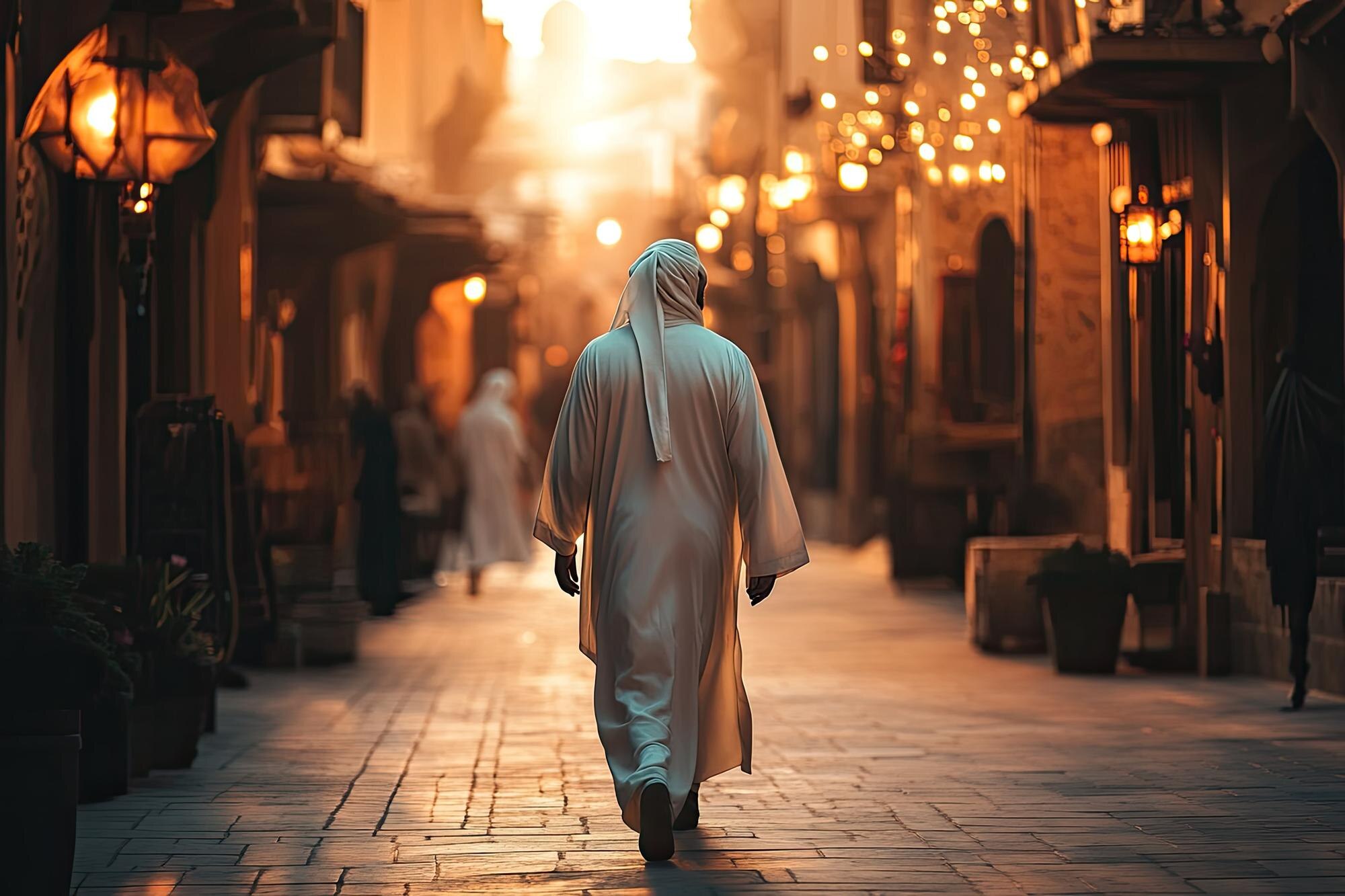
Hardly anyone flies to the Kingdom in one clean hop. Most pilgrims travel the connecting way, on the better-value routes through the great hub airports, and that means a few hours — sometimes many — between one aircraft and the next. A long wait in a transit terminal can feel like dead time: tired, bored, suspended somewhere between home and the Haram. It doesn’t have to be. With a little planning, the layover becomes a gift — a chance to rest, wash, pray, and enter ihram in comfort, so you land in Jeddah fresh instead of frazzled.
This guide covers the transit rules at the hubs pilgrims actually use — Istanbul, Dubai, Doha, and Cairo — the 96-hour Saudi stopover visa that has quietly become one of the best tools in Umrah travel, the practicalities of ihram in transit, where to sleep and shower, and the connection and baggage pitfalls that catch people out, all as things stand in mid-2026.
First, Know Which Kind of Transit You’re Doing
Everything about a layover flows from one distinction. Airside transit means you stay inside the secure international zone, never cross immigration, and simply walk (or ride a train) from one gate to another; for this, at all the major Umrah hubs, most travellers need no visa at all when both flights sit on one booking. Landside transit means crossing immigration to collect bags, change airports or terminals in some cities, or leave for a hotel and a proper bed — and that engages the visa rules of the country you’re in. Confusing the two is one of the classic Umrah planning mistakes: a traveller books two separate cheap tickets, discovers at the hub that the bags must be collected, and meets an immigration desk they have no visa for. Check which kind of transit your itinerary involves before you buy it, not after.
The Big Four Hubs, One by One
Istanbul
Istanbul Airport is now one of the world’s largest, and Turkish Airlines funnels a huge share of Europe-to-Jeddah pilgrim traffic through it. Staying airside, most nationalities transit without any visa. The terminal is superbly equipped for a Muslim traveller: spacious prayer rooms (mescit) on multiple floors of both departures and arrivals, wudu facilities beside them, abundant halal food, and an airside YOTEL selling rooms by the hour along with paid lounges and showers. For very long connections, Turkish Airlines has long offered stopover perks — complimentary hotel stays or guided city programmes for qualifying connections — though terms shift, so check the airline’s current offer when you book. Leaving the airport requires whatever visa your nationality normally needs for Türkiye; many pilgrims qualify for visa-free entry or an easy eVisa, which turns a twelve-hour wait into an evening by the Bosphorus and a bed.
Dubai
Dubai works on the same logic. Connecting airside at DXB on one ticket, you need no visa regardless of nationality, and the terminals run all night — this is an airport where 3am feels like mid-afternoon. Prayer rooms sit throughout the concourses, sleep pods and the airside Dubai International Hotel serve the exhausted, and lounges sell entry at the door with showers included. If you want to leave the airport, the UAE’s normal entry rules apply: dozens of nationalities get visa-free entry or visa on arrival, and others can arrange transit visas — typically sponsored through the airline — for stays of up to 96 hours. Book any landside plan before you fly rather than gambling on the desk.
Doha
Hamad International is compact by comparison and consistently ranked among the world’s best airports, which matters at 2am with children. Airside transit is visa-free for everyone on through-tickets, prayer rooms are plentiful and well kept, and the airside Oryx Airport Hotel plus quiet rooms with reclining loungers give you genuine rest options without crossing a border. Qatar also runs a free transit visa scheme for layovers up to 96 hours, arranged through Qatar Airways in advance of travel, and many nationalities qualify for visa-free entry anyway — Doha’s corniche and the Museum of Islamic Art are a fine way to spend a long daytime wait if your paperwork allows.
Cairo
Cairo is the budget workhorse of Umrah routings from Europe and Africa, and its rules reward a moment’s study. On a single ticket with bags checked through, you stay in the international transit area and need nothing. Beyond that, Egypt runs a free transit-visa programme for passengers of EgyptAir, Air Cairo, and Nile Air whose stopover runs between 8 and 96 hours — extended, as of late 2025, through April 2027 — arranged on arrival at the carrier’s transit desk with your passport and onward boarding pass. It applies to nationalities eligible for Egypt’s visa on arrival, so check your own passport against that list. Cairo’s terminals are older and rest facilities thinner than the Gulf hubs’, which makes the free hotel-and-transfer packages EgyptAir sometimes offers on long connections worth asking about at booking.
Connecting Inside Saudi Arabia
A growing share of pilgrims route through the Kingdom itself — landing at Riyadh or Dammam on a cheaper fare, then hopping domestically to Jeddah or Madinah. Two things change when you do. First, immigration and customs happen at your first Saudi airport, not your last: you clear the border in Riyadh, collect and re-check bags if your airline requires it, and the onward leg is a purely domestic flight. Second, and easily missed, the Miqat applies to that domestic leg. A Riyadh–Jeddah flight bound for Makkah crosses the boundary of Qarn al-Manazil en route, so you must be in ihram garments with the intention made before that crossing — treat the domestic gate at Riyadh exactly as you would a final international leg into Jeddah, and see the Miqat guide for the details.
Season your plans, too. In Ramadan and the weeks either side of Hajj, every one of these hubs runs hot: transit hotels sell out days ahead, lounges cap entry and turn walk-ups away, and the pilgrim flow through transfer security doubles. If your layover falls in those windows, book the room or the lounge before you fly rather than at the desk, and treat every published queue time as an optimistic estimate. Off-season, the same terminals feel half-empty at night, and almost everything on this page gets easier and cheaper.
The 96-Hour Saudi Stopover Visa
Here is the development that has changed transit planning entirely: Saudi Arabia’s stopover visa, issued to passengers flying Saudia or flynas, allows a stay of up to 96 hours in the Kingdom — and it explicitly permits Umrah. As of mid-2026 the terms are these: the visa is offered during the flight-booking process when your itinerary connects through Jeddah, Riyadh, or another Saudi gateway en route to a final destination outside the Kingdom; it is single-entry, valid for travel within 90 days of issue, capped at four days in-country, and costs only a small processing and insurance fee — around SAR 40 plus roughly SAR 13 for the mandatory medical cover. Approval is typically electronic and near-immediate. A pilgrim flying, say, London to Kuala Lumpur on Saudia can step off at Jeddah, perform Umrah, and continue two days later, at a fraction of the cost of a dedicated trip.
Two footnotes keep it honest. The stopover visa cannot be used for Hajj, and Umrah on it still requires the standard Nusuk permit, booked before you set out for the Haram. And because it’s tied to the operating carrier, it suits itineraries built on Saudia or flynas from the start — if you’re comparing visa routes more broadly, our visa guide sets the stopover option alongside the Umrah and tourist eVisas.
Ihram in Transit: The Layover as Changing Room
For pilgrims connecting onward to Jeddah, the layover airport is usually the best place on the whole journey to prepare for ihram — because on the common routings, the Miqat is crossed on that final leg. Fly Istanbul–Jeddah, Dubai–Jeddah, Doha–Jeddah, or Cairo–Jeddah, and somewhere in that last flight the aircraft passes over the boundary; the Miqat guide explains the geography and the timing announcements. So use the hub well: shower — ghusl, if you can manage it, in a lounge or pay-shower — change into the garments in space and dignity, deal with nails and grooming beforehand, and board the final flight already dressed, leaving only the niyyah for the air. It beats the aircraft lavatory in every respect. Pack the ihram, sandals, and unscented soap in your cabin bag — never the hold — and our guide to wearing ihram shows the folding and securing so the garments survive a boarding queue.
Wearing ihram garments through the transit terminal is perfectly fine, and staff at Muslim-world hubs see it constantly; remember that the garments alone impose nothing — the restrictions begin with the intention. If, on the other hand, you arrive at your layover already in ihram (having made the intention earlier, or transiting after entering ihram for a Madinah-first plan that changed), keep its rules through the wait: no scented soaps or lotions from the washroom dispensers, no trimming, and the calm bearing the state asks for. Your own unscented soap, a small towel, and patience cover everything a transit terminal will throw at you.
Sleeping, Eating, Praying
Past about six hours, a layover stops being a wait and becomes a stay, and it deserves planning like one. Airside transit hotels — Istanbul’s YOTEL, Dubai International Hotel, Doha’s Oryx — sell blocks of hours without any immigration crossing, and a four-hour sleep in a real bed transforms how you arrive; for the elderly, for families, and for anyone performing Umrah within hours of landing, it’s money spent directly on the pilgrimage. Lounges are the next tier: quiet seating, food, and above all showers, bookable ahead or paid at the door, and sometimes free with cards you already hold. Even with no budget at all, the hubs give you plenty: quiet gates for a nap with your bag strap looped round an arm, water fountains to keep ahead of the dryness that our dehydration guide warns about, and prayer rooms — find yours as soon as you arrive, not ten minutes before Fajr, and note that every hub on this page has proper wudu facilities beside its mosques.
Eat sensibly rather than grandly; a heavy 1am meal serves nobody who plans tawaf the next evening. And guard your sleep schedule where you can — if the final leg lands you in Jeddah at dawn, a nap at the hub is worth more than any lounge buffet.
Keep a dedicated layover bag inside your cabin bag, packed at home: the ihram and sandals, unscented soap and a small towel, your medication, a change of underclothes, a charger and power bank, an empty water bottle to fill airside, a few familiar snacks, and every document in one pouch. When the bag is right, an eight-hour wait needs no shops at all — and if a checked case goes missing somewhere between three airlines, nothing that matters to the pilgrimage is in it.
Connections, Baggage, and the Pitfalls
Every airport publishes a minimum connection time, and booking engines respect it — but the minimum is the airline’s promise that a connection is possible, not comfortable. Through the giant hubs, give yourself at least ninety minutes to two hours between international flights on one ticket, and more in Ramadan, when everything from transfer security to the gate queue swells. On a single booking, a missed connection is the airline’s problem to fix; our guide to handling delays and cancellations covers your rights and the fastest counters to reach.
Separate tickets are where transit dreams go wrong. Book two unconnected reservations — a cheap flight to the hub, then a cheap flight onward — and no airline owes you a through-checked bag or a rebooking if the first leg runs late. You’ll usually need to clear immigration (visa rules and all), collect your case, and check in again from scratch, which means treating the two flights as separate journeys with four or five hours between them and your essentials packed in the cabin: medication, documents, the ihram, one change of clothes. Even on single tickets, confirm at first check-in that your bags are tagged through to Jeddah or Madinah and that you hold boarding passes for every leg — then confirm the tag sticker matches. Thirty seconds at the counter spares you an hour at a transfer desk.
Travellers needing wheelchair or special assistance should know the service does not automatically bridge a connection: it is booked per flight, so request it for every leg when you buy the ticket, and confirm at the transfer desk on arrival at the hub that the onward airline expects you. Families connecting overnight do well to aim for the quieter satellite gates for sleep, and to fix a simple rule with older children — nobody leaves sight of the group, even for a bathroom, without a named adult. The airport procedures guide covers assistance booking in full.
Leaving the Airport on a Very Long Wait
When a layover runs past twelve hours, a city hotel and a real night’s sleep can genuinely be the right call — if the visa rules above permit you out, and if you respect the arithmetic of getting back in. Returning means security and often immigration all over again, and both crawl at peak times; be back at the terminal three hours before the onward departure, keep your documents on you the whole excursion, know which terminal you return to, and set more than one alarm. A few hours of comfort are worth having, but never at the price of the one flight that carries you on to the holy cities.
Then comes the landing that all of this served: the final leg into the Kingdom, the immigration hall, and the road beyond — picked up by our Jeddah airport and airport-to-Makkah guides. Before you fly, settle the three questions this page turns on: which kind of transit your ticket involves, where on the routing the Miqat falls, and where you’ll wash and change. Write the answers into your phone next to your booking references — the pilgrim who lands in Jeddah rested, dressed, and unhurried planned the layover as carefully as the flights themselves.
Leave A Comment