اَللّٰهُمَّ هَذَا حَرَمُكَ وَأَمْنُكَ فَحَرِّمْنِي عَلَى النَّارِ ❁ وَآمِنِّيْ مِنْ عَذَابِكَ يَوْمَ تَبْعَثُ عِبَادَكَ ❁ وَاجْعَلْنِي مِنْ أَوْلِيَائِكَ وَأَهْلِ طَاعَتِكَ
Allāhumma hādhā ḥaramuka wa amnuka fa-ḥarrimnī ‘alā-n-nār, wa āminnī min ‘adhābika yawma tab’athu ‘ibādak, waj’alnī min awliyā’ika wa ahli ṭā’atik.
“O Allah, this is Your sanctuary and Your security, so protect me from the Fire, and grant me safety from Your punishment on the Day You raise Your servants, and make me among those near to You and obedient to You.”
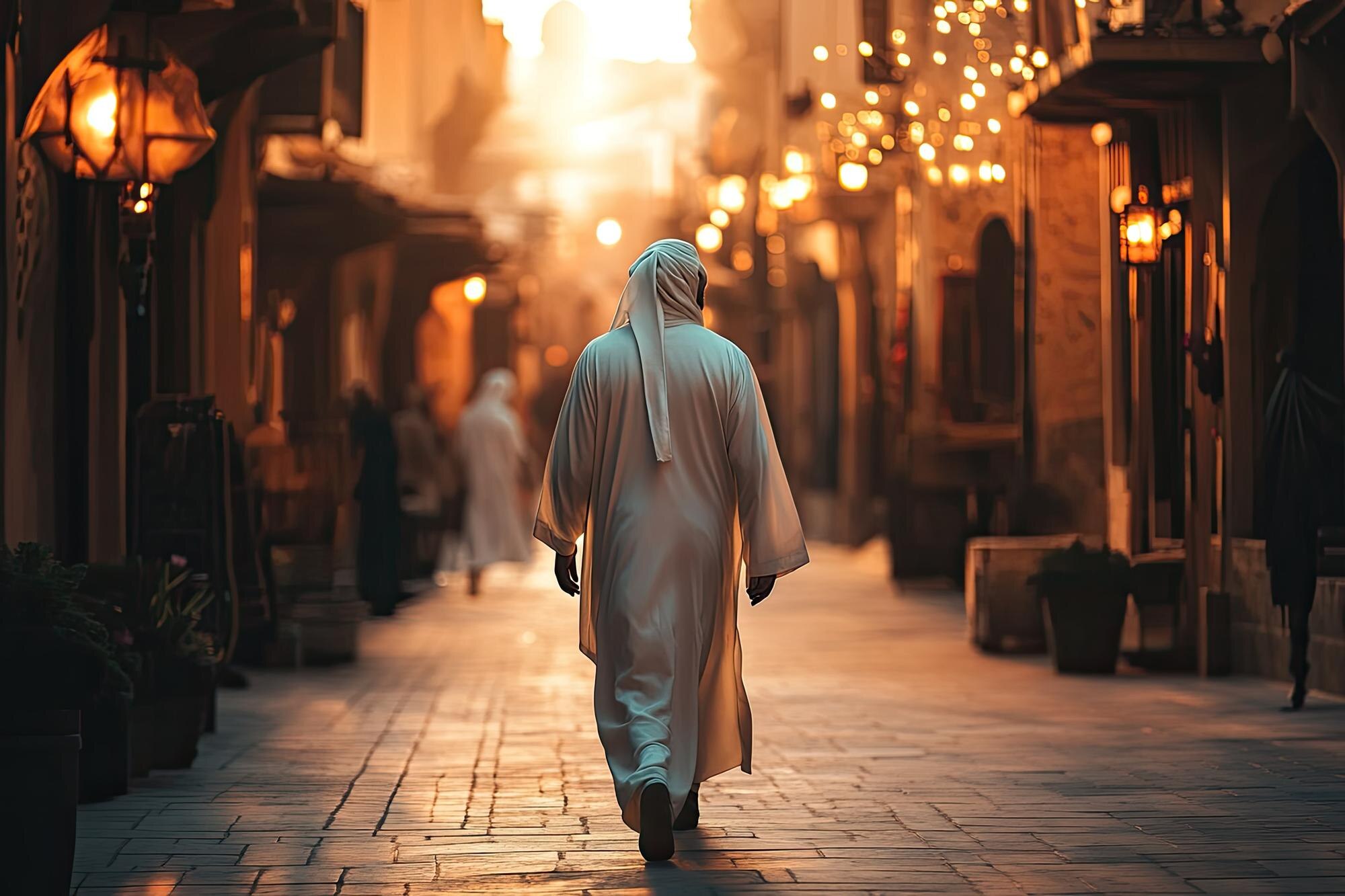
It will come over you slowly at first. The bus, or the car, moving through the night; the signs beginning to name a city your heart has whispered about for years; a hush falling over the people around you. Perhaps you try to speak as you normally would and find your voice no longer quite holds. Perhaps you look out the window without really seeing, because something deeper has already begun to move in your chest. And then it arrives, quiet and certain: I am nearing Makkah. I am nearing the sanctuary of my Lord. I am nearing the place my heart has been aching for, perhaps my whole life, without ever fully understanding how deep the ache went.
And look — look at what this du’a teaches your heart to ask for first. Not give me the world. Not give me ease. But protect me from the Fire. As though, the moment you draw near this sacred ground, everything in you is stripped down to the one thing that was always most true and most lasting. In meeting Makkah, your heart suddenly remembers what it needs more than breath: not safety in this short life, but safety on the Day when every soul is raised and stands, with nothing in its hands, before its Lord.
This is why so many pilgrims begin to weep before they have even seen the Ka’bah. You are carrying a whole life into this sanctuary — years of mistakes, years of forgetting, du’as you whispered into the dark when you thought no one heard, a long hope kept alive through so much weakness. And now here you are. Not as a perfect soul. Not as someone with everything in order. But as a servant with a pounding heart and a single overwhelming prayer: Yā Allah, do not let this arrival be empty. Let it be the beginning of my forgiveness. Let it be the beginning of my coming near to You. And see how the du’a ends — make me among those near to You, and obedient to You. Not only let me be here. Not only let me finish the rites. But change me. Because, it is entirely possible to arrive with your body while your heart stays standing somewhere far behind. And it is just as possible to arrive exhausted and broken and plain — and to arrive with a heart that is finally, at last, ready to say: I do not only want to see these places. I want them to change me forever.
Leave A Comment