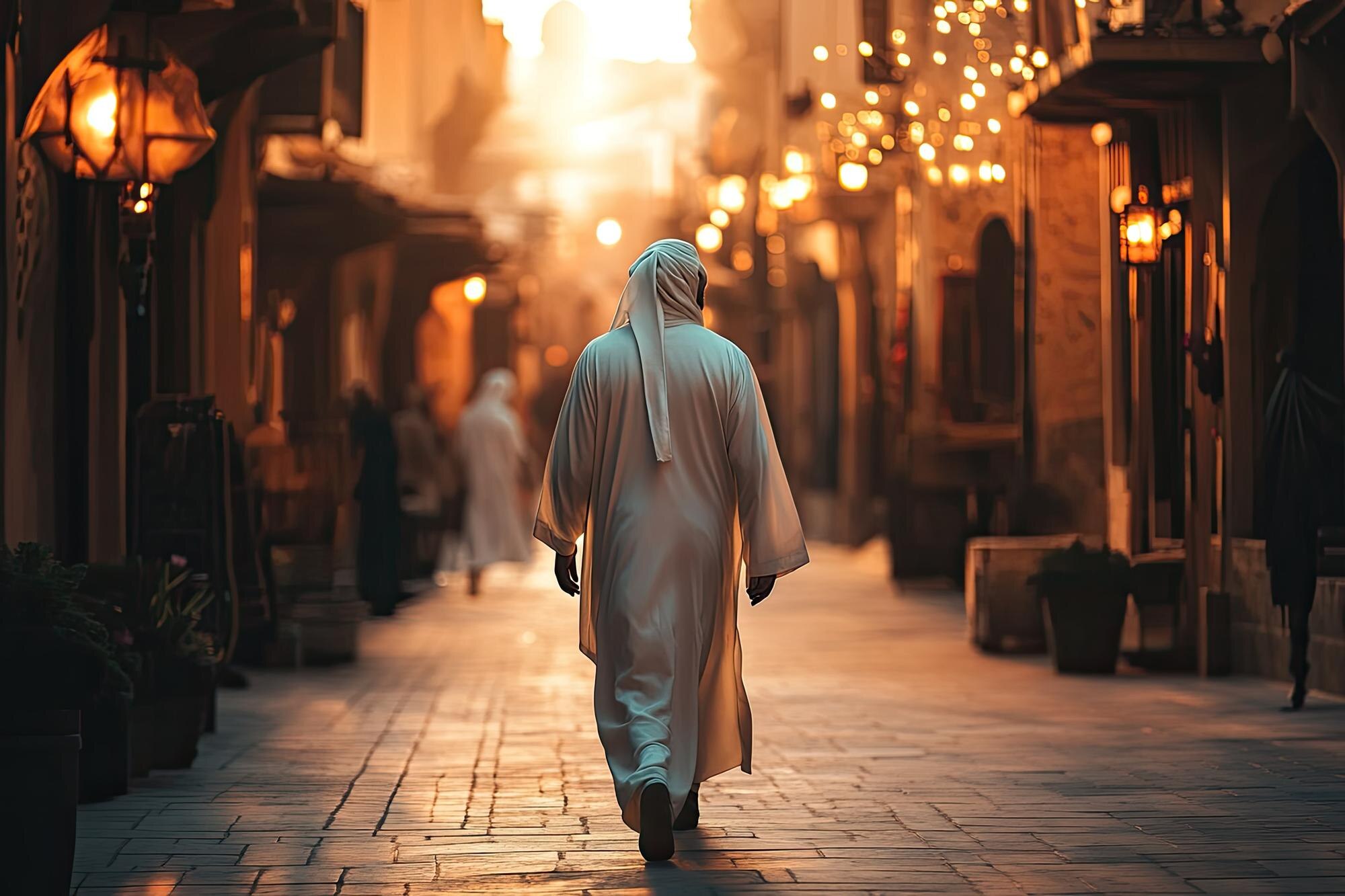
Makkah will surprise you — and I want you ready for it, so the surprise does not steal your reverence. It is a real, living city: traffic and hotels and lifts and queues, shops and bright signs and the ordinary noise of human life. And beneath every bit of it, unchanged and unbreakable, lies the sacred sanctuary of Allah. So you must teach your heart not to grow careless simply because the streets feel busy and commercial. Your Lord says, “Whoever honours the symbols of Allah, that is from the piety of the hearts” (al-Hajj 22:32) — and honouring His symbols is not done only with dramatic tears. It is done by lowering your voice, by refusing to argue, by treating the cleaners and the workers with dignity, by not crushing the weak, by guarding your eyes, and by remembering that the sacred can be wounded by a tongue as surely as by a hand. So before you step into the Haram, pause and make a quiet covenant: Yā Allah, protect my tongue, my eyes, my hands, my phone, my temper, and my intention, here in Your sacred place. That one whispered sentence can save a whole journey.
And this is where you must settle the matter of the phone, before it settles you. That small device in your pocket can serve your Umrah or it can quietly steal it. It can hold your du’a list and your map and your recitation — and it can also pull your eyes away from the Ka’bah, turn your worship into a performance for people who are not even there, and make you more anxious to be seen praying than to actually pray. The question, is not whether it is permitted. The question is whether it serves what you came for. So decide your limits before you enter: take the photograph if you must, without disturbing a single soul; do not film people in the rawest, most broken moments of their worship; do not broadcast your private devotion for applause. Some of the most precious moments of your Umrah were meant to stay between you and Allah alone. A tear that no camera ever captured may be worth more, in His sight, than a thousand images the whole world admired. Let the phone serve you — and let Allah be enough as your Witness.
Leave A Comment