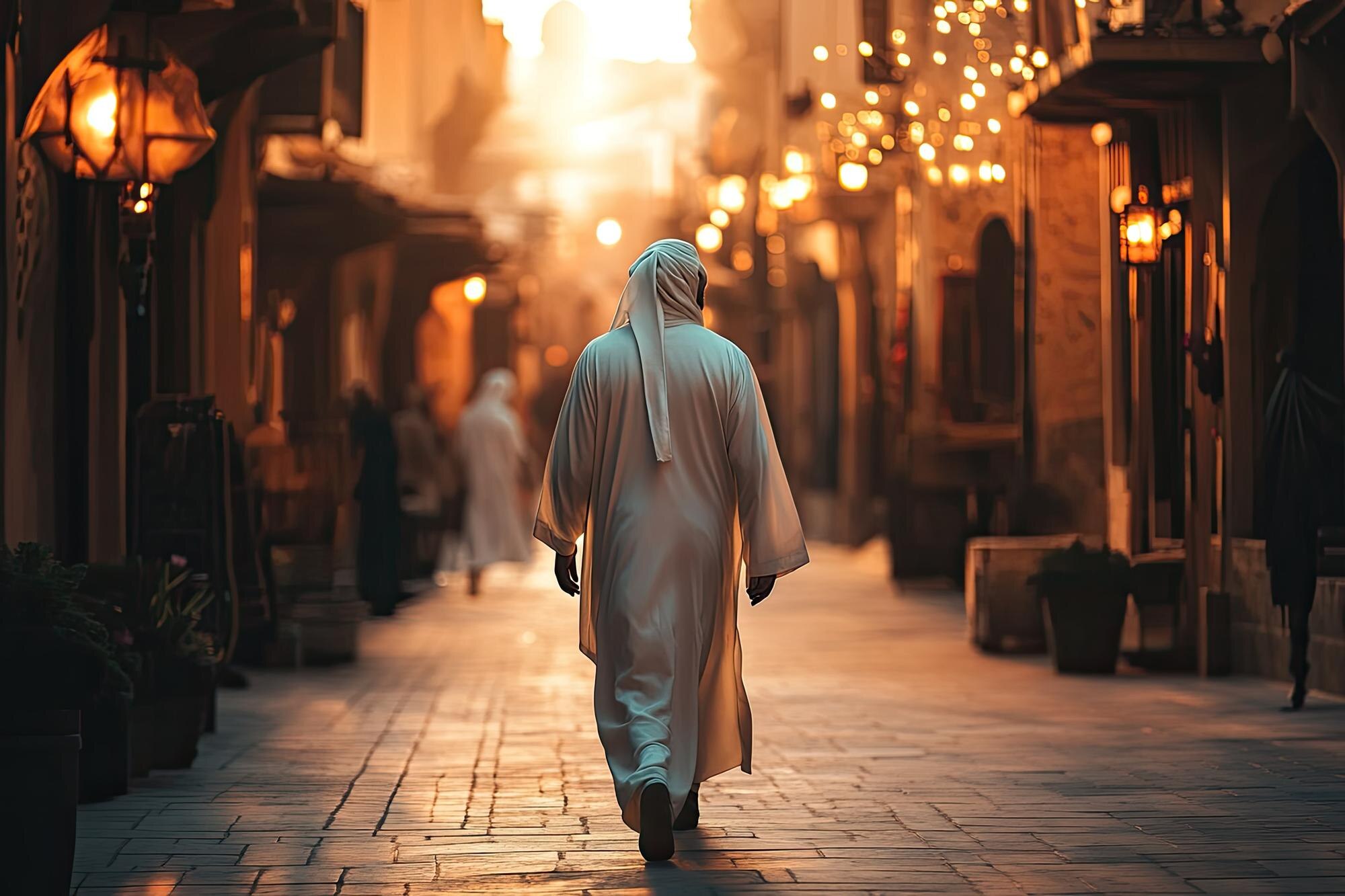
Few pilgrims come home from Makkah empty-handed, and there’s nothing wrong with that. A box of dates for the neighbours, a prayer mat for a friend, a vial of attar for your mother — these are ways of sharing the journey with the people who couldn’t make it, and choosing them can be a genuine pleasure. The trouble is that shopping in Makkah is a game with two very different sets of rules depending on where you stand, and most pilgrims only ever learn one of them. Stay inside the marble malls at the foot of the Clock Tower and you’ll pay tourist prices for goods that often aren’t even Saudi. Learn where the city itself shops, and the same money buys twice as much of something twice as good.
This guide gives you the honest version: the real hierarchy of shopping venues, what’s actually worth buying and at what price, how to haggle without embarrassing yourself, how gold is priced, what the customs people at home will want to know, and — just as valuable — what to leave on the shelf. Prices quoted are realistic ranges as of mid-2026 and will drift with seasons and grades, so treat them as bearings rather than promises.
The honest hierarchy: where you shop decides what you pay
Makkah’s shopping splits into three worlds, and the price gaps between them are dramatic. At the top of the cost scale sit the malls built into the Haram towers — above all the vast complex beneath the Clock Tower. They’re air-conditioned, orderly and steps from the mosque, and for that convenience you pay handsomely: fixed prices, international brands, and souvenir shops whose rents are baked into every misbaha on the rack. They’re excellent for a cool browse and hopeless for value.
The middle world is the street commerce that fans out from the central area — the shops along Ibrahim Al Khalil street and through Ajyad, plus the surviving remnants of the older souq trade in the lanes beyond the redevelopment. Prices here are noticeably better than the towers, quality is mixed, and gentle bargaining is part of the transaction.
The third world is where Makkans themselves shop, and it’s the one most pilgrims never see: the markets of Aziziyah and the famous Al Utaibiyyah (Otaibiyyah) souq, a short taxi ride from the Haram. Utaibiyyah is one of the city’s oldest trading districts, packed with fabric shops, abaya sellers, perfume houses, gold shops and date merchants serving a local clientele that knows exactly what things should cost. The rule you learned about food in Makkah applies to shopping with even more force: every kilometre from the Haram is a discount, and a ten-riyal taxi to Utaibiyyah can save you hundreds across a full gift list.
What’s worth buying
Dates — and the truth about Ajwa prices
Dates remain the finest gift the region offers: light to divide, welcome in every household, and genuinely of this place. The everyday varieties — sukkari, khudri, safawi — are inexpensive, running roughly SAR 15 to 40 per kilo depending on grade and season. Ajwa, the celebrated dark date of Madinah, is another matter. As of mid-2026, genuine Ajwa sells for roughly SAR 80 to 150 per kilo depending on grade and size, with premium large-fruit grades at the top of that band and bulk sacks a little below it. Be properly suspicious of Ajwa offered dramatically cheaper: reports of dyed, mixed or mislabelled dates sold to pilgrims are common, and a too-good price is the classic tell. Buy from established date shops rather than trolley vendors, ask to taste, and check the fruit is uniform — real Ajwa is soft, fine-wrinkled and never shiny-black with dye.
Attar and oud
Concentrated, alcohol-free perfume oil is a Makkah speciality and a wonderfully personal gift. Small vials of decent attar start at a few riyals and pleasant mid-range bottles run SAR 20 to 60, while genuine oud oil and aged blends climb steeply into the hundreds and beyond — a market where you should only spend serious money with serious knowledge. Test on skin rather than paper, give each scent a minute to settle, and don’t let a salesman layer five oils up your forearm; after three, your nose is voting blind.
Prayer mats, misbahas and the classic list
A plain prayer mat costs SAR 10 to 30 in the markets; thick, padded or ornate ones run SAR 50 to 150, and the heavily embroidered showpieces more again. Misbahas span the same happy spread — simple wooden strings for pocket change, olive-wood and stone sets for SAR 20 to 80, and collector pieces beyond that. Caps, miswak sticks, hijabs and scarves, small framed calligraphy and Zamzam-themed trinkets fill out the traditional list cheaply. Quality varies more than price, so run your thumb over stitching and clasps before you pay.
Abayas and thobes
If anyone at home wants an abaya or thobe, buy it in Utaibiyyah or Aziziyah rather than a tower boutique. Everyday abayas there run roughly SAR 50 to 150 with tailoring shops on hand for quick adjustments, while the mall versions of similar cloth start where the market versions finish. Thobes follow the same pattern. Check seams and zips, and remember sizes run generous.
Two packaging notes worth knowing. Date shops will box, shrink-wrap and bag larger purchases for travel if you ask, which matters more than it sounds when a five-kilo sack meets a baggage handler. And for modest gift boxes, the supermarkets are quietly excellent: BinDawood and its neighbours sell attractively boxed dates at grocery prices, often undercutting the souvenir stalls selling the identical box a street away.
What isn’t worth buying
Electronics top the list. Phones, tablets and accessories carry no Makkah discount — you’ll usually pay the same as at home or more, warranties may be regional, and the fakes around the pilgrim districts are polished. Skip them entirely. Be equally clear-eyed about souvenirs: a large share of the “Saudi” keepsakes sold around the Haram — prayer mats, clocks, models of the Ka’bah — are manufactured elsewhere and imported by the container. That doesn’t make them worthless, but it should anchor what you pay, so turn the item over and read the label before believing any story about local craftsmanship. And walk away without hesitation from anything sold as blessed, secret or holy — supposed fragments of the Ka’bah’s kiswa, “special” water, miracle-working stones. At best it’s a fiction with a price tag; our guide to avoiding scams during Umrah covers the whole gallery of these tricks.
Haggling: the polite dance, venue by venue
The first rule is knowing where bargaining belongs. In the malls and chain shops, prices are fixed and haggling just produces an awkward silence — pay the ticket or move on. In the souqs and street markets, negotiation is expected and, done well, it’s a warm little ritual rather than a contest. Greet the seller properly, handle the goods with interest, and ask the price. Counter somewhere around two-thirds of it, cheerfully, and let the exchange settle in the middle. Your strongest card is the polite walk-away: a genuine “thank you, perhaps not today” brings the price down more reliably than any argument, and if it doesn’t, the price was fair.
Keep your sense of proportion. These are mostly fellow Muslims working brutal hours in the heat to serve pilgrims, and grinding a man down over three riyals wins you nothing worth having. Don’t disparage goods to force a discount, don’t open a long negotiation for an item you’ve no intention of buying, and pay a fair price gladly when you hear one. The Prophet (peace be upon him) praised easy, honest dealing in trade; the marketplace is as good a place as any to practise it.
On payment: the souqs have gone cashless along with the rest of the country, and even small stalls generally take contactless cards as of mid-2026. A little cash still smooths the smallest transactions and the final riyal of a negotiation, so carry some low notes — but nobody needs a money belt full of riyals to shop in Makkah any more.
Gold souks: how the pricing actually works
Gold shops cluster in the central markets and especially around Utaibiyyah, and they’re a legitimate place to buy — provided you understand the arithmetic. Gold jewellery in Saudi Arabia is priced in two parts: the weight of the gold at the daily gram rate, which moves with world markets, plus a workmanship (making) charge for the craftsmanship, which is where the shop earns its margin and where you can negotiate. Before you set foot in a souk, look up the day’s gram rate for the karat you want — it’s published on any gold-price app or site, and reputable shops will happily confirm it. Then ask the seller to weigh the piece in front of you and quote the gold value and the making charge separately. If a shop resists that split, shop elsewhere.
Saudi gold is regulated and hallmarked: look for the karat stamp (18, 21, 22 or 24) on the piece itself, with 21k and 22k dominating the jewellery trade. Insist on a proper receipt recording weight, karat and price — you’ll want it for any exchange, for insurance, and for customs at home. And treat gold as a considered purchase, not an ambush buy on the way back from Isha; prices are honest in the regulated shops, but hallmarks and receipts are your protection, not the seller’s smile.
Zamzam is not a shop purchase
Whatever a souvenir shop tells you, the Zamzam you take home does not come from its shelves. Water for the flight is sold only as officially sealed containers — typically the five-litre boxes arranged at or near the airport for ticketed travellers — and airlines accept those and nothing else in the hold. Bottles filled in the mosque and tucked into a suitcase get confiscated at the airport, and “Zamzam” sold loose in the markets carries no guarantee it’s Zamzam at all. Drink freely and gratefully while you’re in Makkah, and sort the take-home supply properly through the official channel — the full procedure, allowances and packing rules are in our guide to bringing Zamzam water home.
Time it right: shop last, not first
The single best shopping decision you can make costs nothing: do it at the end. Pilgrims who shop in their first days carry the consequences for the whole trip — money spent before the budget has settled, luggage filling up before the luggage maths is done, and prime worship hours traded for retail when energy and purpose are at their peak. Save the gift-buying for your final day or two, once the heart of the journey is behind you. By then you’ll know the price of things, you’ll know how much room and budget genuinely remain — our Umrah budgeting guide has the weight-and-money worksheet — and you’ll buy with a clear head instead of arrival-day euphoria. The only exception is anything requiring tailoring or ordering, which needs a day or two of lead time.
Customs, declarations and getting it home
Two sets of rules matter, and pilgrims regularly confuse them. Saudi Arabia’s own customs framework exempts travellers’ personal effects and gifts up to a value of SAR 3,000, with electronic declaration required beyond that — a rule that chiefly concerns what you bring into the Kingdom, and worth knowing if you arrive with new goods. What governs your shopping, though, is your home country’s import allowance, and those vary widely: most countries give returning residents a personal duty-free threshold of a few hundred pounds, dollars or euros, above which goods should be declared. Keep your receipts together in one envelope — especially for gold and anything valuable — and declare honestly if you’re over; the fine for a discovered undeclared purchase always dwarfs the duty. Food rules deserve a separate check: commercially packed dates travel fine into most countries, but nations with strict biosecurity regimes, Australia and New Zealand above all, require declaration of all food products. Check your own border agency’s current rules before you fly rather than gambling at the red channel.
As for shipping versus carrying: cargo and shipping offices in Makkah will freight boxes home, but for typical pilgrim quantities the sums rarely work — an extra checked bag bought from your airline in advance is usually cheaper, faster and far less likely to go astray. Shipping earns its keep only for genuine bulk: a group order of dates, a carpet, cartons beyond any baggage allowance.
Don’t let the shopping eat the worship
The markets are engineered to swallow time, and pilgrim time is the most expensive kind there is. The pattern to fear isn’t one big splurge; it’s the daily drift — a browse after Dhuhr, an hour lost in the mall after Isha, until the shops have quietly taken a whole day of your journey in instalments. The fix is a schedule. Give shopping one deliberate session near the end of the trip, list in hand, and protect everything else. A workable plan looks like this:
- Write the gift list before you travel — names, items, rough budget per person
- Note prices casually during the trip without buying
- Take one taxi trip to Utaibiyyah or Aziziyah on your second-to-last day and work the list in a single sweep
- Leave the last day for worship and farewells, not errands
Two hours with a list beats six afternoons of drifting, and the difference lands exactly where you want it — in the Haram.
If you’re going to Madinah, buy your dates there
One last piece of trader’s advice. If your itinerary includes Madinah — and for most pilgrims it does — hold your date shopping for it. Madinah is the source: Ajwa is grown there, the city’s central date market near the Prophet’s Mosque offers a depth of variety and freshness Makkah’s resellers can’t match, and prices for bulk purchases run meaningfully lower, particularly on multi-kilo sacks. Taste before buying, compare two or three merchants for the grade you want, and have larger quantities vacuum-packed for the journey. Buy a small box in Makkah if you can’t wait — a treat for the hotel room goes well with the supplies covered in our guide to finding food and essentials in Makkah — but save the serious purchase for the city the dates come from, at the end of the trip, receipts in the envelope and the luggage maths already done.


Leave A Comment