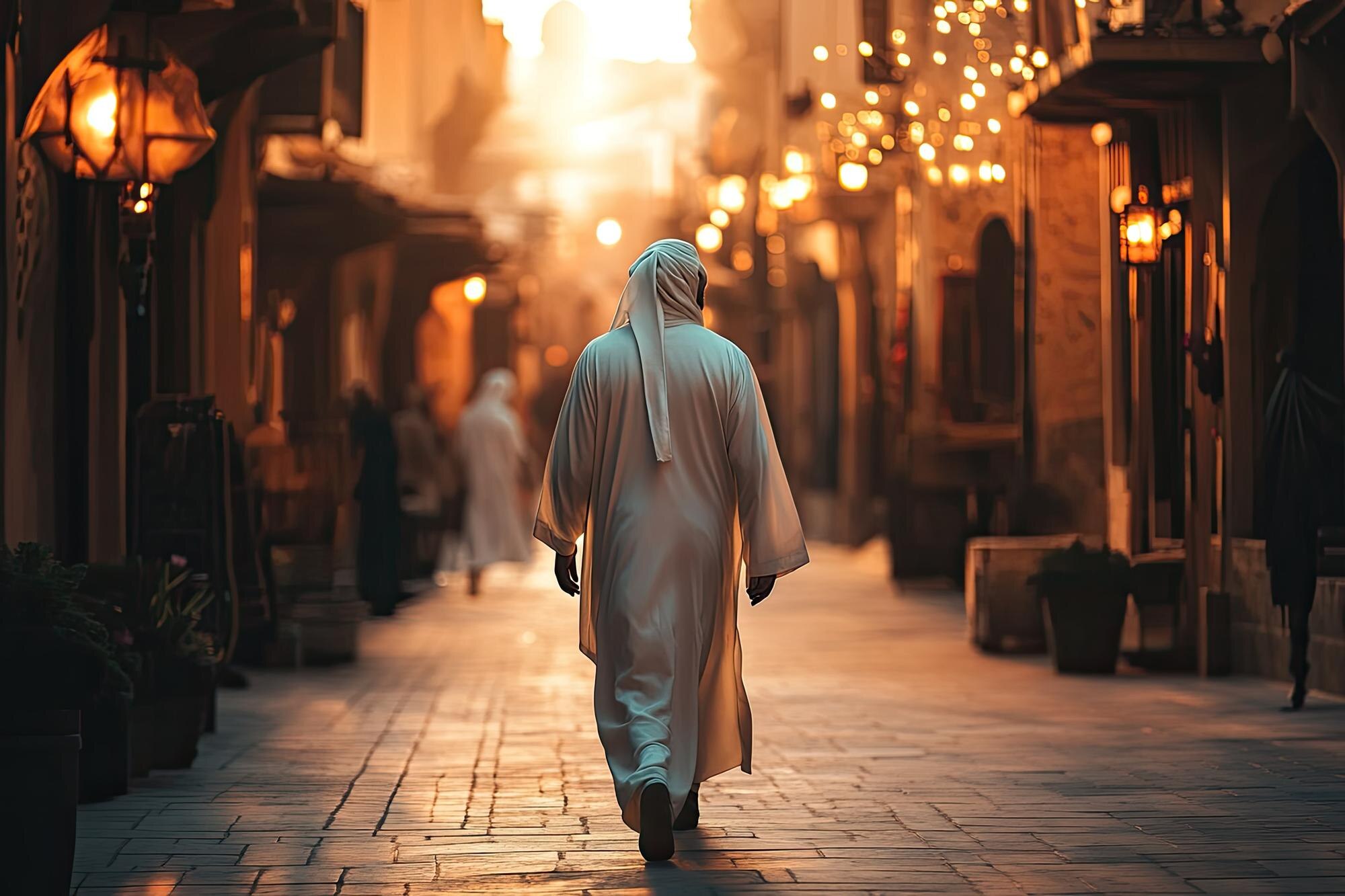
A child on Umrah is surrounded, every waking hour, by the richest teaching material in the Muslim world — the places where the stories actually happened, the rites that act them out, and a family visibly moved by all of it. But the learning doesn’t happen by itself. Left unguided, a young child can experience the whole journey as a blur of crowds, marble and waiting, and come home remembering the hotel breakfast. Guided well, the same child comes home with Hajar’s run in their legs, the talbiyah in their ears, and a journal they’ll still own at forty.
The difference between those two children isn’t money or a gifted teacher. It’s a handful of habits: stories told at the right moment, activities matched to age, and a light touch that follows curiosity rather than forcing a curriculum. This guide walks through the whole arc — the weeks before you fly, the days on the ground in Makkah and Madinah, and the weeks after you return, when the real consolidation happens. It sits alongside our broader guide to taking children on Umrah, which covers logistics, pacing and everything else; here the subject is purely what and how they learn.
The pre-trip arc: teach the story before they see the stage
Teaching children about Umrah works best in that order — story first, place second — because a child who arrives already knowing the tale experiences the trip as recognition rather than explanation. Start three or four weeks out, in ten-minute instalments rather than lectures.
Begin with Ibrahim and Hajar, told properly and told well. This is one of the great stories of any tradition — a mother left in an empty valley with her baby, asking her husband whether Allah had commanded this, and on hearing yes, answering that He would not abandon them. Tell it with the heat, the silence, the seven desperate runs between two hills, the baby’s heel and the water bubbling up where no water should be. Don’t rush to the moral; let the drama do its work. Then, on another evening, the building of the Kaaba — a father and son raising walls together, the stone brought down, the call to pilgrimage that your family is now answering. A third evening can take the Prophet’s own connection to these places, peace be upon him: his birth in Makkah, the cave above the city, the migration to Madinah. Keep each telling short enough that they ask for more.
Alongside the stories, teach the talbiyah as a song. Children memorise melodies effortlessly where they resist recitation drills, and the talbiyah’s call-and-response rhythm is practically designed for the back seat of a car. Play a recording on the school run, sing it line by line, and let them shout the response. A child who boards the plane already owning the words will produce them unprompted at the miqat — and there are few sweeter moments on the whole journey than a five-year-old’s labbayk rising from somewhere near your knees.
Match the activity to the age
The single most common mistake families make is pitching everything at one child’s level and losing the others. A little planning gives each age band its own project.
Under-sevens: colour, sequence, spot
Small children learn Umrah as a sequence of scenes, so give them the sequence to colour. Printable colouring sets showing the rites in order — ihram, tawaf, sa’i, the haircut — are widely available from Islamic publishers and free online, or you can sketch your own stick-figure version in an afternoon. Colouring the sequence before the trip means the child can narrate it back to you on the plane: first we wear the white clothes, then we go round the Kaaba seven times. On the ground, convert it into a spotting game — find the green light that marks the start of a circuit, count the lap markers at sa’i, spot the Zamzam coolers. A clipboard, a pencil and a tick-list will hold a four-year-old’s attention through stretches that would otherwise dissolve into wailing.
Eights to twelves: the journal, with prompts
This is the golden age for a travel journal, but a blank page defeats most children, so seed each day with two or three prompts. What did the Kaaba look like the first second you saw it? What would you have asked Hajar if you’d met her at the well? What did the crowd sound like at Fajr? What du’a did you make today, in your own words? Add jobs that feel grown-up: taping in the boarding pass, recording the day’s temperature, interviewing a grandparent about their first Umrah. Fifteen minutes after dinner, back at the hotel, is enough — and it doubles as the wind-down routine that our guide to hotel life with a family recommends anyway.
Teenagers: give them a production, not a worksheet
A teenager handed a colouring sheet will file the whole trip under childish. Handed a real project, they transform. Make one teen the family’s documentary-maker: a shot list (the clock tower at Maghrib, grandad’s hands in du’a, the birds circling the minarets), interviews with family members about what they prayed for, a two-minute edit to show relatives at home. Another might photograph doors and calligraphy, or keep the family’s expense log in riyals, or research each site the night before and brief everyone over breakfast — the teen-as-tour-guide role works startlingly well. The wider art of keeping this age group engaged rather than merely present is covered in our guide to Umrah with teenagers.
Teachable moments: the right story in the right spot
However good your pre-trip groundwork, the deepest learning happens in tiny, well-timed moments on the ground — and timing is everything. The Zamzam story belongs at the coolers, not in the hotel: fill the cup, and as the child drinks, tell them this is the same water, the well that answered Hajar, still flowing after all these centuries, and that the Prophet, peace be upon him, said it is a water for whatever it is drunk for — so make a wish that’s really a du’a. Ten seconds, cup in hand, and the story is fused to a taste they’ll recognise for life.
Likewise, Safa and Marwah belong mid-sa’i. Somewhere on the third or fourth lap, when small legs are beginning to complain, lean down: you’re tired after three — she ran this seven times, in the heat, with no water, carrying all her fear for her baby. Watch a seven-year-old straighten up and finish the lap like a marathon runner. The green-lit section where men jog is your cue to explain that we hurry here because she hurried. These moments can’t be scripted to the minute, but they can be prepared: know which story belongs to which spot, and wait for the opening.
The same placement works for adab. Rather than a rolling commentary of don’t, catch the beautiful moments as they happen — the man who gave up his spot, the stranger who passed dates down the row — and point them out admiringly. Children learn the manners of a sacred place from what they see praised.
The museums: what’s worth it with children, as of mid-2026
Makkah and Madinah now have a genuinely good museum offer, though what’s open and how you book changes often enough that everything here deserves a same-week check.
The famous one is the Kiswa factory — formally the King Abdulaziz Complex for the Holy Kaaba Kiswa — where the Kaaba’s covering is woven and embroidered. As of mid-2026 it welcomes visitors on weekday mornings with a free advance permit booked through the government permit platforms, and the guided visit of the exhibition halls runs under an hour. One detail matters enormously for families: children under twelve are currently not admitted, so this is an outing for parents and older children while the younger ones stay with the other parent — check the current age policy before you build a morning around it. For a twelve-year-old, though, watching gold thread being worked into black silk destined for the Kaaba itself is unforgettable.
Far more child-friendly is the exhibition inside the Clock Tower in Makkah, where the International Fair and Museum of the Prophet’s Biography and Islamic Civilization runs interactive, multi-language displays — screens, models and immersive rooms that hold children’s attention in a way glass cases never will. Its Madinah counterpart sits directly opposite the Prophet’s Mosque, which makes it the perfect answer to a scorching afternoon. The Clock Tower’s own museum, up in the tower with its astronomy floors and staggering views over the Haram, is another reliable hit with children who need a break from crowds at ground level.
On the edge of Makkah, the Hira Cultural District below the Cave of Hira has grown into a full half-day visit: the Revelation Exhibition recreates the story of the first revelation with sound and visuals children respond to, and the Holy Quran Museum alongside it traces how the Quran was preserved and written down. Makkah also has older institutions — the Makkah Museum in the Al Zaher Palace among them — and an exhibition dedicated to the architecture of the Two Holy Mosques has operated in the Umm al-Joud district in various forms over the years; opening arrangements for these have shifted repeatedly, so ask your hotel or check the official visitor platforms rather than trusting an old blog post. As a rule of thumb: one museum per city is enrichment, three is a forced march. Choose the one that fits your children’s ages and let the rest go.
Madinah: gentler ground, wonderful stories
Madinah’s calmer rhythm makes it the better teaching city, and two outings stand above the rest. The first is Quba: tell the children on the way that this was the first mosque of Islam, that the Prophet, peace be upon him, used to ride out to it every Saturday, and that praying two rak’ahs here carries the reward of an Umrah — then let them pray their two rak’ahs and own that reward themselves. A child who has done something is a child who remembers.
The second is Uhud — and here, tell the story at the mountain, not in the car. Stand where they can see the archers’ hill, and tell it as the drama it is: the archers posted with one instruction, the moment half of them left their posts, the tide turning, the Prophet himself wounded, his uncle Hamzah fallen. Then point: that small hill, right there, is where it happened. Geography turns an abstract lesson about obedience into a scene they can see. Keep the graves visit brief and quiet, model the greeting to the martyrs, and take the mood gently home. Dates farms and the pomegranate-and-dates markets round out a Madinah day with something sweet in every sense.
Quizzes, rewards and the rhythm of attention
Children run on rhythms, and a nightly quiz gives the day’s learning a finish line. Keep it tiny — five questions over supper, one per person, youngest first. Who ran between the hills? How many circuits in tawaf? What did we drink today and where does it come from? Right answers earn something small and immediate: a date, a sticker on the journal page, the right to choose tomorrow’s ice-cream stop. Rotate the quizmaster role so older children set questions for parents — being the examiner teaches more than being examined. The point isn’t assessment; it’s signalling, night after night, that noticing things is part of the fun of this family.
Screens, used on purpose
You won’t keep screens out of a long-haul journey, so conscript them. Before you fly, load the tablet deliberately: an animated telling of the story of Ibrahim and Hajar, a children’s series on the history of the Kaaba, talbiyah and short-surah recordings, and one of the many well-made children’s apps that walk through the Umrah rites step by step. The flight out then becomes revision — a captive six hours in which the stories get a final polish before the child sees the real thing. Set the rule that on the ground, screens live in the hotel: the Haram is for eyes up. The flight home, in turn, is for sorting photographs and choosing the ten best for the journal, which is a screen activity that serves the learning rather than replacing it.
The journal as heirloom
Treat the journal, from day one, as an object with a long future. Buy something sturdy rather than a school exercise book, put the child’s name and the year inside the cover, and glue in the boarding pass, the hotel key card sleeve, a pressed date-box label. Handwriting, spelling and wobbly drawings should stay exactly as they are — the wobble is the value. Families who did this a generation ago now hand a child’s Umrah journal around at family gatherings the way others hand around wedding albums, and more than one adult has wept at their own eight-year-old du’a list. Your child’s first sight of the Kaaba, recorded in their own hand within hours of it happening, is a document nobody will ever be able to recreate. Guard it accordingly: photograph every page before you fly home, in case a bag goes missing.
What not to over-teach
A word of restraint. The first sight of the Kaaba does not need your commentary. The plan for that moment is silence: walk in, let them look, and say nothing until they do. Children are entitled to their own awe, and a parent narrating over the top of it — do you see it, do you remember what I told you, how do you feel — flattens the very experience you spent weeks preparing. The same goes for fiqh detail beyond their years, for quizzing mid-rite, and for correcting a child’s theology in the middle of their wonder. Some days they’ll absorb everything; some days they’ll be too hot and too tired for any of it, and pushing on those days teaches only resentment. You prepared the soil before the trip. On the ground, when the moment turns quiet and large, your job is to stand beside them and let the place speak. Their questions will come — usually at bedtime — and the child’s own question is worth ten of your prepared lessons. Keeping them physically safe while all this unfolds is its own discipline, covered in our guide to child safety in the crowds; and weaving their learning into the family’s actual worship is the subject of our companion piece on family worship during Umrah.
Bringing it home: the consolidation weeks
Most of what a child retains from Umrah is decided in the month after landing, so plan the follow-through before the suitcases are unpacked. Retelling is the engine of memory: within the first week, have each child present their journal or video to grandparents or cousins — a real audience raises the stakes wonderfully. Ask the school whether they can do a show-and-tell; teachers almost always say yes, and a child who has explained tawaf to thirty classmates owns that knowledge permanently. Print a small photo book with the child’s own captions. Keep one or two trip rituals alive at home — the nightly quiz can become a Friday tradition, the du’a they wrote at the Kaaba can go up on the bedroom wall — and put a date in the calendar, three months out, for a family evening of retelling the stories over dates and Zamzam if you managed to bring some back. Do those four things — audience, school, book, ritual — and the journey stops being a week they went on and becomes a story they carry.
Leave A Comment