Al-Shabeka Cemetery in Makkah: History, Burials, and the Complete Guide to Maqbarat al-Shabikah
Historical Background: Origins and Setting of Al-Shabikah Cemetery
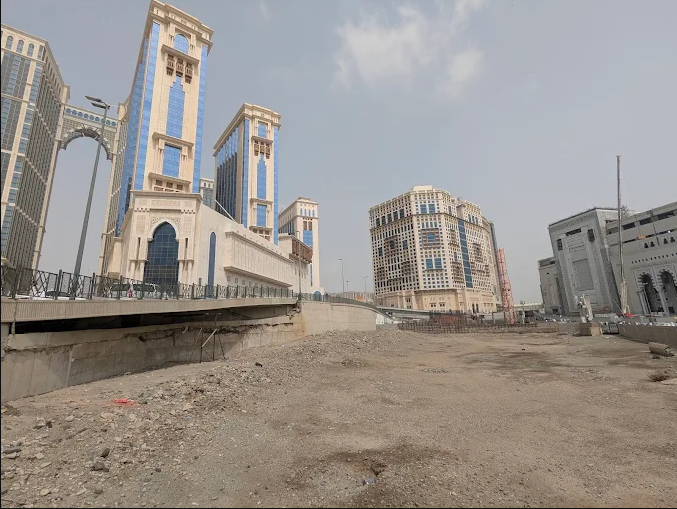
West of the Masjid al-Haram, perhaps seven hundred meters from the Kaaba as the crow flies, a walled rectangle of bare earth sits hemmed in by hotel towers, apartment blocks, and the vast construction perimeter of the Jabal Omar development. There are no domes here, no marble, no signage most pilgrims would recognize. If you did not know what you were looking at, you might walk past it entirely. This is Maqbarat al-Shabikah — the Al-Shabeka Cemetery — and it is, by most historical accounts, the second-oldest burial ground of Makkah al-Mukarramah, older in its origins than the city’s Islamic era and still, in a diminished and quiet way, part of the fabric of the Haram’s inner district today.
Every pilgrim who has performed Hajj or Umrah knows Jannat al-Mu’alla, the cemetery on the road toward Mina where Khadijah bint Khuwaylid, may Allah be pleased with her, is traditionally said to rest, and where a river of visitors flows daily to offer greetings to the dead. Far fewer have heard of al-Shabikah, though it lies on the opposite side of the sanctuary and, according to the classical historians of Makkah, may be just as old — arguably older in its use as a burial ground, since some accounts trace its origin to the pre-Islamic Quraysh themselves, generations before Jannat al-Mu’alla rose to prominence as the resting place of the Prophet’s ﷺ family. This article treats al-Shabikah on its own terms: what is actually known about its origin, its long relationship with the district that carries its name, its role today in the machinery that cares for Makkah’s dead — including the pilgrims who die during Hajj and Umrah — and what a visitor today can honestly expect to see. Where the sister article on Jannat al-Mu’alla covers the etiquette of grave visitation and the controversial 1925 demolitions in the depth they deserve, this article will not repeat that ground at length; it points there instead and concentrates on what is distinctive about al-Shabikah.
The honest starting point is that al-Shabikah is far less documented than its more famous counterpart. It has no verse of the Qur’an named for it, no consensus tradition of a Companion’s grave that scholars have debated for centuries, no surviving structure that archaeologists have excavated and published. What exists is a scatter of references in the classical topographical histories of Makkah — chiefly al-Fakihi’s ninth-century Akhbar Makkah and al-Fasi’s fifteenth-century Shifa’ al-Gharam, both preserved and summarized by later Makkan historians such as Ibn Zahira — combined with modern Saudi press reporting, a Wikipedia entry compiled from those older sources, and a handful of eyewitness travel accounts from recent years. This article draws on all of it, states plainly where sources agree and where they diverge, and does not manufacture certainty that the record does not support. An honest account of a lightly documented place is worth more than an inflated one.
Names and Their Layered History
The cemetery has carried more than one name across the centuries, and the names themselves are a kind of historical record. The most common labels found in Arabic sources are Maqbarat al-Shabikah (مقبرة الشبيكة), named for the district in which it sits, and Maqbarat al-Ahlaf (مقبرة الأحلاف), the “Cemetery of the Confederates,” a name tied to a pre-Islamic political alliance among certain clans of Quraysh. A third and more startling name appears in the older sources too: Maqbarat La’aqat al-Dam (مقبرة لعقة الدم), “the Cemetery of the Blood-Lickers,” a name that commemorates, rather bluntly, the blood oath by which that same alliance was sealed. A fourth label, Maqbarat Bani Abd al-Dar, ties the site to a specific clan of Quraysh, the descendants of Abd al-Dar ibn Qusayy. Finally, in the topographical shorthand of the classical historians, it is sometimes simply called al-Maqbara al-Sufla or Maqbarat Asfal Makkah — “the Lower Cemetery” or “the Cemetery of Lower Makkah” — set in deliberate contrast to Jannat al-Mu’alla, which lies toward the upper part of the city and was, in the same classical vocabulary, “the cemetery of Upper Makkah.” Geography, in other words, gave Makkah two poles for its dead, one at each end of the settled valley, centuries before either was given the name history remembers it by today.
The Arabic Wikipedia entry on Maqbarat al-Shabikah preserves a passage from Ibn Zahira’s al-Jami’ al-Latif, itself quoting al-Fasi, who in turn quotes the earlier historian al-Fakihi, on precisely this point: “the cemetery of al-Mutayyibin was anciently in upper Makkah, and the cemetery of al-Ahlaf in lower Makkah.” The chain of transmission across centuries is itself worth pausing on — al-Fakihi wrote in the ninth century CE, al-Fasi drew on him in the fifteenth, and Ibn Zahira preserved both in a compilation used by historians into the modern era. Between these layers, the passage draws the conclusion that has become the standard identification: “it appears that the cemetery of al-Ahlaf is this cemetery [al-Shabikah], because no other cemetery is known in lower Makkah.” That is the closest thing to a scholarly consensus this cemetery has: an inference, built across five centuries of citation, rather than a single settled attestation. It should be read with that qualification attached, not as an established fact beyond dispute.
Where the Cemetery Sits
Al-Shabikah cemetery lies within the district of the same name, one of the old western quarters of Makkah, which historically served as one of the city’s principal entrances — a gateway for caravans and pilgrim processions arriving from the direction of Jeddah and Madinah. According to reporting on Saudi state television’s al-Ikhbariyya channel, citing Dr. Fawzi al-Dahhas, director of the Center for Studies on the History of Makkah, the cemetery sits roughly seven hundred meters from the Kaaba, to the west of Masjid al-Haram — a detail corroborated by Emarat Alyoum’s coverage of that broadcast. That places it within easy walking distance of the sanctuary, closer in fact than Jannat al-Mu’alla is from the other side of the Haram, though far fewer pilgrims ever make the walk, since almost nothing in the modern pilgrim itinerary directs them there.
The district and the cemetery share the same story in a way that is unusual even by Makkah’s standards: you cannot really understand one without the other. Before there is a mosque to build a narrative around, before there is a single named grave to visit, there is a neighborhood — a working quarter of the old city, with its markets, its alleys, its gate in the city wall, and, at its edge, a plot of ground given over to burial since before Islam. The chapters that follow trace both threads together: the district’s long life as one of Makkah’s western gates, and the cemetery’s long, quiet service to the dead of that district and, in the modern era, to a wider circle of the dead that includes pilgrims who never intended to be buried in Makkah at all.
The Story Behind the Place: From a Pre-Islamic Blood Oath to a Modern Pilgrim’s Cemetery
To understand why a cemetery in Makkah carries the grim name “Blood-Lickers,” you have to go back before Islam, before the Prophet ﷺ was born, to a succession dispute inside the tribe of Quraysh that nearly tore the guardianship of the Kaaba apart.
Qusayy ibn Kilab and the Offices of the Kaaba
Qusayy ibn Kilab, an ancestor of the Prophet ﷺ five generations back, had unified control of Makkah and its sanctuary generations before Islam, consolidating in his own hands the principal ceremonial offices associated with the Kaaba: the Hijaba (custodianship of the Kaaba’s key), the Nadwa (headship of Makkah’s council house, where the city’s affairs were decided), the Liwa (the right to carry the war banner), the Siqaya (the provision of water to pilgrims), and the Rifada (the levy and distribution of food for pilgrims). This bundling of religious, political, and logistical authority in one family made the line of Qusayy the effective rulers of Makkah, and it made the question of who inherited these offices after him a matter of real consequence, not mere ceremony.
Before his death, Qusayy willed all of these offices to one son, Abd al-Dar, rather than dividing them among his children or passing them to the son many in the tribe considered more distinguished. The Wikipedia entry on Quraysh and the seerah literature agree on the shape of what followed: Qusayy’s other son, Abd Manaf, had already achieved such personal standing during his own lifetime — through wealth, generosity, and stature among the Arabs — that when he died, his sons and their allies felt the ceremonial authority Abd al-Dar’s line had inherited by simple testament sat awkwardly against what Abd Manaf’s branch had earned by merit. Among Abd Manaf’s descendants was Hashim ibn Abd Manaf, the Prophet’s ﷺ own great-grandfather, which places this dispute only a few generations from the family into which the final Messenger of Allah would be born.
Two Oaths, Two Names
The disagreement hardened into two rival confederations, each sealed by its own oath. The article on Hilf al-Ahlaf published by Wikishia and the parallel entry on the Mutayyabun describe the two pacts in vivid, almost ritual terms. On one side stood the Hilf al-Mutayyabun — “the Perfumed Ones” — an alliance of Banu Abd Manaf together with Banu Asad, Banu Zuhrah, Banu Taym, and Banu al-Harith ibn Fihr. Their ritual was one of fragrance and solemnity: tradition holds that the allied clans brought a bowl of perfume to the Kaaba, dipped their hands into it together, and then touched the sacred house itself as they swore their pact, sealing the alliance in scent that was said to have lingered on the stone. It is from this act that they took their name.
On the other side stood the Hilf al-Ahlaf — “the Confederates” — comprising Banu Abd al-Dar (Qusayy’s chosen heirs), Banu Makhzum, Banu Sahm, Banu Jumah, and Banu Adi ibn Ka’b. Their oath was sealed in a starker fashion. According to the accounts preserved in the seerah tradition and summarized in sources such as the seerah chapter on the ascendancy of Quraysh, the allied clans slaughtered a cow, filled a vessel with its blood, and dipped their hands into it as they swore their alliance — and, in the more dramatic retellings, some among them are said to have gone further still and licked the blood from their hands, a gesture of grim, binding solemnity meant to signal that the oath could not be broken without something like the violation of blood itself. It is this act, more than any other single detail in Makkah’s pre-Islamic history, that gave the alliance and later the cemetery associated with its clans the name La’aqat al-Dam, “the Blood-Lickers” — a name that would attach itself, centuries later, to a stretch of burial ground in lower Makkah with no obvious connection left to the oath that first earned it.
Two armed camps, drawn from the leading families of Quraysh, stood ready to fight over the guardianship of the Kaaba. That the dispute did not end in open warfare is itself part of Makkah’s pre-Islamic history worth noting: the two sides reached a negotiated settlement rather than a battle. The Mutayyabun retained the Siqaya and the Rifada — the right to provide water and food to pilgrims, offices of hospitality and provision. The Ahlaf, through Abd al-Dar’s line, kept the Hijaba, the Nadwa, and the Liwa — the key of the Kaaba, the council house, and the war banner, offices of custodianship and authority. This division held, by and large, until the coming of Islam over a century later, when the Prophet ﷺ himself, at the conquest of Makkah, would return the key of the Kaaba to the family of Uthman ibn Talha, a descendant of Abd al-Dar’s line, honoring the old arrangement even as Islam swept away the tribal order that had produced it.
From Alliance to Cemetery
How a political and military alliance gave its name to a burial ground is a matter of straightforward historical logic rather than any recorded ceremony: the clans of the Ahlaf confederation — Banu Abd al-Dar, Banu Makhzum, Banu Sahm, Banu Jumah, and Banu Adi ibn Ka’b — buried their dead, as clans across Arabia did, on land associated with their own quarter of the city, in lower Makkah, and that plot of ground came in time to be called after them: Maqbarat al-Ahlaf, later absorbed into the same identification as Maqbarat La’aqat al-Dam, and eventually, as the district itself took the name al-Shabikah, into Maqbarat al-Shabikah. The Emarat Alyoum report citing Dr. al-Dahhas makes this connection explicit, tracing the cemetery’s naming directly back to the succession dispute after Qusayy’s death and the two confederations it produced — a rare case of a modern Saudi media outlet drawing a direct line from a specific pre-Islamic political event to a specific plot of ground still standing today, rather than the vaguer attributions that surround so much of pre-Islamic Makkah’s geography.
It bears repeating, in the spirit of candor this subject demands, that this account rests on the classical Arabic historical tradition — al-Fakihi, al-Fasi, and their later compilers — rather than on any archaeological confirmation or an unbroken chain of legal transmission of the kind used to grade hadith. It is history in the register of tribal genealogy and topography, the same register in which most of pre-Islamic Makkah’s geography survives, and it should be trusted at that level: plausible, consistent across independent later citations, but not provable in the way a verified hadith or a Qur’anic revelation is provable. Readers who want the fuller texture of how such pre-Islamic material is weighed against firmer categories of evidence will find that distinction addressed again in this article’s closing note on method.
A Second Layer: The Companion Who Died Reaching for Madinah
One more strand of the cemetery’s story belongs to the earliest years of Islam rather than to the pre-Islamic period, and it concerns a Muslim of Makkah too old and too sick to make the Hijrah on his own strength, who insisted on being carried toward Madinah anyway. The most detailed statement of this connection comes from the Saudi government’s own reference work, the Encyclopedia of the Kingdom of Saudi Arabia (Mawsu’at al-Mamlaka al-Arabiyya al-Sa’udiyya), published online by the King Abdulaziz Public Library and cited here as the Saudiency encyclopedia entry on al-Shabikah. It states that a companion identified there as Jundu’ ibn Abi Hamza ibn Abi al-‘As fell seriously ill while still in Makkah, after the command to emigrate to Madinah had been given, and that “death overtook him in this place, so he was buried here” — and that it was concerning him that Allah revealed the verse of Surah al-Nisa on the reward of the one who dies while emigrating in His cause.
This companion appears in the wider tafsir literature under a confusing scatter of names — variously given as Jundab ibn Damrah al-Laythi, Damrah ibn al-Ays, Aktham ibn Sayfi, and several others — a genuine and long-standing point of uncertainty among the exegetes rather than a simple error to be corrected. Most versions of the story, moreover, place his death at al-Tan’im, on the road out of Makkah toward Madinah, rather than explicitly inside the boundary of what is today called al-Shabikah. The Saudiency encyclopedia’s specific claim that he was buried in this cemetery is, therefore, a real assertion from a serious source, but one that stands somewhat apart from the more common tafsir accounts of where he died — a discrepancy this article will return to, and weigh carefully, in the section on the Qur’anic connections below. It is exactly the kind of detail where honesty requires presenting the claim, naming its source, and noting plainly where the wider literature diverges from it, rather than either suppressing it or asserting it as settled.
The Prophet ﷺ and This Place
Here candor is essential, and the style this article follows requires stating it plainly rather than stretching thin material to fill a heading: there is no authentic hadith recording a visit by the Prophet ﷺ to the specific plot of ground known today as al-Shabikah cemetery, no narration of him praying there, and no established tradition of an event in his life tied to this exact site by name. This is a real difference from Jannat al-Mu’alla, where multiple sound and weaker narrations together preserve a memory of the Prophet’s ﷺ visits and of his grief at the graves of his family. Al-Shabikah’s connection to the Prophet’s ﷺ life is more indirect, and it runs through two channels: the district itself, which he passed through on the day Makkah was conquered, and the broader pattern of his ﷺ teaching on visiting graves and praying for the dead, a teaching that applies to every graveyard in the Muslim world and which later generations of Makkans applied, as a matter of course, to the cemetery in their own western quarter.
The Conquest of Makkah and the District of al-Shabikah
On the day of the conquest of Makkah, in Ramadan of the eighth year after the Hijrah, the Prophet ﷺ divided his forces to enter the city from several directions at once, a plan intended to overawe any remaining resistance without provoking a general battle. Khalid ibn al-Walid, newly reconciled to Islam and already proving himself one of its most capable commanders, led one column in from the lower part of the city — through the district that would come to be called al-Shabikah and, within it, the quarter later known as Harat al-Bab. The Prophet’s ﷺ instruction to him, as preserved in the sira literature, was to advance and to plant his standard “at the end of the houses, the nearest of them” — a marker of where the column’s advance was to halt rather than a call for a general assault, since the Prophet ﷺ had commanded that bloodshed be avoided wherever possible on that day. A mosque was later built on the spot associated with this halt, known today as Masjid Khalid ibn al-Walid, standing in Harat al-Bab within the wider al-Shabikah district — renovated in 1280 AH and rebuilt again in the Saudi era in 1377 AH, and still standing as a modest, functioning neighborhood mosque rather than a major pilgrimage site.
This is a real thread connecting the Prophet’s ﷺ life to the district, but it should be described accurately: it ties him to the neighborhood of al-Shabikah as a whole, on one specific day of enormous significance in Islamic history, not to the cemetery itself. No source consulted for this article places the Prophet ﷺ at the burial ground specifically, whether on the day of the conquest or at any other point in his life. Readers should not come away thinking otherwise; the honest statement is that the district hosted a pivotal moment of his ﷺ career, and the cemetery sits within that district, sharing its name and its historical neighborhood, without itself being the site of a recorded prophetic visit.
The General Teaching That Applies Here
What does apply directly, and with full authority, is the Prophet’s ﷺ general teaching on visiting graves and praying for the deceased — teaching that governs every Muslim cemetery, al-Shabikah included, and that later generations of Makkans would have followed when they buried their own dead in this ground and came to visit them. Early in his mission, the Prophet ﷺ forbade visiting graves altogether, out of concern that a community only recently emerged from pre-Islamic practices around the dead might fall into extravagant or idolatrous behavior at gravesides. He later reversed this prohibition explicitly. Sahih Muslim preserves the core of the reversal in the form “I forbade you to visit graves, but you may now visit them,” recorded as Sahih Muslim 977 and graded Authentic (sahih); a related narration collected in Jami at-Tirmidhi 1054, also graded Authentic (sahih), adds the specific reasoning pilgrims most often quote: “I had prohibited you from visiting the graves… so visit them, for they will remind you of the Hereafter.” Together these two reports are among the foundational texts for the entire practice of ziyarah to graves across the Muslim world, this cemetery included. The permission, and indeed the encouragement, to visit graves rests on this hadith and its parallels; the practice is not an innovation layered onto Islam but a restoration of something the Prophet ﷸ himself first restricted and then deliberately reopened once the risk he had originally guarded against had passed.
The full etiquette of grave visitation — the specific du’a for entering a graveyard, the scholarly discussion of women visiting graves, and the difference between legitimate ziyarah and later accretions around it — is treated at length in the companion article on Jannat al-Mu’alla, and this article does not repeat that full treatment here. It is summarized again, briefly and with its own verified references, in the Practical Visitor Guide below, because a pilgrim standing at the gate of al-Shabikah needs the same information a pilgrim standing at the gate of al-Mu’alla needs. But the deeper etiquette discussion — differences of opinion among the schools, the status of specific weaker narrations sometimes cited in popular literature, and the history of restrictions on grave visitation in the Hijaz — belongs to that companion piece, and readers seeking it in full should turn there.
Qur’anic Connections
Al-Shabikah cemetery has no verse of the Qur’an revealed about it by name, and no verse whose asbab al-nuzul (occasion of revelation) is unambiguously and universally tied to this specific plot of ground. What exists is a single claimed connection, advanced by one serious modern source, that deserves to be presented carefully — with its evidence, its uncertainty, and the wider Qur’anic theme it touches, rather than either promoted as settled fact or dismissed outright.
Surah al-Nisa 4:100 and the Companion Who Died Reaching for the Hijrah
﴿وَمَن يُهَاجِرْ فِي سَبِيلِ اللَّهِ يَجِدْ فِي الْأَرْضِ مُرَاغَمًا كَثِيرًا وَسَعَةً ۚ وَمَن يَخْرُجْ مِن بَيْتِهِ مُهَاجِرًا إِلَى اللَّهِ وَرَسُولِهِ ثُمَّ يُدْرِكْهُ الْمَوْتُ فَقَدْ وَقَعَ أَجْرُهُ عَلَى اللَّهِ ۗ وَكَانَ اللَّهُ غَفُورًا رَّحِيمًا﴾
“Whoever emigrates for the cause of Allah will find on the earth many locations and abundance. And whoever leaves his home as an emigrant to Allah and His Messenger and then death overtakes him — his reward has already become incumbent upon Allah. And Allah is ever Forgiving and Merciful.” This is Surah al-Nisa, 4:100, one of the Qur’an’s clearest statements that the reward for hijrah is secured by sincere intention and effort, not contingent on physically completing the journey.
The classical tafsir tradition records that this verse, or at least its closing portion concerning the one whom death overtakes while emigrating, was revealed regarding a specific individual — a Muslim of Makkah, elderly and gravely ill, who could easily have claimed exemption from the obligation to emigrate once the command was given, yet who insisted on being carried out toward Madinah rather than remain behind. He died on the road before completing the journey. The tafsir sources differ, as noted above, on his exact name — variants include Jundab ibn Damrah al-Laythi, Damrah ibn al-Ays al-Ghifari, and Aktham ibn Sayfi among others — reflecting genuine uncertainty in the historical record about precisely who this was, a point the exegetes themselves acknowledge rather than paper over. Most versions place his death at al-Tan’im, a location on the Makkah–Madinah road still known today as a miqat point for Umrah pilgrims from within Makkah.
The Saudiency encyclopedia’s entry on al-Shabikah, cited above, makes a more specific claim: that this companion — named there as Jundu’ ibn Abi Hamza ibn Abi al-‘As — fell ill “while in Makkah,” that “death overtook him in this place,” and that he “was buried here,” with the verse then revealed concerning him. If accurate, this would tie Surah al-Nisa 4:100 directly to al-Shabikah cemetery. But this claim sits in some tension with the more widespread tafsir accounts that place his death at al-Tan’im, some distance outside the city, rather than within the bounds of what became al-Shabikah. Both strands come from serious sources — the Saudiency encyclopedia is an official Saudi government reference work, while the al-Tan’im location is the more commonly repeated detail in classical and modern tafsir literature — and this article is not in a position to adjudicate between them with confidence. The honest position is to present the Saudiency claim as a real, sourced assertion, note that it is not the majority account found elsewhere, and let the reader hold both possibilities rather than manufacture a false certainty in either direction.
A note on authenticity: the identification of exactly which companion this verse concerns, and precisely where he died and was buried, are not settled by hadith with a graded chain in the way a legal ruling would be; they belong to the tafsir and sira literature, which preserves multiple named candidates and, in this case, at least two different claimed locations of death. The verse itself is, of course, definitively part of the Qur’an; what is uncertain is only the specific identification of the individual and place tied to its revelation.
The Broader Theme: Death Overtaking the Traveler for Allah’s Sake
Whatever the truth of the specific identification, the verse’s theme resonates with al-Shabikah cemetery in a way that goes beyond any single claimed burial. This is, after all, a cemetery whose Saudi-era function has increasingly included pilgrims who traveled to Makkah for Hajj or Umrah and did not live to return home — people who, in the words of the verse, “left their homes as emigrants” toward the sacred house, in a spiritual if not technical sense of hijrah, and whom death overtook along the way. The Qur’an’s promise in this verse — that such a person’s reward has already become incumbent upon Allah, regardless of whether the journey was completed — is one that resonates whenever a Hajj-related death is discussed, and it will surface again in this article’s treatment of what actually happens when a pilgrim dies in Makkah today.
Surah al-Nahl and the Condemnation of Pre-Islamic Female Infanticide: A Claim to Handle with Care
A second Qur’anic connection circulates in popular pilgrim literature and travel content about al-Shabikah, and it needs to be addressed directly because it is repeated often enough to seem authoritative: the claim that this cemetery, or the ground beneath it, was where pre-Islamic Arabs of Makkah buried infant daughters alive, the practice known as wa’d al-banat, which the Qur’an condemns in unambiguous terms.
﴿وَإِذَا الْمَوْءُودَةُ سُئِلَتْ بِأَيِّ ذَنبٍ قُتِلَتْ﴾
“And when the girl [who was] buried alive is asked, for what sin she was killed” — Surah al-Takwir, 81:8–9, part of a passage describing the terrors of the Day of Judgment, in which this question is posed as one among several signs of the reckoning to come. A related condemnation appears in Surah al-Nahl, 16:58–59, describing the shame and anguish of a pre-Islamic father on learning his newborn was a girl, and the darker impulse this could lead to.
These verses are unquestionably part of the Qur’an, and the practice they condemn is well documented as a real feature of at least some pre-Islamic Arabian society, though modern scholarship — including an academic analysis hosted by the University of Helsinki’s research repository — notes that the extent and universality of the practice across pre-Islamic Arabia is itself debated among scholars, some of whom read the verses as condemning a real but perhaps localized or intermittent custom rather than a near-universal one. What is not supported by the classical Makkah-history sources consulted for this article — al-Fakihi, al-Fasi, and the later compilers who preserve their work — is any specific claim that al-Shabikah, by name or by location, was the particular site where this practice was carried out. That identification appears to be a modern addition, circulating chiefly through tourism and ziyarah websites and short-form video content rather than through the classical topographical historians of Makkah, who had every reason to record such a striking detail about a named cemetery if it had been part of the established local memory. This article therefore reports the claim, because it is genuinely in circulation and readers will encounter it, but it does not endorse it as established history, and it urges the same caution here that the style of honest historical writing demands throughout: a striking claim repeated on travel websites is not the same thing as a claim preserved in the classical sources.
Hadith References: Visiting Graves, the Funeral Prayer, and Its Reward
Although no hadith names al-Shabikah cemetery specifically, a substantial body of authentic hadith governs two practices that are directly and constantly relevant to it: the general sunnah of visiting graves, which applies here as it does at every Muslim burial ground, and the funeral prayer offered at Masjid al-Haram, which — as later sections of this article explain in detail — is where the janazah for anyone who dies in Makkah, including pilgrims later buried in cemeteries such as this one, is typically performed. This section consolidates the verified hadith on both subjects, each checked against Sunnah.com and graded according to the standard classifications.
On Visiting Graves
The foundational hadith on the permissibility of visiting graves is recorded in Sahih Muslim 977: the Prophet ﷺ said, “I forbade you to visit graves, but you may now visit them.” This report is graded Authentic (sahih), appearing in one of the two most rigorously authenticated hadith collections in Islam. The specific reasoning most often quoted alongside it — that visiting graves serves as a reminder of the Hereafter — comes from a related narration recorded in Jami at-Tirmidhi 1054, likewise graded Authentic (sahih): “I had prohibited you from visiting the graves… so visit them, for they will remind you of the Hereafter.” Together, these are the single most important texts establishing that grave visitation is not merely tolerated in Islam but actively encouraged as a reminder of mortality and the life to come.
A closely related report appears in Sunan Ibn Majah 1571, which some scholars have graded Weak (da’if) in certain chains, while a parallel narration preserved as Sunan Ibn Majah 1572 is considered stronger by other muhaddithin; both concern the Prophet’s ﷺ instruction on visiting graves and, in some versions, the words to be said upon entering a graveyard. Scholars of hadith have differed on the precise grading of individual chains in this cluster of narrations, which is itself an example of the principle this article follows throughout: where authentication is disputed, the dispute is reported rather than resolved by fiat.
The specific supplication for entering a graveyard is preserved in Sahih Muslim 974, narrated by Aisha, may Allah be pleased with her, who reported that the Prophet ﷺ used to say upon visiting the graves: “Peace be upon you, abode of a people who are believers. What you were promised would come to you tomorrow, you receiving it after some delay; and God willing we shall join you. O Allah, grant forgiveness to the inhabitants of Baqi al-Gharqad.” A closely related version, preserved in Sahih Muslim 975 on the authority of Buraidah from his father, gives the wording: “Peace be upon you, the inhabitants of the abode, among the believers and Muslims, and we, if Allah wills, are about to join you. I ask Allah for well-being for us and for you.” Both reports are graded Authentic (sahih), and together they remain the standard, textually secure du’as recommended for any Muslim entering any graveyard — al-Shabikah included, and there is no reason at all why a pilgrim standing at its gate should not say words drawn from either of these authentic reports, exactly as they would at Jannat al-Mu’alla or any cemetery anywhere in the world.
On the Funeral Prayer and Its Reward
The central hadith establishing the extraordinary reward for accompanying and praying over a funeral is recorded in Sahih al-Bukhari 47, narrated by Abu Hurairah: the Prophet ﷺ said, “Whoever attends the funeral procession of a Muslim out of sincere faith and hoping for reward from Allah, and remains with it until the funeral prayer is offered and the burial is completed, will return with a reward of two qirats, each qirat being like Mount Uhud. And whoever offers the funeral prayer and returns before the burial will return with the reward of one qirat.” This report is graded Authentic (sahih), and a close parallel is preserved as Sahih al-Bukhari 1325, also graded Authentic (sahih), reinforcing the same measure of reward with a comparably strong chain.
This is precisely the hadith that gives weight and meaning to a practice that almost every pilgrim to Masjid al-Haram has taken part in, often without fully realizing what they were doing: the funeral announcement and prayer that follows nearly every obligatory prayer at the Haram, for someone — very often a pilgrim who has died that day in Makkah — whose body has been brought to the mosque. A worshipper who was already present for the fard prayer, and who then remains and joins the funeral prayer that follows it, earns the reward of one qirat described in this hadith: a reward the Prophet ﷺ likened, in scale, to Mount Uhud itself. This practice, its exact mechanics inside Masjid al-Haram, and what a pilgrim should know about joining it, are explained in full in the practical section of this article below, because it is one of the pieces of information visitors most need and least often receive in any organized form.
Taken together, this cluster of hadith establishes two things directly relevant to al-Shabikah and to every cemetery like it: first, that visiting the graves of the dead — even graves of people entirely unknown to the visitor, without a name to attach to any single one, which is exactly the situation a visitor to al-Shabikah faces — is a sunnah act carrying its own reward and its own reminder of mortality; and second, that the funeral prayer offered for the Muslim dead, whether at the graveside or, as is now standard practice in Makkah, at Masjid al-Haram itself before burial, carries a reward the Prophet ﷺ described in the most vivid terms available to him, comparing it to the mass of the mountain that stood over the site of one of early Islam’s fiercest battles.
Historical Development: From Pre-Islamic Ground to the Modern Saudi Era
Unlike Makkah’s major mosques and monuments, al-Shabikah cemetery has left almost no trace in the record of the Rashidun, Umayyad, or Abbasid caliphates beyond its presumed continuous use as a burial ground for the western quarter of the city — a use so ordinary, in the terms of its own time, that it generated no chronicle entries the way a battle, a building project, or a caliphal visit would have. The one notable exception, discussed below, belongs to the Abbasid period and concerns a violent episode rather than the cemetery’s ordinary function. The clearer record begins only in the later medieval period, with the Ayyubid-era fortification of the district, and becomes genuinely detailed only in the nineteenth and twentieth centuries, under late Ottoman and then Saudi administration.
The Rashidun and Umayyad Periods (11–132 AH / 632–750 CE)
No specific event tied to the cemetery by name is recorded for these two periods in the sources available for this article. This should be read as an honest gap rather than evidence that nothing happened here — the district continued to function as a residential and commercial quarter of Makkah, and its cemetery presumably continued to receive the dead of the surrounding clans, as it had before Islam, but the classical historians who preserve so much detail about Makkah’s mosques and wells in these centuries simply did not record comparable detail about this particular burial ground.
The Abbasid Period and the Battle of Fakhkh (169 AH / 785 CE)
The Saudiency encyclopedia’s entry on al-Shabikah states that a group of Alids — descendants of Ali ibn Abi Talib — killed in a battle against the forces of the Abbasid Caliph Musa al-Hadi were buried in this cemetery. This almost certainly refers to the Battle of Fakhkh, fought in 169 AH (785 CE) near Makkah, in which a rebellion led by al-Husayn ibn Ali ibn al-Hasan, a great-great-grandson of Ali and Fatimah, rose against Abbasid rule and was crushed by forces sent by al-Hadi, with heavy loss of life among the Alid rebels and their supporters. The battle is a documented episode of Abbasid-era history, recorded in the broader Islamic historical tradition as one of the bloodiest suppressions of an Alid uprising in the early Abbasid period, and its site, Fakhkh, lay in the vicinity of Makkah. If the Saudiency encyclopedia’s identification is correct, it would mean al-Shabikah received the bodies of Alid dead from this battle, making the cemetery, briefly, a site connected to one of the more dramatic and tragic episodes of early Abbasid political history — a period when the descendants of the Prophet’s ﷺ family through Ali and Fatimah suffered repeated persecution under Abbasid rule despite the Abbasids’ own claim to legitimacy through kinship with the Prophet’s ﷺ house.
This claim, like the Jundu’ ibn Abi Hamza identification discussed above, comes from a single source rather than multiple independent confirmations, and this article presents it with that qualification attached. It is a plausible and historically consistent claim — the battle did occur near Makkah in this period, and burial of the dead in the nearest available cemetery would be the ordinary practice — but it has not been independently verified against the primary chronicles of the battle itself for the purposes of this article, and readers should treat it as a serious but singly sourced claim rather than an established fact repeated across the historical literature.
The Mamluk and Early Ottoman Periods
The most concrete pre-modern development affecting the district comes from the Ayyubid and early Mamluk period, and concerns the gate and fortification of al-Shabikah rather than the cemetery directly, though the two shared the same ground and the same name. According to the Makkah-history site maintained by the historian Husam Makkawi, drawing on classical sources including al-Fakihi and al-Fasi, the ruler known as al-Malik al-Muzaffar — a ruler associated with Irbil who funded charitable and infrastructural works in the Hijaz — financed the improvement of the pass at al-Shabikah in 607 AH (1210–1211 CE), having the ground leveled and a wall with a gate constructed there, carried out under the supervision of Sharif Qatadah ibn Idris al-Hasani, the ruling Sharif of Makkah at the time. The gate had two arched openings wide enough for laden camel caravans to pass through, reflecting the district’s continuing role as one of the principal entrances to the city.
This gate did not survive undisturbed. It was burned down in 689 AH (1290 CE) by the commander of that year’s Syrian Hajj caravan, in circumstances the sources describe only briefly, and it was rebuilt more than once thereafter, with the most durable reconstruction most likely dating to 908 AH (1502–1503 CE) under Sharif Barakat. An episode of local political violence is also attached to the gate: in 816 AH (1413–1414 CE), a man named Muhammad al-Harashi was hanged at the gate for defying Sharif Hasan ibn Ajlan and allying instead with a rival claimant, Sharif Rumaythah — a reminder that this western entrance to Makkah was, across the medieval period, not only a point of commerce and pilgrimage traffic but also a site of real political contestation over control of the city.
The Later Ottoman Period (Tenth–Thirteenth Centuries AH / Sixteenth–Nineteenth Centuries CE)
As Ottoman rule brought a longer period of comparative regional stability to the Hijaz from the tenth century AH onward, the gate at al-Shabikah gradually lost its earlier defensive importance and was eventually demolished, though the historian al-Nahrawali, writing in the tenth century AH (he died in 985 AH), reported that he could still see remnants of the old wall in his own time. Around the site of the vanished gate, a neighborhood grew up that took the name Harat al-Bab — “the Quarter of the Gate” — a name that survives to this day as a locally recognized sub-district within the wider al-Shabikah area, complete with its own local headman (umda) distinct from that of al-Shabikah proper, even though the two districts have since merged into a single continuous urban fabric.
It was in this later Ottoman period that the cemetery received the clearest architectural attention recorded in any source consulted for this article: in 1274 AH (1857–1858 CE), a local religious figure named Sheikh Ali al-Shahumi al-Maghribi — described in some sources as al-Jaddawi — had a wall built around the cemetery, along with a mughassal, a dedicated building for the ritual washing of the dead, and a ribat, a hostel providing shelter for poor and widowed women of Makkah, situated in front of the cemetery. This is the single most concrete instance of purposeful construction connected to the cemetery found anywhere in the sources for this article, and it marks the point at which al-Shabikah moves from an informally used burial ground into something more like a managed, walled cemetery with its own supporting infrastructure — a mughassal for preparing bodies, a wall to define and protect its boundary, and a charitable institution attached to its precinct.
Late Ottoman and Early Saudi Continuity, and the Question of When Burial Stopped
Sources diverge on exactly when general burial at al-Shabikah ceased, and this article reports that divergence honestly rather than resolving it artificially. The Emarat Alyoum report, citing Dr. al-Dahhas, states that burial there stopped roughly a century and a half before the 2022 broadcast — that is, around 1310 AH (1892–1893 CE) — attributing the change to an epidemic that struck Makkah in the thirteenth century AH, which overcrowded the cemetery’s capacity and caused an odor that reportedly disturbed pilgrims at the nearby Haram, leading authorities of the time to prohibit further general burial there, though the report notes that certain families continued limited use of the site afterward rather than the general public. Against this, the Makkah-history material drawing on Sheikh Ibrahim al-Ghazzawi’s Shadharat suggests burial continued into what is described as “the fourth decade of the past Hijri century” — that is, roughly the 1330s to 1340s AH, corresponding to the 1910s and 1920s CE — a substantially later date than the Emarat Alyoum account implies.
These two claims cannot both be precisely correct as stated, and no source consulted for this article resolves the contradiction. It may be that both are partly true in different senses — general public burial curtailed around the 1310s AH following the epidemic, with limited or exceptional burials, perhaps of notable families or religious scholars, continuing for a further two or three decades afterward — but this is a reconciliation offered here only as a plausible reading, not as a documented fact. The honest position, consistent with the standard this article holds itself to, is to report both claims, name their sources, and let the discrepancy stand rather than force a false precision onto a question the record does not settle cleanly.
In the Saudi era, the cemetery’s boundary wall — by then in poor repair — was rebuilt in 1374 AH (1954–1955 CE) after the older Ottoman-era wall had collapsed, according to the Arabic Wikipedia entry on the cemetery. Since then, the site has been maintained as a closed, non-active cemetery: walled, generally inaccessible for new burial, and increasingly surrounded on every side by the modern high-rise development that has transformed the whole of the al-Shabikah district since the early 2000s, discussed further in the Architecture and Practical Visitor Guide sections below.
Architecture
Al-Shabikah cemetery has never possessed, in any period documented by the sources, the kind of monumental architecture associated with major shrines or mosque complexes, and this absence is itself part of an honest architectural description rather than an oversight to be corrected. What the historical record actually describes is modest and functional: a boundary wall, first built in the Ottoman period and rebuilt in the Saudi era; a mughassal, or ritual washing facility, associated with the nineteenth-century development under Sheikh Ali al-Shahumi al-Maghribi; and, within the walls, what every source — classical and modern alike — describes as an open field of graves, largely unmarked or marked only with simple, low stones bearing no elaborate inscription, in keeping with the broader Hanbali-influenced Saudi practice of discouraging elaborate grave markers, tombs, or structures that could invite practices resembling shrine veneration.
This plainness is not an accident of neglect but reflects a considered position within Islamic jurisprudence, shared across the Hanafi, Maliki, Shafi’i, and Hanbali schools in their core principle even where they differ on specific details: that graves should not be built up, plastered, inscribed with elaborate epitaphs, or converted into structures that could draw people toward venerating the dead rather than simply remembering and praying for them. Saudi Arabia’s contemporary cemetery administration, guided by this principle as understood within the kingdom’s predominant Hanbali-influenced tradition, maintains this plainness deliberately across its cemeteries, and al-Shabikah, in its current closed and preserved state, is a clear example of it: a walled enclosure of bare, level ground, without domes, without individual headstones bearing names in the manner familiar from Western cemeteries, and without any built structure inside the wall beyond, historically, the mughassal that once stood at its edge.
The wall itself has been rebuilt at least twice according to the sources — once under Sheikh al-Shahumi in 1274 AH and again in the Saudi era in 1374 AH — and some sources suggest fragments of the older Ottoman-era wall may survive within or alongside the current perimeter, though this article has not located a source with the archaeological precision to confirm which, if any, specific stretch of wall predates the twentieth century. What can be said with confidence, based on recent traveler accounts discussed in the Practical Visitor Guide section, is that the cemetery today presents as a fenced, gated plot, its low wall visible from the surrounding streets, its interior a field of undifferentiated graves, entirely without the elaborate gateways, calligraphed inscriptions, or landscaping that mark some other historic Islamic cemeteries elsewhere in the Muslim world.
The Mughassal: An Overlooked Piece of Islamic Funerary Infrastructure
The mughassal that Sheikh Ali al-Shahumi al-Maghribi built alongside al-Shabikah’s wall in 1274 AH deserves a moment of attention in its own right, because the institution it represents is easy to overlook in general accounts of Islamic funerary practice, yet it sits at the very center of what Islamic law requires before any burial can take place. Ghusl al-mayyit, the ritual washing of the deceased, is a communal religious obligation (fard kifayah) in Islamic law — meaning that if some members of the community perform it properly for a deceased Muslim, the obligation is lifted from the community as a whole, but if no one performs it, the whole community shares in the shortfall. A dedicated mughassal building, staffed by those trained and willing to perform this washing according to the Sunnah, is therefore not a peripheral convenience but part of the basic religious infrastructure a Muslim community owes its dead, comparable in its own quiet way to a mosque or a school as a marker of a settled, organized religious community rather than an ad hoc one.
That Sheikh al-Shahumi chose to build this facility specifically at the edge of al-Shabikah cemetery in 1274 AH tells us something about the cemetery’s continued, if by then perhaps diminishing, importance to the surrounding district in the mid-nineteenth century: it was still enough of a functioning burial ground, still receiving enough of the district’s dead, to justify a dedicated washing facility built beside it rather than relying on washing performed in private homes, which was and remains the more common practice in many parts of the Muslim world lacking a dedicated communal facility. The pairing of the mughassal with the ribat for widowed and poor women in the same charitable project is itself worth noting: it reflects a single benefactor’s attempt to address, in one location and in one act of waqf, two of the most pressing needs of a nineteenth-century Makkan community — the dignified care of the dead, and the material support of women left without a provider — needs that a wealthy individual’s charitable endowment, rather than any centralized state welfare system, was expected to meet in this period.
Comparing Al-Shabikah’s Documentation to Other Historic Makkan Sites
It is worth placing al-Shabikah’s documentary thinness in a wider comparative context, because it helps explain why this article has had to lean so heavily on caveats and honest uncertainty rather than the richer narrative texture available for sites like the Kaaba, Masjid al-Haram itself, or even smaller but better-attested sites such as Ghar Hira on Jabal al-Nur. Sites directly connected to a specific, well-attested event in the Prophet’s ﷺ own biography — a revelation received, a prayer performed, a battle fought — tend to accumulate detailed hadith and sira coverage precisely because the earliest generations of Muslims had strong religious motivation to preserve exactly what happened there, in as much detail as possible, for the instruction and inspiration of later generations. Al-Shabikah, lacking any such single event tied directly to the Prophet’s ﷺ own recorded life, never generated that same intensity of early textual attention. Its history survives instead through the more diffuse, cumulative record-keeping of local topographical historians interested in Makkah’s geography and social history for its own sake — a genuinely valuable but structurally different kind of source base, generating breadth of scattered detail rather than the depth of a single, well-attested narrative thread.
This difference in documentation type, rather than any difference in the site’s inherent historical interest, is the real reason this article reads differently from an article about, say, Masjid al-Khayf or Jabal al-Nur. It is not that al-Shabikah matters less; it is that the kind of record capable of establishing certainty about it was never generated in the same way, for reasons rooted in what early Muslim communities had the strongest motivation to remember precisely. This is a pattern worth understanding for any pilgrim interested in Makkah’s history broadly: the survival of detailed historical memory is not a reliable guide to a place’s actual historical or spiritual importance, and the comparative silence surrounding a site like al-Shabikah should be read as an accident of documentation, not a verdict on its significance.
Archaeological Findings
No published archaeological excavation of al-Shabikah cemetery has been located for this article, and none appears to exist in the accessible academic or governmental literature. This is worth stating plainly rather than glossing over: Makkah’s sacred and historic sites have, on the whole, received far less systematic archaeological investigation than comparable sites in Madinah or in the wider Islamic world, partly due to the religious sensitivities around excavation in the immediate vicinity of the Haram and partly due to the sheer pace of modern redevelopment, which has in some documented cases proceeded without preceding archaeological survey. Concerns of exactly this kind were raised publicly by Sami Angawi, founder of the Hajj Research Centre, in a 2005 Gulf News report titled “Building over Makkah’s history”, which discussed the loss of historic fabric in Makkah amid large-scale redevelopment projects — a concern relevant to the wider district in which al-Shabikah sits, immediately adjacent to the enormous Jabal Omar development, even though that report does not mention the cemetery by name.
In the absence of any excavation report, this section cannot responsibly describe artifacts, stratigraphy, or dated material culture recovered from the site, and it will not invent any. What can be said is limited to surface observation reported by recent visitors — a low perimeter wall, a gated entrance, and an interior of bare ground with graves that are largely unmarked or marked only with small, plain stones — which is a matter of visible description rather than archaeological finding, and which is treated in full in the Practical Visitor Guide section below. Should any future excavation or academic survey of the site be published, it would be the first of its kind for this location, and it would meaningfully expand what can be said here beyond the topographical and documentary history this article otherwise relies on.
Makkah’s Two Cemeteries: A Comparison Worth Making Plainly
It helps, in trying to understand al-Shabikah’s place in Makkah’s history, to set it directly beside Jannat al-Mu’alla and see exactly where the two cemeteries converge and where they diverge, rather than treating the comparison as implicit. Both are old. Both predate, or at least coincide with, the earliest years of Islam in the city. Both took their classical names from the geography of “upper” and “lower” Makkah relative to the Haram — al-Mu’alla to the northeast, on the higher ground toward Mina, and al-Shabikah to the southwest, on the lower ground toward Jeddah and the coast. Both, in the classical vocabulary preserved by al-Fakihi and al-Fasi, served specific clusters of Quraysh clans in the pre-Islamic period, before Islam dissolved the tribal basis of Makkah’s social order and made every Muslim, in principle, equally entitled to burial in either ground.
Where they diverge is in what each has come to mean since. Jannat al-Mu’alla accumulated, across fourteen centuries, an association with the Prophet’s ﷺ own family — most significantly the tradition, discussed in full in the companion article on that cemetery, connecting it to the resting place of Khadijah bint Khuwaylid, may Allah be pleased with her, the Prophet’s ﷺ first wife. That single association, whatever its precise historical certainty, was enough to make al-Mu’alla a site of continuous, organized pilgrim visitation across the centuries, and it remains so today, with a managed flow of visitors and a a place in nearly every Umrah and Hajj itinerary produced by travel operators and religious authorities alike.
Al-Shabikah accumulated no comparable single association strong enough to survive into the modern tourist and pilgrim infrastructure. Its ties to named individuals — the companion linked to Surah al-Nisa 4:100, the Alid dead of the Battle of Fakhkh, the scattered ulama named in the Makkawi material — are each real in their own right but none of them achieved the kind of singular, centuries-long popular attachment that turned al-Mu’alla into a fixed stop on the pilgrim route. The result is two cemeteries with genuinely comparable historical depth, standing on opposite sides of the same sanctuary, one of which nearly every pilgrim visits and the other of which almost none do. This asymmetry is not a judgment on which cemetery is more historically significant — the evidence, weighed honestly, does not support ranking one above the other in that sense — but it does explain why one has a visitor infrastructure and the other does not, and it is worth a pilgrim’s reflection: fame and historical substance are not the same thing, and a place can carry real weight in a city’s history while remaining almost invisible to the millions who pass near it every year.
Makkah’s Wider Pattern of Neighborhood Cemeteries
Al-Shabikah and al-Mu’alla were, historically, not the only burial grounds serving Makkah’s population, though they were and remain its two principal ones. Classical Makkah, like most pre-modern cities in the region, does not appear from the available topographical sources to have relied on a single centralized cemetery for its entire population across all periods; smaller, more localized burial areas tied to specific clans or quarters existed at various points, most of which left far less trace in the historical record than either al-Shabikah or al-Mu’alla. The persistence of these two large cemeteries into the Ottoman and Saudi periods, while smaller local burial grounds faded from use or memory, reflects the same process of urban consolidation that shaped much of Makkah’s development: as the city grew and its population became less organized around discrete clan territories and more integrated as a single Muslim urban community, burial practice consolidated correspondingly around a smaller number of larger, better-maintained cemeteries, of which al-Shabikah and al-Mu’alla are the two that survived with clear historical identity intact into the modern era.
Jabal Omar and the Transformation of the District
No account of al-Shabikah’s modern setting is complete without describing the redevelopment project that has physically transformed nearly everything around it. The Jabal Omar project, launched under King Abdullah in 2005 and continuing in phases through the following two decades, is among the largest urban redevelopment schemes undertaken anywhere in Saudi Arabia, converting a district of largely older, lower-rise residential buildings — the same district that had for centuries comprised much of al-Shabikah and its neighboring quarters — into a dense complex of hotel towers, serviced apartments, and retail space designed primarily to house and serve the millions of pilgrims who visit Makkah each year. The Saudipedia entry on the Jabal Omar project describes the scale of the undertaking: multiple towers rising immediately adjacent to the Haram’s western flank, connected by pedestrian bridges and service infrastructure, built to accommodate the growing volume of Hajj and Umrah pilgrims in accommodation far closer to the sanctuary than was previously available at this scale.
This redevelopment is the direct, physical reason al-Shabikah cemetery today looks the way recent visitors describe it: a low-walled, quiet enclosure standing in stark visual contrast to soaring modern towers on every side, rather than sitting, as it once did, amid a lower-rise historic quarter of narrow alleys and old stone houses. The cemetery’s survival through this redevelopment — its preservation as an intact, undeveloped plot while nearly everything immediately around it was demolished and rebuilt — is itself notable, and reflects the same general Saudi policy, discussed in the Architecture section above, of maintaining historic Muslim cemeteries as protected, if minimally developed, sites even amid extensive surrounding construction. Concerns about the pace and scale of this kind of redevelopment, and its effect on Makkah’s older urban fabric more broadly, were raised publicly by Sami Angawi, the founder of the Hajj Research Centre, in the 2005 Gulf News report cited earlier in this article — concerns that apply to the district surrounding al-Shabikah as much as to any other part of historic Makkah affected by the city’s rapid twenty-first-century expansion.
Stories of the Companions
Honesty again has to come before narrative color here. Al-Shabikah does not have the kind of well-attested Companion connection that Jannat al-Mu’alla has through figures whose burial there is widely reported in the classical sources, nor does it have a documented Companion burial confirmed by multiple independent chains of transmission. What it has is the single claimed case discussed above — the companion identified by the Saudiency encyclopedia as Jundu’ ibn Abi Hamza ibn Abi al-‘As, tied to the revelation of Surah al-Nisa 4:100 — together with a popular but far less well-attested claim concerning a woman remembered in Islamic tradition as the first martyr of Islam. Both deserve to be told, because both are part of what people say and search for about this cemetery, but both must be told with the qualifications the evidence demands.
The Old Man Who Would Not Be Left Behind
Picture the scene the tafsir literature implies, without inventing dialogue the sources do not record: a Muslim of Makkah, already advanced in years, watches his fellow believers depart for Madinah one by one as the command to emigrate takes hold of the young community. He is ill — seriously enough that carrying him any distance is itself a hazard — and by any ordinary reckoning he would be excused. The Qur’an itself makes provision elsewhere for the genuinely incapable. But this man does not accept the exemption. He asks, or by some accounts insists without being asked, to be carried out on a litter toward Madinah, unwilling to be counted among those who stayed behind for a reason he considered insufficient given how much the young faith demanded of those who could still walk. He does not reach his destination. Death comes to him on the road, at a place most tafsir accounts identify as al-Tan’im, though the Saudiency encyclopedia’s account places his death and burial within what is now al-Shabikah.
What happens next is recorded with more confidence than the man’s own name or exact location: Allah reveals a verse making explicit that his reward is not diminished by his failure to physically complete the journey. “Whoever leaves his home as an emigrant to Allah and His Messenger and then death overtakes him — his reward has already become incumbent upon Allah” (Qur’an 4:100). It is one of the most consoling verses in the Qur’an for anyone who has ever set out to do something difficult and right, and failed to finish it through no fault of intention or effort — and it is worth noting, in the context of this article’s later discussion of pilgrims who die during Hajj and Umrah, how directly this verse’s logic maps onto the situation of someone who traveled toward the House of Allah with sincere intention and did not live to complete the rites they came for.
A note on authenticity: the identity of this companion is genuinely disputed in the classical sources, with at least half a dozen names proposed across different tafsir works, and the specific claim that he died and was buried at al-Shabikah rather than at al-Tan’im comes from a single modern encyclopedic source rather than the classical tafsir tradition as a whole. The verse and its general occasion — a sick man’s determination to complete the hijrah — are well attested; the precise identity and burial location are not.
Sumayyah bint Khabbat: A Popular Claim That Does Not Hold Up Under Scrutiny
Numerous English-language pilgrim and tourism websites — among them IslamicLandmarks.com’s page on the Shabeka graveyard — state that Sumayyah bint Khabbat, traditionally honored as the first martyr in the history of Islam, is buried at al-Shabikah cemetery. Sumayyah’s story itself is well established in the sira literature: she was a servant in Makkah, among the earliest converts to Islam, who was tortured for her faith by Abu Jahl and, according to the widely transmitted accounts, killed by him — usually described as being speared — making her, by the near-universal reckoning of Islamic history, the first person to die for the sake of Islam. Her courage and that of her family, including her husband Yasir and son Ammar ibn Yasir, is remembered as one of the most moving episodes of early Islamic persecution in Makkah.
But the specific claim that she is buried at al-Shabikah does not appear in the classical Makkah-history sources this article has drawn on throughout — not in al-Fakihi, not in al-Fasi, not in the later compilations of Ibn Zahira, and not in the Makkah-history material assembled by modern historians such as Husam Makkawi who have otherwise catalogued this cemetery’s associations in some detail. It appears exclusively in modern, non-academic tourism and ziyarah content, without a cited primary source, a chain of transmission, or a reference to any classical historian who might have recorded it. A search of the Shia reference work Wikishia’s entry on Sumayyah bint Khabbat places her traditional burial at a different location altogether, described there as the Abu Talib cemetery — itself a name sometimes used, in some traditions, for ground associated with what is now called Jannat al-Mu’alla, rather than for al-Shabikah at all.
A note on authenticity: the claim that Sumayyah bint Khabbat is buried at al-Shabikah cemetery should be treated as an undocumented popular tradition circulating in modern pilgrim literature, not as an attested fact from the classical historical record. This article reports it because readers will encounter it — it appears across enough travel websites that omitting it entirely would leave a gap in an honest survey of what is said about this cemetery — but it does so with the clear caveat that no primary source has been found to support it, and that at least one other tradition places her grave elsewhere.
The Alid Dead of the Battle of Fakhkh
If the Saudiency encyclopedia’s claim about the Alid dead of 169 AH is accurate, then al-Shabikah briefly became, in that single year, the resting place of men who died in one of the most sorrowful episodes of early Abbasid history: the crushing of al-Husayn ibn Ali’s revolt at Fakhkh, near Makkah, in which descendants of Ali and Fatimah — and by extension of the Prophet ﷺ himself — were killed by the forces of a caliphate that claimed its own legitimacy in part through kinship with the Prophet’s ﷺ house. The episode belongs to the broader and well-documented pattern of Abbasid-era suppression of Alid uprisings, and it is remembered in Islamic history, across sectarian lines, as one of the more tragic instances of Muslim fighting Muslim in the name of political succession rather than genuine religious dispute. As noted above, this specific burial claim rests on a single source and has not been independently corroborated for this article against primary chronicles of the battle, and it is presented here with that qualification, as one more thread in a cemetery whose historical connections are real but frequently singly attested rather than multiply confirmed.
Stories of Great Islamic Scholars
Al-Shabikah’s connection to named scholars of Islam is, again, more modest than that of Makkah’s major religious sites, and it runs through two channels: scholars traditionally said to be buried in the cemetery, and scholars who lived, taught, or built religious and charitable institutions in the surrounding district. Both deserve honest treatment.
Scholars and Notables Traditionally Associated with Burial Here
The Makkah-history material assembled by the historian Husam Makkawi, drawing on classical sources, names several ulama and notable figures of Makkah traditionally said to have been buried at al-Shabikah, among them al-Sayyid Abdullah al-Aydarus, al-Sayyid Ahmad Bafaqih, and al-Sayyid Yahya al-Masawa — figures associated with the Hadrami sayyid families whose scholarly and spiritual lineage was prominent in the Hijaz and across the Indian Ocean world in the Ottoman period. These identifications come from the local historical tradition of Makkah rather than from independently verifiable primary documentation of the kind available for major classical scholars such as Imam al-Shafi’i or Ibn Hajar al-Asqalani, and this article reports them at the level of confidence the sources themselves support: traditional attributions preserved by Makkah’s own local historians, plausible and unremarkable in themselves, but not corroborated by external chains of evidence.
Sheikh Ibrahim al-Ghazzawi’s Shadharat, referenced in the Historical Development section above regarding the date burial ceased, is itself a work of local Makkan biographical and historical scholarship, part of a genre in which Makkan scholars recorded the notable dead of their own city — a genre worth appreciating in its own right, since it is precisely this kind of local scholarly memory-keeping, more than any single monumental chronicle, that has preserved what little is known about al-Shabikah at all.
Sheikh Ali al-Shahumi al-Maghribi: The Cemetery’s Builder
The one figure who can be tied to al-Shabikah with real specificity and confidence is Sheikh Ali al-Shahumi al-Maghribi, sometimes identified in sources as al-Jaddawi, who died in 1280 AH (1863–1864 CE). It was he who, in 1274 AH, funded and oversaw the construction of the wall around the cemetery, the mughassal for washing the dead, and the ribat providing shelter to poor and widowed women of Makkah at the cemetery’s edge — a combination of works that marks him as exactly the kind of pious, locally rooted benefactor whose charitable endowments quietly built much of the infrastructure of daily religious life in Ottoman-era Makkah, far from the grander imperial patronage that funded the Haram’s own expansions in the same period. His ribat for widows, built in 1279 AH according to the Makkah-history sources, reflects a specific and recurring form of Ottoman-Hijazi charity: housing for women left without male provision, sited deliberately near a cemetery and a mosque, in a pattern found elsewhere in Makkah and Madinah’s old quarters.
Scholars of the Surrounding District
Two other religious figures are tied to mosques within the al-Shabikah district rather than to the cemetery itself, and both belong to the wider story of the neighborhood’s Ottoman-era religious life. Sheikh Abd al-Rahman ibn Muhammad al-Husayni al-Idrisi al-Maknasi, born in 1023 AH in Meknes, Morocco, is remembered as having met the Ottoman Sultan Murad, performed Hajj in 1043 AH, and subsequently settled in Makkah, where a mosque known as the Mosque of al-Mahjub is attributed to him; he died on a Wednesday, the seventeenth of Dhul-Qa’dah, 1058 AH. Sayyid Ja’far ibn Mirk al-Hasani lived in al-Shabikah from 1060 to 1140 AH, owned considerable property in the district, and endowed it as a waqf to support the mosque that still bears his name, its supervision passing through various hands across the centuries before coming under the Saudi Ministry of Islamic Affairs in the modern era. Neither figure is a household name in the wider Islamic scholarly tradition, but both represent the texture of ordinary religious life in a working Makkan quarter across three centuries of Ottoman rule — precisely the kind of local history that rarely makes it into general accounts of Makkah but that gives a neighborhood like al-Shabikah its own continuous religious identity, distinct from but adjacent to the Haram itself.
Why the Great Jurists Are Largely Silent on This Specific Site
Readers familiar with the format of major Islamic-heritage writing may notice, and rightly ask about, the absence here of the kind of material found in richer sites’ scholar sections — rulings by Imam Malik, Imam Abu Hanifah, Imam al-Shafi’i, or Imam Ahmad ibn Hanbal specifically addressing this cemetery by name. That absence is real, and it should be explained rather than papered over with generic biographical material about these jurists that has no genuine connection to al-Shabikah. None of the four great imams of Sunni jurisprudence is recorded, in any source consulted for this article, as having issued a ruling, made a visit, or commented specifically on al-Shabikah cemetery as distinct from graveyards in general. This is not surprising: the four imams lived and taught principally in Madinah, Kufa, Baghdad, and Egypt, at some distance from Makkah’s specific local cemeteries, and their surviving legal opinions on burial and grave visitation — foundational as they are to Islamic law on these subjects — were framed in general terms applicable to any Muslim burial ground, not tied to particular named sites unless a specific and significant event occurred there.
What can honestly be said is that the general principles these jurists established — on the permissibility and etiquette of grave visitation, the prohibition on excessive grave ornamentation, and the obligation to pray the funeral prayer for a deceased Muslim — govern practice at al-Shabikah exactly as they govern practice at every other Muslim cemetery in the world, including the specific etiquette questions addressed in the Hadith References and Practical Visitor Guide sections of this article. Where the four schools differ on points of grave-visitation etiquette — for instance, the permissibility and recommended frequency of women visiting graves, a topic addressed with the depth it deserves in the companion article on Jannat al-Mu’alla — those differences apply here too, without alteration, since nothing about al-Shabikah’s specific history has generated a distinct scholarly discussion different from the general rulings.
Ibn Hajar al-Asqalani and the Broader Value of Local Makkan History
One scholar whose broader work touches, indirectly, on the kind of material this article relies on is Ibn Hajar al-Asqalani (773–852 AH / 1372–1449 CE), the great hadith scholar and biographer whose al-Isabah fi Tamyiz al-Sahaba remains one of the most authoritative biographical dictionaries of the Companions. Ibn Hajar’s method — carefully weighing competing reports about a Companion’s identity, chronology, and biography, and stating plainly where the sources disagree rather than forcing artificial certainty — is precisely the method this article has tried to apply to the disputed identity of the companion associated with Surah al-Nisa 4:100 and the several names proposed for him across different tafsir works. Ibn Hajar himself does not appear, in the sources consulted here, to have written specifically about al-Shabikah cemetery, but the tradition of careful, source-transparent biographical scholarship he represents is the standard this article has aimed to meet in handling every uncertain attribution connected to this site.
The Value of Local Historians Over Universal Chroniclers
It is worth pausing to appreciate a point implicit throughout this article: almost everything known about al-Shabikah specifically, as opposed to Makkah in general, survives because of historians who specialized in Makkah’s own local history rather than in the universal chronicles of Islamic empire. Al-Fakihi and al-Fasi were not writing world history; they were writing the history of one city, in granular topographical and biographical detail, precisely the kind of detail that a broader chronicler covering the sweep of the Rashidun, Umayyad, and Abbasid caliphates would have had no space or reason to include. The same is true of the modern historian Husam Makkawi, whose website-based research on Makkah’s old quarters preserves exactly the kind of granular neighborhood history — alley names, gate-construction dates, the biography of a single charitable sheikh who built a cemetery wall — that would never survive in a general history of Saudi Arabia or of Islam. This article’s ability to say anything specific about al-Shabikah at all depends almost entirely on this tradition of local historical scholarship, and it is a debt worth acknowledging directly rather than leaving implicit in the footnotes.
The District of Al-Shabikah: One of Makkah’s Old Western Quarters
Because the cemetery and the district are so closely bound together in name and history, an honest account of al-Shabikah cemetery has to include a fuller picture of the neighborhood that gave it its name — a neighborhood whose own story is a meaningful piece of Makkah’s urban history, independent of the cemetery, and one that deserves the space the task of writing about this site calls for.
A Gateway City Quarter
Al-Shabikah was historically one of three principal entrances on the western and southern side of Makkah, alongside al-Ma’ala and al-Masfala, through which caravans and pilgrim processions arriving from Jeddah and from the direction of Madinah entered the city. The great ceremonial pilgrim caravans of the Ottoman period — the Syrian mahmal and the Egyptian mahmal, the ornamented palanquins that symbolically represented the authority of the Ottoman sultan and the Mamluk sultans before him over the annual Hajj — passed through this district on their approach to the Haram, making al-Shabikah, for centuries, one of the first parts of Makkah that arriving pilgrims from the north and west would actually see and walk through.
The medieval geographer Yaqut al-Hamawi, who died in 626 AH, described the area in his Mu’jam al-Buldan as lying “between Makkah and al-Zahir, on the road to al-Tan’im” — situating it precisely within the network of roads and landmarks that structured how medieval travelers understood and moved through the city’s outskirts, and tying it, incidentally, to the same road toward al-Tan’im where the tafsir tradition places the death of the companion discussed above in connection with Surah al-Nisa 4:100.
Where the Name Came From
The origin of the name “al-Shabikah” itself is not settled with certainty. The Makkah-history material assembled by Husam Makkawi, drawing on the historian al-Siba’i’s Tarikh Makkah al-Mukarramah, offers as the leading theory that the district was named for the frequency of armed clashes (ishtibakat, from the same Arabic root as “Shabikah”) that occurred there across its history — a theory consistent with the district’s documented role as a contested gateway, the site of the gate burned in 689 AH and the site of at least one recorded execution in 816 AH. A second, less prominent theory holds that the district was named after a man called Shabikah al-Hasani or al-Husni who once lived there, though this is reported as a minor tradition rather than a well-evidenced alternative. Other minor naming theories exist in the local historical literature without rising to the level of serious contenders.
Boundaries, Alleys, and the Shape of the Old Quarter
The Arabic Wikipedia entry on the al-Shabikah district preserves a detailed description of its historical boundaries: to the northwest, near Bab al-Umrah, it overlooked Masjid al-Haram at the area known as al-Hazwarah, once home to the Suq al-Saghir (the small market), a ribat, and the well known as Bi’r al-Dawudiyya; to the east it faced al-Hajlah, which had its own timber market (souq) and a site called Bayt al-Buqariyyah; to the west stood Jabal Umar and Jabal al-Sharashif — the same Jabal Umar that gives its name to the enormous modern redevelopment project discussed in the Practical Visitor Guide section below; and to its side lay al-Khandarisiyyah, home to the al-Sawlatiyyah school, with Jabal al-Ka’bah beyond it. Some historians extended the boundaries of al-Shabikah further still, counting the areas of Sheikh Mahmoud and Bi’r Tuwa as part of the district, while the historian Muhammad ibn Musa extended the name even further, to include the area called al-Shuhada between Makkah and al-Zahir.
Within this area, the old quarter’s alleys carried their own names, several of them recorded in the same Wikipedia entry and in the Makkawi material: Zuqaq al-Masawa, Zuqaq al-Sharbasi, Zuqaq al-Washqala, Zuqaq al-Hufrah, Zuqaq al-Falah, Zuqaq Anqini, and — most striking for the purposes of this article — Zuqaq al-Jana’iz, literally “the Alley of Funerals,” a name whose obvious connection to the cemetery this article has not seen explained further in any source, but which stands as a small, evocative piece of evidence that the presence of the burial ground shaped the everyday toponymy of the neighborhood around it, embedding the cemetery into the district’s street-level memory in a way that outlived whatever specific event first prompted the alley’s name.
From Gate to Quarter: Harat al-Bab
The fortification history recounted earlier in this article — the gate built in 607 AH, burned in 689 AH, rebuilt across the following centuries, and eventually left to decay as Ottoman-era stability reduced its defensive necessity — left behind more than a memory. The neighborhood that grew up around the site of the vanished gate took its name directly from it: Harat al-Bab, “the Quarter of the Gate,” a name still recognized today as a distinct sub-area within the wider al-Shabikah district, with its own local umda (headman), even as the physical boundary between the two has long since dissolved into a single continuous urban area. This layered naming — a physical gate, then a neighborhood named for the memory of the gate after the gate itself is gone — is a small but telling example of how Makkah’s urban history persists in place names long after the physical structures that generated them have vanished, and it is a pattern this article’s account of al-Shabikah cemetery itself, in some ways, mirrors: a name outlasting the structures and even some of the historical specifics behind it.
The Saudipedia entry on education in Makkah records one further piece of the district’s nineteenth-century history: the founding, in 1291 AH (1874 CE), of al-Madrasa al-Sawlatiyya in the Shabikah quarter — described as the first formally organized, regulated school in Makkah’s modern educational history, established with an endowment funded by a female pilgrim remembered as Sawlat al-Nisa, who purchased a house adjacent to the Haram specifically to establish this waqf. The school’s founding in this district, rather than elsewhere in the city, is one more thread tying al-Shabikah into the broader institutional and educational history of Makkah, alongside its more somber association with the cemetery that shares its name.
Spiritual Reflection
Stand for a moment, in your mind if not in person, at the low wall of al-Shabikah. There is nothing here to photograph in the way you might photograph a dome or a minaret. There is no name carved anywhere that you can point to and say, with confidence, “this is where a companion of the Prophet ﷺ lies.” What there is, instead, is ground — plain, walled, quiet — that has received the dead of Makkah for well over a thousand years, through the age of pre-Islamic tribal alliances sealed in blood, through the coming of Islam and the conquest of the city, through Abbasid violence and Ottoman charity, and into an age of glass towers rising on every side of it. You are looking, whether you know the names of anyone buried here or not, at continuity itself: the single fact of human mortality, unbroken across fourteen centuries, in one unremarkable field of earth.
This is worth sitting with, because so much of what pilgrims are drawn to in Makkah is monumental — the black stone, the vast marble courts, the mountain where revelation began. Al-Shabikah offers the opposite kind of lesson, and it may be the more necessary one. It asks you to feel the weight of a grave you cannot identify, a life you will never know the details of, a death that mattered enormously to someone and now registers, to you, only as an unmarked patch of ground behind a low wall. This is, in fact, the condition of almost every human being who has ever died: remembered fully only by Allah, forgotten in every human particular within a generation or two, reduced at last to bare earth and a wall. The Prophet ﷺ told his companions, in the hadith recorded in Jami at-Tirmidhi 1054, that visiting graves would remind them of the Hereafter. Few graveyards perform that function as starkly, or as honestly, as one where you cannot even read a name.
If you have ever worried about being forgotten — about your own death mattering to no one, about the erasure that time performs on every human life left unrecorded — let al-Shabikah answer that worry with the only answer Islam actually offers, which is not that you will be remembered by other people, but that you are remembered by Allah, fully and without loss, regardless of what any human record preserves or fails to preserve. The people buried at al-Shabikah whose names are genuinely lost to history are not, on that account, lost to Allah. Their reward, if they died sincere and believing, “has already become incumbent upon Allah” — the very words of Surah al-Nisa 4:100, revealed, on at least one account, for a man who died on the very road that runs near this cemetery, reaching for a destination he never lived to see.
There is a particular kind of grief specific to pilgrims that this cemetery, more than any other site in Makkah, forces you to confront honestly: the grief of someone who traveled here, to the House of Allah, with every intention of returning home afterward to tell the story of their Hajj or Umrah to children and grandchildren — and did not return. Their families, in some cases, learned only afterward that burial would happen here, in Saudi Arabia, in ground they might never see. If you have lost someone this way, or fear losing someone this way, the practical section that follows is written for you directly, because this is exactly the information families in that position most need and most often cannot find clearly explained. And if you have not experienced this grief, take a moment before you leave this cemetery, or this article, to make du’a for those who have — for every family whose Hajj ended not with a joyful return but with a phone call from a country far away, telling them their loved one’s reward, as the Qur’an says, has already become incumbent upon Allah, even though the journey itself remained unfinished in this world.
What the Wall Teaches About the Limits of Human Record-Keeping
There is a particular discipline in writing honestly about a place like this, and it is worth naming directly, because it is itself part of the spiritual content this article wants to offer you. Every instinct in narrative writing pushes toward resolution — toward picking the more interesting of two conflicting dates, toward presenting the more dramatic of two competing claims as though it were settled, toward filling a gap in the record with something plausible rather than admitting the gap outright. Al-Shabikah, more than almost any other site treated in this kind of writing, resists that instinct at every turn. Its very name has at least four variants. The date its general use as a cemetery ended is genuinely disputed between sources separated by several decades. Its single most striking claimed Companion connection — Sumayyah bint Khabbat — turns out, on close inspection, to rest on nothing more solid than repetition across tourism websites.
Sit with what that means for a moment, because it is not a defect in this cemetery’s story; it is close to the actual condition of most human history, once you strip away the confident narrative voice most popular history writing adopts. Certainty about the distant past is rarer than most accounts admit, and a cemetery holding the anonymous dead of fourteen centuries is, in a strange way, the most honest possible monument to that fact: it does not pretend to remember what it cannot actually remember, and the historians who have written about it across the centuries have, for the most part, extended it the same honesty, noting uncertainty rather than manufacturing false confidence. If you take one thing from this article beyond its practical information, let it be this: a record that says “this is uncertain” is not a weaker record than one that asserts false certainty. It is a more trustworthy one, and the same is true of every account you will ever receive of your own family’s history, your own community’s memory, and, in the end, of your own life as others will eventually try to remember it after you are gone.
A Prayer for the Forgotten
Before you leave this cemetery, in person or in your reading, take a moment to make du’a specifically for the dead whose names have not survived — not only at al-Shabikah, but everywhere: the servant girl tortured for her faith, whether or not she rests in this particular ground; the sick old man who insisted on being carried toward a destination he never reached; the confederates who sealed a blood oath in an argument over the Kaaba’s keys, centuries before that argument was rendered meaningless by the coming of Islam; the Alid rebels crushed at Fakhkh; the ulama whose names survive only because a local historian troubled to write them down; and, closest to our own time, every pilgrim who has died in Makkah in recent Hajj seasons, often far from family, prayed for at Masjid al-Haram by strangers who did not know their name, and buried in ground that bears no marker to identify them. Ask Allah’s mercy on all of them together, in the words the Prophet ﷺ himself taught for exactly this purpose: peace upon the believers and Muslims among the people of the graves, mercy on those who have gone before and those who come later, and the hope, if Allah wills, of joining them one day having lived and died as they did — sincerely, and in submission to Him.
The Wider Context: Cemeteries in Islamic Law and Practice
It is worth stepping back, briefly, to place al-Shabikah within the broader Islamic legal and spiritual framework governing cemeteries generally, since this framework explains why a site like this — plain, largely unmarked, and lightly documented — is nonetheless treated with real seriousness in Islamic teaching rather than as a mere logistical necessity. The Qur’an itself repeatedly frames death and burial within a theology of accountability and return: Surah al-Anbiya 21:35 states that “every soul will taste death,” a principle applied without exception to every grave in every cemetery in the Muslim world, al-Shabikah included, regardless of whether the person buried there is remembered by name or entirely forgotten by later generations. Islamic burial practice — the requirement of prompt burial, the simplicity of the shroud, the absence of elaborate coffins in most traditional practice, and the general discouragement of ostentatious grave markers discussed earlier in this article’s Architecture section — reflects a consistent theological emphasis on equality before death and before Allah, an emphasis that a plain, unmarked field of graves like al-Shabikah embodies about as literally as any cemetery could.
This theological backdrop also explains why Saudi cemetery administration, in the modern era, has generally resisted pressure — sometimes from grieving families accustomed to different cultural practices around grave marking — to permit elaborate headstones or built grave structures. The practice is rooted in concern, discussed also in the companion article on Jannat al-Mu’alla with respect to the 1925 demolitions there, that elaborate grave structures can become sites of inappropriate veneration, a concern with real roots in authentic hadith warning against treating graves, including even the graves of righteous people, as places of worship or supplication directed at the deceased rather than places of remembrance and prayer for the deceased. Understanding this theological and legal background helps explain why a visitor to al-Shabikah should not expect, and should not seek, the kind of elaborate memorial architecture found in some other religious traditions’ cemeteries — the plainness is neither poverty nor neglect, but a considered expression of Islamic teaching about death, remembrance, and the danger of misdirected veneration.
A Final Practical Note on Language and Local Names
One small but genuinely useful piece of practical guidance for any pilgrim attempting to research or ask about this site while in Makkah: the multiple names this article has documented — al-Shabikah, al-Shubaikah, Shabeka, and the historical Maqbarat al-Ahlaf — are not interchangeable in casual local usage, and asking a local resident, taxi driver, or hotel staff member about “the al-Shabikah cemetery” may sometimes produce more recognition than the English transliterations “Shabeka” or “Shubaika” more common on tourism websites, since the district and cemetery are known locally by their Arabic name and its most common transliteration into Arabic script, مقبرة الشبيكة, rather than by the various English spellings that have proliferated across different pilgrim websites, each apparently transliterating independently rather than following a single agreed standard. Carrying or showing the Arabic name, if possible, alongside a general description of the location relative to the Jabal Omar towers, is likely to produce faster and more accurate local recognition than relying on any single English spelling alone.
It is also worth a pilgrim’s notice that the very multiplicity of names attached to this single plot of ground — a pre-Islamic alliance name, a grim epithet tied to a blood oath, a clan name, a directional name contrasting it with al-Mu’alla, and finally the district name that has become standard today — is itself a kind of historical record in miniature, each layer preserved because some later generation of Makkans and historians found it worth repeating rather than letting it lapse. Few sites anywhere in the Islamic world carry quite so many overlapping names for so little surviving physical structure, and that imbalance between naming and building is, in its own way, a fitting emblem for a cemetery whose entire history survives chiefly in words rather than in stone.
Practical Visitor Guide: Location, Access, and What a Visitor Actually Sees
This section is written directly for you, the visitor or the person researching on behalf of a family — because the practical questions people bring to a place like al-Shabikah are urgent and specific, and deserve equally specific answers rather than vague reassurance.
Exact Location and Distance from the Haram
Al-Shabikah cemetery sits roughly 700 meters west of the Kaaba, according to the reporting cited earlier from Saudi state television’s al-Ikhbariyya channel and Dr. Fawzi al-Dahhas of the Center for Studies on the History of Makkah, carried by Emarat Alyoum. It lies within the district of the same name, in the area now formally recorded as Harat al-Bab wa al-Shamiyyah, immediately adjacent to the vast Jabal Omar development that has reshaped the district’s skyline since the mid-2000s. Some English-language pilgrim resources, including a listing on hajjumrahinfo.co.za, place it within roughly half a kilometer of the Makkah Al Mukarramah Library, and note its relative proximity to other historic sites in the district such as Bi’r Tuwa and Masjid al-Shajarah; this places it well within comfortable walking distance for any able-bodied pilgrim staying near the Haram, generally estimated at ten to twenty minutes on foot depending on the specific starting point and the state of ongoing construction detours in the area.
A first-hand account posted to the r/Umrah community on Reddit in 2026, titled “Traces of old Makkah”, describes encountering a small sign identifying the al-Shubaikah cemetery along the road leading toward Jarwal, close to the escalators of the Anjum hotel, a short walk from the newer sections of the Haram extension — a plausible and useful confirmation, from an actual recent visitor, of the cemetery’s continued visibility and marked presence amid the district’s redevelopment, even if a single social media post should be weighed as a helpful anecdote rather than an authoritative source.
Access: Can Visitors Enter?
Here the honest answer is that access is limited, and no official visitor program, opening hours, or public information service for al-Shabikah cemetery could be located for this article, in sharp contrast to the organized visitor flow at Jannat al-Mu’alla. The cemetery is walled and gated, consistent with its status as a closed, non-active burial ground rather than a functioning cemetery accepting new burials or organized visits. Multiple video accounts from recent years — first-hand recordings posted to YouTube by travelers and Makkah residents — describe the site as fenced and generally viewed from outside rather than entered, though the Reddit account cited above describes pilgrims making du’a at the cemetery’s gate rather than being denied any access whatsoever, suggesting that approaching the perimeter and viewing the graves from the gate, if not necessarily walking freely among them, is a realistic expectation for a visitor today.
This is a meaningfully different visitor experience from Jannat al-Mu’alla, where organized, if brisk, visitation by the general public is a well-established daily practice. Anyone traveling to al-Shabikah specifically expecting a comparable experience — an open cemetery with a managed flow of visitors reciting du’a among the graves — should adjust that expectation now, before making the walk. What you will more likely find is a quiet, closed perimeter, visible from the street, where you can stand, look, recite the du’a for visiting the dead, and reflect, without an expectation of entering the enclosure itself.
What You Will Actually See
Manage your expectations plainly: this is not a site of dramatic visual interest, and multiple sources, including recent video documentation, describe it consistently as a plain, largely featureless field of graves — unmarked or bearing only small, low stones without inscription, in keeping with the wider Saudi practice of discouraging elaborate grave markers. There are no domes, no calligraphed gateways, no signage explaining the site’s history in any language, and no facilities for visitors. What you see is bare, walled ground, hemmed in on every side by hotel towers and residential blocks belonging to the Jabal Omar development and the wider modern district — a striking visual contrast between fourteen centuries of continuous burial and the newest hotel construction in the holiest city in Islam, standing immediately adjacent to it.
If you come expecting grandeur, you will be disappointed. If you come understanding that this plainness is itself the point — that Islamic tradition deliberately discourages ornamentation of graves precisely so that visitors focus on mortality and prayer rather than on architecture — you will find the visit exactly as meaningful as a walled field of anonymous graves can be, which is to say: quietly, powerfully so, if you bring the right frame of mind to it.
Visiting Etiquette
The core etiquette is the same as at any Muslim cemetery, and is treated fully, with its complete scholarly detail, in the companion article on Jannat al-Mu’alla; it is summarized briefly here because you need it at this gate too. Approach with humility rather than as a tourist attraction. Say a version of the greeting the Prophet ﷺ taught, recorded on the authority of Aisha in Sahih Muslim 974 and, in a closely related wording, on the authority of Buraidah in Sahih Muslim 975: “Peace be upon you, the inhabitants of the abode, among the believers and Muslims, and we, if Allah wills, are about to join you. I ask Allah for well-being for us and for you.” Make du’a for the deceased generally, since you will not be able to identify individual graves. Avoid sitting or stepping directly on graves where this can be avoided, avoid loud conversation, and avoid any act — lighting candles, tying cloth, seeking blessings from the stones themselves — that could shade from legitimate remembrance into the kind of grave veneration the Prophet ﷺ warned against, a warning discussed at greater length in the Common Misconceptions section below.
Best Time to Visit
No source specifies restricted visiting hours for al-Shabikah, consistent with its status as a closed cemetery viewed chiefly from outside rather than a managed visitor site with set hours. Given Makkah’s climate, an early morning or evening visit, avoiding the height of midday heat, is the sensible practical choice, exactly as it would be for any outdoor walk in the city outside the air-conditioned interior of the Haram itself. Because the walk there takes you through ordinary streets rather than through crowded pilgrim thoroughfares, it can be undertaken at a quieter pace than a visit to Jannat al-Mu’alla, without the crowd management concerns that apply there.
Photography and Group Visits
No specific prohibition on photography at al-Shabikah has been located in the sources for this article, though the general Saudi sensitivity around photographing cemeteries and the dead — rooted in the same concern about veneration and dignity discussed throughout this article — suggests visitors should be restrained and respectful with any photography, focusing on the wall and setting rather than attempting to photograph graves closely, and should certainly avoid photographing any funeral or burial activity that may be underway, out of basic respect for grieving families. Because the site is not developed for tourism, there is no infrastructure for group visits, no guide service, and no facility for children beyond the ordinary need to supervise them near a public street and a walled construction-adjacent area.
Getting There: Practical Directions
From the Haram, the walk to al-Shabikah takes you out through one of the western gates of the mosque complex and into the streets of the modern Jabal Omar development, following what is now largely King Abdulaziz Road or the parallel service roads that wind between the hotel towers before reaching the older, lower-rise streets where the cemetery itself sits. A travel listing on evendo.com places the site at a specific address point in the Haratal Bab And Ash Shamiyyah district and estimates a walk of around 1.5 kilometers along this route from the Haram; this figure is somewhat longer than the roughly 700-meter straight-line distance reported by Dr. al-Dahhas, a difference that likely reflects the difference between a direct line-of-sight distance and the actual walking route through streets and around construction. Pilgrims should expect the walking figure, rather than the straight-line figure, to better reflect their actual experience, and should budget fifteen to twenty-five minutes each way depending on pace, heat, and current construction detours in the area, which change from year to year as the Jabal Omar project continues in phases.
There is no dedicated public transport stop for the cemetery itself, consistent with its status as a non-touristic site; pilgrims wishing to visit should plan to walk from the Haram or from nearby hotel accommodation in the Jabal Omar towers, many of which sit within a few minutes of the cemetery given their location in the same district. Taxis and ride-hailing services operating in Makkah can be given the general district name — Harat al-Bab wa al-Shamiyyah, or simply “Maqbarat al-Shabikah” — though drivers unfamiliar with the specific site may need the nearby Anjum hotel or the Makkah Al Mukarramah Library mentioned in the hajjumrahinfo.co.za listing as more recognizable reference points.
Combining a Visit with Other Nearby Historic Sites
Because al-Shabikah sits within a district that carries substantial historical weight beyond the cemetery itself, a visitor with the time and inclination can reasonably combine a walk to the cemetery gate with a look at Masjid Khalid ibn al-Walid in the neighboring Harat al-Bab quarter, discussed earlier in this article’s account of the conquest of Makkah, and with the general area around Bi’r Tuwa, historically associated with the well where the Prophet ﷺ is reported to have bathed before entering Makkah on the day of the conquest, and listed by hajjumrahinfo.co.za as lying within similar walking distance of the cemetery. None of these sites individually justifies a special trip in the way the Haram itself does, but together they offer a genuine, if modest, walking tour of one of Makkah’s old western quarters — a way of experiencing a side of the city’s history that the standard Hajj and Umrah itinerary, focused overwhelmingly on the Haram, Mina, Muzdalifah, and Arafat, does not otherwise include.
A Word on Safety and Realistic Expectations
Because the area around al-Shabikah has been, and in places continues to be, an active construction zone as the Jabal Omar project proceeds in phases, visitors should expect some streets to be fenced, rerouted, or under active work, and should exercise the same basic caution around construction equipment and altered pedestrian routes that any city under major redevelopment requires. This is not a safety concern specific to the cemetery itself, but a practical reality of visiting this particular district in this particular period of Makkah’s development, and it is worth pilgrims knowing in advance rather than discovering only on arrival. None of the sources consulted for this article reported any specific safety incident connected to visiting the cemetery itself, and the general expectation, consistent with Makkah’s overall security environment, is that a daytime walk through this district is a safe and unremarkable undertaking for any pilgrim exercising ordinary urban caution.
If You Cannot Visit in Person
Not every pilgrim will have the time, mobility, or opportunity to make the walk to al-Shabikah during a Hajj or Umrah trip already packed with obligatory rites and, often, very limited free time. If this describes your situation, know that the sunnah of remembering the dead and praying for them does not require physical presence at any specific cemetery. The du’as recorded in Sahih Muslim 974 and Sahih Muslim 975 can be recited for the Muslim dead of al-Shabikah, or of any cemetery, from wherever you are standing, including from within the Haram itself. If your visit to Makkah is constrained, prioritizing the obligatory rites of your Hajj or Umrah, and the well-established, organized visit to Jannat al-Mu’alla if time allows, over a special trip to a site with no organized visitor infrastructure, is a entirely reasonable and religiously sound choice. Al-Shabikah rewards the curious and the historically minded pilgrim with time to spare; it does not need to be, and for most pilgrims realistically will not be, part of a standard itinerary.
What Happens When a Pilgrim Dies During Hajj or Umrah: A Guide for Families
This is, by the explicit instruction guiding this article, the single most important practical section here, because it addresses information that grieving families search for in real distress and very often cannot find set out clearly in one place. It draws on Saudi government procedure as reported by international press, and it is presented with the honesty the subject demands: some details are well documented, and some details vary by source, by year, and by exactly where in Makkah’s Hajj geography death occurs. Where sources disagree, that disagreement is reported rather than smoothed over.
The Basic Framework: Burial Happens in Saudi Arabia, Not at Home
Under Saudi Hajj regulations, if a pilgrim dies during Hajj, the body is not repatriated to the home country; it is washed, prepared, prayed over, and buried within Saudi Arabia. This is not a decision made case by case after death — it is a condition agreed to in advance. Every pilgrim, when completing the Hajj application and visa process, signs a form consenting to burial on Saudi soil in the event of death during the pilgrimage or in Saudi airspace en route, and according to reporting by BBC Hindi, objections raised afterward by families are not generally accepted, precisely because this consent was given as a condition of undertaking the journey in the first place. Families should know this before departure, not learn it for the first time in grief: if the unthinkable happens, the burial will take place in Saudi Arabia, and the practical questions that matter are about notification, identification, the funeral prayer, and how to eventually locate the grave, not about arranging repatriation.
How Death Is Reported and the Family Notified
When a pilgrim dies, the death is typically reported first to that pilgrim’s national Hajj Mission operating in Saudi Arabia, often relayed through the mu’allim — the local guide or agency responsible for that pilgrim’s group — or directly by hospital staff or bystanders if death occurs away from the group. Identification is usually straightforward because pilgrims typically wear a wristband or identification card recording their name, age, sponsoring agency, nationality, and identification number, which the Hajj Mission cross-references, along with a photograph, to confirm identity; a relative or acquaintance traveling with the deceased can also assist with identification where needed. According to the same BBC Hindi reporting, citing Dr. Oliver Rahman Khan of the Bangladesh Islamic Foundation, unidentified bodies may be held in a mortuary for as long as fifteen days while identification is confirmed — a detail worth knowing if a family is searching for a missing relative and fears the worst but has not yet received confirmation.
Once identified, the Hajj Mission notifies the family in the home country and informs the Saudi Ministry of Hajj, with the information also typically updated through official Hajj Mission channels and websites. A death certificate is then issued, generally by the nearest hospital or by the medical center attached to the deceased’s home-country Hajj office, certified by a physician, with an additional clearance provided by the mu’allim’s office; for some nationalities, including Indian pilgrims specifically, the Saudi government provides the death certificate to that country’s Hajj Mission, from which the family can obtain it, sometimes via the pilgrim’s own travel agency rather than directly.
Who Handles the Washing, Shrouding, Prayer, and Burial — and What It Costs the Family
This is a point families should hear clearly, because it removes one enormous practical burden from an already devastating situation: the washing, shrouding, funeral prayer, and burial of a pilgrim who dies during Hajj are handled entirely by the Saudi government, with various government departments and the Saudi Red Crescent playing an active role throughout. The family and the home government bear no cost and have no logistical responsibility for these arrangements. Refrigerated transport vehicles are provided by Saudi authorities to move bodies as needed between the place of death and the place of preparation and burial.
The Funeral Prayer: Where It Takes Place
The location of the janazah, the funeral prayer, depends on where the pilgrim died. If death occurs in Makkah, Mina, or Muzdalifah, the funeral prayer is performed at Masjid al-Haram. If death occurs in Madinah, it is performed at Masjid an-Nabawi. If death occurs in Jeddah or elsewhere, the prayer is generally performed at a local mosque near the place of death. At Masjid al-Haram specifically, the body is brought by vehicle and placed near the area of Bab Ibrahim and Bab al-Salam, south of the Kaaba, in the section of the mosque associated with the Ottoman-era expansion near the mataf, and the imam announces the funeral prayer after the obligatory prayer, stating the number of people being prayed for, broken down by men, women, and children.
This is precisely the practice, described earlier in this article’s Hadith References section, that fulfills the reward described in Sahih al-Bukhari 47: the announcement of a funeral prayer after nearly every single obligatory prayer at Masjid al-Haram is, in the overwhelming majority of cases, a prayer for a pilgrim who has died that day somewhere in Makkah’s Hajj geography. According to the same BBC Hindi reporting, this announcement and prayer occurs after nearly every fard prayer at both Masjid al-Haram and Masjid an-Nabawi — described in the original Arabic-derived phrasing as a practice that “hardly ever” fails to occur at some point during the day. If you have prayed at the Haram and heard the imam announce a janazah before or after the standing rows dispersed, and joined it without quite knowing who you were praying for, you have very likely taken part in exactly this: the funeral of a fellow pilgrim, a stranger to you in this world, for whom your presence and prayer, per the hadith of Abu Hurairah, earns you a reward the Prophet ﷺ likened to the mass of Mount Uhud.
Where Burial Takes Place
Here the sources show some genuine variation, and this article reports it honestly rather than forcing a single tidy answer. According to the BBC Hindi report, a pilgrim who dies in Makkah is washed and buried at a site given as Rusaifah in Makkah; the same broader reporting on Saudi Hajj burial practice also references a cemetery called Sharaya (Maqbarat Shara’i) as the burial location for Makkah-area Hajj deaths, and notes that pilgrim burials formerly took place at Jannat al-Mu’alla itself before shifting to Sharaya as available space in the older cemetery diminished. Whether Rusaifah and Sharaya refer to the same location under different names, to two sections of the same larger municipal cemetery complex, or to genuinely separate sites used in different years or circumstances, could not be resolved with confidence from the sources available for this article. Families seeking the specific burial location of a relative should rely on the numbered grave-register information provided by their national Hajj Mission, discussed below, rather than on any general statement in this or any other article, since the precise site can depend on the year, the circumstances of death, and current municipal cemetery capacity.
A separate and distinct facility exists specifically for the area around Arafat: an Arafat cemetery, next to Arafat General Hospital, roughly 2,500 square meters in size with room for around 300 graves, which according to a 2014 Arab News report opens for burial and family visits only one day per year. At the time of that reporting, it held pilgrims from India, Pakistan, Indonesia, Egypt, Thailand, Sudan, Syria, and Yemen, and the report quotes historian Fawaz Aldhas of Umm al-Qura University — very likely the same scholar cited elsewhere in this article as Dr. Fawzi al-Dahhas, under a different transliteration — noting that comparatively little was known even by academic historians about this particular cemetery at the time. This is a useful illustration of a broader honest point: Makkah’s Hajj geography includes several small, distinct, and in some cases little-documented cemeteries serving pilgrims who die in different parts of the pilgrimage area, and al-Shabikah, Sharaya or Rusaifah, and the Arafat cemetery each serve, or have served, a piece of this need at different times and in different locations, rather than there being one single, universally used pilgrim cemetery.
Death occurring in Madinah results in burial at Jannat al-Baqi, beside Masjid an-Nabawi, following the same government-managed process. Death in Jeddah or another city results in local washing, shrouding, prayer, and burial in that city’s own cemetery. If a pilgrim dies while traveling between Makkah and Madinah, the family may be consulted on a preference between the two cities, and burial then proceeds in the chosen city following the funeral prayer.
No Headstones, But a Record That Can Be Traced
No name plaque, headstone, or built grave marker is placed on a Hajj pilgrim’s grave, in any of these cemeteries, regardless of nationality or circumstance — consistent with the general Saudi practice of unmarked or minimally marked graves discussed throughout this article, and there is no mechanism by which a family can pay for or construct an individual grave marker. This can be distressing for a family to hear, particularly one from a cultural background where a marked grave is an important part of mourning. But it is paired with a genuinely reassuring fact: the cemetery register records precisely which numbered grave holds which pilgrim’s body, meaning that even without a visible marker, the burial location of a specific individual is documented and can, in principle, be identified and located later by the family through their national Hajj Mission, should they wish to visit at a future date.
What a Family Should Keep and Ask For
Returning to the practical guidance this article owes to families facing the possibility or reality of a Hajj or Umrah death, a few concrete action items are worth stating plainly, gathered from the reporting cited throughout the earlier section on pilgrim deaths. Before travel, every pilgrim and their immediate family should understand, and ideally discuss openly, the burial-on-Saudi-soil condition that is part of the Hajj application process, so that this is not a shock encountered for the first time in the middle of a crisis. During travel, keeping a clearly legible copy of identification documents, and ensuring travel companions or group leaders know how to reach a designated family contact quickly, meaningfully speeds the identification and notification process described in the reporting above. In the event of a death, families should expect contact through their national Hajj Mission rather than directly from Saudi authorities in most cases, and should ask that Mission specifically for the numbered grave-register information discussed earlier, since this is the concrete, retrievable record of burial location that exists even in the absence of any visible headstone. Families wishing to visit a grave at a later date should coordinate this request through the same Hajj Mission channel, recognizing that access to specific pilgrim cemeteries may be more restricted than access to a well-known site like Jannat al-Mu’alla, exactly as this article’s account of al-Shabikah’s own limited public access has already illustrated for a different, though related, category of Makkah’s burial grounds.
A Note on How This Is Regarded
The same BBC Hindi reporting notes that within India’s Muslim community in particular, dying during Hajj is often regarded as a mark of special fortune rather than pure tragedy — reflecting a widespread sentiment across many Muslim cultures that dying while engaged in an act of worship as significant as Hajj carries its own spiritual honor, consistent with the logic of Surah al-Nisa 4:100 discussed earlier in this article. The same reporting states that no case has been recorded of an Indian pilgrim family demanding repatriation of a body against this framework. This is offered here not to minimize any family’s grief — grief at losing someone during what should have been a joyous and spiritually significant journey is real and should never be minimized — but to place the practical facts of Saudi burial procedure within the framework of meaning that many Muslim families themselves bring to this situation.
Recent Hajj seasons have made this section more than a hypothetical concern. BBC News reporting from June 2024 on that year’s Hajj recorded hundreds of deaths, the majority linked to extreme heat, with temperatures reaching as high as 51.8 degrees Celsius in the shade during a Hajj season that drew over 1.8 million pilgrims; the same reporting noted that more than half of the deceased were unregistered pilgrims who lacked access to the cooling facilities and shaded infrastructure available to those on official Hajj packages, and that Saudi authorities have continued efforts to identify, register, and support the burial and family notification process for all pilgrims regardless of registration status, while also working to reduce the number of unregistered pilgrims undertaking Hajj in future years.
A Closing Thought on Why This Cemetery Was Worth Writing About At All
It would have been easy, given how much less documented al-Shabikah is than Jannat al-Mu’alla, to treat it as a minor footnote — a paragraph or two appended to a larger article about Makkah’s cemeteries in general, rather than a subject warranting its own sustained treatment. This article has taken the opposite view, and it is worth explaining why directly, in closing. Al-Shabikah matters not despite its thin documentation but partly because of what that thinness itself reveals: about how selectively history gets recorded, about how a place can carry real weight in a city’s daily life — a working cemetery for centuries, a mughassal serving the ordinary needs of the dying, a district that shaped the very street on which pilgrims still walk today — while leaving barely a trace in the grander narratives of Islamic history. It matters, too, because of what it teaches about honest scholarship itself: that the correct response to a thin source base is not invention but transparency, not confident narrative smoothing but a clear account of exactly what is known, what is claimed but unverified, and what remains genuinely unknown. And it matters, most urgently, because of the one subject this article has tried hardest to treat with the care it deserves: the reality that pilgrims die in Makkah every single Hajj season, that their families deserve to understand clearly what happens next, and that a cemetery like al-Shabikah — quiet, undocumented, easy to overlook — sits within a citywide system built, however imperfectly recorded in the press and academic literature, to receive the Muslim dead of this city with dignity, whether they arrived as residents of Makkah across fourteen centuries or as pilgrims who came only once, with everything they had, and did not live to go home.
Common Misconceptions
Several claims circulate about al-Shabikah cemetery that deserve direct, respectful correction or qualification, in keeping with this article’s commitment to never assert more certainty than the sources support.
Misconception: Burial Here Carries Special Religious Reward
No authentic hadith establishes any special reward specifically for burial at al-Shabikah cemetery, in contrast to certain claims that circulate — usually informally, through word of mouth or social media rather than through cited scholarly sources — suggesting that burial near the Haram in general, or at this cemetery in particular, carries a unique spiritual merit beyond that of ordinary burial in any Muslim cemetery. Islamic teaching on burial emphasizes proper preparation of the body, the funeral prayer, and burial without unnecessary delay, and it emphasizes the sincerity and deeds of the deceased as the basis of reward, not the geographic location of the grave itself. There is no equivalent, for burial location, of the specific and multiply authenticated hadith establishing extra reward for prayer at Masjid al-Haram itself; readers should not extend that well-established merit of the mosque to an unsupported claim about merit attached to nearby burial ground.
Misconception: This Is Where Pre-Islamic Arabs Buried Daughters Alive
As discussed at length in the Qur’anic Connections section above, the claim that al-Shabikah was specifically the site of pre-Islamic female infanticide does not appear in the classical Makkah-history sources consulted for this article, and appears instead to be a modern addition circulating through tourism and short-form video content. The Qur’anic condemnation of this practice, in Surah al-Nahl 16:58–59 and Surah al-Takwir 81:8–9, is real and unambiguous; the specific geographic identification of this cemetery as the site of the practice is not supported by the primary historical record available to this article.
Misconception: Sumayyah bint Khabbat Is Definitely Buried Here
As discussed above, this is a popular claim without support in the classical sources, and at least one other tradition places her burial elsewhere. It should be treated as an unverified, traditional attribution rather than an established fact.
Misconception: The Cemetery Is Open for General Public Visitation Like Jannat al-Mu’alla
As explained in the Practical Visitor Guide, no evidence of an organized public visitor program comparable to that at Jannat al-Mu’alla could be found for al-Shabikah. Visitors should expect a closed, walled, non-touristic site rather than a managed ziyarah destination, and should plan their expectations, and their itinerary, accordingly.
Misconception: All Pilgrims Who Die During Hajj Are Buried in the Same Place
As the section above on pilgrim deaths makes clear, burial location depends on where in Makkah’s Hajj geography death occurs, and the sources themselves show some variation in naming the exact cemetery used for Makkah-area deaths — Rusaifah and Sharaya both appear in reporting, alongside the distinct Arafat cemetery for deaths in that specific area. There is no single named cemetery that serves as “the” pilgrim cemetery for all of Makkah’s Hajj-related deaths, and readers researching this topic for a family member should not assume any single location without direct confirmation from the relevant national Hajj Mission.
Lesser-Known Facts
- The name “Blood-Lickers” (La’aqat al-Dam) attached to this cemetery’s pre-Islamic predecessor confederation derives from an alliance oath sealed by dipping hands in the blood of a slaughtered cow — one of the more visceral details preserved from pre-Islamic Quraysh political history, recorded in sources including Wikishia’s entry on Hilf al-Ahlaf.
- An alley within the historic al-Shabikah district was named Zuqaq al-Jana’iz — “the Alley of Funerals” — a small piece of toponymic evidence that the cemetery shaped the everyday geography and naming conventions of its surrounding neighborhood.
- The district’s old gate, built in 607 AH under Sharif Qatadah ibn Idris al-Hasani with funding from the ruler al-Malik al-Muzaffar of Irbil, was wide enough to admit two lanes of laden camel caravans at once, and was burned down eighty-two years later, in 689 AH, by the commander of that year’s Syrian Hajj caravan.
- Masjid Khalid ibn al-Walid, still standing today in the Harat al-Bab section of al-Shabikah, marks the point where Khalid ibn al-Walid’s column halted on the day of the conquest of Makkah, under the Prophet’s ﷺ ﷺ instruction to advance without unnecessary bloodshed.
- The first regulated school in Makkah’s modern educational history, al-Madrasa al-Sawlatiyya, was founded in the al-Shabikah district in 1291 AH (1874 CE), funded by a female pilgrim’s charitable endowment, according to Saudipedia’s history of education in Makkah.
- Sources genuinely disagree, by several decades, on when general burial at al-Shabikah ceased — a rare case where this article can point to a specific, named discrepancy between two credible modern accounts rather than presenting a single tidy date.
- A distinct, tiny cemetery reserved for Hajj deaths near Arafat, holding room for roughly 300 graves, opens to the public only one day each year, according to Arab News reporting from 2014 — one of several little-known, purpose-specific burial sites serving Makkah’s Hajj season beyond al-Shabikah and Jannat al-Mu’alla.
- The funeral announcement heard after prayers at Masjid al-Haram, familiar to virtually every pilgrim who has prayed there, is very often for a fellow pilgrim who has died in Makkah that same day — a fact many who have joined that prayer are never told.
Timeline of Al-Shabikah Cemetery and District
- Pre-Islamic period (centuries before 610 CE): Qusayy ibn Kilab consolidates the ceremonial offices of the Kaaba; after his death, the succession dispute between his sons’ descendants produces the rival Hilf al-Mutayyabun and Hilf al-Ahlaf confederations, the latter tied by tradition to the origin of this cemetery’s name.
- 8 AH (630 CE): Khalid ibn al-Walid’s column enters Makkah through the district later known as al-Shabikah and Harat al-Bab on the day of the conquest of the city.
- 169 AH (785 CE): The Battle of Fakhkh is fought near Makkah; per a single source, Alid dead from this battle against Abbasid forces under Caliph Musa al-Hadi are buried at this cemetery.
- 607 AH (1210–1211 CE): The gate and wall at al-Shabikah are built under Sharif Qatadah ibn Idris al-Hasani, funded by al-Malik al-Muzaffar of Irbil.
- 689 AH (1290 CE): The gate is burned down by the commander of that year’s Syrian Hajj caravan.
- 816 AH (1413–1414 CE): Muhammad al-Harashi is hanged at the gate for political defiance against Sharif Hasan ibn Ajlan.
- 908 AH (1502–1503 CE): The most durable reconstruction of the gate is carried out under Sharif Barakat.
- Tenth century AH (sixteenth century CE): The historian al-Nahrawali records seeing remnants of the old wall still standing.
- 1274 AH (1857–1858 CE): Sheikh Ali al-Shahumi al-Maghribi builds the wall, mughassal, and ribat associated with the cemetery.
- 1279 AH (1862–1863 CE): Sheikh al-Shahumi’s ribat for widowed and poor women of Makkah is completed at the cemetery’s edge.
- 1280 AH (1863–1864 CE): Sheikh Ali al-Shahumi al-Maghribi dies.
- 1291 AH (1874 CE): Al-Madrasa al-Sawlatiyya, the first regulated school in Makkah, is founded in the al-Shabikah district.
- Circa 1310 AH (1892–1893 CE): According to one source, general public burial at al-Shabikah ceases following an epidemic and overcrowding; other sources suggest limited burial continued for decades longer.
- 1330s–1340s AH (1910s–1920s CE): According to a different source, burial at the cemetery continues into this period.
- 1374 AH (1954–1955 CE): The cemetery’s boundary wall, by then collapsed, is rebuilt in the early Saudi era.
- 2005 CE onward: The Jabal Omar redevelopment project transforms much of the surrounding al-Shabikah district into a dense hotel and residential zone, with the cemetery preserved as a walled enclosure within it.
- 2022 CE: Saudi state television’s al-Ikhbariyya channel broadcasts a segment on the cemetery’s history, featuring historian Dr. Fawzi al-Dahhas, reported by Emarat Alyoum.
- 2024 CE: A severe-heat Hajj season draws international reporting on pilgrim deaths and Saudi burial and identification procedures.
- 2025–2026 CE: The cemetery remains a closed, walled, non-touristic site, visible from surrounding streets, as documented in recent traveler accounts.
Key Lessons
Historical Lessons
Al-Shabikah cemetery demonstrates how a single plot of ground can accumulate layered historical identity across fourteen centuries without ever becoming a monumental site in the architectural sense — its history is preserved almost entirely in names, in the memory of a blood oath sworn before Islam, in the toponymy of a nearby alley called “the Alley of Funerals,” and in scattered references across classical Makkah histories, rather than in any structure a modern visitor could examine. This is itself a lesson in how much of Islamic history survives in exactly this fragile, textual, easily overlooked form, and how much depends on scholars like al-Fakihi, al-Fasi, and their modern successors simply choosing to write down what they knew before it was lost entirely.
Spiritual Lessons
The absence of named, identifiable graves at al-Shabikah is not a defect in the site but an unusually direct encounter with the reality every grave eventually arrives at: anonymity before human memory, and complete particularity before Allah. The Prophet’s ﷺ instruction to visit graves specifically to be reminded of the Hereafter, recorded in Jami at-Tirmidhi 1054, finds one of its purest applications here, in a cemetery where you cannot be distracted by a famous name and are left with mortality itself as the only subject available to your reflection.
Personal Lessons
The story of the companion who insisted on being carried toward Madinah despite mortal illness, whatever uncertainty surrounds his precise name and burial place, offers a personal challenge that outlives the historical debate around it: sincerity of intention and effort matters more, in Allah’s reckoning as described in Surah al-Nisa 4:100, than the technical completion of the goal. Anyone who has set out to do something difficult and right, and been stopped short by illness, circumstance, or death itself, can take genuine consolation from this verse and the tradition attached to it.
Practical Lessons
For any pilgrim or pilgrim’s family, the practical lesson of this article’s research is that Saudi Arabia has built a real, if imperfectly documented and occasionally inconsistently reported, system for handling the deaths of Hajj and Umrah pilgrims — one that removes financial and logistical burden from grieving families, ensures the Islamic funeral prayer is performed, most often at Masjid al-Haram itself, and maintains a traceable record of burial location even where no visible headstone exists. Knowing this system exists, and roughly how it works, before a crisis occurs is itself a form of preparation every pilgrim and every pilgrim’s family should have, and it is offered here in that spirit.
Authentic Sources
Primary Islamic Sources
The Qur’anic verses cited in this article — Surah al-Nisa 4:100, Surah al-Nahl 16:58–59, Surah al-Takwir 81:8–9, and Surah al-Anbiya 21:35 — are drawn directly from the Qur’anic text as presented on Quran.com. The hadith cited throughout — including Sahih al-Bukhari 47, Sahih al-Bukhari 1325, Sahih Muslim 974, Sahih Muslim 975, Sahih Muslim 977, Jami at-Tirmidhi 1054, and Sunan Ibn Majah 1571 and 1572 — were each verified against the text presented on Sunnah.com. A note of caution applies, as it should to any historical account of early Islamic and pre-Islamic Makkah: sira and early historical material transmitted through figures such as Ibn Ishaq, al-Waqidi, and al-Tabari, while foundational to the field and used extensively by later historians including those cited in this article, carries known weaknesses in some individual reports and chains, and classical scholars themselves have long differed on the reliability of specific narrations within these larger works. Where this article draws on material ultimately rooted in that broader sira tradition — such as the account of the Ahlaf and Mutayyabun confederations — it does so because the material is consistently repeated across independent later sources and is treated as reliable historical background by the classical and modern historians consulted, not because every individual detail carries hadith-grade authentication.
Classical Scholars and Historians
This article relies heavily on the classical topographical historians of Makkah: Muhammad ibn Ishaq al-Fakihi (d. c. 280s AH / 890s CE), author of Akhbar Makkah, one of the earliest and most detailed surviving histories of the city; Taqi al-Din al-Fasi (d. 832 AH / 1429 CE), author of Shifa’ al-Gharam bi-Akhbar al-Balad al-Haram, who preserved and expanded on al-Fakihi’s material; and Ibn Zahira, whose al-Jami’ al-Latif fi Fadl Makkah wa Ahliha transmitted both earlier historians’ accounts into later centuries. The Ottoman-era historian Qutb al-Din al-Nahrawali (d. 990 AH / 1582 CE) is cited for his eyewitness note on the remnants of the old al-Shabikah gate wall. Modern Makkan local historian Husam Makkawi, whose research is published through the Makkawi Makkah-history website, is cited extensively for the district’s fortification and naming history, itself drawing on al-Siba’i’s Tarikh Makkah al-Mukarramah and Sheikh Ibrahim al-Ghazzawi’s Shadharat.
Modern Academic and Reference Sources
- Arabic Wikipedia: Maqbarat al-Shabikah
- Arabic Wikipedia: al-Shabikah district (Makkah)
- Wikipedia: Quraysh
- Wikishia: Hilf al-Ahlaf
- Wikishia: Sumayyah bint Khabbat
- Seerah.gtaf.org: The Ascendancy of Quraysh
- Encyclopedia of the Kingdom of Saudi Arabia (Saudiency/KAPL): entry on al-Shabikah
- Emarat Alyoum: report on al-Shabikah cemetery’s history, citing Dr. Fawzi al-Dahhas
- Saudipedia: The History of Education in Makkah
- IslamicLandmarks.com: Shabeka Graveyard
- HajjUmrahInfo.co.za: Shubaika Graveyard
- r/Umrah: “Traces of old Makkah” (first-hand 2026 visitor account)
- Wikipedia: Jabal Omar
- Gulf News: “Building over Makkah’s history” (2005)
- BBC Hindi: procedures for pilgrims who die during Hajj (2024)
- BBC News: “What’s behind deaths at this year’s Hajj pilgrimage” (2024)
- Arab News: “Arafat cemetery opens to relatives of deceased Hajis” (2014)
- University of Helsinki research repository: academic analysis of Qur’anic verses on female infanticide
- Wikipedia: Jannat al-Mu’alla (companion cemetery, for etiquette of grave visitation and the 1925 demolitions)
A note on method: This article draws on a genuinely thin and unevenly documented source base, and it has tried, throughout, to signal exactly where that thinness lies rather than paper over it with confident-sounding prose. Classical Makkah history, transmitted through al-Fakihi, al-Fasi, and their later compilers, provides the backbone of what is known about the cemetery’s pre-Islamic origins and its Ottoman-era development, but individual claims — the identification of specific graves, the exact date burial ceased, the precise burial site for modern Hajj deaths — often rest on a single source rather than multiple independent confirmations, and this article has flagged every such instance rather than smoothing the record into a false consistency. Where popular pilgrim and tourism literature makes claims not found in the classical historical sources — the Sumayyah bint Khabbat attribution and the pre-Islamic infanticide claim chief among them — this article has said so plainly, reported the claim because readers will encounter it, and declined to endorse it as established history. Readers seeking the fuller treatment of grave-visitation etiquette, the etiquette debates around women visiting graves, and the 1925 demolition controversy will find that material in the companion article on Jannat al-Mu’alla, referenced throughout. What remains here is, to the best of the available record, an honest account of a lightly documented but historically real corner of Makkah — one that continues, in its own quiet way, to serve the city’s dead, including pilgrims who came seeking the House of Allah and did not live to make the journey home.