Souq Al Alawi in Al-Balad, Jeddah: The Complete History and Honest Visitor Guide to the Old City’s Main Market Street
Walk east from the sea through Jeddah’s old town and you are retracing a route that pilgrims have walked for more than thirteen centuries. The street narrows, the light drops into a corridor of coral-stone facades and dark wooden lattice screens, the smell changes from diesel and salt to incense, cardamom and fried dough, and the shopfronts crowd in on both sides selling perfume oil, gold, dates, cloth and prayer beads to a stream of people who are, as they always were, a mix of residents, traders and travellers passing through on their way to somewhere holier. This is Souq Al Alawi (also transliterated Souk al-Alawi, Souq al-ʿAlawi or Alawi Souq), the historic commercial spine of Historic Jeddah, the Gate to Makkah, the UNESCO World Heritage district known locally as Al-Balad. Academic sources describe it as one of the most important market roads in the old town, running “straight from the harbour in the west to the Mecca Gate in the east” (Freitag, A History of Jeddah, ZMO/Brill, open-access chapter) — for most of Jeddah’s history, this one street was the difference between a ship arriving from India or East Africa and a pilgrim caravan departing for the Holy City.
This guide takes Souq Al Alawi on its own terms rather than as a backdrop to Nassif House or Bab Makkah. It covers the street’s role in the pilgrim and trading economy of the walled city; what is actually sold along its length today, stretch by stretch; honest, dated prices and how bargaining really works; a detailed treatment of attar, oud and bakhoor — grades, fair prices, and how adulteration is caught — and the same for dates and gold; the street’s genuinely mixed condition, restored in places and still crumbling in others; and the practical detail a visitor with limited time actually needs. Where the record is thin or sources disagree, that is stated rather than smoothed over. This guide is a companion to separate guides covering the wider Historic Jeddah / Al-Balad district, Nassif House, the Al-Matbouli House museum, and Bab Makkah, and cross-references those subjects rather than repeating them in full.
Overview
Souq Al Alawi is the largest and most visited traditional market in Jeddah’s old city, a roughly kilometre-long run of narrow, shop-lined lanes threading through the heart of Al-Balad, generally reached off Al Dahab Street and running toward Nassif Square and on toward the Al-Shafi’i Mosque and the site of the old Makkah Gate (House of Saud, “Shopping in Jeddah”; Saudi Streets, “Exploring Jeddah’s Markets”). It is unambiguously open and trading as of 2025–2026: it appears as an active, named attraction on the official Visit Saudi site, is the first stop on a widely circulated 2026 walking-tour video of Al-Balad (“JEDDAH, Saudi Arabia — Inside Historic Al-Balad, 4K Walking Tour”), and is listed with specific opening hours by multiple 2025–2026 travel sources (MyHolidays, “Top 8 Markets in Jeddah”; Regency Holidays, “Markets in Jeddah”). It is also, and this needs to be said plainly rather than buried in a “condition” section near the end, a genuinely working, partly derelict historic street rather than a restored tourist arcade: some stretches and some individual coral-stone buildings around it have been stabilised and reopened as cafés and cultural venues under the government’s restoration programme (Reuters, “Saudi’s Jeddah old town regains glory,” 28 April 2025), while other buildings in the wider district remain in the state a 2015 municipal safety survey described — dozens partially collapsed, dozens more in near-complete disrepair (Arab News, “90 Al-Balad buildings ‘public safety hazard’,” 13 October 2015). Recent visitor reviews describe the same contrast at street level: “The old original Hijazi houses and buildings are in various states of repair, from seemingly abandoned to having been totally renovated” (Tripadvisor, Al-Balad review, April 2025).
Who it suits: anyone spending a day or two in Jeddah before or after Umrah or Hajj who wants to see, smell and buy from a market that has actually served pilgrims rather than one built to look like it did; budget shoppers, because prices here are consistently and verifiably lower than in Jeddah’s malls (Airial Travel, Souq Al Alawi guide); anyone interested in attar, oud, bakhoor, gold or dates who wants to buy at source rather than at an airport markup; and photographers, for whom this is by common agreement the single most rewarding street in the district (Explore Saudi, “Photographer’s Walking Route: Al-Balad 2026”). It does not suit anyone wanting an air-conditioned, wheelchair-smooth, one-price shopping experience — for that, Jeddah’s malls (covered in sibling guides to Red Sea Mall and Mall of Arabia) are the honest alternative. The one-paragraph verdict: Souq Al Alawi is real, functioning, and worth the visit, but it is not curated for you. The lanes are uneven, some buildings are unsafe to approach closely, a meaningful share of the “gold,” “oud” and branded goods on offer is not what it claims to be, and the atmosphere the market is famous for only really switches on from late afternoon. Come prepared, come in the evening if you can, and treat every price as a starting offer.
The District and Its History: A Walled City Built Around a Pilgrim Road
To understand Souq Al Alawi, it helps to see the walled city it sat inside, since almost every fact about the souq is really a fact about Jeddah’s dependence on the sea trade and the Hajj. Tradition holds that the Caliph Uthman ibn Affan designated Jeddah as the official port of Makkah in 26 AH / 647 CE, replacing the smaller port of al-Shuaiba (Encyclopaedia Britannica, “Jeddah”; Saudipedia, “Historic Jeddah”). What can be said with more confidence is that from the seventh century Jeddah functioned continuously as a transshipment point for Indian Ocean trade and as the landing harbour for pilgrims arriving by sea, and that “these twin roles saw the city develop into a thriving multicultural centre” (UNESCO World Heritage Centre, “Historic Jeddah, the Gate to Makkah”). The city was walled from the early sixteenth century: Mamluk Sultan Qansuh al-Ghuri ordered the fortification in 1509 against Portuguese naval raids, and the Ottomans, who took the city in 1517, rebuilt and strengthened the walls after defending it that same year (Wikipedia, “Jeddah”; Saudipedia, “Historic Jeddah”). The finished wall enclosed a compact, roughly triangular area of about one square kilometre, with six to eight gates depending on the period, each named for the direction it faced — Bab Makkah to the east, Bab al-Madinah and Bab al-Sham to the north, Bab al-Maghariba on the seaward side. Inside the walls, the town divided into four named quarters, or harat: Harat al-Sham in the north, Harat al-Yaman in the south, Harat al-Mazloum in the northeast, and Harat al-Bahr along the sea (Saudipedia, “Historic Jeddah”).
Souq Al Alawi’s position was not incidental. A detailed academic history of the city describes it as running “straight from the harbour in the west to the Mecca Gate in the east,” with the road effectively continuing past the gate itself, citing the early nineteenth-century travel accounts of Johann Ludwig Burckhardt (Freitag, A History of Jeddah, ZMO/Brill). UNESCO’s own justification for inscribing the district makes the same point more formally: the association with Hajj “is also very evident in the urban structure of the nominated property and is found in the traditional souks running East–West from the sea to Makkah Gate, the Ribat(s) and the Wakala(s) that used to host the pilgrims” (UNESCO World Heritage Centre, “Historic Jeddah, the Gate to Makkah,” Criterion vi). Put simply: Souq Al Alawi was the street a pilgrim walked, coming off the boats at the harbour, to reach the caravans waiting outside Bab Makkah for the final leg to the Holy City — lined with merchants selling to exactly that market the entire way.
Saudi Aramco World’s account of the old city, drawing on medieval Arab geographers, describes Jeddah in earlier centuries as “a great city situated on the coast and surrounded by a strong wall… the bazaars are beautiful,” with two original gates, one opening onto the Makkah road and the other onto the sea (Saudi Aramco World, “A City Within a City”). The Google Arts & Culture project on the historic Hajj route narrates the same pilgrim path in sequence: from the port of al-Bunt, through Qabel Market, “the pilgrims’ steps accelerate toward Alawi Market, and from there to the Maghribi Mosque,” ending at Bab Makkah where “the intention of ihram… is renewed, and the grand pilgrimage toward the Grand Mosque begins” (Google Arts & Culture, “The Historical Path of Hajj”). That the souq itself has no ritual significance in Islamic law is worth stating clearly: it is a commercial street, not a sacred site, and its importance is historical and practical — it was where pilgrims re-supplied before the final overland stage, not a place of worship.
The pilgrimage shaped Jeddah’s economy in a way that is easy to understate. UNESCO’s technical evaluation records that by the late nineteenth century the city was equipped to accommodate as many as 100,000 pilgrims a year, with the poorest sleeping “where they could find a space on benches, roofs, squares,” and wealthier pilgrims renting rooms in large buildings called wakala, or lodging in fortified ribat buildings that doubled as merchant warehouses (UNESCO World Heritage nomination document, ICOMOS evaluation). This was the demand that Souq Al Alawi’s shops were built to serve: pilgrims arriving with money to spend and specific, predictable needs — ihram cloth, water containers, provisions for the desert crossing, gifts to carry home — met by merchant families whose names still mark buildings in the district today.
Origins and Development of Souq Al Alawi
Establishing a precise founding date for Souq Al Alawi is one of the places where this guide has to be honest about the limits of the record. Several current travel sources state that the souq “dates back to 1716” (Visit Saudi, “Souq Al Alawi,” checked 2 November 2025; Saudi Streets, “Exploring Traditional Souqs,” 22 January 2026). This date is consistent enough across independent tourism sources to be worth reporting, but none are primary or academic, none cite an underlying document, and the figure appears in neither the UNESCO nomination dossier nor the academic histories of Jeddah consulted here. The more defensible statement is that the street existed as a market road within the walled city from at least the Ottoman period (the walls were rebuilt in 1525, after the 1517 siege) and grew in importance through the nineteenth century as pilgrim traffic and Red Sea trade expanded, particularly after the 1869 opening of the Suez Canal accelerated steamship travel to the Hijaz and triggered a tower-house construction boom across the old city (Freitag, A History of Jeddah, ZMO/Brill). A precise 1716 founding cannot be verified from the sources checked, and readers should treat it as a commonly repeated but unconfirmed figure.
There was never a single founder or owner: Souq Al Alawi grew organically as an artery lined by independent merchant shops, as most historic Middle Eastern souqs did, rather than being built as a single commissioned project. What is well documented is who traded there. Jeddah’s merchant class in the eighteenth to twentieth centuries was strikingly international, a direct result of its dual role as trading port and pilgrim gateway. The nineteenth-century traveller Johann Ludwig Burckhardt described the city’s inhabitants as “almost exclusively foreigners,” and family names still found in the old city trace that diversity: Bā ʿIshn, Bā Junayd and Bā Qādir families from Hadhramaut in present-day Yemen; the Alireza family originally from Iran; and surnames like al-Ifrīqī, al-Banjābī and al-Asmarrī that record where their bearers, or ancestors, had come from (Freitag, A History of Jeddah, ZMO/Brill). A dedicated account from the French consulate in Jeddah singles out the Hadhrami merchant families as a dominant commercial force in the century from 1850 to 1950, running trading houses that linked Jeddah to the wider Indian Ocean economy (French Consulate in Jeddah, “The Big Hadhrami Merchant Families of Jeddah, 1850–1950”). Merchants from across the Eastern Mediterranean and Indian Ocean world kept trading posts in the city and some settled permanently, drawn by the customs duties Jeddah’s Mamluk and Ottoman rulers extracted from Red Sea shipping and the guaranteed annual demand created by the Hajj (Freitag, A History of Jeddah, ZMO/Brill).
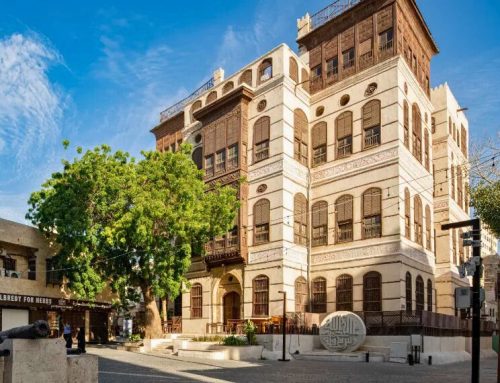
The most visible legacy of this merchant class is architectural rather than commercial: the great coral-stone tower houses that still line the streets around Souq Al Alawi, including Bayt Nassif immediately adjacent to the souq, were built by these trading families in the second half of the nineteenth century as both residences and displays of accumulated wealth — a subject covered in full in the separate guide to Nassif House. The souq itself has no comparable single landmark building; its significance lies in its continuous function as a commercial corridor. Economically, the JHU/ZMO academic history is candid about a longer-run decline: imports into Jeddah “outnumbered exports by far” through the second half of the nineteenth and early twentieth centuries, overall trade volumes fell in the last quarter of the nineteenth century as steamships bypassed Jeddah’s harbour for other Red Sea ports, and the city’s economy shifted to rest ever more heavily on pilgrimage-related income rather than the transshipment trade that had originally built the souq (Freitag, A History of Jeddah, ZMO/Brill).
The most consequential single change to the district came in 1947, when Jeddah’s old city walls were demolished. Multiple sources — Wikipedia’s Jeddah entry, Saudipedia, and academic urban histories — agree on the date and reasons: the town had outgrown the walls, only one remaining gate was wide enough for motor vehicles, and the stone was reportedly reused in the new city pier (Wikipedia, “Jeddah”; UN-Habitat, “Jeddah” city profile). Losing the walls did not end the souq, but it did end the walled city as a defined, gated space — Bab Makkah today stands as a freestanding, reconstructed gate rather than part of a functioning fortification, a point developed in the companion guide to Bab Makkah. Later, as oil wealth drove Jeddah’s growth outward into new districts, Al-Balad and its souqs slipped from being the city’s only commercial centre to one among many, increasingly associated with lower land values, ageing housing stock, and a resident population drawn largely from migrant communities from Yemen, Sudan, Somalia, Pakistan and Bangladesh rather than the old merchant elite, who moved to newer neighbourhoods (Freitag, A History of Jeddah, ZMO/Brill).
That decline is also the reason the district survived architecturally: it was not profitable enough to be worth demolishing for redevelopment for several decades. The turning point was UNESCO’s 2014 inscription of “Historic Jeddah, the Gate to Makkah” on the World Heritage List, under criteria (ii), (iv) and (vi), recognising the souks, together with the ribats, wakalas and tower houses, as integral to the property’s outstanding universal value (UNESCO World Heritage Centre, “Historic Jeddah, the Gate to Makkah”). Since then, restoration has become a stated government priority: a Royal Decree established the Jeddah Historic District Program in 2020, and in 2023 the Public Investment Fund created the Al Balad Development Company to develop the district into what its own materials call a “global cultural and heritage destination” (Public Investment Fund, press release, 2023). The Saudi Press Agency reported in 2024 that restoration, funded by a SAR 50 million donation from the Crown Prince, had been completed on 56 “ramshackle” buildings (Saudi Press Agency, 2024), and Reuters reported in April 2025 that roughly 650 structures across the district had been restored or rejuvenated since the UNESCO listing, part of a Vision 2030-driven tourism push tied to events like Jeddah’s Formula 1 race (Reuters, 28 April 2025). A more sceptical framing comes from an independent 2026 analysis, which draws a clear line between “a restored facade, an announced hotel, and an operating district,” noting that even as stabilisation and adaptive reuse genuinely advance, “this does not mean every historic asset is open, leased, safe for public access, or commercially ready” (Vision2030.ai, “Al-Balad Jeddah Restoration Economics and UNESCO Risk”). That distinction matters directly for Souq Al Alawi: parts of it look renewed, parts plainly do not, and a visitor should expect both within the same short walk.
Architecture and Design
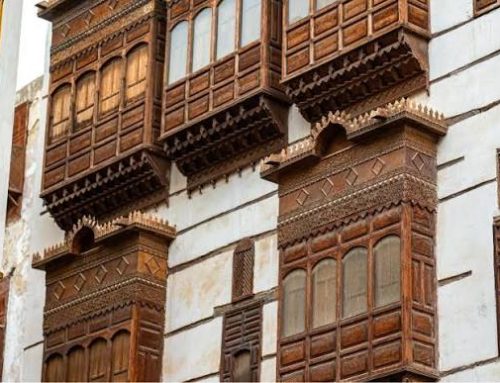
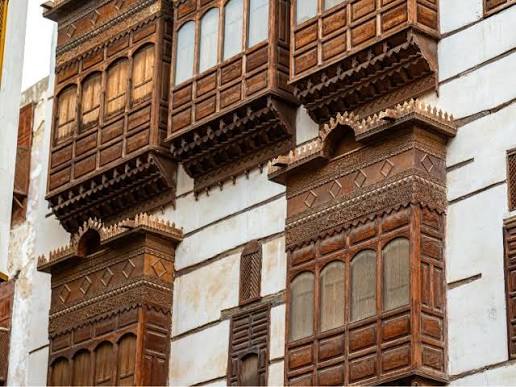
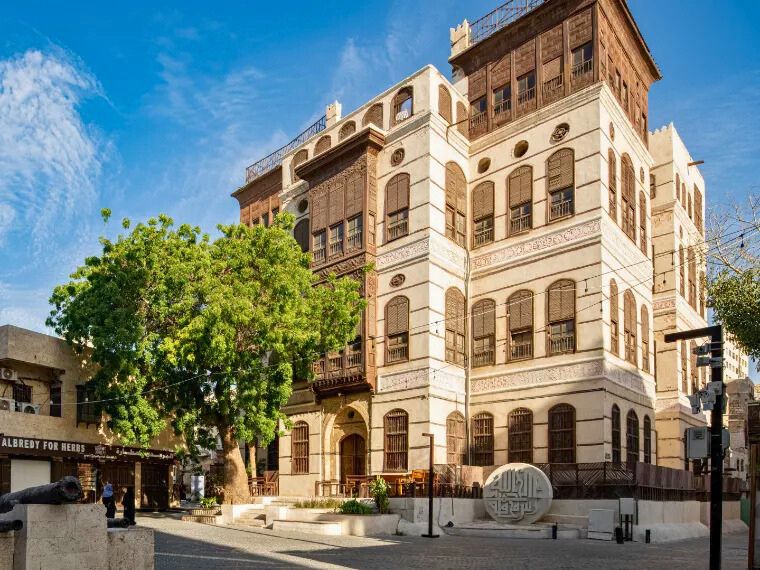
Souq Al Alawi is not architecture in the monumental sense — there is no single designed structure to describe — but it is defined by a building material and a decorative element that recur along its whole length, both particular to the Red Sea coast and both explained more fully in the companion guide to Historic Jeddah / Al-Balad. The first is coral stone, known locally as manqabi or mangabi coral limestone, quarried from the shallow reefs of the Red Sea and used as the primary building material for the tower houses and shopfronts of the old city; it is soft enough to be cut and shaped with hand tools when freshly quarried and hardens on exposure to air, but it is also porous and vulnerable to damp, salt air and neglect — a major reason so many buildings in the district, including some directly on Souq Al Alawi, show visible decay (House of Saud, “Jeddah Coral Architecture”). The second is the rawshan or roshan, the projecting timber lattice window/balcony that is the single most recognisable feature of Hijazi domestic architecture. These were traditionally imported teak or other hardwood, carved and assembled without nails using interlocking wooden joints, and graded by carpenters into recognised types — from the fully enclosed, elaborately louvred “full roshan” through intermediate styles down to the simpler, more open “al-bariz,” a lighter, less enclosed lattice style that is common on the shopfronts and smaller buildings around Souq Al Alawi rather than the grander full roshans found on merchant mansions like Bayt Nassif (House of Saud, “Jeddah Coral Architecture”). Their function was practical as much as decorative: they allowed air to circulate and cool interiors in Jeddah’s humid heat while letting women in the household observe the street unseen, and their density and craftsmanship along a given street were historically a visible marker of a merchant family’s wealth.
Souq Al Alawi’s shopfronts are generally single- or double-storey, opening directly onto the lane with the upper floors — where they survive — carrying roshan screens over what were originally the residential quarters of the same merchant families who traded below. The lanes themselves are narrow, in places barely wide enough for two people to pass with goods, a layout that predates motor traffic and was designed for pedestrians, pack animals and handcarts; this is why driving inside the souq is not permitted today and why comfortable, closed footwear matters, since the stone paving is uneven and, in older stretches, broken (Explore Saudi, “Photographer’s Walking Route: Al-Balad 2026”). Awnings and improvised shade structures — canvas, corrugated sheeting, cloth strung between buildings — have been added over the decades to cut the midday sun, producing the high-contrast light of hard sun and deep shade that photographers repeatedly cite as the street’s most striking visual quality.
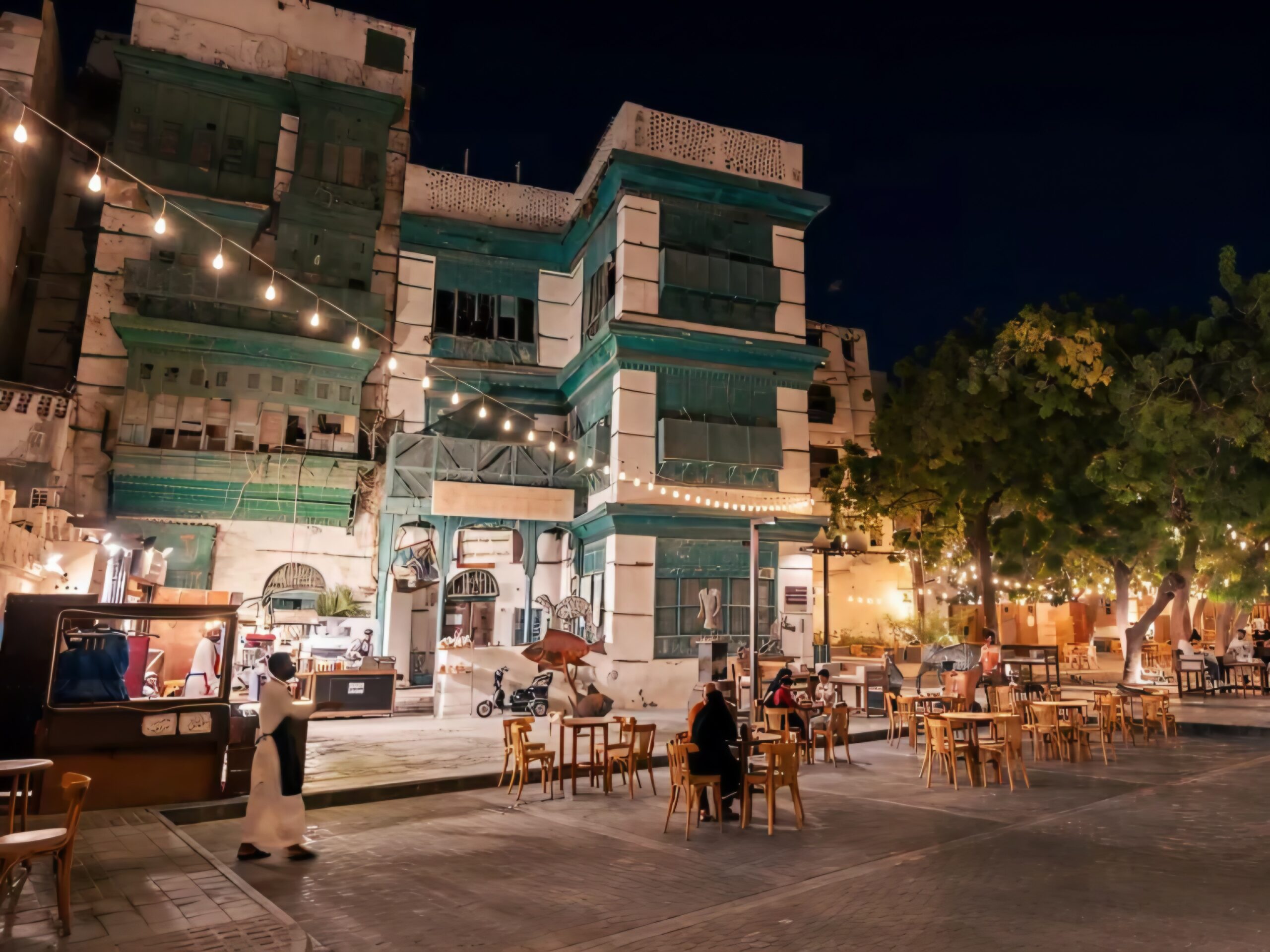
What should not be overstated is any sense of architectural uniformity or curation. This is a working street repaired, patched, rewired and rebuilt piecemeal for well over a century by whoever owned or rented a given shopfront, using whatever materials and budget were available. Concrete block infill sits next to century-old coral stone; modern shutters and signage sit under carved wooden lintels; satellite dishes and tangled wiring cross above lanes lined with hand-carved doors. That layering is an honest architectural record of a market that has never stopped being used — but it is also why UNESCO’s advisory documentation treats the wider district as what one independent analysis calls “a fragile historic urban landscape, not a blank canvas for tourism packaging,” subject to ongoing state-of-conservation scrutiny rather than a finished restoration (Vision2030.ai, “Al-Balad Jeddah Restoration Economics and UNESCO Risk,” accessed 26 May 2026).
What You Will Actually Find There
Souq Al Alawi is best understood not as one shop but as a strip of overlapping specialised markets that share the same lanes, with character shifting noticeably as you move along it. It runs, broadly, off Al Dahab Street, through a labyrinth of narrow alleys, past Nassif Square and Nassif House, and on toward the historic gate area and Al-Shafi’i Mosque (House of Saud, “Shopping in Jeddah”). A French-language guide to Al-Balad describes the street continuing northeast past Nassif House and Beit Matbouli, characterising it in one stretch as “the street of perfumers and shoe merchants” (Petit Futé, “Al-Balad,” 14 September 2024). Saudipedia’s account of traditional markets in Makkah province places Souq Al Alawi as the dividing line between the Harat al-Mazloom quarter to the north and Harat al-Yaman to the south, running between Qabil Street and Souq al-Badu (the old Bedouin market near Bab Makkah), describing its offering as clothing, spices and household supplies (Saudipedia, “Traditional Markets in Makkah Al-Mukarramah Province,” 11 March 2021). Souq Al Alawi is distinct from the nearby Souq Bab Makkah, which sits closer to the gate and specialises more in dates, grains, honey, kitchenware, vegetables, meat, cheese and olives — a grocery market rather than a bazaar for goods and gifts (Saudipedia, “Traditional Markets in Makkah Al-Mukarramah Province”). The two blur together enough at street level that visitors often describe them as one continuous market, while a reader looking specifically for the grain-and-grocery stretch should keep walking toward the gate.
Perfume, oud and incense. This is the trade most closely associated with Souq Al Alawi today, concentrated in dense clusters of small perfume shops where merchants sell oud oil, bakhoor incense, and Arabian attar, often decanted from large jars into small sample bottles in front of the customer (House of Saud, “Shopping in Jeddah”). One particularly evocative stretch is nicknamed Herbalist’s Lane, or Zaqaq Al-Etarah, a narrow alley lined with apothecary-style stalls selling traditional remedies, dried herbs and perfume ingredients side by side, described as one of the most photogenic corners of the market (House of Saud, “Shopping in Jeddah”). The perfume trade here is treated in full depth, including grading and adulteration, later in this guide, but it is worth flagging now that this stretch is also where unlicensed street vendors are most likely to spray passersby unsolicited with branded-smelling scents — Armani, Hugo Boss, “Oud” — to draw them into a stall, a soft-sell tactic documented by Arab News as common along Qabil Street and the surrounding lanes (Arab News, feature on Al-Balad’s specialised souqs).
Gold. Souq Al Alawi has a recognised gold-trading stretch, often referenced together with the nearby Souq Al-Dahab (Gold Street) as one continuous jewellery district; House of Saud’s shopping guide singles it out as a place where “bargaining is expected and welcomed” in a way that differs from the fixed, receipt-driven pricing of mall jewellers (House of Saud, “Saudi Gold Shopping”). Shops here display gold by the gram, mostly 21- and 24-karat, in the dense, densely-hung window style typical of Gulf gold souqs, alongside silver and, in a smaller number of specialist shops, antique and vintage pieces. Full pricing, hallmarking and authenticity detail is covered later in this guide.
Textiles and clothing. Bolts of fabric, ready-made and made-to-measure thobes (the ankle-length men’s garment), abayas, embroidered cloth and general dry goods are sold along multiple stretches of the souq, continuing a trade that long predates the current shops — cloth, and specifically ihram-related textiles for pilgrims, was one of the original commercial reasons this street existed (House of Saud, “Shopping in Jeddah”). Quality varies enormously, from inexpensive imported ready-to-wear to better-made tailored pieces, and at least one long-standing critical visitor account argues that most goods in Al-Balad’s souqs generally are now imported and mass-produced rather than locally crafted, a point discussed further in the Common Misconceptions section below (Tripadvisor review, Al-Balad, 6 December 2014).
Spices, herbs and traditional remedies. Spice traders display the mounds of cumin, cardamom, saffron threads, dried limes and chillies typical of Gulf spice markets, often mixed into the same stalls as the herbalist and traditional-medicine trade — dried plants, roots and remedies sold loose, sometimes alongside their pharmaceutical-style Arabic names written on hand-lettered signs (House of Saud, “Shopping in Jeddah”; Visit Saudi, “Souq Al Alawi”). The official Visit Saudi description groups “spices, herbs and traditional remedies” together with jewellery and incense as the core of what the market offers (Visit Saudi, “Souq Al Alawi,” checked 2 November 2025).
Dates and provisions. Dates are sold both within Souq Al Alawi’s own stalls and, more heavily, in the adjoining Souq Bab Makkah toward the old gate, where grains, honey, kitchenware and fresh produce are the specialism (Saudipedia, “Traditional Markets in Makkah Al-Mukarramah Province”). Loose dates are typically displayed in open crates by variety — Sukkari, Khalas, Safawi, Ajwa among the most commonly seen — allowing buyers to see, smell and taste before committing, in contrast to the sealed retail boxes sold in supermarkets. Full pricing detail is given later in this guide.
Antiques, copperware and curios. A smaller but distinct trade in antique dealers’ stalls sells old Arabian coffee pots (dallah), copperware, brassware, vintage Hijazi woodwork salvaged from demolished or renovated buildings, old coins, and general bric-a-brac, some genuinely old and some reproduction — the same authenticity caution that applies to gold and oud applies here, and buyers should assume a given “antique” is decorative unless a dealer can substantiate its age (House of Saud, “Shopping in Jeddah”).
Counterfeit and imitation goods. Counterfeit branded goods are openly sold in the souqs around Souq Al Alawi. Arab News documented a stall on Qabil Street selling an imitation Rolex Submariner — a watch that retails genuinely for around SR14,000 — for SR250, with the vendor readily admitting, when asked, “Of course it’s not real” (Arab News, feature on Al-Balad’s specialised souqs). Goods here are sold at prices that broadly track what they actually are: a suspiciously low price for a “branded” item is not a bargain, it is an honestly-priced fake sold to a buyer who understands what they are getting (more in Warnings below).
Food stalls and small eateries. Interspersed among the retail stalls, particularly toward Al Dahab Street and the lanes around Souq Al Nada and Qabil Street, are small, functional food outlets serving the market’s own workers and shoppers rather than tourists: named examples include Forn Al-Sheikh and Foul Fattah on Al Dahab Street, Foul & Hummus Al-Balad on Qabil Street, Ba Eshen Fish Restaurant and Baessa Mandi Meat in Souq Al Nada, and a sobia (a cold, sweet malted-barley drink) stall on Koraysh Lane (Visit Al-Balad, “Ramadan Season” events guide, 1 March 2025). More on food and dietary considerations follows in the Practical Visitor Guide section.
Two honest qualifications belong here. First, quality is mixed and buyers should not assume craftsmanship: a detailed 2014 visitor review argues bluntly that “the goods are imported, uninteresting and low quality… there is nothing left of the old style of craftsmanship” when compared with the souqs of Fez or Marrakesh (Tripadvisor review, Al-Balad, 6 December 2014). This guide does not fully endorse or dismiss that view — tastes vary and later restoration postdates that review — but it is included because the brief here is not to suppress negative assessments. Second, not every stall is open at every hour; the souq’s rhythm is covered in the Practical Visitor Guide section.
Highlights Worth Your Time — and What’s Skippable
Worth prioritising: Herbalist’s Lane (Zaqaq Al-Etarah) for its density of small perfume and apothecary stalls and its photogenic, tightly packed stall fronts (House of Saud, “Shopping in Jeddah”); the perfumers’ stretch described in French-language guides as a defining character of the souq, where it is genuinely possible to sit with a merchant, smell several grades of oud and attar, and learn something rather than being rushed (Petit Futé, “Al-Balad”); the gold stretch, a genuine comparison-shopping destination since prices and making charges vary shop to shop (House of Saud, “Saudi Gold Shopping”); and simply walking the market at or after Maghrib, when House of Saud’s guide notes it is “liveliest” (House of Saud, “Shopping in Jeddah”). Combining the walk with nearby Nassif House and the restored merchant mansions is close to essential, since they sit within a few minutes’ walk and share the same ticket-free access.
Reasonably skippable: the antique and curio stalls, unless you have the patience to interrogate provenance, since the ratio of genuine antiques to reproduction pieces is not something a casual visitor can judge; the branded-goods stalls, since the “designer” items on open sale are consistently counterfeit and priced accordingly; and, for visitors short on time, the general clothing and textile stretches, which several reviewers describe as functional rather than distinctive, geared to residents’ everyday needs (Tripadvisor review, Al-Balad, 6 December 2014). For someone with a single afternoon or evening, the perfume, gold and general atmosphere of the market are the more distinctive draws.
Practical Visitor Guide
Location and getting there. Souq Al Alawi sits inside Al-Balad, Jeddah’s historic centre, close to the Corniche and roughly 25–30 minutes by car from central Jeddah depending on traffic, and about 30–40 minutes from King Abdulaziz International Airport (treat this as an estimate). A photographer’s guide recommends arriving by Uber or Careem rather than taxi, citing an approximate ride cost of SAR 15–30 from central Jeddah (Explore Saudi, “Photographer’s Walking Route: Al-Balad 2026”), while a separate ride-hailing guide estimates SAR 40–70 (roughly $11–19) from the airport’s Terminal 1, with higher fares likely during Hajj and Umrah season (House of Saud, “Using Uber and Careem in Saudi Arabia”). Driving inside the souq’s own lanes is not possible; cars stop at the edge of Al-Balad, near Bab Makkah, Bab Jadid or Al Dahab Street, and the market is entered on foot.
Walking route from Bab Makkah and Nassif House. A natural, well-tested route starts at one of the old gates — Bab Makkah or Bab Jadid — where the early light is best for photography, then follows the narrow lanes toward Souq Al Alawi, described as “the district’s central market and its busiest, most photogenic stretch,” before continuing to Nassif House, then the nearby restored Matbouli House and Sharbatly House, finishing at Al-Shafi’i Mosque (Explore Saudi, “Photographer’s Walking Route: Al-Balad 2026”). Walked as a loop, this covers roughly 2 kilometres and takes about two to three hours at an unhurried pace, over uneven stone paving that makes closed shoes worth the trouble. This route runs opposite the historic pilgrim path, which moved from the harbour toward Bab Makkah; starting at Bab Makkah and walking toward the sea retraces that route more literally.
Opening hours — and a genuine conflict between sources. Souq Al Alawi’s operating hours are reported inconsistently across otherwise reputable sources, and rather than pick one, this guide reports the range checked in 2025 and 2026 so readers can plan conservatively. The official Visit Saudi listing, checked 2 November 2025, states the market is closed daily from 12:00 to 16:30, and otherwise open Saturday to Tuesday 9:00 AM to 10:30 PM and Friday 4:30 PM to 10:30 PM (Visit Saudi, “Souq Al Alawi”). MyHolidays, dated 29 December 2025, gives Saturday–Thursday 9:00 AM–10:30 PM with a midday closure, and Friday 4:30 PM–10:30 PM — broadly consistent but naming different closed days (MyHolidays, “Top 8 Markets in Jeddah”). Regency Holidays, dated 6 August 2025, states Saturday–Thursday 9:00 AM–10:00 PM and Friday 2:00 PM–10:00 PM, without mentioning a midday closure (Regency Holidays, “Markets in Jeddah”). ArrivalGuides, dated 22 October 2025, gives a narrower window of 08:00–13:00 and 15:00–19:00, Saturday to Wednesday (ArrivalGuides, “Souq Al-Alawi”). During Ramadan, an official Al-Balad events page for the 2025 season lists the souq as operating from 8:00 PM to 2:00 AM (Visit Al-Balad, “Ramadan Season,” 1 March 2025). Rather than resolve this by guesswork, the practical takeaway is: expect the souq closed or very quiet across midday, running into the evening most nights, opening later on Friday, and shifting substantially later during Ramadan. Individual shop hours vary further since each is independently owned. Confirm close to your visit date rather than relying on any single source, including this one.
Prayer-time closures. Independent of the broader daily schedule, individual shops in Souq Al Alawi close briefly — typically 20 to 30 minutes — at each of the five daily prayer times, in line with common commercial practice across Saudi Arabia; a shopping guide covering Jeddah more broadly notes this rhythm explicitly (House of Saud, “Shopping in Jeddah”). This means a visitor may arrive at a stall to find the shutter half down and the merchant absent for a short period around Dhuhr, Asr, Maghrib, Isha or Fajr — this is normal, not a sign the shop has closed for the day, and simply requires waiting or returning shortly after.
Entry fee and cost of visiting. There is no entrance ticket or fee to walk through Souq Al Alawi or the wider Al-Balad district; it is an open, public street market, confirmed explicitly by the official Visit Saudi listing (“You don’t need tickets to enter”) (Visit Saudi, “Souq Al Alawi”). The only costs are whatever you choose to buy, plus transport to and from the area.
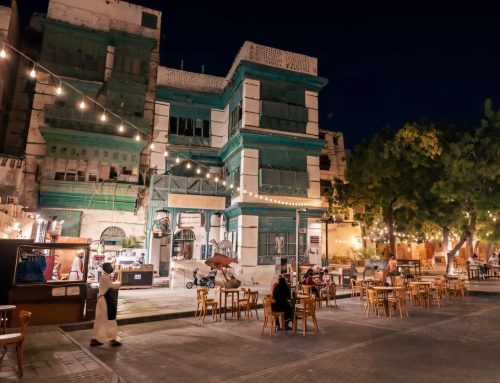
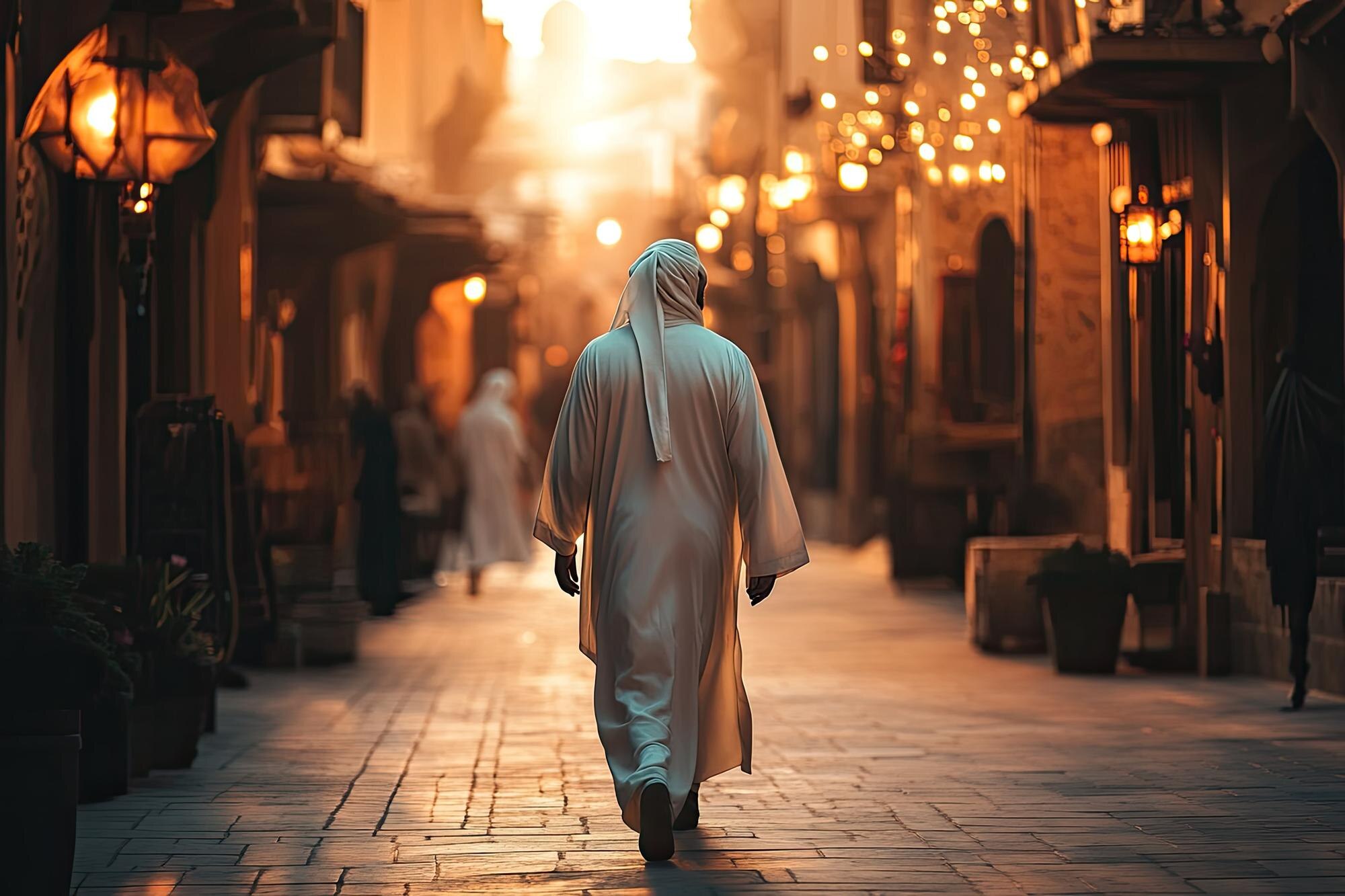
Best time of day and booking. There is nothing to book — no tours, timed entry or reservations apply to the souq itself. The consistent practical advice across sources is to visit in the late afternoon through evening: House of Saud describes the market as liveliest after Maghrib (House of Saud, “Shopping in Jeddah”), a 2025 Tripadvisor review recommends visiting “late afternoon into the evening… it’s completely safe walking around at night, as there’s plenty of visible security” (Tripadvisor, Al-Balad review, April 2025), and photographers favour the hour around sunset and the 20–30 minutes of blue hour immediately after for both light quality and atmosphere, alongside the quieter, cooler half hour around sunrise for empty-street shots of the same lanes (Explore Saudi, “Photographer’s Walking Route: Al-Balad 2026”). Midday, particularly in summer, is the least rewarding time to visit: shops are more likely to be shut, heat is at its most punishing, and the light is harsh and flat rather than atmospheric.
Ramadan, Eid and Hajj-season changes. During Ramadan, Souq Al Alawi and the surrounding Al-Balad district shift to a night-based rhythm, with the souq itself running roughly 8:00 PM to 2:00 AM according to a 2025 official events listing, and the district hosting additional food stalls and evening events (Visit Al-Balad, “Ramadan Season,” 1 March 2025). During Hajj and the weeks around it, expect the souq to be significantly busier and prices — particularly for perfume, oud and small souvenir items — to run higher than at other times of year, a pattern explicitly flagged in shopping guides that recommend visiting outside peak pilgrimage season for the best prices (“Note: packed and inflated pricing during Hajj/Umrah season”) (House of Saud, “Saudi Perfume Shopping”). No source consulted for this guide gives a specific numeric estimate of Hajj-season crowd size within the souq itself, so this should be read as a directional, not quantified, warning.
Prayer Facilities and Religious Considerations
Al-Shafi’i Mosque, at the end of the walking route through the souq, is one of the oldest mosques in the district and functions as a working place of worship, not a museum piece; non-Muslim visitors should not enter during prayer times, though the exterior and surrounding lanes can be photographed freely and respectfully (Explore Saudi, “Photographer’s Walking Route: Al-Balad 2026”). Smaller neighbourhood mosques and musallas (prayer rooms) are scattered through Al-Balad generally — the Jeddah Historic District’s own materials cite 36 mosques within the wider area (Vision2030.ai, “Al-Balad Jeddah Restoration Economics”) — but no source consulted provides a specific, named list of musallas along Souq Al Alawi itself; readers should expect to find a mosque within a short walk in almost any direction rather than relying on a specific named location.
As noted earlier, Souq Al Alawi is a commercial street with genuine historical ties to the pilgrimage route, not a site with independent religious significance, and this guide has deliberately avoided suggesting otherwise. That pilgrims historically passed this way between the harbour and Bab Makkah is well documented, but it is historical context rather than a claim that the street itself carries ritual weight.
The five daily prayer times bring the shop-shuttering pattern described earlier, and shape the market’s daily rhythm: the call to prayer sounding from Al-Shafi’i Mosque is audible throughout the souq, with brief lulls around each prayer, particularly Maghrib, after which the market typically becomes busiest for the evening (House of Saud, “Shopping in Jeddah”). Dress should be modest: a 2026 guide notes the requirement for women to wear an abaya was relaxed in 2019, but loose clothing covering shoulders and knees is still expected, and men should avoid shorts (Explore Saudi, “Photographer’s Walking Route: Al-Balad 2026”). Halal food is the default throughout Saudi Arabia, so no special search is needed among the market’s food stalls.
Families, Children and Accessibility
Souq Al Alawi is walkable with children, but it is not designed with prams, wheelchairs or limited mobility in mind. The lanes are narrow and paved with uneven, sometimes broken stone; there are no ramps or lifts; and the density of shopfronts, pavement stock and — especially in the evening — crowds make navigating a stroller or wheelchair genuinely difficult in places. None of the sources consulted describe dedicated accessibility infrastructure, family rooms or children’s play areas within the souq, an honest gap reflecting its basic character as an unmodernised working street. Families with young children should plan around the same constraints as any visitor — heat, uneven ground, evening crowding — and treat a visit as a walking activity. Nearby restored buildings that now function as cafés offer a practical rest stop (Explore Saudi, “Photographer’s Walking Route: Al-Balad 2026”).
Costs and Value: Honest Pricing, Bargaining, and How to Judge Quality
This section is the practical core of this guide: Souq Al Alawi is a place people visit specifically to buy something — attar, oud, bakhoor, gold or dates — and its value rests on real, dated prices and real detection methods rather than generic reassurance. Every figure below carries the date it was checked and should be treated as a snapshot: perfume ingredient prices move with harvests and global oud markets, gold tracks the international spot price minute to minute, and date prices shift with season.
How bargaining actually works here
Bargaining is the norm in Souq Al Alawi’s independent stalls, unlike the fixed pricing of Jeddah’s malls. For perfume and general goods, open around 30–40% below the first quoted price and negotiate from there (House of Saud, “Saudi Perfume Shopping”). For gold, the spot value and the mandatory 15% VAT are fixed, but the making charge — the workmanship fee — is negotiable; counter 20–40% below the first quote, compare at least three shops, and pay cash rather than card, which often carries a 1–2% surcharge (House of Saud, “Saudi Gold Shopping”). A 2012 Tripadvisor review of the Al-Balad gold souks confirms this has long been the norm: “bargaining is possible and, in fact, expected” (Tripadvisor review, 17 December 2012). Being served tea during negotiation is normal souq hospitality and creates no obligation to buy.
Attar, oud and bakhoor in depth
Perfume in the Hijazi and wider Gulf tradition covers several related but distinct products, and Souq Al Alawi — specifically Herbalist’s Lane — sells all of them side by side, which is why understanding the differences matters before buying.
Oud oil is distilled from the resinous, infected heartwood of Aquilaria trees, and its price scales dramatically with origin, age and resin density. A pricing guide checked 18 April 2026 gives these bands: entry-level blended oud, 50–150 SAR per 3ml (150–400 SAR per tola, the 11.66-gram unit used in the oud trade); mid-range but genuinely pure oud, typically Cambodian or Indonesian, 150–500 SAR per 3ml (660–1,500 SAR per tola); premium wild-harvested oud, such as Indian Assam or aged Vietnamese, 500–2,000 SAR per 3ml (2,000–10,000 SAR per tola); and Kyara or Kinam grade, the rarest classification, from 50,000 SAR upward, collector territory only (House of Saud, “Saudi Perfume Shopping,” 18 April 2026). A useful rule of thumb: pure oud oil is not realistically sold below about 100 SAR per 3ml; anything cheaper is a blend or synthetic, whatever the seller calls it.
Detecting adulterated oud comes down to a few physical checks. Genuine oud oil is typically dark amber to deep brown, thick enough to visibly cling to the bottle when tilted, and its scent evolves over several hours on skin — woody, smoky, sweet — rather than smelling identical at minute one and hour three. Adulterated or synthetic oud is brighter, thinner, watery, and carries a loud, one-dimensional smell, often a burnt-rubber or synthetic-musk note, that does not change over time (House of Saud, “Saudi Perfume Shopping”). For wood chips, genuine pieces are dense and heavy for their size, while fakes show an unnatural black coating or unusual lightness; a burn test helps too, since genuine oud produces complex, evolving smoke while synthetic material burns flat. The most reliable safeguard is the seller: one who can state the wood’s origin, species and distillation method without hesitation is a safer bet than one who deflects. Recognised Saudi houses with verifiable histories include Abdul Samad Al Qurashi (Mecca, 1852), Arabian Oud (1982), and Al Haramain Perfumes (Makkah, 1970) — buying from a branded outlet, even at a mall, establishes a quality baseline before judging independent souq sellers.
Bakhoor (bukhoor), the scented wood chips or compressed incense burned on charcoal, is priced far more accessibly: a 40-gram pack of a recognised brand such as Nabeel runs around 90 SAR, Cambodian oud bakhoor typically 100–150 SAR, oud-and-musk blends 80–120 SAR, and premium gift sets with a burner and multiple scents 190–750 SAR, checked April 2026 (House of Saud, “Saudi Perfume Shopping”).
Attar — concentrated, alcohol-free perfume oil applied to pulse points rather than sprayed — starts around 20 SAR for a basic musk-based blend and rises into the thousands for aged oud-based attars, with price driven almost entirely by oud or ambergris content rather than bottle or branding (House of Saud, “Saudi Perfume Shopping”). Tahara (purity) musk and black musk typically run 20–100 SAR, amber-based attar 30–200 SAR; true ambergris (anbar), a genuinely rare whale-derived material, trades at $10,000–50,000 per kilogram and is sold only through specialist shops — a price point that itself functions as a warning, since anything sold cheaply as “real ambergris” almost certainly is not.
Where to buy within the souq: Souq Al-Alawi itself, off Al Dahab Street, is named as the best general destination in Jeddah for oud, attars and incense burners, given its scale and the number of independent perfumers competing for business, while the nearby Qabel Street trail is noted for perfume oils and hand-carved mabkhara; Red Sea Mall and Mall of Arabia offer fixed-price branded alternatives for buyers who prefer certainty over bargaining (House of Saud, “Saudi Perfume Shopping”). The same guide’s clearest warning bears repeating: expect the souq to be “packed” with “inflated pricing” during Hajj and Umrah season, so buy outside peak pilgrimage periods where possible.
Gold: pricing, hallmarks and authenticity
Gold pricing in Saudi Arabia has three components, key to bargaining sensibly: the international spot price, identical everywhere and non-negotiable; a making charge or workmanship fee, typically 5–30 SAR per gram, the only genuinely negotiable part; and 15% VAT, applied to jewellery but not bullion or coins of 99%-plus purity (House of Saud, “Saudi Gold Shopping”). Since April 2025, foreign tourists can claim a refund of that 15% VAT on purchases over SAR 500 at approved “Tax Free Shopping” retailers, requesting a refund form at sale and validating it with a passport at the airport before departure.
Spot gold prices are genuinely volatile and sources checked for this guide diverge meaningfully depending on the exact date checked, which is itself the point: an April 2026 shopping guide put 24-karat gold at roughly SAR 380–400 per gram ($101–107) (House of Saud, “Saudi Gold Shopping,” 18 April 2026), while a live gold-price tracking site checked 16 July 2026 showed 24-karat around SAR 477.92–512.06 per gram and 21-karat around SAR 418.18–448.05 per gram (LivePriceOfGold.com, Saudi Arabia gold price, 16 July 2026), and Gulf News, checked 23 July 2026, gave 24-karat at SAR 516.00 per gram and 21-karat at SAR 452.00 per gram (Gulf News, gold rate today, 23 July 2026). These figures moved roughly 25–30% across the three months they were checked — a useful illustration that any gold price quoted here, or anywhere else, should be verified against the current spot rate on the day of purchase, not relied on months later.
On hallmarking: Saudi Arabia regulates gold purity marking through the Saudi Standards, Metrology and Quality Organization (SASO), with sources citing either SASO Standard 1357:2020 or 1360:2021 — a discrepancy this guide reports rather than resolves, since both trace to the same regulatory body and the substantive requirement is consistent: a laser-engraved purity stamp (999, 916, 875 or 750, corresponding to 24, 22, 21 and 18 karat), a SASO compliance mark, and a manufacturer or assayer code (House of Saud, “Saudi Gold Shopping”). Counterfeit hallmarks tend to be shallow, blurred or unevenly stamped compared to genuine pieces, and a piece with no hallmark at all should not be bought as fine gold regardless of what a seller claims.
Beyond the hallmark, a consumer gold-authentication resource lists simple home tests that, combined, give a reasonable indication of authenticity: a magnet test, since gold is non-magnetic; a ceramic scratch test, where genuine gold leaves a gold-coloured streak while base metals leave black or grey; a nitric acid test, where genuine gold resists while plated metal reacts or turns green; and a density check, since pure gold measures about 19.3 grams per cubic centimetre (Saab Gold, “Authenticity of Gold”). No single home test is conclusive alone; professional assessment or an XRF assay remains the most reliable route to certainty. The practical version: buy from a shop with a visible hallmark and a receipt stating purity and weight, and compare more than one stall.
Dates: varieties and prices
Date prices vary enormously by variety, grade, and whether sold loose in a souq or packaged for retail. A Saudi Press Agency report carried by Arab News around Ramadan 2024 gave per-kilogram prices of SR25 for Al-Saqi dates, SR20 for Safawi, and SR70 for premium Ajwa (Arab News, citing Saudi Press Agency, 10 March 2024). A specialist date retailer’s pricing page, checked 30 August 2025, gives a broader range: everyday varieties at 20–100 SAR per kilogram, luxury-grade Sukkari at 200–500 SAR, Medjool at 70–80 SAR, and lower-cost varieties such as Riziz, Barni and Maknooz from 8–12 SAR per kilogram (Al Ansar Date, pricing information, 30 August 2025). An older Arab News report from October 2014 recorded good-quality Ajwa at SR110 per kilogram, rising above SR140 in high demand — more than a decade old, but a useful illustration that sharp Ramadan and Hajj price inflation is a long-standing pattern (Arab News, 23 October 2014). Supermarket prices sit in a separate band: branded 1-kilogram boxes of Ajwa Al-Madina from retailers such as Carrefour and Lulu have run roughly SAR 70–127 across checks in 2024–2026, but these are sealed retail products, not loose souq dates. Synthesising the above, checked July 2026, a reasonable expectation for loose souq dates is that everyday varieties fall roughly in the SR20–60 per kilogram range, with Ajwa and Medjool as premium options at SR70–150 or more.
Judging date quality. No source consulted provides a dedicated, souq-specific date-adulteration methodology comparable to the oud and gold sections above, and this guide will not invent one. Loose dates sold in open crates allow basic checks any buyer can perform: visible mould or fermentation, sugar crystallisation on the skin (more common in older or lower-grade stock), uniformity of size and colour within a batch, and, where the seller allows it, tasting a sample before buying in bulk — normal in souq trading, unlike sealed retail packaging.
A note on honey
The task brief for this guide specifically raised adulterated honey as a warning worth covering, and honesty requires flagging a genuine research gap: honey is sold primarily in the neighbouring Souq Bab Makkah rather than in Souq Al Alawi itself, per Saudipedia’s description of that market’s specialism in “various types of honey” alongside dates and grains (Saudipedia, “Traditional Markets in Makkah Al-Mukarramah Province”), and no Jeddah-specific, sourced methodology for detecting adulterated honey could be located. Honey adulteration — commonly dilution with cheap sugar syrups — is a widely reported problem in Gulf honey markets generally, and prized varieties such as Yemeni Sidr honey command a premium precisely because they are frequently imitated, but this guide will not present general consumer folklore as confirmed, site-specific reporting. The honest advice is the same as for oud: buy from an established, named shop, ask about origin, and treat an unusually low price for a “rare” variety as the clearest warning sign.
Seasons, Weather and Timing
Jeddah’s climate is hot and humid year-round by most temperate-climate standards, but there is a real difference between the comfortable months and the punishing ones. A photographer’s guide to the district identifies October through April as the best season to walk Al-Balad and Souq Al Alawi, with June through September singled out as the period when temperature and humidity both climb sharply — the recommendation for those months is to walk early and retreat before midday, since high-summer skies also tend to be hazy in a way that flattens light and visibility (Explore Saudi, “Photographer’s Walking Route: Al-Balad 2026”). This maps directly onto the souq’s own practical rhythm described earlier: the common midday closure reported by several hours sources is at least partly a sensible response to that same summer heat, whatever the precise stated hours on a given day.
Ramadan and Hajj bring the two other major swings in the souq’s calendar, covered in more detail in the Practical Visitor Guide section above: Ramadan pushes trading into a late-night rhythm (roughly 8:00 PM–2:00 AM per one 2025 official listing), while Hajj and Umrah season brings larger crowds and, by multiple accounts, higher prices, particularly for perfume and small souvenir goods (Visit Al-Balad, “Ramadan Season,” 1 March 2025; House of Saud, “Saudi Perfume Shopping”). School holidays in Saudi Arabia and neighbouring Gulf states can also add to weekend and evening crowding at the souq, though no source consulted for this guide gives specific visitor numbers tied to school holiday periods, and this should be treated as a general inference rather than a documented fact.
Nearby Places to Combine
Souq Al Alawi sits at the centre of a cluster of Al-Balad sights naturally combined into a single outing, since most are within a few minutes’ walk of each other. Nassif House (Bayt Nassif), built in the 1870s and later used as a residence by King Abdulaziz, sits directly adjacent to the souq and is described in its own companion guide; the walking route outlined above treats it as the natural next stop (Explore Saudi, “Photographer’s Walking Route: Al-Balad 2026”). Matbouli House and Sharbatly House, both restored merchant mansions nearby, are recommended for close-up views of coral-stone construction and mashrabiya screen detail. Al-Shafi’i Mosque anchors the far end of the same walking loop. Bab Makkah, the reconstructed eastern gate the souq historically ran toward, is a short walk away and is covered in its own dedicated guide. Jeddah’s Corniche and its landmark King Fahd’s Fountain are a further drive away rather than a walking extension of Al-Balad, best treated as a separate outing; both are covered in their own guides, as are Red Sea Mall and Mall of Arabia for visitors wanting a contrasting, fixed-price shopping experience afterward. A natural sequence: Bab Makkah or Bab Jadid in the early morning or late afternoon, then Souq Al Alawi, then Nassif House and the nearby restored mansions, finishing at a rooftop café as the light fades.
Common Misconceptions and Traveller Warnings
Misconception: this is a restored, tourist-ready heritage site. It is not, uniformly. Restoration is real but partial: 56 buildings formally restored under a SAR 50 million programme reported in 2024, and roughly 650 structures restored across the wider district by April 2025 according to Reuters, sit alongside buildings a 2015 municipal survey found partially collapsed or near-derelict, and independent 2026 analysis is explicit that a restored facade, an announced hotel and a genuinely operating district are different things not to be conflated (Saudi Press Agency, 2024; Arab News, 13 October 2015; Vision2030.ai analysis, accessed 26 May 2026). Expect restored and derelict buildings within the same block, and do not assume a coral-stone facade is sound enough to lean against without an obvious invitation to do so.
Misconception: everything sold here is handmade or locally produced. This is contested. A specific 2014 review argues bluntly that “the goods are imported, uninteresting and low quality,” with “nothing left of the old style of craftsmanship” (Tripadvisor review, 6 December 2014), while other sources describe genuine specialist trades, particularly oud, attar and gold, still practised by knowledgeable merchants. Both can be true in different stalls on the same street; judge each purchase on its own merits.
Warning: counterfeit and imitation goods are openly sold. As detailed above, Arab News documented an openly-sold fake Rolex Submariner priced at SR250 against a genuine retail price of roughly SR14,000, with the vendor freely admitting it was not authentic (Arab News, feature on Al-Balad’s specialised souqs). Treat any “branded” item sold at a steep discount in the souq as what it almost certainly is: a knowing imitation, not a bargain.
Warning: adulterated attar, oud and possibly honey. The detailed detection methods for oud and gold are given in full in the Costs and Value section above and should be read before making a significant purchase; the short version is that colour, viscosity, scent evolution and a seller’s willingness to answer specific questions about origin are the most useful checks available to a non-expert, and that genuinely pure oud oil is not sold cheaply. On honey specifically, this guide was unable to source a verified, Jeddah-specific adulteration-detection methodology, and says so rather than presenting general folk tests as confirmed fact — see the dedicated note on honey above.
Warning: inflated pricing, especially in peak season. Several sources flag inflated pricing in heritage and tourist-facing areas as a real risk, recommending comparison across multiple stalls and a willingness to walk away as the main defence (TripWaffle, Jeddah safety guide). This is compounded specifically during Hajj and Umrah season, when a dedicated perfume-shopping guide warns the souq becomes “packed” with “inflated pricing” (House of Saud, “Saudi Perfume Shopping”).
Warning: taxi overcharging. This is one of the best-documented traveller risks connected to any visit to Al-Balad. A dedicated guide to taxi scams in Jeddah describes a “meter is broken” tactic, where a driver claims the meter is non-functional and quotes an inflated flat fare — for example SAR 100 for a ride that should cost SAR 20–30 — with the recommended response being to insist on the meter (asking in Arabic for “Shaghghal Adad,” meaning “turn on the meter”) or simply find another driver (TaxiServiceKSA, “Taxi Scams in Jeddah, Airport & Makkah,” 27 December 2025). The same source describes an “airport shark” pattern of unlicensed touts charging triple the normal fare, and a “per person” trick where an agreed fare is reinterpreted as per-passenger rather than total — the fix is to explicitly agree the fare is “Kulluh” (the whole amount) before the ride begins. A separate example cited in a general Saudi tourist-scam guide describes an airport fare of SAR 500 quoted for a ride to Al-Balad that “should run 100 to 120” (Tabiji, Saudi Arabia tourist-scams guide). Saudi Arabia’s Transport General Authority has stated passengers may ride free if a driver fails to activate the meter at trip start (Saudi Gazette, 30 March 2025). Unlicensed street taxis also carry fines and impoundment risk for the driver — an argument for sticking to Uber, Careem or licensed taxi ranks (House of Saud, “Using Uber and Careem in Saudi Arabia”).
Warning: petty theft and crowding. A dedicated Jeddah safety guide names petty theft in crowded markets as a real, if moderate, risk, flagging Al-Balad specifically: “worth visiting… but crowded lanes and busy souqs make petty theft and confusion more likely” (TripWaffle, Jeddah safety guide). A 2026 Al-Balad-specific safety assessment rates daytime safety as good, with police visibly present, but rates night walking only moderate, recommending leaving before dark since the area “empties out at night and narrow alleys become poorly lit and uncomfortable” — in some tension with a 2025 Tripadvisor reviewer who felt the area was safe at night due to visible security; this guide reports both rather than picking one (Her Safe Voyage, Al-Balad safety guide, 6 May 2026; Tripadvisor, Al-Balad review, April 2025). A broader index rates Jeddah’s overall safety at 65 out of 100 (TravelSafe-Abroad, Jeddah safety guide, 9 March 2026). A 2014 visitor described “tonnes of beggars and pickpocketers” and a “filthy” environment (Tripadvisor review, 11 July 2014), while a 2019 review described feeling safe overall despite crumbling masonry and a small number of beggars (Tripadvisor review, 21 November 2019) — together suggesting gradual improvement.
Warning: aggressive selling. Beyond ordinary bargaining, Arab News documented unlicensed street vendors around the souq spraying passersby unsolicited with perfume — branded scents like Armani and Hugo Boss, or generic “oud” — as a tactic to draw shoppers into a stall (Arab News, feature on Al-Balad’s specialised souqs). This is a nuisance rather than a safety risk, but declining politely and continuing to walk is the straightforward response; it does not create any obligation to enter a shop or buy anything.
Warning: heat and dehydration. Jeddah’s combination of high heat and high humidity, discussed in the Seasons section above, is flagged as a genuine risk factor by general safety guides to the city, alongside the more commonly cited risks of theft and traffic (TripWaffle, Jeddah safety guide). Carrying water through the souq is not optional in the warmer months; the walk is longer than it appears from a map and shade is patchy and inconsistent (Explore Saudi, “Photographer’s Walking Route: Al-Balad 2026”).
Photography note treated as a warning. Casual photography of streets and building exteriors is unrestricted, but photographing people, especially women or children, without asking first is a real etiquette breach, not a minor courtesy — the suggested approach is to ask directly (“mumkin soura?”, “may I take a picture?”) and to accept a refusal without argument; photographing military or police personnel or government buildings is prohibited outright; and professional or commercial shoots, drone flights, and tripod use inside certain restored buildings all require advance permission from Jeddah’s historic-district authorities (Explore Saudi, “Photographer’s Walking Route: Al-Balad 2026”).
Lesser-Known Facts
Souq Al Alawi’s role in the pilgrim journey continued past the market itself: academic sources describe camel drivers and vendors of agricultural produce and cattle setting up huts on either side of the road immediately in front of Bab Makkah, extending the souq’s commercial activity to where the pilgrim caravans assembled — a detail drawn from the early nineteenth-century travel writing of Johann Ludwig Burckhardt (Freitag, A History of Jeddah, ZMO/Brill). The scale of pilgrim accommodation tied to this stretch was larger than most visitors would guess: UNESCO’s nomination documentation records that nineteenth-century wakala buildings in the Yemen quarter alone could house up to 10,000 pilgrims at a time (UNESCO World Heritage nomination document).
Jeddah’s merchant elite was so international that a resident’s surname often functioned as a small piece of migration history — names like al-Ifrīqī (“the African”), al-Banjābī (“the Punjabi”) and al-Asmarrī (“the one from Asmara”) recorded where a family had originally come from, matching Burckhardt’s observation that the city’s population was “almost exclusively foreigners” (Freitag, A History of Jeddah, ZMO/Brill).
The 1947 demolition of Jeddah’s protective wall is reported, across multiple sources, to have been driven partly by a strikingly mundane practical problem: only one of the remaining gates was wide enough to admit a car, and the stone was reportedly reused in the city’s new pier — meaning fragments of the wall that once framed Souq Al Alawi’s eastern end may literally be part of Jeddah’s modern port infrastructure today (Wikipedia, “Jeddah”).
The commonly repeated claim that Souq Al Alawi dates specifically to 1716 is worth flagging again as unverifiable: it appears across several current tourism sources but not in the UNESCO nomination dossier or the academic histories consulted, and readers should treat it with caution rather than as an established date (Visit Saudi, “Souq Al Alawi”).
Timeline
- 26 AH / 647 CE — Caliph Uthman ibn Affan is traditionally credited with designating Jeddah as the official port serving Makkah, replacing the earlier port of al-Shuaiba (Encyclopaedia Britannica, “Jeddah”; Saudipedia, “Historic Jeddah”).
- 1425 — The Mamluk administration designates Jeddah as the main Red Sea port of entry, requiring merchants to call there and pay duty on imports including spices and coffee (Freitag, A History of Jeddah, ZMO/Brill).
- 1509 — Mamluk Sultan Qansuh al-Ghuri orders construction of Jeddah’s protective city wall against Portuguese naval threats (Wikipedia, “Jeddah”).
- 1517 — The Ottoman Empire takes Jeddah after defending it against a Portuguese siege; the walls are rebuilt and reinforced, completed around 1525 (Saudipedia, “Historic Jeddah”).
- 1716 (unverified) — Several current tourism sources date the founding of Souq Al Alawi to this year; this guide could not confirm the date against primary or academic sources (Visit Saudi, “Souq Al Alawi”).
- 1829 — Johann Ludwig Burckhardt’s travel account, describing Jeddah’s population, huts near Bab Makkah, and pilgrim caravan traffic, is published, later cited extensively by modern historians of the city (Freitag, A History of Jeddah, ZMO/Brill).
- 1869 — The opening of the Suez Canal increases Red Sea shipping traffic and accelerates steamship-borne pilgrimage, contributing to a boom in tower-house construction across Jeddah’s old city in the following decades (UNESCO World Heritage nomination document).
- 1850–1950 — Hadhrami merchant families dominate Jeddah’s trading economy, per a dedicated account from the French consulate in the city (French Consulate in Jeddah).
- 1870s — Nassif House, immediately adjacent to Souq Al Alawi, is built by the Nassif merchant family.
- Late 19th century — Jeddah’s economy shifts toward pilgrimage-based income as the transshipment trade that originally built the souq declines; annual pilgrimage numbers reach roughly 100,000 (UNESCO World Heritage nomination document).
- 1947 — Jeddah’s historic city wall, including the gates the souq ran between, is demolished — reportedly because the city had outgrown it and only one gate could admit motor vehicles (Saudipedia, “Historic Jeddah”).
- 1981 — One of the world’s largest airport terminals opens north of Jeddah for pilgrimage traffic, shifting arrivals away from the old sea harbour Souq Al Alawi once served (Freitag, A History of Jeddah, ZMO/Brill).
- 2014 — UNESCO inscribes “Historic Jeddah, the Gate to Makkah,” including its souks, ribats and wakalas, on the World Heritage List (UNESCO World Heritage Centre).
- 13 October 2015 — Arab News reports that 90 buildings in Al-Balad have been classified as a public safety hazard by municipal authorities, with 38 partially collapsed and 52 in near-complete disrepair (Arab News, 13 October 2015).
- 2020 — A Royal Decree establishes the Jeddah Historic District Program to lead rehabilitation of the area (Vision2030.ai analysis, citing official Saudi sources).
- 21 November 2022 — Arab News reports a SR50 million Crown Prince pledge toward restoring 56 buildings, alongside new pedestrian and traffic rules near Bab Makkah (Arab News, 21 November 2022).
- 2023 — The Public Investment Fund establishes the Al Balad Development Company to lead development of the historic district (Public Investment Fund, press release, 2023).
- 2024 — The Saudi Press Agency reports completion of restoration on 56 “ramshackle” buildings, funded by the pledged SAR 50 million donation (Saudi Press Agency, 2024).
- 28 April 2025 — Reuters reports roughly 650 structures across the district restored or rejuvenated since the 2014 UNESCO listing, tied to a broader Vision 2030 tourism push (Reuters, 28 April 2025).
- 7 December 2025 — The Saudi Press Agency reports the opening of the Red Sea Museum within the Jeddah Historic District (Saudi Press Agency, 7 December 2025).
Practical Takeaways
- Souq Al Alawi is open and actively trading as of the 2025–2026 sources checked for this guide, with no ticket required, but exact opening hours are genuinely inconsistent across otherwise reputable sources — expect a midday closure, evening opening, and later Friday hours, and confirm close to your visit date (Visit Saudi, “Souq Al Alawi”).
- Visit from late afternoon into the evening for both atmosphere and cooler temperatures; midday, especially June to September, is the least rewarding time to go (House of Saud, “Shopping in Jeddah”; Explore Saudi, “Photographer’s Walking Route: Al-Balad 2026”).
- Bargain on everything except gold’s spot price and VAT — open around 30–40% below the first quote for general goods, and 20–40% below the first making-charge quote for gold, and compare multiple stalls before committing (House of Saud, “Saudi Perfume Shopping”; House of Saud, “Saudi Gold Shopping”).
- Judge oud and attar by colour, viscosity, and how the scent evolves over hours, not by the bottle or the seller’s claims alone; treat a price under roughly 100 SAR per 3ml as evidence a “pure oud” claim is false (House of Saud, “Saudi Perfume Shopping”).
- Never buy gold without a visible hallmark, and treat spot-price figures anywhere, including in this guide, as needing same-day verification given how much the price moves over even a few months (House of Saud, “Saudi Gold Shopping”; LivePriceOfGold.com).
- Assume any heavily discounted “branded” item is a knowing counterfeit, and price it, and buy it if at all, as exactly that (Arab News, feature on Al-Balad’s specialised souqs).
- Use Uber, Careem or a licensed taxi rank rather than unofficial street taxis, insist on the meter or an agreed total fare before moving, and know that Saudi transport authorities entitle you to a free ride if a driver refuses to activate the meter (TaxiServiceKSA, “Taxi Scams in Jeddah, Airport & Makkah,” 27 December 2025; Saudi Gazette, 30 March 2025).
- Wear closed, comfortable shoes for the uneven stone paving, carry water, dress modestly, and expect brief shop closures around each of the five daily prayers (Explore Saudi, “Photographer’s Walking Route: Al-Balad 2026”; House of Saud, “Shopping in Jeddah”).
- Ask before photographing people, respect refusals, and do not photograph military, police or government buildings; get advance permission for drones, tripods in restored interiors, or commercial shoots (Explore Saudi, “Photographer’s Walking Route: Al-Balad 2026”).
- Stick to main, well-lit routes after dark, and treat the daytime/evening market as the safer and more rewarding time to visit than late night, per the more cautious of the safety sources checked for this guide (Her Safe Voyage, Al-Balad safety guide, 6 May 2026).
Sources
Official and institutional: UNESCO World Heritage Centre, “Historic Jeddah, the Gate to Makkah”; UNESCO nomination document and ICOMOS evaluation; Visit Saudi, official listing for Souq Al Alawi; Visit Al-Balad, “Ramadan Season” events guide; Saudipedia, “Historic Jeddah”; Saudipedia, “Traditional Markets in Makkah Al-Mukarramah Province”; Saudi Press Agency, on the 56-building restoration; Public Investment Fund, press release on Al Balad Development Company; Saudi Gazette, on taxi-meter rules; UN-Habitat, Jeddah city profile.
Academic: Freitag, A History of Jeddah, ZMO/Brill via Project MUSE; Cambridge Core, “The Changing Faces of Jeddah”; Encyclopaedia Britannica, “Jeddah”; Saudi Aramco World, “A City Within a City”; Google Arts & Culture, “The Historical Path of Hajj”; French Consulate in Jeddah, on Hadhrami merchant families.
Independent reporting and analysis: Reuters, on Jeddah old town restoration, 28 April 2025; Arab News, on buildings deemed a public safety hazard, 13 October 2015; Arab News, on counterfeit goods in Al-Balad’s souqs; Vision2030.ai, “Al-Balad Jeddah Restoration Economics and UNESCO Risk”.
Practical guides: House of Saud, “Shopping in Jeddah”; House of Saud, “Jeddah Coral Architecture”; House of Saud, “Saudi Perfume Shopping”; House of Saud, “Saudi Gold Shopping”; House of Saud, on Uber and Careem in Saudi Arabia; Explore Saudi, “Photographer’s Walking Route: Al-Balad 2026”; MyHolidays, “Top 8 Markets in Jeddah”; Al Ansar Date, pricing information.
Safety and authenticity resources: Her Safe Voyage, Al-Balad safety guide; TaxiServiceKSA, on taxi scams in Jeddah; LivePriceOfGold.com, Saudi Arabia gold price; Saab Gold, “How to Tell Real Gold from Fake”.
Visitor reviews used as dated, first-hand accounts of conditions and safety: Tripadvisor, Al-Balad reviews, April 2025; Tripadvisor review, 6 December 2014; Tripadvisor review, Al-Balad gold souks, 17 December 2012.
A note on method. This guide draws on official Saudi and UNESCO sources, one open-access academic history of Jeddah, independent news reporting, specialist travel and shopping guides, and dated visitor reviews, cross-checked against each other wherever possible. Its clearest limitations: Souq Al Alawi’s precise founding date could not be independently verified beyond a repeated but unsourced tourism-industry claim of 1716; opening hours are genuinely inconsistent across recently checked sources and are reported as a range rather than resolved by guesswork; a dedicated, sourced methodology for detecting adulterated honey specific to this market could not be located, despite honey adulteration being a recognised issue in Gulf markets generally, and general folk tests are not presented here as confirmed fact; precise Hajj-season crowd figures and a specific list of musalla locations within the souq were not available in the sources consulted; and gold, oud and date prices are inherently volatile, so every figure here carries the date it was checked and should be re-verified at the time of any actual purchase.