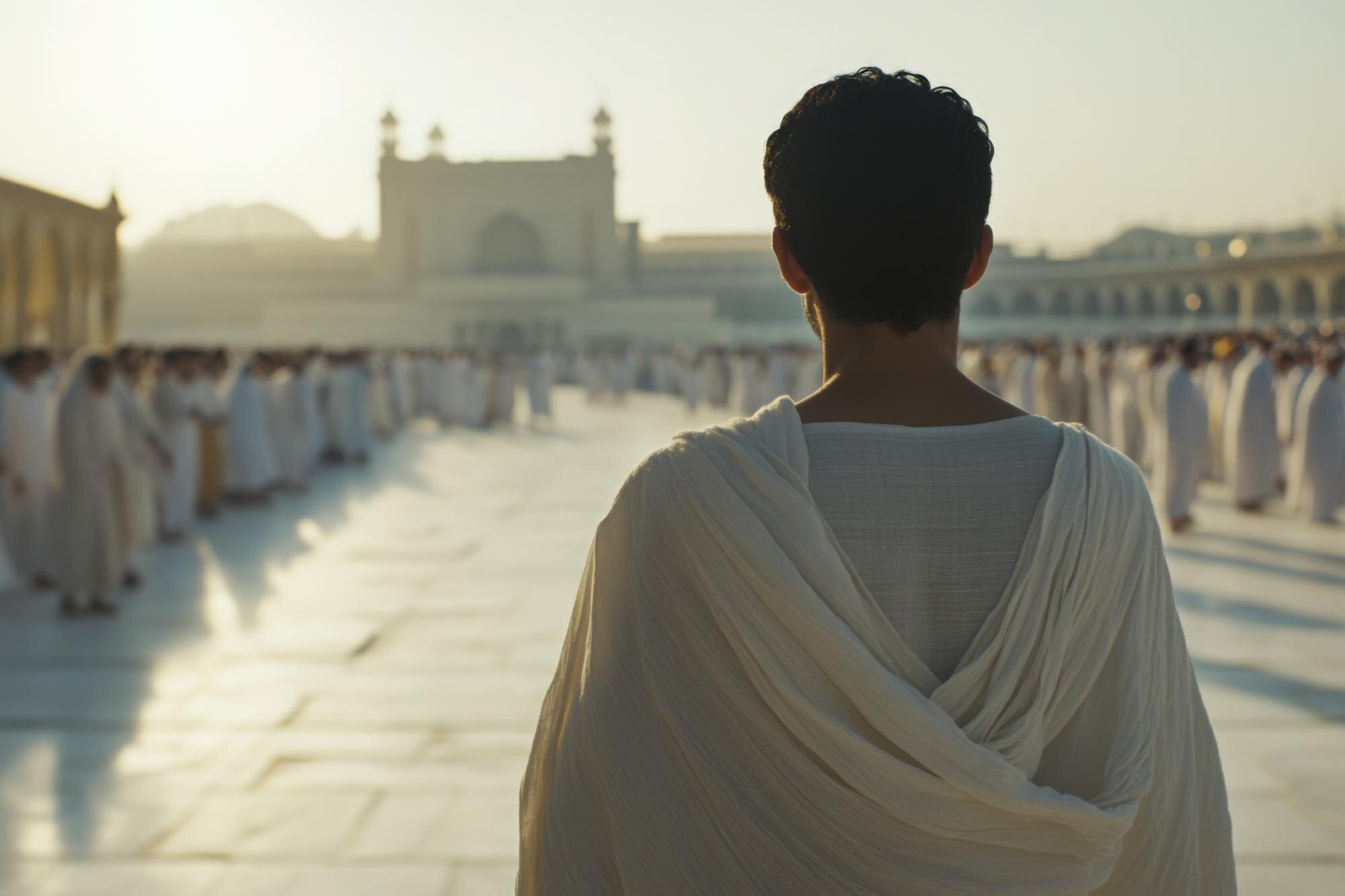
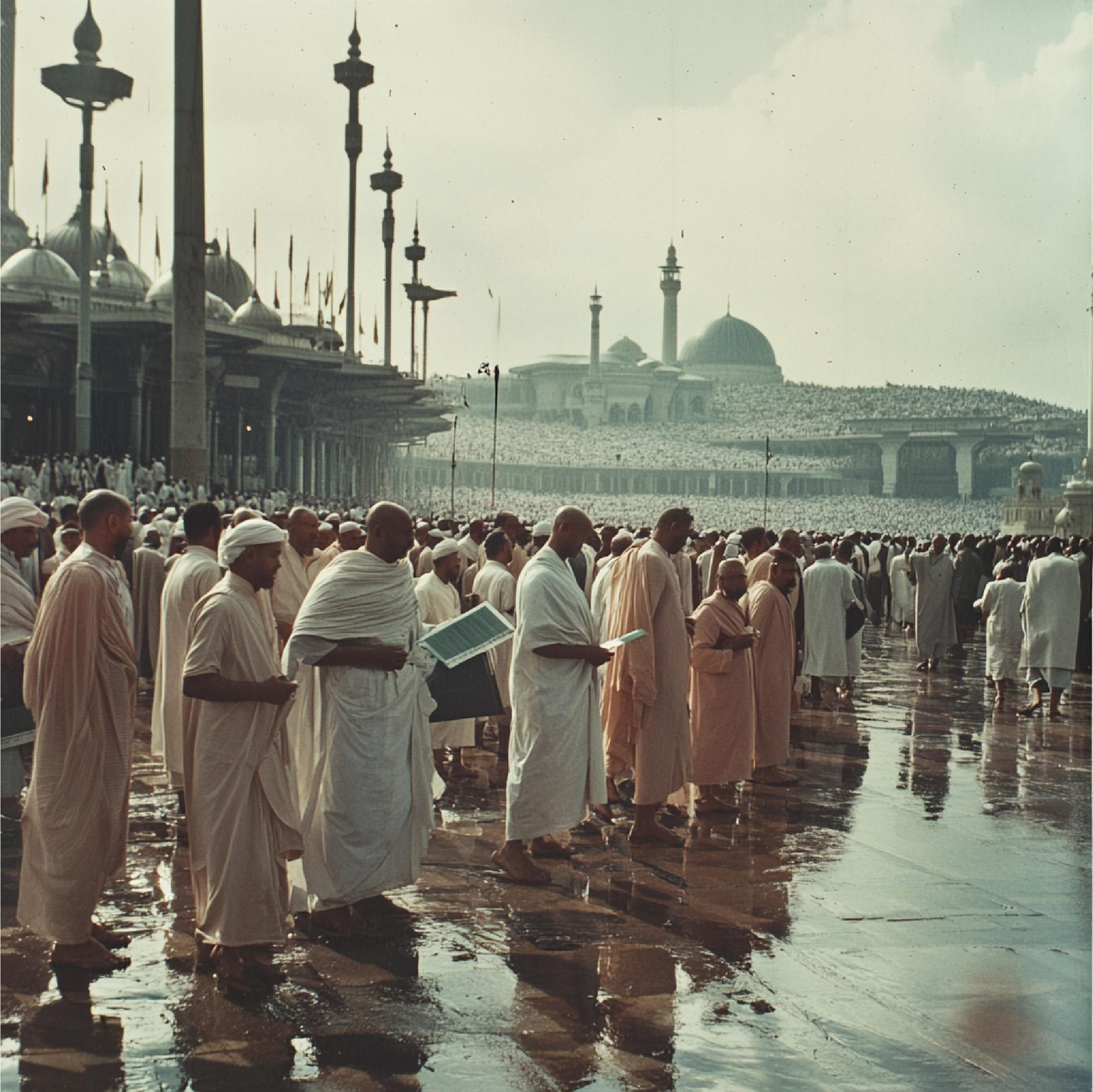
I want to show you something, that may change how you walk every step that follows: Umrah is one of the most beautiful doors of repentance Allah ever opened — because it lets your whole body do what your heart longs to do. Turning back to Allah was never just a sentence spoken by the tongue. It is a turning — away from the sin, and back toward Him. And Umrah makes that turning visible. You leave your home; you wrap yourself in white; you cry out Labbayk; you circle the House; you run between the two hills; you cut your hair; you step back out of the sacred state. On the outside, these are rites. On the inside, they are a map of repentance drawn in the movements of your own body.
Feel it as you go. The white cloth is the first mercy: you strip away your ordinary clothes and your adornment, and your heart understands that there are other things, heavier things, you have come here to take off. Some of them are obvious — the missed prayers, the harsh words, the unlawful earning, the hours you are ashamed of. Others hide beneath respectable clothing — the pride, the showing-off, the cold heart, the refusal to say sorry. The white cloth does not only ask, what are you wearing? It asks, what are you still carrying?
Tawaf then teaches your heart that turning back needs a new centre. So many sins simply keep going because a life has been quietly orbiting the wrong thing — a desire, an anger, a craving for approval, a fear. When you circle the Ka’bah, your body rehearses a new order: Allah at the centre, and everything else, finally, in its proper place. Sa’i teaches you that repentance takes effort — Hajar did not sit and wait; she ran, with everything in her. And so you, too, must run from whatever drags you back: delete the number, end the unlawful deal, change the route home, build the wall between yourself and the old road. And at the end, the cutting of the hair teaches you that the old self must lose something real. The hair falls — but what you are truly asking Allah to cut away is the pride, the excuses, the long attachment to sins you had begun to love. You walk out of Ihram as though He has handed you a second beginning. Guard that beginning with your life. Do not let it become merely a feeling that visited you in Makkah. Let it become a covenant you protect long after you are home.
And hear this, you who are afraid your past has made you unwelcome: the Prophet ﷺ told you that one Umrah to the next wipes away what lies between them. Let that fill you with hope — but never with carelessness. This mercy is not a licence to plan tomorrow’s sin; it is an open hand reaching for you now. Your Lord says, “Do not despair of the mercy of Allah” — and that verse is medicine poured straight onto the wound of the pilgrim who thinks himself too stained for Makkah. You are not going because you are pure. You are going because you need to be made pure. You were not invited because you have no wounds. You were invited by the very One who heals them.
Leave A Comment