Souq Qabil: The Complete Guide to Qabel Street Market in Historic Jeddah
Overview
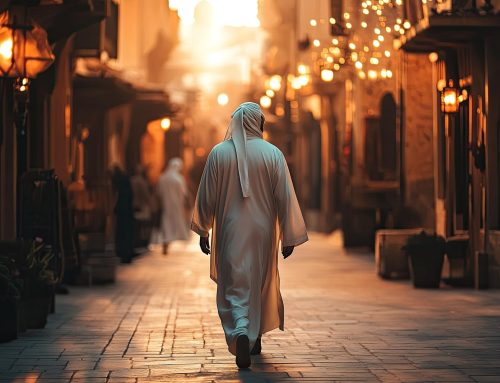
Qabel Street is loud in a way that malls are not. A hundred metres of narrow lane, roofed in places against the sun, lined on both sides with shopfronts stacked three and four deep with bolts of cloth, cardboard boxes of imported watches, plastic-wrapped luggage, and glass cases of perfume oil — and running through all of it, the particular commercial noise of a market that has never stopped haggling with its customers since the early twentieth century. Visitors know it by several names: Qabil Street, Souq Qabil, Gabel Street Souq, or, on Google Maps, Qabel Trail — all transliterations of the same Arabic شارع قابل, in the Al-Mazloum quarter of Al-Balad, Jeddah’s UNESCO-listed historic district (Wikipedia) (Wikipedia, Al-Balad).
The honest one-paragraph verdict: Souq Qabil is real, it is trading, and it is one of the few places left in Saudi Arabia where a visitor can watch cloth cut, priced by the metre, and handed to a tailor in the same afternoon. It is not glamorous. Parts of it are shabby, the wiring overhead looks exactly as dangerous as it is, and a meaningful share of the watches, sunglasses and branded goods on the tables are counterfeit and everyone selling them knows it (Arab News). But the fabric trade is genuinely good, the prices are genuinely lower than anywhere else in the city for the same categories of goods, and the atmosphere — Ramadan lanterns, sugarcane-juice stalls, competing shopkeepers calling out prices across the alley — is the closest thing Jeddah has left to what a Hijazi souq actually sounded like a century ago. If you want convenience and certainty, go to a mall. If you want fabric cut to your measurements by a tailor who has been doing it for thirty years, at a fraction of boutique prices, come here — and read the warnings below before you do.
The District and Its History
Al-Balad: Jeddah before Jeddah was a city of towers
Everything about Qabel Street only makes sense inside the history of Al-Balad, Jeddah’s old town. Jeddah’s role as a settlement predates Islam, but its defining historical function was fixed in 647 CE, when the Caliph Uthman ibn Affan designated it the official seaport for pilgrims travelling to Makkah (Saudipedia) (Jeddah Insider). For thirteen centuries afterward, every ship bringing pilgrims from Egypt, East Africa, India and the wider Indian Ocean world put in at Jeddah first, and every one of those pilgrims and merchants walked or rode through the town before continuing on the pilgrimage road to Makkah. That single fact — a port town permanently full of transient traders from three continents — is the origin of everything the historic souqs of Al-Balad still sell: imported textiles, spices, perfumes, and goods that had no local origin at all, brought in by the people passing through.
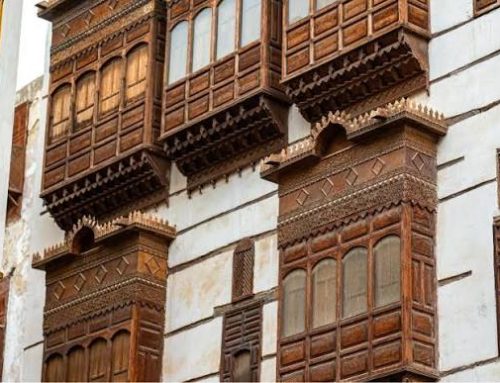
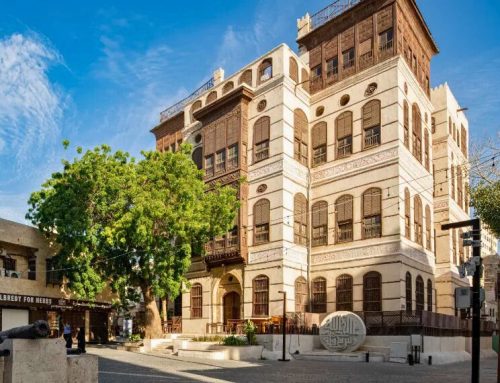
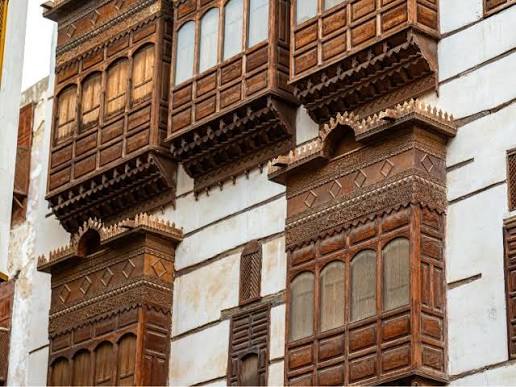
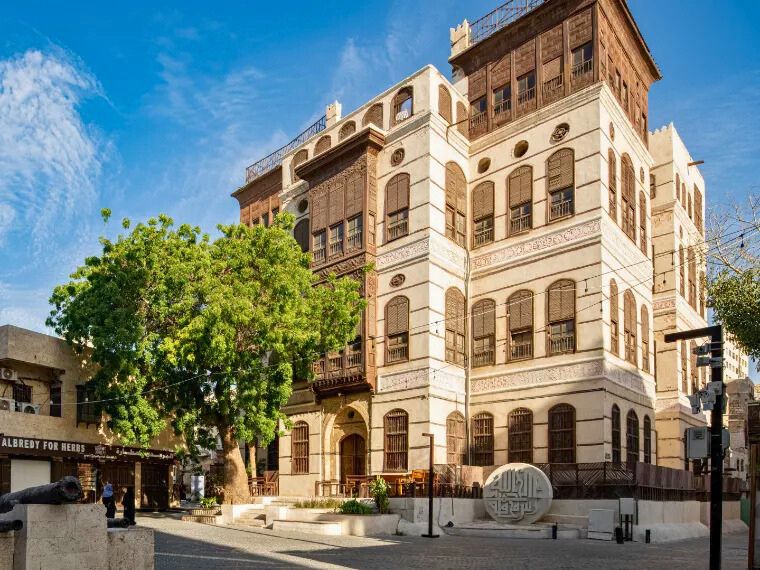
The old town’s building stock reflects this cosmopolitan commerce directly. Wealthy merchant families, especially from the mid-nineteenth century onward following the opening of the Suez Canal, built multi-storey coral-stone houses with elaborate carved wooden balconies known as rawasheen, designed to admit sea breeze while shielding interiors from the sun and from the street (Wanderlust). UNESCO inscribed Historic Jeddah, the Gate to Makkah on the World Heritage List in 2014, citing more than 600 traditional buildings and five historic souqs as the core of its Outstanding Universal Value (UNESCO World Heritage Centre) (Wikipedia). Al-Balad divides informally into several old neighbourhoods — Al-Mazloum, Al-Sham, Al-Yaman among them — and Qabel Street sits inside Al-Mazloum, north of Souq Al-Alawi, alongside Dar Al-Qabil and the Al-Shafi’i Mosque (Wikipedia).
A network of souqs, not one market
It is a common misconception, encouraged by casual tourist writing, to describe “Al-Balad Souq” as a single market. It is not. Historic Jeddah’s commercial quarter is a network of adjoining, historically specialised streets and lanes: Souq Al-Alawi, the largest and oldest, running through the centre of the district; Souq Al-Badu (the Bedouin Market), clustered near the Bab Makkah gate; Souq Al-Nada, a rectangular market roughly 150 years old known for food and fabric; Souq Al-Khaskiya; Souq Bab Shareef; and Qabel Street itself, also recorded historically as Souq Al-Jamaa (Wikipedia) (Arab News). A Ministry of Culture-affiliated account for UNESCO’s Google Arts & Culture programme places these markets in relation to one another precisely: Souq Al-Alawi “extends from Qabel Street to Bab Makkah” (Google Arts & Culture), meaning Qabel Street is one end of the same commercial corridor rather than an isolated curiosity. Sibling articles in this series cover Historic Jeddah as a whole and the Bab Makkah gate separately; this guide focuses specifically on Qabel Street and treats the wider district as context, not as duplicate ground.
Al-Shonah: what stood here before the street existed
Before Qabel Street was cut through, the site was occupied in part by Al-Shonah, a fortified warehouse complex whose surviving section is dated by architectural evidence to the late Mamluk period, the fifteenth or sixteenth century, and which historical accounts say was rebuilt during the reign of the Mamluk Sultan Al-Ghuri in response to Portuguese naval incursions into the Red Sea (Google Arts & Culture, “The Historical Path of Hajj”). In the early twentieth century Al-Shonah functioned as a private merchant warehouse storing spices, textiles and foodstuffs brought in from around the trading world, before later becoming a government store for grain, timber and even ammunition (Google Arts & Culture). When Qabel Street was cut through in the early twentieth century, it was built, in the words of this account, “on part of the ruins of Al Shonah” (Google Arts & Culture) — meaning the market street is not simply old; it physically overlays an older fortified trading structure whose own history runs back roughly five centuries. This detail should be read as one curated institutional account rather than an archaeologically verified excavation report, and the record on the exact extent of the overlay is thin.
Origins and Development of the Street
Founding and the name: two accounts, reported honestly
Sources disagree, mildly but consistently, on exactly who founded Qabel Street and precisely when — this is a case where the record should be reported as a conflict rather than smoothed over. Wikipedia’s summary states the street “was founded by Hussein bin Ali in the early years of the 20th century” and “was not given its name until it was bought in 1925–6 by Suliman Qabil” (Wikipedia). An Arab News feature gives a related but not identical account: the street was “built by Al-Sharif Hussein ibn Ali during the early 20th century,” and “was later bought by the Al-Qabil family from the son, Ali Al-Sharif” (Arab News) — implying the purchase was from Sharif Hussein’s son rather than directly from Hussein himself. A Google Arts & Culture account for the Ministry of Culture’s Jeddah Historic District programme dates the market “back to 1337 AH (1918–1919)” and says it was built “atop part of the ruins of Al Shonah,” named after Sulayman Qabel, who purchased the land and named it after his family (Google Arts & Culture). A separate Google Arts & Culture page dates the street’s opening specifically to 1916 (1334 AH), stating it “gained vitality with the opening of Qabel Street,” which connected Souq Al-Alawi to the port (Google Arts & Culture). Saudipedia’s own account is looser still, saying only that the street’s market “reputation resonated over the economic landscape since 1940” (Saudipedia), without endorsing the 1916–1919 founding dates given elsewhere. Sharif Hussein bin Ali was the Hashemite ruler of the Hijaz in this period, so a founder’s link to him is plausible on general historical grounds, but the exact chain of ownership from Hussein (or his son) to Suliman/Sulayman Qabil is not independently documented beyond these tourism and encyclopedic sources, and readers should treat the precise founding date as somewhere in the 1916–1926 range rather than a single fixed year.
What is consistent across every source is the second half of the story: the street took its permanent name from Suliman (Sulayman) Qabil, described uniformly as one of the most prominent merchants in Jeddah at the time (Wikipedia) (Saudipedia). His house, Beit Qabil (also Dar Al-Qabil), still stands in the heart of the area and is noted for rawasheen woodwork distinctive enough that replica art pieces have been made from its design (Saudipedia) (Wikipedia).
The first electrified street in Jeddah
The single best-documented and most frequently repeated fact about Qabel Street’s early development is that it was the first street in Jeddah to be electrified (Wikipedia) (Saudipedia). According to Arab News, the Qabil family imported a generator so that every shop on the street could be equipped with an electric lamp and an electric fan — a striking amenity for the period — and the street was roofed in corrugated metal known locally as altotowa, built by a German company (Arab News). The effect, by this account, was that tradesmen competed fiercely to rent shops on the street, since electric light and moving air were rare enough to be a genuine commercial advantage, and Qabel Street briefly “epitomized modernity and progress in downtown Jeddah” (Arab News). It is worth being precise about what this claim covers: it is the street’s early electrification that is well documented, not a claim that the market invented Jeddah’s commerce; the market itself long predates its electric lamps.
From food and currency to fabric, then to everything
Saudipedia’s account of the market’s early trade differs from the fabric-first narrative found elsewhere: it states that vendors on Qabil Street “displayed their products, mainly consisting of olives and a variety of cheese and pickles, for sale,” and that trade began with basic food supplies — sugar, tea, rice and grains — before the market “kept evolving” (Saudipedia). Arab News’s account, by contrast, states plainly that “in the past, Qabil Street was known to specialize in the fabric and material trade,” alongside currency exchange (Arab News). Both are probably true of different periods: a market street that opens selling staple foods and currency exchange, and which develops a specialised textile trade as it matures, is an entirely ordinary trajectory for a Red Sea port bazaar, and by the mid-twentieth century the fabric and material trade is what the street had become known for. The Wikipedia summary confirms the historical specialisation directly, noting the street’s shops sold “imported textiles, shoes, watches, etc., as well as locally manufactured goods” (Wikipedia).
Restoration and modern development
Qabel Street has been the subject of active, government-led restoration work for over a decade, distinct from — but coordinated with — the wider Al-Balad regeneration programme. A 2014 Arabic-language report in Asharq Al-Awsat documents that Jeddah Municipality completed the first phase of development works on Qabel Street specifically, including the removal of informal, unlicensed structural additions (iron and concrete extensions that had narrowed the lane and were identified as a fire and structural-collapse hazard), repaving of walkways in basalt stone, and restoration of building façades using materials matching the early twentieth-century originals — coral stone (hajar munqabi), Javanese timber, and a traditional lime-and-cement plaster mix (Asharq Al-Awsat, 2014). The same report notes equivalent works were under way at the same time across Souq Al-Nada, Souq Al-Alawi and Souq Al-Khaskiya (Asharq Al-Awsat). This 2014 restoration sits within the broader Jeddah Historic District programme, established under the Ministry of Culture, which by 2024 had carried out detailed conservation assessments of 651 historic buildings across Al-Balad and continued restoration and rehabilitation projects under an intervention plan spanning 2019–2030 (UNESCO State of Conservation report, 2023) (UNESCO State of Conservation report, 2024). In November 2025, the Public Investment Fund’s Al Balad Development Company announced a $3.6 billion hospitality investment portfolio for Historic Jeddah running from 2025 to 2038, aimed at converting historic properties into hotels while keeping “the district’s heritage identity… untouched” under defined architectural guidelines (Asharq Al-Awsat English). None of this reporting suggests Qabel Street’s market function has been displaced by these investments; the souq continues to operate as a working market inside a district that is simultaneously being restored building by building.
Architecture and the Physical Street
Qabel Street’s built form is easy to state precisely because Wikipedia records exact figures: the street runs approximately 77 metres long and seven metres wide, leading from King Abdulaziz Road near the Al Mahmal Center to Al Dhahab Street (“Gold Street”) (Wikipedia). Several tourism sources round this to “under 100 metres” or “barely 100 metres long,” which is consistent with the more precise figure (House of Saud). Architecturally, the street sits within the same coral-stone, rawasheen-balcony tradition as the rest of Al-Balad: multi-storey merchant houses with elaborately carved wooden latticed balconies designed to admit sea air while preserving privacy, a style repeated throughout the district and best preserved in house-museums a short walk away (Wanderlust). Historically the street was roofed over in corrugated metal sheeting to shade shoppers from the sun, a construction attributed to a German contractor in the early twentieth century (Arab News); visitors today still experience Qabel Street as a shaded or partially covered lane rather than an open street, which matters directly for how bearable it is at midday in summer.
Two of Historic Jeddah’s most important house-museums stand at the eastern end of the street: heading east from Qabel Street toward Al Ma’amar Mosque, visitors pass Nassif House Museum, built for the wealthy Ottoman-era merchant and governor Omar Nasseef Effendi, and Matbouli House Museum, tucked into Qumusani Alley off Souq Al-Alawi and reputed to be the oldest surviving house in Historic Jeddah (Wikipedia). These are covered in their own dedicated articles in this series and are not repeated here in detail, but their proximity is one of the practical reasons Qabel Street is worth combining with a wider Al-Balad walk rather than visiting in isolation.
By the early 2000s, Arab News reported visible physical decline along the street: “many of the stores are in a state of disrepair,” with exposed electrical cabling running across the pavement marked by hazard signs, overflowing rubbish containers, and long-abandoned, unfinished construction projects standing as concrete skeletons (Arab News, 2003). The 2014 municipal restoration campaign described above was a direct response to exactly this kind of deterioration — removing unsafe informal additions and re-plastering façades (Asharq Al-Awsat) — and later UNESCO reporting confirms Historic Jeddah has continued a structured, building-by-building conservation programme since (UNESCO). A 2021 report from Majalla described a slow post-pandemic recovery, with the Old Downtown still resembling “a big restoration workshop,” and shopkeepers reporting customer numbers had not returned to pre-2020 levels even as government-led rehabilitation of around 100 traditional buildings continued (Majalla). Readers should expect a market that is genuinely old and genuinely restored in patches, not a uniformly polished heritage set — some frontages will look freshly plastered, others tired, in the same short stretch of street.
What You Will Actually Find There
The general character of the goods on sale
A walk down Qabel Street today, according to Arab News’s on-the-ground account, turns up “a variety of electronic goods, watches, wallets, luggage, perfumes, fabric, gold, as well as a variety of other wares,” a list that has changed little in substance across two decades of reporting (Arab News). More recent tourism write-ups converge on the same categories: perfumes and oud, spices, gold and gold trinkets, textiles, and handmade accessories such as beaded jewellery, prayer caps and small souvenirs (House of Saud) (Tempo). TripAdvisor’s aggregated listing places the market squarely inside “the bustling Balad marketplace” and repeats that it sells “electronics, perfumes, spices, dates, honey and household items” (Tripadvisor). Saudipedia’s separate entry on Souq Al-Badu records that fabrics, spices, grains and traditional Bedouin women’s clothing are the specialities of the adjoining Bedouin Market (Saudipedia), reinforcing that Qabel Street sits inside a wider textile-and-general-goods corridor rather than being an isolated one-trade street.
Currency exchange: a genuine surviving speciality
One trade that has persisted on Qabel Street since its earliest years is currency exchange. Wikipedia notes the street “was home to currency exchange shops” historically (Wikipedia), and this remains true today: multiple licensed exchange houses, including branches of Alamoudi Exchange and Ben Yaala Exchange Company, list street addresses on “Qabel Trail” in Al-Balad, with Ben Yaala’s branch showing opening hours of 8:00 AM–10:00 PM (2:30–9:00 PM on Fridays) as of a currency-comparison site checked in December 2024 (Wise, December 2024). An older Saudi Arabian Monetary Authority-style licensed exchanger list similarly records several exchange establishments with addresses simply given as “Jeddah, Al Balad, Qabel St.” (Ministry of Commerce-affiliated exchanger directory), and Arab News reported separately that Qabil Street and the wider Al-Balad district “still remains the central location for money exchange shops” in Jeddah (Arab News). For a visitor this matters practically: Qabel Street is a reasonable, established place to change currency in cash, though as with all cash currency exchange, comparing two or three counters before committing to a rate is sensible.
Fabric and tailoring: the genuine strength of this market
This is the part of Qabel Street — and of Al-Balad’s fabric trade generally — that deserves the most careful, concrete treatment, because it is one of the few things Jeddah is unambiguously good at and one of the few reasons a discerning shopper, not just a heritage tourist, has to come here specifically.
What kind of cloth is actually sold. Fabric shops in Balad, including those on and around Qabel Street, stock a wide range: cotton, cotton-polyester blends, chiffon, crepe, velvet, brocade, and dedicated abaya-weight and thobe-weight cloths, alongside bridal and “fancy” fabrics for special-occasion wear (Fabriclore) (Sewing and Fabric Shops in Jeddah). A wholesale-buying guide checked in June 2025 specifically identifies “Balad Fabric Market” in Jeddah as a strong source for imported Indian, Turkish and Chinese fabrics, with “crepe, chiffon, cotton, and brocade” as standard stock, describing it as suited to “boutiques, embroidery units, and tailors” (Fabriclore, June 2025). A long-running Jeddah expatriate sewing blog, checked for shops as recently maintained, notes that Balad fabric shops “carry almost all kinds of fabrics like cotton, abaya clothes, fancy and bridal too,” while cautioning that in general Jeddah fabric shops tend to sell women’s cotton-polyester prints “by 5 metres, not less” as a minimum cut in some outlets, with fewer shops carrying men’s (thobe) fabric specifically (Sewing and Fabric Shops in Jeddah). An Arab News shopper interviewed on Qabil Street specifically praised the fabric on offer: “The fabric available here is unlike any other I have found in Jeddah. There are special designs that come from small sewing mills all over the Middle-East, that are unavailable anywhere else. The material is soft and of excellent quality, and so inexpensive,” she told the paper (Arab News).
Price per metre, with the date checked. Fabric pricing in Jeddah is not centrally published and varies by material, origin and shop, so the figures below should be read as a range drawn from multiple retail and wholesale sources rather than a fixed tariff. A Jeddah sewing-supplies blog listing shops in the wider city (not Balad specifically) records fabric priced from roughly SAR 10 to SAR 1,000-plus per metre or piece depending on material — plain cotton prints at the low end, chiffon, velvet, embroidered and “chanel” fabrics at the high end (Sewing and Fabric Shops in Jeddah). Specifically for thobe cloth, a 2016 Arab News report on Ramadan tailoring demand quoted a tailoring-shop supervisor stating that Swiss fabric cost SR250 per metre, Japanese fabric SR150 per metre, with Indian and Indonesian fabrics cheaper still, and that stitching charges for a thobe during the Ramadan rush ran around SR200, “though this may vary from one shop to another” (Arab News, 2016). An earlier 2013 Arab News report on the same seasonal trade gave a different breakdown by finished-garment cost rather than cloth alone: a tailored, Egyptian-cotton thobe running SR500–600, Indian-cotton thobes at SR400–550, and Indonesian-cotton thobes at SR300–350, all as of the 2013 Ramadan season (Arab News, 2013) — these are older figures and should be treated as historical reference points rather than current prices; readers should confirm current per-metre and stitching rates directly with a Balad tailor before committing. For scale, a wholesale fabric-sourcing guide checked in 2025 gives a still-broader picture across Saudi fabric markets generally, without breaking Balad out specifically by price (Fabriclore, 2025).
How tailoring is actually commissioned. The process described consistently across sources is straightforward and still functions the way it has for decades: a customer selects cloth from a fabric shop — in Balad, from a shop on or near Qabel Street, Souq Al-Alawi, or the wider fabric lanes of the district — and either that shop or a nearby independent tailor takes measurements on the spot and stitches the garment to order. A Reddit thread on Jeddah tailoring confirms this directly: “There are quite a few shops in balad where you can buy thobe fabric and get it tailored… Ask the shopkeeper if they can get it stitched” (Reddit, r/Jeddah). This is the traditional two-step commission: buy the cloth, then have it cut and sewn, sometimes by the same shop and sometimes by a tailor they refer you to a few doors down. It is a meaningfully different experience from buying a ready-made thobe or abaya off a rack, and it is the reason fabric and tailoring belong together in any serious account of what this market is for.
Turnaround times and stitching costs. Reddit threads focused specifically on Saudi tailoring costs, while mostly discussing Riyadh rather than Jeddah, give a useful general sense of the market: neighbourhood tailors quoted at roughly SR100–200 for a basic thobe, with better-known ateliers charging SR300–600 or more depending on fabric and finish, and turnaround commonly described as one to three weeks outside of peak season, compressing or lengthening around Ramadan and Eid depending on demand (Reddit, r/Riyadh). A separate Reddit poster asking specifically about Jeddah pricing set a personal ceiling of SR150 for tailoring labour alone (supplying his own cloth) as what he considered reasonable, without confirming whether that figure was actually achievable (Reddit, r/Jeddah, August 2025) — his question went unanswered in the thread as fetched, which is itself useful information: pin down the stitching price with the specific shop before committing, rather than assuming a city-wide standard rate. An older, more anecdotal source, a long-running Jeddah expatriate blog, put a basic ready-made thobe at “80 riyals and up,” with a non-fancy custom-made thobe running “about 90–100 riyals” for stitching, rising with fancier fabric and added detailing (Jeddah Daily Photo) — again, an old figure to be read as a historical low-end reference rather than a current price. For suits rather than thobes, a Reddit thread on Jeddah tailors from November 2025 quoted one satisfied customer describing a tailor who “finished the job in about two weeks,” with total cost — fabric plus workmanship — likely to exceed SR1,300 for a good suit (Reddit, r/Jeddah, November 2025).
Abayas: buy off the rack or commission bespoke. Abaya pricing spans an enormous range depending on fabric, embellishment and whether the piece is ready-made or bespoke. A Jeddah-focused shopping guide checked in April 2026 sets out a realistic breakdown: basic, unembellished abayas at SAR 100–250; mid-range pieces with light embroidery at SAR 250–600; designer ready-to-wear at SAR 600–1,500; luxury and couture at SAR 1,500–5,000-plus; and fully custom, bespoke commissions from private tailors or ateliers at SAR 2,000–10,000-plus (House of Saud, “Buying an Abaya in Saudi Arabia,” April 2026). That same guide describes Souq Al-Alawi specifically — immediately adjoining Qabel Street — as selling handmade abayas in classic black styles with hand-stitched embroidery and beadwork, priced from SAR 150 to SAR 800, with bargaining expected: “start at roughly 60% of the asking price and settle around 70–80%” (House of Saud). Cheaper still, a market comparison piece lists basic cotton abayas from Jeddah shops starting around SAR 50 at the very low end, rising with silk and better finishing (cheap abaya shop comparison), and a first-hand blog account put typical retail abayas, off sale, at roughly SR200–300 (Susie’s Big Adventure). The general point that holds across every source: fabric-and-tailoring commissions in this district are markedly cheaper than boutique or designer abaya shopping on Tahlia Street or in Jeddah’s malls, at the cost of some uncertainty over exact finish and turnaround — precisely the trade-off the merchant quoted in Arab News described when he said his goods were “much cheaper than in other shopping areas like Tahlia Street” (Arab News).
Quality variation is real and worth planning for. Multiple sources note that fabric quality on offer varies significantly shop to shop and even bolt to bolt: some vendors carry genuinely well-made cloth from small regional sewing mills, as the Arab News shopper described, while cheaper stalls stock synthetic-heavy prints intended for low-cost, high-turnover sale. There is no substitute for handling the fabric yourself before committing — checking weight, weave tightness, and whether a printed pattern is dyed through or only surface-printed — and for asking a tailor’s opinion on whether a given cloth will hold its shape after washing and repeated wear in Jeddah’s heat and humidity, which is harder on cheap synthetic blends than on cotton or good-quality blends.
Shoes, luggage, electronics, watches and household goods
Beyond fabric, the categories Arab News singles out from direct observation — electronics, watches, wallets and luggage — remain the backbone of the general merchandise trade on the street (Arab News). These are overwhelmingly imported, low-to-mid-price goods: mobile phone accessories, small household electronics, imitation and genuine-brand watches side by side, synthetic-leather wallets and bags, and hard-shell or soft luggage stacked outside shopfronts. This is bazaar retail in the classic sense — dense stock, competitive adjacent shops, and prices that depend heavily on your willingness to negotiate rather than on a fixed sticker. Shoes appear in the same general-goods category, typically inexpensive imported footwear rather than a specialist cobbler trade. None of these categories carry the same “worth a special trip” case that the fabric and tailoring trade does; they are worth browsing if you are already there, and worth buying only once you have checked the item closely, since quality control on cheap imported electronics and footwear in bazaar settings is inconsistent by nature, not specific to this street.
Perfume, oud and household items
Street-level perfume vendors — some with fixed stalls, some unlicensed and simply spraying scent samples at passersby — are a fixture of the Qabel Street experience, offering imitation and interpretation blends of major Western fragrance houses (Arab News names Armani and Hugo Boss specifically) alongside traditional oud-based oils and rose water preparations (Arab News). A 2026-dated tourism guide to the district’s souqs gives representative price bands for this category as sold in the wider Al-Balad market complex: Arabian perfume oil at SAR 30–300, oud oil at roughly SAR 100–2,000-plus per tola (about 12ml) depending on grade, and basic bukhoor (scented wood chips) at SAR 20–80 for a 250g measure (House of Saud, checked April 2026). The same guide lists household and decorative items commonly found across these markets — brass dallah coffee pots at SAR 50–250, and handwoven rugs, more a speciality of the neighbouring Bedouin Market, at SAR 200–1,500 (House of Saud). These figures describe the district generally rather than Qabel Street pricing specifically, since no source breaks out perfume or brassware prices by individual street, but they are a reasonable guide to what to expect walking this stretch of Al-Balad.
Highlights Worth Your Time
The fabric-and-tailoring commission itself. Not a single shop or building, but an experience: choosing cloth, having it measured and cut, and coming back to collect a finished thobe, abaya or shirt a few days later, is the one activity on this street that cannot be replicated in a mall and is worth deliberately building time into a Jeddah visit for, given turnaround times of roughly one to three weeks reported above (Reddit, r/Riyadh).
Beit Qabil (Dar Al-Qabil). The merchant house of the street’s namesake, Suliman Qabil, notable for its carved rawasheen woodwork and standing as one of the identifiable landmark buildings of the Al-Mazloum quarter (Saudipedia).
The currency exchange row. A cluster of licensed money changers, a direct continuation of a trade recorded on this street since its early years, useful practically as well as historically (Wikipedia) (Arab News).
The transition into Souq Al-Alawi. Walking the full length of Qabel Street feeds directly into the eastern end of Souq Al-Alawi, Jeddah’s largest and oldest bazaar, which is worth treating as one continuous walk rather than two separate destinations (Google Arts & Culture).
The overhead roofing and old shopfronts. Sections of the street’s historic metal roofing and narrow, densely packed shopfronts are among the more visually distinctive stretches of Al-Balad’s commercial architecture, a direct physical trace of the street’s early twentieth-century construction (Arab News).
Practical Visitor Guide
Where it is and how to get there
Qabel Street sits inside Al-Balad, running between King Abdulaziz Road (near the Al Mahmal Center, in the area historically called Bab Al Sabba) and Al Dhahab Street, feeding directly into Souq Al-Alawi (Wikipedia) (Google Arts & Culture). Al-Balad itself sits close to Jeddah’s waterfront, a short taxi or rideshare journey from the Corniche and from Jeddah’s main business districts; most visitor guides describe reaching Al-Balad from central Jeddah hotels as a ride of roughly fifteen to twenty-five minutes depending on starting point and traffic, though exact timing depends on where in the city you start and should be checked against a live map at the time of travel rather than assumed. Ride-hailing apps (Uber, Careem) are consistently recommended over hailing a taxi on the street, both for price transparency and to avoid the fare disputes discussed under Warnings below.
Hours, and prayer-time closures
Sources differ somewhat on exact opening hours, which is unsurprising in a market of small, independently run shops with no central management, but the pattern is consistent: Qabel Street runs primarily as an evening market. A dedicated souq guide checked in April 2026 gives Souq Qabil’s hours as 5:00 PM to midnight, daily (House of Saud, April 2026). The same guide gives the adjoining Souq Al-Alawi’s hours as 9:00 AM–10:00 PM Saturday through Thursday and 2:00–10:00 PM on Fridays, and gives equivalent hours for Bab Makkah Market and the Bedouin Market (House of Saud). As with all souq hours in Saudi Arabia, expect stores to close briefly, generally for ten to twenty minutes, around each of the five daily prayer times, most disruptively around Maghrib (sunset) prayer, when many shops close their shutters and staff step away to pray before reopening; this is a normal, respectful part of doing business in the district rather than an unusual inconvenience, and shoppers should simply plan to pause rather than expect uninterrupted opening hours. Given Souq Qabil’s own listed hours begin at 5:00 PM, a visit here will typically span the Maghrib closure regardless, so build in patience for that pause as a normal part of an evening visit.
Best time of day and season
The same April 2026 guide recommends visiting “after 5:00 PM year-round” for the most comfortable shopping conditions and the fullest atmosphere, and identifies October through March as the most comfortable season overall, with daytime temperatures in the 28–32°C range (House of Saud). This lines up naturally with Souq Qabil’s own evening-only opening hours — there is little reason to try visiting at midday, since the street is not meaningfully open then in any case.
Crowds, Ramadan and Hajj season
Foot traffic in Al-Balad’s souqs rises sharply during Ramadan evenings, when shopping after the day’s fast is broken becomes a major evening activity, and during the run-up to Eid, when clothing and tailoring demand peaks — precisely the period the Arab News tailoring-cost reporting above describes as pushing prices and turnaround pressure upward (Arab News) (Arab News). Al-Balad, as the historic gateway to Makkah, also sees crowd and traffic-management measures introduced around Hajj season; a 2022 Arab News report describes new municipal measures introduced in the Bab Makkah area of Al-Balad, including golf-cart transport, iron pedestrian barriers separating foot and vehicle traffic, and designated loading and monitoring points, aimed specifically at managing dense pedestrian flow in the historic core (Arab News, 2022). Visitors heading to Qabel Street during Ramadan evenings or around major pilgrimage periods should expect denser crowds, slower movement through the lane, and shops working later than their normal hours to capture the higher footfall.
Parking
Al-Balad’s historic core, including the immediate area around Qabel Street, is a dense network of narrow pedestrian lanes not built for vehicle access; visitors driving themselves should expect to park at the edge of the historic district, on wider streets such as King Abdulaziz Road, and walk in, rather than expecting to park adjacent to the souq itself. Municipal traffic-management measures noted above, including pedestrian-only enforcement near Bab Makkah, reinforce that this district is increasingly managed as a walking precinct rather than a drive-through shopping street (Arab News). Ride-hailing drop-off and pickup at a fixed, well-lit point on the district’s perimeter is generally more practical than attempting to park a private car nearby.
Heat
Jeddah’s climate is hot and humid for most of the year, and this matters directly for anyone planning a Qabel Street visit outside the evening hours the market itself keeps. Climate data checked for Jeddah shows average daytime highs around 38°C in July and August, with humidity peaking closer to 67% in September and comparatively lower, though still high, humidity around 53% in July (Weather2Travel climate data). Since Souq Qabil’s own opening hours run from 5:00 PM, most visits will naturally occur after the worst of the daytime heat has passed, but the residual heat and humidity of a Jeddah summer evening, particularly indoors under the street’s partial metal roofing, should not be underestimated; light, breathable clothing and water are sensible regardless of season.
Safety
General safety guidance for Jeddah’s historic markets rates petty theft in crowded market conditions as a low-to-medium risk, manageable with normal precautions such as keeping bags zipped and in front, and rates taxi and informal-transport overcharging as a more consistently reported medium-risk issue, discussed in detail under Warnings below (TripWaffle Jeddah safety guide). The market itself, being small, well-trafficked in the evening, and part of an actively policed historic district, does not feature in available sources as a location associated with serious crime; the practical risks reported are overwhelmingly commercial — being overcharged, sold counterfeit goods, or shortchanged in a rushed cash transaction — rather than personal safety threats.
Prayer Facilities and Religious Considerations
Qabel Street is a commercial street, not a religious site, and it should be described as such — nothing about its history or trade carries particular religious significance beyond the ordinary rhythms of commerce in a Muslim-majority country. That said, the district around it is genuinely dense with historic mosques, and a visitor interested in combining shopping with a sense of the district’s religious life has real options nearby. A TripAdvisor reviewer’s route description through this part of Al-Balad notes that “next door” to the Qabel Street area stands “one of the oldest mosques in Jeddah, Akkash mosque” (Tripadvisor), and Wikipedia’s summary of Al-Balad notes the Al-Shafi’i Mosque as one of the landmark buildings of the same Al-Mazloum neighbourhood that contains Qabel Street and Dar Al-Qabil (Wikipedia). As set out above under Hours, shops on and around Qabel Street close briefly around each of the five daily prayer times, most noticeably at Maghrib; this is standard practice across Saudi Arabia’s commercial life and not specific to this market. There is no indication in available sources of dedicated visitor prayer rooms within the souq itself; visitors wishing to pray should use one of the district’s mosques rather than expect in-market facilities. Modest dress is expected throughout Al-Balad as it is throughout Saudi Arabia generally — this is general country-level context rather than a site-specific rule for this particular street, and is worth stating plainly as such rather than dressed up as special local custom.
Families, Children and Accessibility
Qabel Street’s narrow, densely packed, evening-only format makes it a reasonable but not especially child-optimised destination. The lane is roughly seven metres wide and heavily trafficked with pedestrians and shop displays spilling into the walkway (Wikipedia), meaning prams and small children need close supervision, and the market has no dedicated family zones, seating areas, or children’s facilities described in any source consulted. Surfaces underfoot are a mix of older paving and the basalt-stone resurfacing carried out during the 2014 restoration campaign (Asharq Al-Awsat), generally walkable but uneven in places typical of an old town rather than a purpose-built pedestrian mall; wheelchair or mobility-aid users should expect some uneven ground and narrow passing space, particularly during busy evening hours, and no source reviewed makes any specific claim about step-free access or dedicated accessibility provisions on this particular street. Families interested in a gentler introduction to the district’s history might combine a Qabel Street stop with the more curated, indoor experience of Nassif House or Matbouli House Museum nearby, both of which offer calmer, self-paced viewing compared to the working market itself (Wikipedia).
Costs and Value
Every price cited in this guide should be treated as a snapshot checked on the date given beside it, not a fixed tariff — souq pricing in general, and this street’s pricing in particular, moves with fabric import costs, gold spot prices, seasonal demand around Ramadan and Eid, and simple shop-to-shop variation. With that caveat, the clearest value proposition on Qabel Street is fabric and tailoring: thobe cloth priced from roughly SR150 per metre for Indonesian or Indian fabric up to SR250 per metre for Swiss fabric, as reported in 2016, with stitching charges around SR200 during peak Ramadan demand (Arab News, 2016), compares favourably with the SR750–1,100 per finished garment reported for rushed custom tailoring elsewhere in the city during the same Ramadan period (Arab News, 2014), and very favourably indeed with bespoke abaya commissions from private ateliers, quoted as high as SAR 2,000–10,000-plus (House of Saud). A Qabil Street merchant told Arab News plainly that his prices were low specifically “because the rent here is quite low,” in direct contrast to higher-rent shopping streets such as Tahlia (Arab News) — a rare piece of direct, on-record reasoning for why this particular market undercuts other parts of the city.
Bargaining is expected and normal, as it is throughout Al-Balad’s souqs. A 2026-dated visitor guide to the district’s markets recommends opening negotiations at 40–50% of the asking price and working toward a middle ground, noting that gold is the one clear exception since “gold prices per gram are fixed nationally” and only the workmanship or “making charge” is genuinely negotiable (House of Saud). The abaya-specific guide from the same publisher suggests a slightly gentler opening point for that category — around 60% of the asking price, settling around 70–80% (House of Saud). Paying in cash is generally reported to produce better negotiated prices than card payment across these markets (House of Saud).
Seasons, Weather and Timing
As noted under Practical Visitor Guide, Souq Qabil’s own listed hours run from 5:00 PM to midnight daily (House of Saud, checked April 2026), which largely determines the best time to visit regardless of season: this is functionally an evening and night market. Within the calendar year, October through March offers the most comfortable ambient conditions for walking Al-Balad generally, with daytime temperatures around 28–32°C, compared with average highs around 38°C in July and August and humidity peaking near 67% in September (House of Saud) (Weather2Travel). Ramadan brings a distinct seasonal character: shops extend hours and stock up for the pre-Eid clothing rush, evening crowds swell after Iftar, and the tailoring trade in particular sees its busiest and most price-sensitive period of the year, as the 2013, 2014 and 2016 Arab News reports on Ramadan thobe pricing all independently confirm (Arab News, 2013) (Arab News, 2014) (Arab News, 2016). A February 2026 travel report confirms that Al-Balad’s markets, including its historic souqs, were being actively promoted and revitalised in the run-up to Ramadan 2026 under a municipal “Heart of Ramadan” cultural tourism campaign, with restoration of rawasheen balconies and coral-stone façades continuing alongside guided walking tours (TravelAndTourWorld, February 2026) — direct, recent confirmation that the district’s souqs, including Qabel Street, remain an active part of the city’s commercial and cultural life heading into 2026, not a fossilised heritage attraction.
Nearby Places to Combine
Qabel Street is short enough that no visitor should treat it as a stand-alone destination; it functions best as one stop on a longer walk through Al-Balad. Immediately adjoining is Souq Al-Alawi, Jeddah’s largest and oldest bazaar, extending from Qabel Street to the Bab Makkah gate and specialising in gold, oud and perfume, spices, abayas and antiques (Google Arts & Culture) — treated in more depth in this series’ dedicated coverage of Historic Jeddah. Further along the same corridor toward Bab Makkah sits Souq Al-Badu, the Bedouin Market, more than 140 years old by local tradition, known for handmade rugs, camel-leather goods, and turquoise and amber Bedouin jewellery — genuinely handmade stock that is comparatively rare among the largely imported goods found elsewhere in the district (House of Saud) (Destination KSA). A short walk east brings visitors to Nassif House Museum and Matbouli House Museum, two of the best-preserved historic merchant residences in Al-Balad, covered separately in this series (Wikipedia). For a change of pace from market shopping, Jeddah’s Corniche waterfront and the landmark King Fahd’s Fountain sit a short taxi ride from Al-Balad and are natural pairings for a single day’s itinerary combining old-town commerce with the modern seafront — both are covered in their own dedicated articles in this series.
Common Misconceptions and Traveller Warnings
Misconception: this is one souq, not several
As set out above, “Al-Balad Souq” is not a single market; Qabel Street, Souq Al-Alawi, Souq Al-Badu, Souq Al-Nada and Souq Al-Khaskiya are historically distinct, adjoining commercial streets, each with its own character and specialities (Wikipedia). Referring to the whole district loosely as “the souq” will not cause real problems, but expecting a single unified market hall, rather than a network of narrow historic streets, sets the wrong expectation.
Warning: counterfeit watches, electronics and branded goods are common
This is the most important honest warning to give about this market. Arab News’s own 2003 reporting on Qabil Street is direct about it: shopkeepers openly stocked counterfeit luxury watches, and one vendor was quoted admitting to selling an imitation Rolex Submariner for SR250, compared with a genuine model’s SR14,000 price tag, freely acknowledging the item was fake to the reporter (Arab News). This is not an isolated, decades-old problem confined to one street: Saudi Arabia’s Ministry of Commerce has run large, sustained enforcement campaigns against counterfeit goods nationally in the years since. Reporting on enforcement activity in the second half of 2025 recorded more than five million counterfeit items seized nationally in a single quarter (Saudi Expatriates news aggregator), and a further intellectual-property industry report covering activity through December 2025 recorded 3.6 million counterfeit products seized and 1,245 non-compliant commercial facilities closed nationwide (NJQ & Associates). Watches specifically remain a recurring target of these efforts: a 2025 report on the global Swiss watch industry’s anti-counterfeiting programme noted roughly 150,000 counterfeit Swiss watches seized in Saudi Arabia as part of coordinated international enforcement (Swissinfo), and a historical 2004 seizure in Jeddah specifically saw roughly 500,000 fake watches, valued at around SR43 million, impounded by Saudi customs (Arab News archive). None of this means every watch or electronic item on Qabel Street is fake, but a shopper should assume that heavily discounted “branded” watches, sunglasses and electronics on open-air tables are very likely counterfeit, treat any claim of authenticity on an unusually low-priced branded item with real scepticism, and buy such items, if at all, purely as inexpensive novelties rather than as genuine branded goods.
Warning: fabric and finished-garment quality varies significantly
As discussed in the fabric and tailoring section above, quality ranges widely from genuinely good small-mill cloth to cheap synthetic prints, and there is no reliable way to judge this from a distance — handle the fabric, ask the tailor’s opinion on how it will wear, and inspect stitching on any ready-made item closely before paying (Arab News) (Sewing and Fabric Shops in Jeddah).
Warning: taxi and informal transport overcharging
Multiple independent sources flag transport to and around Al-Balad, including Qabel Street, as a common site of tourist overcharging. A Jeddah travel-safety guide rates taxi overcharging a medium-level risk and recommends using metered ride-hailing apps or agreeing a fare in advance rather than hailing a street taxi (TripWaffle). A published travel-safety account describes a specific “broken meter” scam at Jeddah’s airport, in which a driver quoted roughly SAR 500 for a ride to Al Balad against a fair fare of around SAR 100–120 (Tabiji, “Saudi Arabia: Tourist Scams”), and a first-hand travel blog account of a week in Jeddah separately describes talking a driver down to a fair fare before a trip to “Al Balad souq for the evening,” after being badly overcharged on an earlier ride the same week (Gallivantrix, “The Taxis: A Week in Jeddah”). The practical takeaway is consistent across all these sources: use a rideshare app with a fixed, app-quoted price, or agree the fare explicitly before the journey begins, rather than trusting a metered or verbally quoted fare from an unlicensed street taxi.
Warning: haggling fatigue and pushy street vendors
Unlicensed perfume vendors spraying scent samples on passersby without invitation, described directly in Arab News’s reporting on the street (Arab News), remain a fixture of the district and can feel intrusive to visitors unused to open-air bazaar sales tactics; a firm but polite decline is normal and effective, and is not considered rude in this context.
Lesser-Known Facts
Qabel Street’s dimensions are recorded with unusual precision for an old-town market lane: 77 metres long and seven metres wide, according to Wikipedia’s summary (Wikipedia) — smaller than most visitors expect from a market with this much historical reputation attached to it.
The street’s metal roofing, built to shade shoppers, was constructed by a German contracting firm, a detail of foreign technical involvement in Jeddah’s built environment that predates the oil era by decades (Arab News).
Qabel Street’s electrification was not simply modernisation for its own sake — Arab News’s account frames it explicitly as a competitive commercial strategy: the Qabil family’s private generator gave their tenants electric light and fans that no other street in Jeddah could offer at the time, which in turn made shop rents on Qabel Street some of the most sought-after in the city, “epitomizing modernity and progress in downtown Jeddah” for a period (Arab News).
Part of the ground the street occupies overlays the remains of Al-Shonah, a fortified Mamluk-era warehouse whose surviving structure has been dated to the fifteenth or sixteenth century and which is linked in some historical accounts to defensive preparations against Portuguese naval incursions into the Red Sea under Sultan Al-Ghuri (Google Arts & Culture) — meaning the site’s commercial history plausibly runs back roughly five centuries before the street itself was cut through, though this specific claim rests on a single curated institutional source rather than an independent archaeological study, and should be treated as suggestive rather than settled.
Despite its small size, Qabel Street has long been one of Jeddah’s most consistently cited locations for licensed currency exchange, a role documented from Wikipedia’s historical summary through to present-day currency comparison sites listing active exchange branches at “Qabel Trail” as of December 2024 (Wikipedia) (Wise).
The market’s low prices are not accidental or purely a function of competition — a vendor interviewed on the record attributed them directly to low commercial rents on the street compared with modern retail corridors such as Tahlia Street, a rare instance of a shopkeeper explaining a market’s pricing structure in his own words rather than a guide simply asserting it (Arab News).
Timeline
The dates below are drawn from the sources cited throughout this guide; where sources conflict, both figures are given rather than resolved by guesswork.
647 CE — Caliph Uthman ibn Affan designates Jeddah the official port for pilgrims travelling to Makkah, establishing the trading role that would eventually produce Al-Balad’s souqs (Saudipedia, cited above).
15th–16th century — The fortified warehouse complex of Al-Shonah, later partly overlaid by Qabel Street, is built and, according to one account, rebuilt under Mamluk Sultan Al-Ghuri in response to Portuguese naval threats (Google Arts & Culture, cited above).
1916 (1334 AH) or 1918–1919 (1337 AH) — Qabel Street is opened, according to two Google Arts & Culture accounts that give slightly different Hijri-to-Gregorian datings; Wikipedia separately places the street’s founding, under Hussein bin Ali, in “the early years of the 20th century” without a specific year (sources as above).
1925–1926 — Per Wikipedia, the street is purchased by the merchant Suliman Qabil and takes his name; Arab News separately dates the purchase from “the son, Ali Al-Sharif” without giving a specific year (sources as above).
1940 — Saudipedia dates the beginning of the street’s sustained market reputation to this year, describing early trade in olives, cheese, pickles, and later staple foods, a narrative that differs somewhat from the fabric-first specialisation described by other sources (Saudipedia, cited above).
2003 — Arab News publishes a detailed feature on the street’s history and contemporary trade, documenting both the fabric quality praised by shoppers and visible physical deterioration of the street’s infrastructure (Arab News, cited throughout).
2009 — Historic Jeddah is formally nominated for UNESCO World Heritage status (Wikipedia, cited above).
2014 — UNESCO inscribes “Historic Jeddah, the Gate to Makkah” on the World Heritage List (UNESCO); in the same year, Jeddah Municipality completes the first phase of dedicated restoration works on Qabel Street itself, removing informal structural additions and repaving in basalt stone (Asharq Al-Awsat, cited above).
2019 — Saudi Arabia’s Crown Prince announces a $13.3 million first-stage restoration programme covering 56 historic buildings in Al-Balad (Wikipedia, cited above).
2021 — Majalla reports Historic Jeddah recovering slowly from the pandemic, with restoration of roughly 100 traditional buildings continuing and Qabel Street, described as “over a hundred years old,” still trading with reduced footfall (Majalla, cited above); in the same year, Saudi Arabia’s Antiquities, Museums and Urban Heritage Law is enacted, giving Historic Jeddah’s buildings formal legal protection (UNESCO).
2022 — New pedestrian and traffic-management measures, including golf-cart transport and physical barriers, are introduced around the Bab Makkah area of Al-Balad to manage crowd flow (Arab News, cited above).
2024 — UNESCO’s State of Conservation reporting confirms detailed assessment of 651 historic buildings across the district and continuing restoration under a 2019–2030 intervention plan; three historic houses (Jokhdar, Al-Rayyis and Kedwan) are announced as future heritage hotels (UNESCO and Wikipedia, cited above).
November 2025 — The Public Investment Fund’s Al Balad Development Company launches a $3.6 billion hospitality investment portfolio for Historic Jeddah, running to 2038 (Asharq Al-Awsat English, cited above).
February 2026 — Reporting confirms Al-Balad’s historic souqs, including its markets, are being actively promoted and revitalised as part of a Ramadan 2026 cultural tourism campaign, with restoration of rawasheen and coral-stone façades ongoing (TravelAndTourWorld, cited above).
Practical Takeaways
- Visit in the evening: Souq Qabil’s own hours run from roughly 5:00 PM to midnight, and the wider Al-Balad souq network keeps similar late hours, so a daytime visit will find much of the street closed (House of Saud).
- Come specifically for fabric and tailoring if you want the street’s real strength: choose cloth, get measured, and expect a finished thobe, abaya or shirt in roughly one to three weeks outside peak season, faster or slower around Ramadan and Eid (Reddit).
- Expect to bargain. Start around 40–50% of the asking price for general goods, closer to 60% for abayas, and remember gold’s per-gram price is fixed nationally — only the making charge is negotiable (House of Saud) (House of Saud).
- Treat heavily discounted branded watches, sunglasses and electronics as very likely counterfeit, and buy them, if at all, as inexpensive novelties rather than genuine goods (Arab News) (NJQ & Associates).
- Use a rideshare app or agree a fare before getting into any street taxi to or from Al-Balad; the “broken meter” and inflated flat-fare tactics are well documented for exactly this route (Tabiji) (Gallivantrix).
- Park at the edge of the historic district and walk in; Qabel Street and its surrounding lanes are pedestrian by nature and increasingly managed as such (Arab News).
- Plan around prayer times, particularly Maghrib, when shops close briefly; this is routine across the district, not specific to this street.
- Combine the visit: Qabel Street flows directly into Souq Al-Alawi, and Souq Al-Badu and Nassif House Museum are a short walk further, making a single evening loop practical (Google Arts & Culture) (Wikipedia).
- Bring cash. Multiple sources note cash payment secures better negotiated prices than card, and the street’s historic currency-exchange shops make obtaining local cash straightforward on-site (House of Saud).
- Every price quoted in this guide, and in any guide to this market, should be re-confirmed on the day — souq pricing here moves with season, demand and shop-to-shop variation, and none of it is fixed retail pricing.
Sources
This guide draws on a mix of official and independent sources, and it is worth being clear about which is which. Official or quasi-official sources include the UNESCO World Heritage Centre listing for Historic Jeddah and its associated State of Conservation reports, the Ministry of Culture-affiliated Google Arts & Culture narrative histories of the Jeddah Historic District, Saudipedia, a Saudi state-linked encyclopedic reference, and reporting on the Al Balad Development Company’s PIF-backed investment programme.
Independent journalism forms the backbone of the historical and pricing detail: Arab News’s 2003 feature on Qabil Street’s history and trade is the single richest first-hand account available, supplemented by the paper’s later reporting on 2016 tailoring costs, 2013 Ramadan thobe pricing, 2014 custom-tailoring demand, currency exchange patterns, and 2022 pedestrian-management measures; the Arabic-language Asharq Al-Awsat report on the 2014 street restoration; and Majalla’s 2021 report on the district’s slow pandemic recovery. Encyclopedic reference came from Wikipedia’s dedicated Souq Qabil article and its Al-Balad, Jeddah article, both of which should be treated as tertiary sources summarising the primary and journalistic record rather than as original research.
Contemporary visitor and pricing information came from tourism-industry guides, most substantially House of Saud’s souq guide and abaya shopping guide (both checked April 2026), TravelAndTourWorld’s February 2026 report on Al-Balad’s Ramadan revitalisation, and Weather2Travel’s climate data for Jeddah. Traveller-generated sources — Reddit threads on thobe tailoring, tailoring costs generally, and suit tailoring, plus long-running expatriate blogs such as Sewing and Fabric Shops in Jeddah and Jeddah Daily Photo, and travel-safety accounts such as TripWaffle’s Jeddah safety guide, Tabiji’s tourist-scam documentation, and Gallivantrix’s first-hand account — provide texture and anecdotal pricing that official sources do not capture, but should be weighted as personal experience rather than verified fact. Counterfeit-goods enforcement figures came from Saudi Expatriates’ 2025 enforcement summary, NJQ & Associates’ intellectual-property enforcement report, and Swissinfo’s reporting on Swiss watch counterfeiting, alongside Arab News’s own historical reporting on a 2004 counterfeit-watch seizure in Jeddah.
A note on method. Where sources genuinely disagreed — chiefly on the exact founding date and founder of Qabel Street, and on whether its earliest trade was in food staples or fabric — this guide has reported both versions with their sources named and dated, rather than silently picking one. Prices throughout are given with the date they were checked wherever that date is known, because souq pricing changes with season, import costs and shop-to-shop variation, and a figure from 2013 or 2016 is offered as historical context, not a current quote. Several claims, including the precise extent of the Al-Shonah warehouse ruins beneath the street and the exact chain of ownership from Sharif Hussein’s family to the Qabil family, rest on a single institutional or journalistic account that could not be independently cross-verified within the scope of this research; those points are flagged in the text rather than presented as settled fact. No claim of religious significance has been made for Qabel Street itself, which is a commercial street; religious context is limited to noting nearby mosques and the ordinary rhythm of prayer-time closures common to all commerce in the district.