Al-Aziziyah and Al-Misfalah: The Markets Where Makkah Actually Shops
Update, 25 July 2026. Al-Aziziyah remains fully active and was trading normally through the 2025 Hajj season. Al-Misfalah is a different matter. On 4 May 2026 a retail building in the district owned by the Jadwa REIT Al Haramain fund was placed under a municipal evacuation and demolition order, reported by Argaam and confirmed in the fund’s own disclosure. That is one building rather than the whole market, and there is no evidence the district’s commercial life has stopped, but it confirms that clearance is still under way in Misfalah as of mid-2026. Shops described below may have moved or gone.
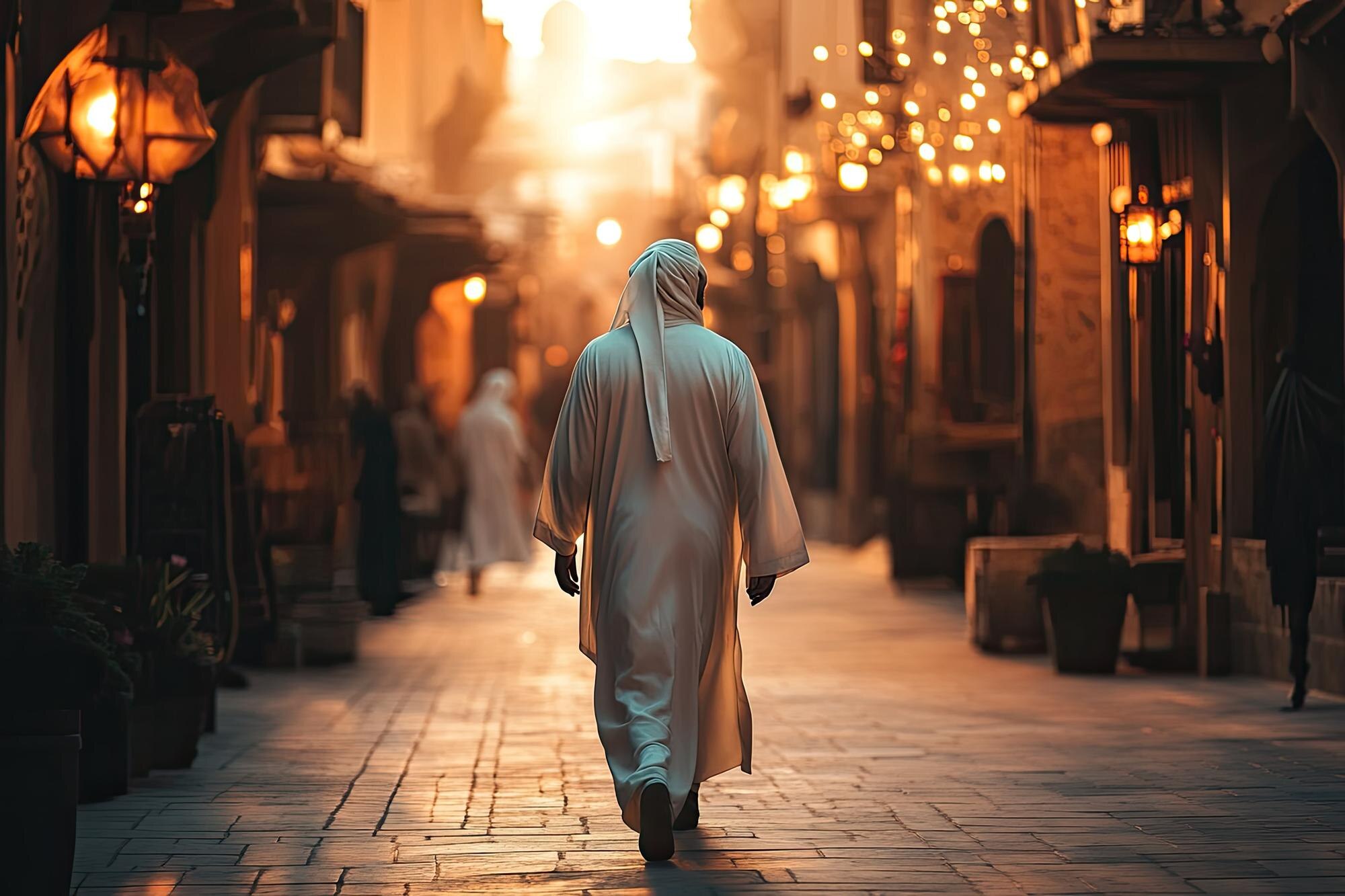
Walk fifteen minutes east of the King Abdulaziz Gate, past the last of the marble-clad towers, and the character of Makkah changes abruptly. The shopfronts get smaller and closer together. The signage switches from four languages to two, then to Urdu and Bengali and Indonesian scrawled on hand-painted boards. Suitcases are stacked three deep on the pavement. A man calls out prices for dates by the kilogram rather than the gift box. This is Al-Aziziyah, the sprawling residential district east of the Grand Mosque where a very large share of the pilgrims who come to Makkah each year actually sleep, eat and shop, and it looks almost nothing like the retail podium of the Clock Tower complex a short taxi ride away. Head the opposite direction, south and downhill from the Haram, and a different but related world appears: Al-Misfalah, older, denser, quieter in places and louder in others, threaded with alleys that predate the Saudi state by centuries and now increasingly hemmed in by the construction hoardings of the Jabal Omar development.
Neither district is a tourist attraction in the way the Clock Tower Museum or the Kaaba’s own precinct are attractions. Nobody organizes a special trip to Al-Aziziyah or Al-Misfalah as a destination in itself, and this guide is not going to pretend otherwise. What both districts offer is something more useful to most pilgrims: ordinary commercial life at ordinary prices, accommodation for people who cannot afford or do not want to stay inside the five-star ring around the mosque, and a shopping experience that has not been built primarily to extract money from a captive religious tourist market. That is also their limitation. The markets here are functional rather than beautiful, the streets are often congested and dusty, and a pilgrim expecting an atmospheric “old souq” experience curated for visitors will find something rougher and more genuine instead. This guide treats the two districts separately, because they have distinct histories, different relationships to the Haram, and different personalities, and blurring them together would do a disservice to both. Where the two overlap — in the practicalities of bargaining, transport, and the traveller scams that recur across all of Makkah’s commercial districts — the guide says so explicitly rather than repeating itself twice.
A word on scope before going further. This is a companion piece to two other guides in this series: one on Abraj Al Bait, the Clock Tower mall complex directly overlooking the Haram, which functions as this guide’s reference point for Haram-adjacent pricing; one on Makkah Mall, the large modern shopping centre that sits at a middle price tier between the Clock Tower and these older districts; and one specifically on Souq Al-Khalil, the market that has grown up in and around the Jabal Omar development on Misfalah’s edge. Readers who want detailed shop-by-shop pricing for the Clock Tower or a close look at Souq Al-Khalil’s stalls should turn to those guides; this one references their findings for comparison but does not repeat them at length.
Overview
Al-Aziziyah is a large, mixed residential and commercial district that begins roughly two to three kilometres east of the Haram and extends several kilometres further out, officially bounded by the Bin Dawood Market area in the north and Al-Hada Road and the Fourth Ring Road to the south, encompassing several administrative neighbourhoods including Al-Mursalat, Al-Jamiah, Al-Nasim and Al-Awali alongside the core Aziziyah area itself (Umm Al-Qura University’s administrative breakdown of Makkah’s Hajj-related districts). It is best understood as Makkah’s largest single pilgrim dormitory: hundreds of towers, hotels and apartment blocks built specifically to house pilgrims during Hajj and Umrah season, threaded through with the markets, restaurants, pharmacies and shops that a resident population of that scale requires. One municipal account puts the number of hotel and residential towers in Aziziyah at more than 900, housing close to half of all pilgrims arriving in a given season, a figure that should be read as indicative of scale rather than a precise annual count (Al Riyadh newspaper’s report on Al-Aziziyah’s accommodation capacity). It suits the budget-conscious and the practical-minded pilgrim: someone who wants a genuinely cheap plate of food, a real discount on dates or a prayer mat, and does not mind a fifteen- to twenty-five-minute walk, or a short paid shuttle ride, to reach the mosque.
Al-Misfalah is different in kind, not just in location. It occupies the lower ground immediately south and southwest of the Haram — “Misfalah” itself derives from the Arabic for “lower place,” describing its elevation relative to the mosque and to the old upper quarter of Ma’la on the opposite side of the city (a historical account of old Makkah’s Ma’la and Misfalah quarters). It is one of the two halves into which the old walled city of Makkah was traditionally divided, and it carries genuine pre-modern history: this was, by tradition, where Abu Bakr al-Siddiq’s house stood, and the birthplace quarter associated with Umar ibn al-Khattab at the foot of a hill historians call Jabal Ghafid — the same hill now consumed by the Jabal Omar development and better known today by that name (the same historical account of Misfalah’s traditional associations). None of that history should be mistaken for religious significance attached to the market stalls themselves; it is urban and biographical history about a quarter of the city, not a sanctified site, and this guide treats it as such throughout. What Misfalah offers the modern visitor is a market and food scene that is smaller, older in feel, and in places cheaper again than Aziziyah’s — along with a visibly accelerating pace of demolition and redevelopment that means parts of what is described here will not exist in the same form for very much longer.
The honest verdict: neither district rewards a special detour on its own merits. Both reward a pilgrim who is already staying nearby, or who is willing to spend an hour of a free afternoon getting there, with meaningfully lower prices on the same categories of goods sold at a large mark-up around the Haram — dates, Zamzam containers, prayer mats, abayas, ihram cloth, attar, tasbeeh and gifts — and with food that costs a fraction of what a Haram-facing restaurant charges. Anyone expecting either district to feel curated, clean or particularly picturesque should adjust expectations before arriving.
The Districts and Their History
Al-Aziziyah: From Cattle Trough to Tower Forest
Before it carried its current name, the area now called Al-Aziziyah was known locally as “Hawd al-Baqar” — literally the Cattle Trough — a reference to its role as a resting and watering point for cattle traders bringing livestock into Makkah ahead of the Hajj season, when animals were needed in large numbers for sacrifice (Nawa3em’s account of the origin of the Hawd al-Baqar name; Al Riyadh newspaper’s history of the naming of Al-Aziziyah). The district’s modern name dates to the establishment of a government school there, Madrasat Al-Aziziyah, after the Kingdom’s education minister at the time, Sheikh Hassan Al Sheikh, asked a local landowner, Abdul Hamid Qattan, for a plot of land on which to build it; the school took the name Al-Aziziyah, and the surrounding area was named after the school in turn (the same Nawa3em account of the school’s founding and the district’s renaming; the Arabic Wikipedia entry on Al-Aziziyah, Makkah). This is a piece of twentieth-century civic history rather than anything older or more storied, and it is worth stating plainly: Al-Aziziyah has no claim to religious or seerah-era significance. It became important to Makkah’s life only in the modern period, as the city expanded east to absorb the growing numbers of pilgrims that mechanized transport and, later, mass international travel made possible.
That expansion happened fast and relatively recently, tracking Saudi Arabia’s broader Hajj infrastructure build-out from the late twentieth century onward, as developers raced to add bed capacity near the Haram to keep pace with pilgrim numbers that grew to, in a normal pre-pandemic year, well over two million for Hajj alone. A municipal profile of the district describes it as split into two zones: a northern part that is genuinely commercial and mixed-use, home to markets, administrative buildings and a denser street grid, and a southern part that is overwhelmingly residential towers built for housing pilgrims, with comparatively little independent shopping character (Al Riyadh’s district profile distinguishing Aziziyah’s northern commercial zone from its southern residential zone). A visitor’s experience of Aziziyah therefore depends heavily on which part they are actually in — a point hotel listings do not always make clear when marketing a property simply as “Aziziyah.”
Al-Misfalah: The Lower Quarter of the Old City
Where Aziziyah’s story begins in the twentieth century, Misfalah’s begins far earlier. Pre-modern Makkah was traditionally understood as divided into two principal halves along a rough north–south line through the Haram: Ma’la, the upper quarter running north and slightly uphill, and Misfalah, the lower quarter running south and downhill, with the dividing point traditionally placed near the Yamani corner of the Kaaba itself (a historical account of the traditional division between Ma’la and Misfalah; Al-Madina newspaper’s feature on the historic Misfalah quarter). Tribes recorded as having lived in the quarter historically include Banu Adi, Banu Tamim and branches of Banu Hashim, and later tradition places both the house of Abu Bakr al-Siddiq and the birth-site of Umar ibn al-Khattab, near a hill called Jabal Ghafid, within its boundaries (the same account detailing tribal settlement and traditional sites within old Misfalah). These are historical and biographical associations belonging to the quarter as a whole rather than to any specific market street discussed in this guide, and readers should not read devotional weight into the shopping streets themselves on the strength of them.
One strand of Misfalah’s history deserves particular note because it explains some of the district’s later character: a lane historically known as Zaqaq Jawa, or “Java Alley,” and the associated Ribat Jawa (a residential-cum-study hall for Southeast Asian pilgrims), became a centre of Islamic scholarship for the Malay-Indonesian world from roughly the nineteenth century onward. Notable scholars including Syekh Nawawi al-Bantani and Syekh Ahmad Khatib al-Minangkabawi studied or taught in the area, and the influential twentieth-century scholar Syekh Muhammad Yasin al-Fadani was born there (Line1News’ account of the historic Java Alley scholarly community in Misfalah; a Batemuri Tour feature on the history of the Misfalah district). Almost none of that built fabric survives; the lane and its ribats have been substantially replaced by hotels and parking structures as the district was redeveloped to serve the modern pilgrim economy, a pattern repeated across most of old Makkah’s residential quarters over the past half-century. This is worth knowing because it explains why a visitor walking through modern Misfalah today, looking for traces of that scholarly history, will find almost none — the physical memory of it has been built over, even though the historical record of its existence is solid.
Administratively, modern Misfalah is defined as running from the Second Ring Road and Umm Al-Qura Road in the north down to the Third Ring Road and the Kudai parking area in the south, encompassing several neighbourhoods including Al-Misfalah proper and Kudai (Umm Al-Qura University’s administrative breakdown of Makkah’s districts, including Misfalah’s boundaries). Within that footprint, redevelopment has accelerated in recent years, particularly around Ibrahim Al-Khalil Road and the Misfalah bridge area, where older one- and two-star hotel buildings have been demolished as part of the wider push to remake the district’s building stock; a 2025 video account documents ongoing demolition activity in exactly this stretch (a 2025 video documenting demolition activity in the Misfalah district). A pilgrim visiting Misfalah in 2025 or 2026 should expect a district in visible transition — parts genuinely old and dense, parts recently flattened, and parts already rebuilt in the glass-and-concrete idiom of Jabal Omar next door.
Jabal Omar: The Development That Reshaped Misfalah’s Edge
No account of Misfalah’s recent history is complete without Jabal Omar, the vast redevelopment project that occupies what was, until the mid-2000s, a densely populated informal settlement on the hillside directly southwest of the Haram — the same hill traditionally associated with Umar ibn al-Khattab’s birthplace, which gives the project its name (the Wikipedia entry on the Jabal Omar development, its naming and administrative location). Before redevelopment began, the hillside was reported to house around 70,000 residents from 29 different nationalities, with neighbourhoods informally segregated by nationality — a Yemeni quarter at the base, African and Burmese communities further up the slope — living in structures that a 2005 report described, through the words of Hajj Research Centre founder Sami Angawi, as including buildings with genuine historical value dating back some 1,400 years, which Angawi publicly warned would be lost to the bulldozers (Gulf News’ 2005 report on the Jabal Omar scheme and warnings over historic buildings; The National’s account of the Jabal Omar redevelopment and its residents). The Saudi government established the Jabal Omar Development Company in 2006 with an initial budget reported at around $1.6 billion, later phases pushing total project costs into the tens of billions of riyals, envisioning more than ninety buildings including hotel towers, apartment blocks and retail space, with architectural input at various stages from international firms including Foster and Partners and Buro Happold (the same Wikipedia entry detailing the project’s budget, scale and design input). Residents who owned property were offered a choice between selling to the government outright or accepting shares in the redevelopment company, while renters were promised assistance finding comparably priced housing elsewhere in the city — an arrangement the developer’s own public statements characterized as residents “voluntarily” relocating to better housing, a characterization independent reporting at the time treated with some scepticism given the scale and speed of the displacement involved (The National’s 2021 retrospective on the displacement of Jabal Omar’s original residents).
Nearly two decades on, the project remains only partly realized against its original ambitions, but its footprint is now fixed: a cluster of more than a dozen hotel and residential towers, two of which directly abut the Haram’s own plaza, sits where an informal, multi-ethnic hillside settlement once stood (Wikipedia’s summary of Jabal Omar’s current built state relative to its original masterplan). Souq Al-Khalil, covered in its own guide in this series, now operates within and adjacent to this development — a market with a traditional-sounding name trading in the shadow of towers that replaced the settlement it once served (a shopping-centre directory listing situating Souq Al-Khalil within the Jabal Omar development). For Aziziyah, the Haram’s own successive expansions, rather than a single named project, have been the dominant force reshaping the district’s relationship to the mosque, shortening the walk for some hotel guests while pushing new construction further east as land closer in was absorbed by the mosque’s footprint and the King Abdulaziz Gate approaches.
Origins and Development of the Markets
Aziziyah’s Markets: Built for a Resident Pilgrim Population
Aziziyah’s markets did not evolve from an ancient trading tradition the way parts of old Makkah’s markets did; they grew up alongside the district’s hotel towers, essentially as a retail and food-service response to housing tens of thousands of pilgrims a short bus or walk from the mosque. The largest and best known is generally referred to as Al-Kakiyyah Market, sometimes written Souq Al-Kakia, positioned near Ibrahim Al-Khalil Road within a roughly ten-minute walk of the Haram at its closest edge and functioning as both a wholesale and retail market — this is the market most budget shopping guides point to first, and independent visitor accounts describe it as open from around 7:00 a.m. to 11:00 p.m. daily with free entry and a strong emphasis on bulk buying and negotiated pricing (ZiyaraGo’s guide to Al-Kakiyyah Market’s location and hours). A short YouTube walkthrough filmed at the market documents dozens of stalls selling abayas from roughly SAR 20 to 60, prayer beads by the dozen for around SAR 20, and loose dates sold by weight, giving a reasonably current sense of the price floor for basic pilgrim goods in this part of the city (a visitor’s budget shopping video filmed at Souq Al-Kakia).
Further out, the Al-Otaibiyah Market — sometimes transliterated Al-Otaybiyah — is described by Makkah’s own official tourism portal as one of the oldest and most famous traditional markets in the city, located 2.8 kilometres from the Haram and offering, in the portal’s own words, “an authentic atmosphere and a wide variety of goods” at “affordable” prices, though the portal’s entry is notably thin on hard specifics such as exact opening hours or a shop count (Discover Makkah’s official listing for Al-Otaibiyah Market, checked 25 July 2026). Independent Arabic-language sources fill in more detail: the market spans roughly one million square metres across Otaibiya, Andalus and Jazair streets, with figures for the number of shops ranging widely across sources from around 200 to as many as 2,000, a discrepancy this guide cannot resolve with confidence and flags accordingly rather than picking the more impressive-sounding number (Bayut’s feature on Souq Al-Otaibiyah’s scale and layout; the Arabic Wikipedia entry on Al-Otaibiyah, Makkah). Local tradition holds that the market and surrounding area take their name from an elderly woman of the Otaibah tribe who was among the first to settle and graze sheep there, an origin story of the same modest, non-religious character as Aziziyah’s own cattle-trough naming, and worth treating as folk etymology rather than documented fact (the same Bayut feature recounting the market’s naming tradition).
Two further names recur in visitor accounts of Aziziyah’s shopping scene without the same level of documentation behind them: Souq Salam, a market referenced by pilgrims as sitting behind the main Aziziyah hotel strip and reachable by short taxi ride from the Haram, and Bawarith Plaza, mentioned in the same forum discussions as a further local shopping option (a Tripadvisor forum thread discussing local markets in and around Aziziyah). A Reddit account of gold shopping specifically names “Salam Market in Aziziyah” as home to a cluster of gold shops, corroborating the market’s existence and rough function even though this guide could not locate an official or heavily documented source describing its founding or history in detail — a case where the record is genuinely thin, and this guide says so rather than inventing detail to fill the gap (a Reddit discussion naming Salam Market’s gold shops in Aziziyah). Beyond these named markets, much of Aziziyah’s actual shopping activity happens along ordinary commercial streets rather than inside a defined souq structure: strips of small shops lining the main roads through the district, selling everything from luggage to phone accessories to household goods to the resident and transiting pilgrim population, in a pattern closer to any large Middle Eastern residential district’s high street than to a purpose-built tourist bazaar.
Misfalah’s Markets: An Older Trading Pattern, Now Under Pressure
Misfalah’s principal market, generally called Souq Al-Misfalah, has a claimed pedigree considerably older than anything in Aziziyah: one specialist Hajj and Umrah travel blog describes it as founded more than five hundred years ago, opening daily from around 8:00 a.m., and built around a mix of handmade goods — wooden prayer beads, incense, traditional dress — alongside a genuine food market selling fresh produce, nuts and Arabian sweets such as baklava and maamoul (Hijaz Hajj & Umrah’s blog account of Souq Al-Misfalah’s history and offerings). This guide treats the five-hundred-year claim as a piece of oral or promotional tradition rather than an independently verified historical fact — no primary or academic source corroborating a specific founding date for this precise market could be located during this research, and readers should understand the figure as indicative of the market’s general age and character rather than a documented date. Other visitor-facing sources describe a market by the same name selling perfumes, thobes, Qurans and other Islamic goods at negotiable prices, broadly consistent with the picture of a working neighbourhood souq rather than a curated attraction (a Southeast Asian budget shopping guide’s description of Souq Al-Misfalah’s goods).
What distinguishes Misfalah’s market fabric from Aziziyah’s is less any single named souq than the character of the surrounding streets. Ajyad Street and the Misfalah streets more generally are repeatedly described in shopping guides as lined with smaller, independently run shops offering more competitive prices than the Haram-facing malls, particularly for abaya-and-hijab bundles and everyday modest wear, and this smaller scale is part of what gives the district its older, denser feel compared with Aziziyah’s newer, more tower-dominated commercial strips (Hisar Travel’s guide to abaya shopping streets including Ajyad and Misfalah). Ibrahim Al-Khalil Road itself, which runs along the boundary between Misfalah and the Haram precinct and is often treated as the de facto spine of this whole shopping zone, is lined with hundreds of small shops and stalls selling prayer rugs, tasbeeh, attar, Islamic caps, Qurans, ihram cloth and abayas, with a typical simple meal along the strip running SAR 8 to 20 and price signage becoming more common, though not universal, during the busiest pilgrimage periods (Siasat Daily’s guide to shopping and eating along Ibrahim Al-Khalil Road).
The more consequential story for Misfalah’s markets in 2025 and 2026, however, is not what they sell but how much longer some of them will be there to sell it. As noted in the district history above, demolition around the Ibrahim Al-Khalil Road and Misfalah bridge corridor has already removed a number of older budget hotels and, with them, some of the small shops and food stalls that depended on their guests, and this process shows every sign of continuing as the Jabal Omar development’s footprint extends further into the surrounding streets (the 2025 video account of demolition activity in Misfalah, cited above). A pilgrim reading an older blog post or forum thread describing a specific Misfalah shop or alley should treat that description as a snapshot of a moment rather than a permanent feature of the district, and confirm on the ground rather than assuming continuity.
Architecture and Street Layout
Neither district offers architecture in the sense the word is used for a heritage building or a purpose-designed shopping mall — there is no single architect, no unified design brief, no protected facade. What is worth describing instead is the built pattern each district has settled into, because it shapes how a visitor actually experiences shopping there.
Aziziyah’s built form is dominated by its residential towers: rows of ten- to twenty-storey hotel and apartment blocks, many purpose-built for the pilgrim accommodation market from the 1990s onward, standing along wide arterial roads designed for bus and coach traffic rather than pedestrians. Retail is mostly wedged into the ground floors of these towers and along the connecting side streets — a continuous ribbon of small shopfronts rather than a distinct market building — with the genuinely dense, souq-like clusters, such as Al-Kakiyyah, forming where several streets converge near Ibrahim Al-Khalil Road. The northern part of the district carries most of this commercial density, while the southern part is closer to a pure dormitory zone with little independent street life (Al Riyadh’s district profile of Aziziyah’s north–south commercial divide). Pavements are often narrow relative to pedestrian and luggage-cart traffic, particularly outside hotel entrances during Hajj check-in periods, and visitors should expect uneven surfaces and general obstacle-course conditions rather than a pedestrianized shopping precinct.
Misfalah’s street layout carries more of the old city’s irregular grain, even where the buildings themselves are new: narrower lanes, sharper turns, and old low-rise shopfronts standing next to recently completed towers and, in places, active demolition sites. This is the physical signature of a district rebuilt piecemeal rather than masterplanned in a single pass, producing disorienting stretches where a pilgrim can walk from a modern glass-fronted pharmacy to a decades-old awning-shaded spice stall within the same block. Ibrahim Al-Khalil Road, Misfalah’s commercial spine along the Haram-facing edge, is wider and more heavily trafficked than the residential lanes behind it, functioning as much as a through-route for buses and taxis as a shopping street (Siasat Daily’s description of Ibrahim Al-Khalil Road’s mixed shopping and transit function). Where Jabal Omar’s towers rise directly behind the older market streets, the contrast is stark enough that some visitors describe shopping in the literal shadow of a construction site — which much of western Misfalah currently is.
What You Will Actually Find There
Al-Aziziyah: Accommodation, Food and Everyday Goods at Volume
The first thing most pilgrims encounter in Aziziyah is not a shop but a bed: the district’s core economic function remains housing large numbers of people during Hajj and Umrah, and hotel and furnished-apartment listings for the area typically place properties anywhere from roughly 2.5 to 8 kilometres from the Haram, with the closer end of that range commanding meaningfully higher rates than towers further out along the access roads (House of Saud’s guide to pilgrimage-season hotel zones including Aziziyah). Around and beneath these towers, the retail and food scene exists primarily to serve that resident population rather than day-trippers, which is exactly why it tends to run cheaper and more specific to pilgrim needs than shopping closer to the mosque.
Restaurants are the most immediately obvious feature of the district to anyone who has stayed there, and the range reflects the demographics of who actually books rooms in Aziziyah: dense concentrations of South Asian restaurants — Pakistani, Indian and Bangladeshi menus dominate — sit alongside Turkish, Egyptian, Chinese and Indonesian kitchens, many clustered near specific landmark towers and mosques such as Masjid Bin Mahfouz, and pitched squarely at pilgrims looking for food that tastes like home after a long day (a visitor’s video tour of a Khyber Darbar restaurant near the Al-Hidayah Towers in Aziziyah). Two Saudi chains with something close to cult followings among pilgrims also maintain branches in the district: Al Baik, the fried-chicken chain whose queues are a familiar sight throughout the Haram area, has an outlet in Aziziyah on Al-Masjid Al-Haram Road, and Al Tazaj, a grilled-chicken chain founded in 1989, runs a family-friendly branch in the district as well (a Makkah hotel blog’s list of restaurants including Al Baik and Al Tazaj branches in Aziziyah). Marhaba Restaurant, offering Pakistani cuisine on a buffet and à la carte basis in the Rabwah area of the district and open from noon until midnight, is another frequently mentioned option for a filling, inexpensive meal (the same hotel blog’s entry on Marhaba Restaurant).
Grocery and supermarket provision in Aziziyah is substantial, aimed at both self-catering pilgrims and the district’s permanent residents; large chains including BinDawood and Panda operate branches in the area, and a HyperPanda location near Makkah Mall’s gate number one is specifically recommended in pilgrim shopping guides for bulk staples such as rice, lentils and packaged food at everyday supermarket prices rather than tourist mark-ups (a Hindi-language video guide to grocery shopping in Aziziyah, including HyperPanda). Gold retail also has a real presence in the district, most notably at Souq Al-Zain, described in one jewellery-focused directory as a gold souq within Al-Aziziyah operating daily from 10:00 a.m. to 11:00 p.m. with prices in the SAR 300 to 15,000 range depending on the piece, and separately corroborated by a Reddit thread naming “Salam Market in Aziziyah” as home to a further cluster of gold shops (The Jewellery Cut’s directory entry for the Souq Al-Zain gold souq in Aziziyah; the Reddit discussion of Salam Market’s gold shops, cited above). As with any gold souq in Saudi Arabia, the metal price is fixed nationally against the daily international spot rate; what varies between shops, including within Aziziyah itself, is the making charge, and pilgrims comparing prices should shop around specifically on that component rather than on the headline price per gram (House of Saud’s explanation of how Saudi gold pricing is structured). One Reddit commenter’s blunter advice — to visit several shops in Aziziyah specifically because “they will all try to scam you” on the making charge if a buyer does not compare — is worth taking at face value as a reminder to negotiate rather than accept a first quote (the same Reddit thread’s advice on comparing Aziziyah gold shops).
Beyond food and gold, Aziziyah’s markets and street-level shops carry the full range of goods a departing pilgrim is likely to be shopping for: prayer mats, tasbeeh, dates sold loose or boxed, attar and inexpensive perfume oils, ihram cloth, abayas and modest wear, luggage — a category that becomes especially visible in the final days before pilgrims fly home and need an extra bag or a sturdier suitcase for gifts — and a broad tier of souvenir goods aimed at the pilgrim gift market, from prayer beads to small Kaaba-imagery keepsakes. Pharmacies and small clinics are also a genuine feature of the district’s street life, serving both the resident population and pilgrims who need medication or minor treatment during their stay, though this guide could not locate a comprehensive, independently verified directory of specific pharmacy locations and opening hours across Aziziyah, and travellers needing medical supplies should ask their hotel for the nearest option rather than relying on any single named pharmacy cited online.
Al-Misfalah: Older Streets, a Tighter Mix of Food and Trade
Misfalah’s retail mix covers similar broad categories to Aziziyah’s — prayer accessories, modest dress, food, dates, perfume — but in a physically tighter, older-feeling street pattern, and with a food scene weighted more toward small, family-run eateries than branded chains. Souq Al-Misfalah’s food section is described as genuinely oriented toward daily shopping needs, with fresh produce, nuts and Middle Eastern sweets such as baklava and maamoul sold alongside the handmade goods and prayer items more associated with pilgrim shopping (Hijaz Hajj & Umrah’s account of Souq Al-Misfalah’s food offerings, cited above). Along Ibrahim Al-Khalil Road, where Misfalah meets the Haram precinct, cheap eating is readily available in the SAR 8 to 20 range for a simple meal, and the road’s hundreds of small shops carry the same core pilgrim-goods inventory — prayer rugs, tasbeeh, attar, Islamic caps, Qurans, ihram, abayas — as Aziziyah’s equivalent strips, but generally within closer walking distance of the mosque itself (Siasat Daily’s guide to Ibrahim Al-Khalil Road, cited above). Ajyad Street specifically is called out in shopping guides for competitively priced abaya-and-hijab sets from small independent shops, an area worth a visit for anyone assembling modest travel wear on a budget rather than paying mall prices (Hisar Travel’s abaya shopping guide referencing Ajyad Street, cited above).
The clearest way to understand what distinguishes Misfalah’s market experience from Aziziyah’s is proximity and scale rather than product range: Misfalah’s shopping streets sit closer to the Haram — commonly cited at under two kilometres for the district’s hotel zone, against Aziziyah’s more typical three to seven kilometres — but occupy a physically smaller and more constrained footprint, squeezed between the mosque precinct, Jabal Omar’s expanding towers, and the Ibrahim Al-Khalil Road corridor (The Hajj Guide’s practical accommodation guide noting distance ranges for Misfalah’s hotel zone). A pilgrim staying in Misfalah is generally closer to everything, including the market itself, but has fewer options once there, simply because there is less physical space for shops to spread out compared with Aziziyah’s wider, newer streets further from the mosque.
Highlights Worth Your Time — and What Is Skippable
In Aziziyah, the single most useful stop for most pilgrims is Al-Kakiyyah Market, precisely because it functions as a genuine price benchmark: once a visitor has seen what an abaya, a prayer mat or a kilogram of dates costs there, every other price quoted elsewhere in the city — including inside the Clock Tower mall — becomes easier to evaluate honestly (ZiyaraGo’s guide to Al-Kakiyyah Market, cited above). The district’s restaurant scene is also worth deliberately seeking out rather than treating as an afterthought: a plate of Pakistani or Bangladeshi food at one of Aziziyah’s South Asian restaurants, at a fraction of Haram-facing prices, is a genuinely better meal for most travellers than the international fast-food options clustered around the mosque. What is skippable, honestly, is treating Aziziyah’s southern residential zone as a shopping destination in its own right — as the district profile cited earlier makes clear, this part of Aziziyah is overwhelmingly towers and hotels with little independent commercial life, and a pilgrim staying there should expect to travel toward the northern, market-dense part of the district, or toward the Haram itself, for meaningful shopping (Al Riyadh’s district profile distinguishing Aziziyah’s commercial north from its residential south, cited above).
In Misfalah, the streets around Souq Al-Misfalah and the length of Ibrahim Al-Khalil Road reward a slow walk rather than a rushed one — this is where the district’s older character and its food and craft stalls are most visible, and where the price gap against Haram-adjacent shops is most pronounced for everyday items like tasbeeh, attar and modest wear. What is worth approaching with more caution, and arguably skipping unless there is a specific reason to go, is any area currently under active demolition or immediately adjacent to a construction hoarding — not for safety reasons in the sense of danger to a passer-by, but because these stretches are commercially dead: shuttered shopfronts, dust, and none of the retail activity a pilgrim is actually looking for. Anyone relying on an older blog post’s specific recommendation for a shop or alley in this part of Misfalah should treat that recommendation as provisional and be prepared for it to be gone.
Across both districts, the honest general advice is to treat neither as a single “highlight” destination the way a guide might treat a museum or a historic mosque, but as a practical shopping and eating resource to be used in the ordinary course of a longer stay — ducking out from a nearby hotel for an hour rather than budgeting a dedicated half-day excursion, unless a pilgrim specifically wants to compare prices across the full range of Makkah’s commercial districts as a matter of interest.
Practical Visitor Guide
Getting There and Distances
From the Haram, Aziziyah’s hotel and market zone typically sits somewhere between 2.5 and 8 kilometres away depending on the specific tower or street in question, with properties and shops closer to the 2.5–4 kilometre end of that range commanding a real premium over those further out (House of Saud’s guide to pilgrimage hotel distances, cited above). Misfalah sits considerably closer, commonly cited at under two kilometres for much of its hotel and shopping zone, making it walkable — if a slow, crowded walk during peak periods — for a reasonably fit visitor (The Hajj Guide’s accommodation distance guide, cited above). As a rough planning rule, allow twenty to thirty-five minutes on foot from the nearer stretches of Aziziyah to the Haram under normal conditions, and expect this to roughly double during the last ten days of Ramadan or the days immediately around the Hajj rites, when pedestrian volumes on the connecting roads increase sharply.
For transport, Makkah’s city bus network is the cheapest option connecting Aziziyah to the Haram, with a flat fare of SAR 4 per trip payable by card machine, the Makkah Bus app QR code, or in some cases contactless payment, and services running roughly every ten to fifteen minutes; Route 5 specifically connects Aziziyah to the Haram area (a taxi and transport guide’s overview of Makkah’s bus routes, fares and the Aziziyah-Haram Route 5). Taxis and hotel shuttles are the more commonly used option in practice: a one-way taxi trip between Aziziyah and the Haram is typically quoted at SAR 15 to 30 under normal conditions, and many hotels in the district offer their own shuttle buses, sometimes free of charge on a fixed schedule, specifically to spare guests the walk (a pilgrim forum discussion of typical Aziziyah-to-Haram taxi fares and hotel shuttle availability). These fares and free-shuttle arrangements should both be treated as time-sensitive and reconfirmed with the specific hotel or driver before relying on them, particularly given how sharply fares can move during Hajj, discussed further in the traveller warnings section below.
The area’s train station — served by the Haramain High Speed Rail connecting Makkah to Madinah and Jeddah — now charges a shuttle fee of SAR 8 per person for the connection to the Haram, a service that was previously free, and this change is worth knowing in advance for anyone budgeting a rail journey that includes a transfer through this stretch of the city (a visitor’s video documenting the current SAR 8 shuttle fee from Makkah’s train station to the Haram). Makkah’s metro system, which would eventually offer another public transport option through parts of this corridor, remains under construction as of the time of writing, with completion expected in the 2027 to 2028 range rather than in the near term (Halalbooking’s transport guide noting the expected completion window for the Makkah Metro).
Opening Hours and Prayer-Time Patterns
Al-Kakiyyah Market’s hours are documented as running from roughly 7:00 a.m. to 11:00 p.m. daily, a long window consistent with its role serving a resident pilgrim population around the clock rather than day-trippers on a fixed schedule (ZiyaraGo’s Al-Kakiyyah Market hours, cited above). Souq Al-Misfalah is described as opening around 8:00 a.m. (Hijaz Hajj & Umrah’s Souq Al-Misfalah opening time, cited above). Across both districts, individual small shops set their own hours, and the more reliable general pattern to expect — consistent with retail practice across Saudi Arabia rather than anything specific to these two districts — is a short closure around each of the five daily prayers, typically fifteen to thirty minutes, during which shutters come down or shop lights dim even where a formal closure sign is not posted. This is worth building into any shopping plan: arriving at a stall five minutes before Maghrib and expecting a leisurely negotiation is likely to be disappointed.
During Ramadan, the rhythm of both districts shifts substantially toward the night, mirroring the pattern documented for the Clock Tower mall and the wider Haram-adjacent retail zone: shops that might close relatively early on an ordinary evening instead stay busy well past midnight and into the pre-dawn hours before Suhoor, as residents and pilgrims shop between Taraweeh prayers and the final meal before the fast resumes (cross-reference: this guide’s companion piece on Abraj Al Bait documents the same late-night Ramadan pattern for the Clock Tower complex, and the underlying driver — worshippers moving between the mosque and nearby retail in the hours after Taraweeh — applies just as much to Aziziyah and Misfalah). During Hajj, both districts see a sharp increase in foot traffic, particularly Aziziyah given its role housing large numbers of pilgrims directly, and simple errands that would take ten minutes in the low season can take considerably longer amid the crowds moving between accommodation towers, transport pickup points and the Haram itself.
Costs and Value: What Things Actually Cost, and Where
Pricing is the entire point of this guide, so this section deals in real, dated figures rather than vague reassurance that “prices are lower.” Every figure below should be reconfirmed on the day, since souq prices move with the season, with the exchange rate, and with how well a given pilgrim negotiates — but the ranges give a reliable sense of where Aziziyah and Misfalah sit relative to the Haram-adjacent malls.
Dates
Loose dates sold by weight at the wholesale-oriented markets in this part of the city run considerably below Haram-adjacent gift-box pricing. One detailed pilgrim account from a comparable market context near Madinah’s Haram — cited here for its granularity, since equivalent per-kilogram breakdowns specific to Aziziyah were harder to source with the same precision — records Ajwa dates at SAR 20 per kilogram, Ambar at SAR 18, and Mabroom at SAR 9, with room to negotiate further (a detailed Reddit account of per-kilogram date prices and negotiation). For Makkah specifically, a budget shopping video filmed at Souq Al-Kakia documents loose dates sold by weight alongside abayas and prayer beads at similarly low price points, consistent with the SAR 12 to 45 per kilogram range (depending on grade) previously documented at this market and cited in this guide’s companion piece on Abraj Al Bait (the Souq Al-Kakia budget shopping video, cited above). Against this, gift-boxed Ajwa dates sold inside the Clock Tower mall carry a clear premium, and readers wanting the specific comparison should consult this series’ Abraj Al Bait guide directly rather than have the figures repeated here — the short version is that the same category of date can cost several times more per kilogram once packaged and sold a few hundred metres from the Kaaba than it does bought loose in Aziziyah or Misfalah.
Abayas and Modest Wear
Street-market abayas in both districts are consistently documented in the SAR 20 to 60 range for simple styles, with some accounts citing prices as low as SAR 10 to 30 at the cheapest end (a Reddit thread on shopping in Makkah and Madinah citing low-end abaya prices; a budget shopping video showing SAR 20 abayas). Better-quality souq abayas, with finer fabric or embroidery, run SAR 60 to 300 depending on quality, while mall-based abayas — including at the Clock Tower complex and at branded shops — typically start around SAR 250 and run into the SAR 500 to 900-plus range for designer pieces (Hisar Travel’s abaya price comparison across souqs and malls, cited above). Ajyad Street and the smaller Misfalah lanes are specifically recommended for competitively priced abaya-and-hijab sets from independent shops rather than chain retailers (the same Hisar Travel guide).
Prayer Mats and Tasbeeh
Basic prayer mats in the souqs of both districts run SAR 15 to 30, with mid-range options at SAR 40 to 80 and premium Turkish embroidered mats reaching SAR 150 to 300 or more (Bakar & Sons Travels’ guide to what to buy in Makkah and typical prices). At Al-Kakiyyah specifically, prices run lower still, with one visitor account citing basic mats from as little as SAR 5 to 15 (a Reddit thread on affordable shopping in Madinah and Makkah citing Al-Kakiyyah prayer mat prices). Tasbeeh follow a similar pattern: simple plastic or wood prayer beads run SAR 5 to 20, nicer stone or glass versions SAR 30 to 80, and a dozen basic sets can be had for around SAR 20 at Al-Kakiyyah specifically (Hisar Travel’s bargaining guide with tasbeeh price ranges; the Souq Al-Kakia video citing a dozen tasbeeh for SAR 20, cited above).
Attar and Perfume Oils
Small roll-on attar bottles in the souqs of Aziziyah and Misfalah typically run SAR 10 to 25, with better blends reaching SAR 40 to 100 or more depending on ingredients and brand (the same Hisar Travel bargaining guide, with attar price ranges). As discussed further in the traveller warnings section below, attar quality and authenticity vary considerably at this end of the market, and price alone is not a reliable guide to whether a given oil contains what the label claims.
Gold
Gold pricing works identically across Aziziyah, Misfalah, the Clock Tower and every other legitimate gold retailer in the country: the metal itself is priced against the same daily international spot rate nationwide and is not negotiable, while the making charge — the labour and design premium added on top — is where real variation and real negotiation happen (House of Saud’s explanation of Saudi gold pricing structure, cited above). Simple, machine-made pieces typically carry making charges in the range of SAR 5 to 30 per gram in ordinary souq settings, while more elaborate hand-finished work can run considerably higher; the Clock Tower and other prime Haram-facing locations tend to sit at the upper end of the making-charge range precisely because their customer base is less likely to shop around, whereas Aziziyah’s Souq Al-Zain and the gold shops at Salam Market give a pilgrim a genuine opportunity to compare making charges across several shops within the same district before buying (the same House of Saud gold-buying guide; The Jewellery Cut’s Souq Al-Zain listing, cited above). Fifteen percent VAT applies to gold jewellery purchases nationwide, added on top of the metal price and making charge combined, and every purchase should come with an itemized receipt breaking out weight, karat, making charge and VAT separately — a shop that will not provide this breakdown, or will not weigh the piece in front of the buyer, is a shop to walk away from (the same House of Saud guide’s advice on receipts and shop-floor practice).
Zamzam Water and Containers
The single most important thing to understand about Zamzam water in either district, or anywhere else in Makkah, is that it is free at its source: pilgrims can fill containers without charge at official distribution points around the Haram and at the Kudai bottling plant, and this policy exists specifically to prevent the kind of commercial exploitation described in the traveller warnings section below (Al Arabiya English’s investigation into Zamzam water sold on the streets of Makkah, cited above). Commercially bottled Zamzam sold through licensed retail channels, such as five-litre bottles available at BinDawood supermarkets, has been documented at around SAR 5.50 as of a mid-2022 check, a figure now several years old and one this guide flags explicitly as needing reconfirmation rather than treating as current (The Clear Evidence’s documentation of BinDawood’s Zamzam pricing, checked 19 June 2022). Street vendors in both Aziziyah and Misfalah, and around the Haram generally, have been repeatedly documented charging SAR 10 to 20 or more for containers of water that should have been free at an official point a short walk away, and this guide’s advice, consistent with its companion piece on Abraj Al Bait, is simple: fill a container at an official free dispensing point and treat any street vendor selling “Zamzam” as a product to be avoided rather than a convenience worth paying for (Arab News’ investigation into Zamzam street-vending practices, cited above).
Comparing the Tiers: Aziziyah and Misfalah Against Abraj Al Bait and Makkah Mall
One independent shopping guide places Makkah’s retail options on an explicit three-tier scale: the Clock Tower complex rated “$$$ (Expensive),” Makkah Mall rated “$$ (Moderate),” and the wholesale-oriented Al-Kakiyyah market rated “$ (Very Cheap — Bargaining is a must)” — a framework this guide finds broadly consistent with everything documented above, and one that places both Aziziyah and Misfalah’s street markets firmly in that lowest, most negotiable tier (Taxi Service KSA’s Makkah shopping guide with its three-tier price comparison, cited in this series’ Abraj Al Bait guide). A separate shopping-focused guide puts an approximate number on the overall gap, suggesting that knowing where to shop in Makkah and Madinah “can save you 50% or more” compared with buying equivalent goods at the tourist-facing malls near the Haram — a figure broadly consistent with the specific per-item comparisons above, though it should be read as an approximate, aggregate claim rather than a guaranteed discount on any single item (UmrahTransit’s Makkah and Madinah shopping guide on potential savings, cited in this series’ Abraj Al Bait guide). For a full breakdown of Clock Tower pricing across categories, and for Makkah Mall’s own middle-tier positioning, readers should consult those dedicated guides in this series rather than expect this article to duplicate them; the consistent finding across all of them is that Aziziyah and Misfalah sit at the cheap, negotiable end of the same spectrum, not a separate market altogether.
Bargaining: How It Actually Works in Each District
Bargaining is expected in both Aziziyah’s and Misfalah’s street markets and small independent shops, and is not expected — and often simply not possible — in branded stores, fixed-price supermarket chains, or shops displaying a printed price tag on the merchandise. The dividing line is the price tag itself: if a garment or item has a visible, printed price, that price is generally treated as fixed; if it does not, negotiation is the norm rather than the exception (Bakar & Sons Travels’ guide to fixed-price versus negotiable shopping in Makkah, cited above).
The mechanics are broadly consistent across both districts and, for that matter, across Saudi souqs generally. A commonly cited starting point is to open at roughly 30 to 60 percent of the asking price and expect to settle somewhere in the middle, typically landing around 15 to 20 percent below the initial quote for a straightforward item, though the exact discount depends heavily on the item, the season, and how many of a given item the buyer wants (The Hajj Guide’s practical shopping advice on opening bids; Bakar & Sons Travels’ guide to negotiation ranges, cited above). A polite greeting — “Assalamu alaikum” — followed by a simple “Bikam?” (“how much?”) is the standard opening, and counter-offering 20 to 30 percent below the first quoted price, delivered with good humour rather than aggression, is the typical middle-of-the-road approach recommended by several independent guides aimed at pilgrim shoppers (Hisar Travel’s bargaining etiquette guide for Saudi souqs, cited above).
In practice, bargaining leverage differs somewhat between the two districts because of what each market is built around. Al-Kakiyyah in Aziziyah is explicitly structured around wholesale as well as retail trade, and buying in bulk — several prayer mats, a dozen tasbeeh, a full box of dates rather than a single kilogram — produces the steepest discounts, consistent with its “bargaining is a must” reputation in independent shopping guides (Taxi Service KSA’s characterization of Al-Kakiyyah as requiring bargaining, cited above). Misfalah’s smaller, more individually run shops along Ajyad Street and around Souq Al-Misfalah tend to involve a more personal, single-item negotiation rather than a bulk wholesale discussion, closer in feel to bargaining at a neighbourhood market than at a trade fair — a difference of degree rather than kind, but noticeable to anyone who has shopped at both.
Gold is the clearest illustration of what can and cannot be negotiated: the metal price itself is fixed nationwide against the daily spot rate and is simply not up for discussion, while the making charge is where all genuine negotiation happens, and comparing the making charge quoted at two or three shops before committing — feasible in both Aziziyah’s Souq Al-Zain and at Salam Market, given the concentration of gold shops in each — is standard, expected practice rather than something that will cause offence (House of Saud’s gold-buying guide, cited above). One useful opening question, recommended for GCC gold souqs generally, is to ask directly for the piece’s weight and the making charge being applied that day, rather than simply asking “how much” for the finished item — this anchors the conversation around the two genuinely negotiable numbers rather than a single bundled price a shopkeeper controls entirely (DahabPulse’s guide to negotiating gold making charges in GCC souks).
Prayer Facilities and Religious Considerations
Both districts are residential and commercial neighbourhoods with their own local mosques serving the surrounding population, in the ordinary pattern of any Saudi city district, rather than dedicated pilgrim musallas built into the market structure itself. A pilgrim shopping in Aziziyah is generally never far from a neighbourhood mosque given the density of hotels and towers built specifically to house worshippers, and hotel staff or shopkeepers can reliably point to the nearest one; the same is true in Misfalah, where the proximity to the Haram itself means many visitors simply time their shopping around a return to the Grand Mosque for the prayer itself rather than using a local district mosque at all. This guide could not identify a single authoritative, publicly available directory naming and mapping every neighbourhood musalla across either district with confirmed prayer-time schedules, and says so rather than presenting an invented list; the practical advice for a visitor is to ask locally rather than rely on a fixed list published in any guide, including this one.
Shops in both districts follow the near-universal Saudi retail pattern of a short closure around each of the five daily prayers — typically fifteen to thirty minutes — during which shutters come down, and a pilgrim planning a shopping trip should build slack into the schedule around prayer times rather than arrive at a stall expecting it to be open exactly on the hour. Halal food is not a special consideration to flag in either district in the way it might be in a non-Muslim-majority country — the entire food economy of Aziziyah and Misfalah, from the South Asian restaurants to the Al Baik and Al Tazaj branches to the small Misfalah food stalls, operates under standard Saudi halal norms as a matter of course.
On gender and family arrangements: neither district’s markets impose formal gender segregation in the way some retail environments elsewhere in the Muslim world do, and mixed-family shopping is entirely normal and unremarkable in both Aziziyah’s and Misfalah’s street markets. Modest dress is expected of all visitors as a matter of general Saudi social norms rather than anything specific to these markets — loose, non-revealing clothing for women and men alike is the practical baseline, and this is, incidentally, also exactly the kind of clothing both districts sell in bulk at low prices, making it easy for an underprepared traveller to buy what they need on arrival rather than pack it in advance.
Families, Children and Accessibility
Both districts are walkable family environments in the sense that nothing about them is formally restricted by age, but neither is designed with strollers or wheelchairs specifically in mind, and pavements in both — narrow, often uneven, frequently obstructed by parked delivery vehicles, luggage carts or stallholders’ overflow stock — present real practical friction for anyone pushing a stroller or navigating a wheelchair independently. This is a meaningfully different accessibility profile from the Clock Tower mall, which this series’ companion guide documents as having lift access connecting all retail floors and a manageable, if occasionally crowded, route through to the Haram’s own wheelchair-accessible entrances (cross-reference: see this series’ Abraj Al Bait guide for mall-specific accessibility detail). Aziziyah and Misfalah’s open-air street markets offer no equivalent infrastructure; a wheelchair user or a parent with a stroller should expect to navigate around obstacles rather than along a cleared path, and should factor real extra time into any shopping trip on this basis.
For children, both districts are reasonably manageable in short visits — the food scene in particular, from Al Baik and Al Tazaj in Aziziyah to the sweet stalls of Souq Al-Misfalah, tends to be a hit with younger pilgrims — but neither offers the kind of dedicated family space, rest areas or climate-controlled respite from Makkah’s heat that a mall environment provides. Families visiting during the hottest months, discussed further below, should plan shorter outings with clear breaks rather than an extended shopping session, and should be aware that public seating and shaded rest areas are limited outside of the restaurants themselves. Older pilgrims or anyone with mobility limitations may find a mall environment, or a hotel-arranged shopping trip with door-to-door transport, considerably more comfortable than navigating either district’s street markets independently, particularly during the crowded conditions of Ramadan and Hajj described throughout this guide.
Seasons, Weather and Timing
Makkah’s climate is a genuine practical constraint on shopping in either district, since both involve real time spent outdoors on open streets rather than in a climate-controlled mall. Summer heat in Makkah routinely exceeds 40 degrees Celsius during the middle of the day, and outdoor street markets in Aziziyah and Misfalah offer little shade beyond shop awnings, making early morning or evening the sensible time to shop during the hotter months rather than the middle of the afternoon. When Hajj falls during the northern hemisphere summer, as it has in several recent years under the lunar Islamic calendar, this heat consideration becomes especially acute for pilgrims already managing the physical demands of the rites themselves.
Ramadan and Hajj are the two periods that most change how both districts function, and the changes are largely about crowding and timing rather than about what is sold. During Ramadan, as discussed above, retail activity in both districts shifts toward the night, with shops staying open later and street life picking up markedly after Taraweeh prayers; a pilgrim wanting to avoid the thickest crowds should shop in the hour or two immediately after Maghrib, before the post-Taraweeh rush begins, or very late at night closer to Suhoor. During Hajj itself, Aziziyah in particular becomes extremely crowded given its core function as pilgrim accommodation for large numbers of people, and both districts see transport, and therefore the practical logistics of getting to a market at all, become considerably more difficult — a point covered in more detail in the transport and traveller-warnings sections of this guide.
Nearby Places to Combine
Aziziyah and Misfalah are not naturally a single combined outing given the distance between them — Aziziyah sits several kilometres east of the Haram while Misfalah sits close in on the opposite, southwestern side — so most pilgrims will end up visiting one or the other depending on where they are staying, rather than both in a single trip. For a pilgrim staying in Aziziyah, a sensible pairing is a visit to Makkah Mall, which sits at a middle price tier between the district’s own street markets and the Clock Tower complex, and which this series covers in its own dedicated guide; the two can reasonably be combined in a single afternoon given their relative proximity within the district’s northern commercial zone. For a pilgrim staying in or passing through Misfalah, the natural pairing is Souq Al-Khalil, which this series also covers separately and which sits within the Jabal Omar development directly adjacent to Misfalah’s western edge — walkable from much of the district in well under fifteen minutes given the proximity documented earlier in this guide (the shopping-centre directory situating Souq Al-Khalil within Jabal Omar, cited above).
Both districts also combine naturally, in the loosest sense, with a visit to the Clock Tower complex and the Haram itself, simply because most pilgrims will be moving between their accommodation and the mosque multiple times a day regardless of any specific shopping plan; the practical suggestion here is less a formal itinerary pairing than a reminder to fold a shopping stop into a trip that is already happening, rather than treat it as a separate excursion requiring its own transport arrangement. Pilgrims with a specific interest in price comparison across Makkah’s full retail spectrum — from the cheapest wholesale souq to the most expensive Haram-facing mall — could reasonably plan a single day taking in Al-Kakiyyah or Souq Al-Misfalah, then Makkah Mall, then the Clock Tower complex, in ascending order of price, using this guide and its two companion pieces as a reference for what to expect at each stop.
Common Misconceptions and Traveller Warnings
This is the section where honesty matters most, because the consequences of getting it wrong range from mild overpayment to genuine fraud. The warnings below are drawn from documented cases and patterns rather than speculation, and are given in the same spirit as this series’ companion guide to Abraj Al Bait: not to frighten a pilgrim away from these districts, but to make sure they arrive knowing what to watch for.
Fake and counterfeit Zamzam water is a real and documented problem, not a rumour. Saudi authorities have destroyed large seized quantities of fraudulently labelled Zamzam — one Ministry of Commerce operation alone accounted for 200,000 fake bottles and containers — and independent investigations abroad, including one in South Africa, have found bottled “Zamzam” on sale that tested as ordinary or diluted water sold at a significant markup (the Saudi Ministry of Commerce’s report on destroying 200,000 fraudulent Zamzam bottles, cited above; GroundUp’s investigation into fake or diluted Zamzam sold in South Africa, cited above). Separately from outright fraud, a well-documented “Zamzam mafia” of street vendors has long operated near legitimate free distribution points, pressuring pilgrims — especially during the crowded final days of Ramadan — into paying for water that should have cost nothing, with individual vendors reported earning as much as SAR 1,500 to 1,800 a day during peak periods (Arab News’ investigation into the Zamzam mafia, cited above). Saudi authorities have separately documented street resale and adulteration of Zamzam water more generally as an ongoing enforcement concern (Saudi Gazette’s 2016 report on the black-market resale of Zamzam water). The rule for both Aziziyah and Misfalah is unchanged from the rest of Makkah: fill a container at an official free distribution point, and treat any street vendor selling Zamzam as a product to avoid entirely.
Dates are sometimes sold by misleading weight or repackaged under a false premium label. Saudi Ministry of Commerce enforcement records document exactly this kind of fraud: one operation uncovered labourers repacking ordinary dates — stuffed with cheaper nuts and dried fruit — into cartons bearing counterfeit posters for premium brands such as “Luxury Khlass” and “Luxury Sukkary,” seizing more than 135 cartons and 150,000 fraudulent labels in a single raid (the Saudi Ministry of Commerce’s report on a date-repackaging fraud operation). A separate case involved workers relabelling substandard dates with falsified expiry dates and premium brand names, leading to the confiscation of 400 kilograms of product along with thousands of counterfeit stickers (FreshPlaza’s report on a Riyadh date-relabelling crackdown). These specific cases were not located in Aziziyah or Misfalah, but they establish that the practice exists in the Saudi retail date trade generally; pilgrim forum accounts separately describe vendors letting a buyer sample a high-quality date before delivering a different, lower-grade batch in the sealed package — the defence is to buy loose dates weighed in front of you rather than pre-sealed boxes, and to check the sample matches what is packed (the Reddit account describing date sample-switching, cited above).
Attar and honey are both documented targets for adulteration in the Saudi market. Saudi authorities have shut down honey retailers, including a documented case in Abha, for selling product mixed with cheaper sugar syrups without proper labelling — a widespread practice in the broader regional honey trade rather than something unique to any one shop, but relevant to any pilgrim buying honey as a gift item in either district (Gulf News’ report on Saudi honey-adulteration enforcement). The Saudi Food and Drug Authority has separately issued consumer warnings covering specific honey-adjacent products sold under health claims that do not hold up to scrutiny (the Saudi Food and Drug Authority’s warning regarding a “Royal Honey” product). Attar carries a parallel risk: inexpensive oils sold as pure oud or premium blends at street-market prices are, in a significant share of cases, synthetic or heavily diluted, and price alone is not a reliable indicator of authenticity — a genuinely rare oud oil cannot be sold honestly at a SAR 10 street-stall price, and any vendor claiming otherwise should be treated with scepticism.
Taxi overcharging is common around both districts, and gets sharply worse during Ramadan and Hajj. A well-documented pattern involves drivers claiming a broken meter and quoting a fixed price several multiples above the honest fare — a trip that should cost SAR 20 to 30 quoted instead at SAR 100 — along with airport touts, a “per-person” pricing trick applied to what should be a single fare, and drivers dropping passengers short of their destination with a false excuse about road closures (a taxi-scams guide covering common overcharging patterns around Jeddah airport and Makkah; UmrahTransit’s guide to avoiding taxi scams as a pilgrim). During Ramadan nights, Saudi Gazette documented fares as high as SAR 80 for short trips, including SAR 35 quoted for an Aziziyah run, ordinarily a fraction of that outside peak periods (Saudi Gazette’s report on Ramadan taxi fare exploitation, cited above and in this series’ Abraj Al Bait guide). During Hajj, free hotel shuttles can become unavailable precisely when demand is highest, and anecdotal pilgrim accounts describe taxi prices spiking dramatically — into the hundreds or, in extreme cases, over a thousand riyals for a normally short trip — though this guide treats the most extreme figures as anecdotal rather than verified (the pilgrim forum discussion of Hajj-season taxi price spikes, cited above). The consistent defence is to agree a fare before entering the vehicle, use a metered or app-based service where available, and budget for higher prices during Ramadan nights and the days around Hajj.
Pickpocketing and petty theft risk rises with crowd density, particularly around transport hubs and market entrances. General safety assessments of Makkah rate pickpocketing as a medium risk overall, concentrated specifically around mosque entrances, transport hubs and shopping areas during periods of crowd surge — exactly the conditions both Aziziyah and Misfalah experience during Ramadan and Hajj (Travel Safe Abroad’s safety assessment of Makkah, including pickpocketing risk). The practical advice is unremarkable but effective: keep valuables in a front pocket or a bag worn across the body rather than a back pocket or an open tote, be especially alert in the densest stretches of Al-Kakiyyah or Ibrahim Al-Khalil Road during peak hours, and treat any unusual jostling or crowding around you, particularly near a market entrance, with heightened awareness rather than assuming it is incidental.
Online information about both districts goes out of date quickly, and some of it already is. Given the pace of demolition and redevelopment described earlier in this guide, particularly around Misfalah and the Jabal Omar periphery, a specific shop, alley or hotel described in even a recent blog post or forum thread may simply no longer exist by the time a reader travels. Aziziyah’s own boundaries and character are also imprecisely and inconsistently described across sources — this guide found real discrepancies in shop counts and even in exactly where “Aziziyah” begins and ends, and treated the more conservative, better-sourced figures as more reliable rather than picking the most dramatic-sounding number available. The general rule for both districts, consistent with the rest of this series, is to treat any specific price, hours or shop name as a starting point to be reconfirmed on arrival rather than a fixed fact.
Lesser-Known Facts
- Al-Aziziyah’s name has nothing to do with any historical or religious figure directly; it derives from a government school, Madrasat Al-Aziziyah, built on land requested from a local landowner by the Kingdom’s education minister — a piece of twentieth-century civic history rather than anything older (Nawa3em’s account of the school’s founding and the district’s naming, cited above).
- Before it was Al-Aziziyah, the district was known as “Hawd al-Baqar” — the Cattle Trough — reflecting its earlier use as a watering point for cattle brought in for the Hajj sacrifice trade (Al Riyadh’s history of the naming of Al-Aziziyah, cited above).
- Al-Otaibiyah Market’s name is traditionally traced to an elderly woman of the Otaibah tribe who was reportedly the first to settle and graze sheep in the area — a folk etymology rather than a documented historical record, but a widely repeated one (Bayut’s feature on Souq Al-Otaibiyah’s naming tradition, cited above).
- Misfalah was once home to a lane known as Zaqaq Jawa, or “Java Alley,” a centre of Islamic scholarship for students and scholars from the Malay-Indonesian world for more than a century, almost entirely replaced today by hotels and parking structures (Line1News’ account of Java Alley’s scholarly history, cited above).
- Jabal Omar, the development that now dominates Misfalah’s western skyline, takes its name from Jabal Ghafid, a hill traditionally associated with the birthplace of Umar ibn al-Khattab — a piece of biographical tradition attached to the hill itself rather than to the modern towers built on it (Wikipedia’s account of Jabal Omar’s naming, cited above).
- The gold price component of any purchase in Aziziyah, Misfalah or anywhere else in Saudi Arabia is identical nationwide on any given day; the only real variable a buyer can influence through negotiation is the making charge layered on top (House of Saud’s gold pricing guide, cited above).
- Zamzam water is, by design and Saudi government policy, free at its source everywhere in Makkah — any price charged for it by a street vendor is, by definition, a mark-up on something meant to cost nothing (Al Arabiya English’s investigation into Zamzam street vending, cited above).
Timeline
- Pre-Islamic and early Islamic period: Misfalah forms as part of the lower half of the old walled city of Makkah, traditionally associated with the house of Abu Bakr al-Siddiq and the birthplace quarter of Umar ibn al-Khattab near Jabal Ghafid (the historical account of old Misfalah’s traditional associations, cited above).
- Nineteenth century onward: Zaqaq Jawa, or Java Alley, in Misfalah develops as a centre of Islamic scholarship for the Malay-Indonesian world (Line1News’ account of Java Alley’s development, cited above).
- Early-to-mid twentieth century: The area later known as Al-Aziziyah functions as Hawd al-Baqar, a rest and watering point for cattle traders arriving for Hajj (Al Riyadh’s history of Al-Aziziyah’s earlier name, cited above).
- Mid-to-late twentieth century: Madrasat Al-Aziziyah is established, giving the surrounding district its modern name; the area begins its transformation into a dense pilgrim-accommodation zone as Hajj numbers grow (Nawa3em’s account of the school’s founding, cited above).
- 2005: Plans for the Jabal Omar redevelopment become public, drawing warnings from Hajj Research Centre founder Sami Angawi over the loss of buildings with genuine historical value (Gulf News’ 2005 report on the Jabal Omar scheme, cited above).
- 2006: The Saudi government establishes the Jabal Omar Development Company, with an initial budget reported around $1.6 billion (Wikipedia’s account of the Jabal Omar Development Company’s founding, cited above).
- 2014: Al Arabiya English publishes an investigation into the sale of Zamzam water on the streets of Makkah despite its official free status (Al Arabiya English’s 2014 investigation, cited above).
- 2017: The Saudi Ministry of Commerce announces the destruction of 200,000 fraudulent Zamzam bottles and containers (the Ministry of Commerce’s report, cited above).
- 2021: The National publishes a retrospective account of the displacement of roughly 70,000 original Jabal Omar residents from 29 nationalities (The National’s 2021 retrospective, cited above).
- 2022: Commercial Zamzam pricing at BinDawood supermarkets is documented at around SAR 5.50 for a five-litre bottle (The Clear Evidence’s documentation, checked 19 June 2022, cited above).
- 2025: Video documentation shows active demolition of older hotel buildings around the Ibrahim Al-Khalil Road and Misfalah bridge corridor (the 2025 video account of Misfalah demolition activity, cited above).
- 2026: This guide’s research and price checks are conducted, with figures dated accordingly throughout and flagged for reconfirmation before travel.
Practical Takeaways
- Al-Aziziyah is Makkah’s largest pilgrim-accommodation district, sitting roughly 2.5 to 8 kilometres east of the Haram, with its genuine shopping and market character concentrated in its northern zone rather than spread evenly across the whole district (Al Riyadh’s district profile, cited above).
- Al-Misfalah is older, denser and closer to the Haram — commonly under two kilometres for much of its hotel zone — but its street fabric is currently in visible transition, with ongoing demolition and redevelopment tied to the expanding Jabal Omar project (The Hajj Guide’s accommodation distance figures, cited above).
- For dates, prayer mats, tasbeeh, attar and abayas, both districts’ street markets price meaningfully below the Haram-adjacent malls — often by half or more on the same category of item — and Al-Kakiyyah in Aziziyah and Souq Al-Misfalah are the two most useful reference points for an honest sense of the price floor (UmrahTransit’s shopping guide on potential savings, cited above).
- Zamzam water is free at official distribution points; never pay a street vendor for it, and be alert to counterfeit bottled Zamzam sold under fraudulent labelling (the Ministry of Commerce’s report on fake Zamzam seizures, cited above).
- Bargain in both districts’ open markets and independent shops; do not attempt to bargain where a printed price tag is displayed or inside branded and supermarket chains (Bakar & Sons Travels’ guide to fixed versus negotiable pricing, cited above).
- Agree taxi fares before getting in, expect sharp fare increases during Ramadan nights and Hajj, and treat any “broken meter” claim as a warning sign (the taxi-scams guide, cited above).
- Buy loose dates weighed in front of you where possible, rather than pre-sealed premium-branded boxes, and be sceptical of very cheap attar or honey sold as a rare or premium product.
- Neither district carries genuine Islamic-historical significance in its market stalls themselves; the historical interest in both, particularly Misfalah, belongs to the broader neighbourhood and its pre-redevelopment fabric, not to any specific shop a pilgrim will visit today.
- Reconfirm every price, opening hour and shop location close to your travel date — both districts, and Misfalah especially, are changing quickly enough that even recent online information may already be out of date.
Sources
Official and institutional sources: Umm Al-Qura University’s administrative breakdown of Makkah’s Hajj-related districts, including Aziziyah and Misfalah boundaries; Discover Makkah’s official listing for Al-Otaibiyah Market; the Saudi Ministry of Commerce’s report on the destruction of 200,000 fraudulent Zamzam bottles; the Saudi Ministry of Commerce’s report on a date-repackaging fraud operation; the Saudi Food and Drug Authority’s warning regarding a “Royal Honey” product; the Saudi Bureau of Experts’ Anti-Commercial Fraud Law.
Independent reporting and specialist guides: Al Riyadh newspaper’s district profile of Al-Aziziyah; Al Riyadh newspaper’s history of the naming of Al-Aziziyah; Nawa3em’s account of the origin of the Hawd al-Baqar name and Al-Aziziyah’s naming; the Arabic Wikipedia entry on Al-Aziziyah, Makkah; a historical account of old Makkah’s Ma’la and Misfalah quarters; Al-Madina newspaper’s feature on the historic Misfalah quarter; Line1News’ account of the historic Java Alley scholarly community in Misfalah; Batemuri Tour’s feature on the history of the Misfalah district; a 2025 video documenting demolition activity in the Misfalah district; the Wikipedia entry on the Jabal Omar development; Gulf News’ 2005 report on the Jabal Omar scheme; The National’s 2021 retrospective on Jabal Omar’s original residents; a shopping-centre directory listing situating Souq Al-Khalil within Jabal Omar; ZiyaraGo’s guide to Al-Kakiyyah Market; Bayut’s feature on Souq Al-Otaibiyah; the Arabic Wikipedia entry on Al-Otaibiyah, Makkah; a Tripadvisor forum thread on local markets around Aziziyah; a Reddit discussion of gold shopping in Aziziyah; Hijaz Hajj & Umrah’s blog account of traditional Makkah markets including Souq Al-Misfalah; a Southeast Asian budget shopping guide to Makkah; Hisar Travel’s guide to abaya shopping in Makkah and Madinah; Siasat Daily’s guide to Ibrahim Al-Khalil Road; House of Saud’s guide to pilgrimage hotel zones; a visitor’s video tour of a restaurant near the Al-Hidayah Towers in Aziziyah; a Makkah hotel blog’s list of restaurants in Aziziyah; a video guide to grocery shopping in Aziziyah; The Jewellery Cut’s directory of Makkah jewellery shops including Souq Al-Zain; House of Saud’s guide to buying gold in Saudi Arabia; DahabPulse’s guide to negotiating gold prices in GCC souks; a taxi and transport guide to buying gold in Makkah; a Reddit account of date prices and negotiation; a Reddit thread on shopping in Makkah and Madinah; a budget shopping video showing low-cost abayas; Bakar & Sons Travels’ guide to shopping in Makkah; a Reddit thread on affordable shopping in Madinah and Makkah; Hisar Travel’s bargaining etiquette guide for Saudi souqs; a visitor’s budget shopping video filmed at Souq Al-Kakia; The Clear Evidence’s documentation of BinDawood’s Zamzam pricing; Al Arabiya English’s investigation into Zamzam water sold on the streets of Makkah; Arab News’ investigation into the Zamzam mafia; Saudi Gazette’s report on black-market Zamzam resale; GroundUp’s investigation into fake or diluted Zamzam sold in South Africa; Gulf News’ report on Saudi honey-adulteration enforcement; FreshPlaza’s report on a date-relabelling crackdown in Riyadh; a taxi-scams guide covering Jeddah airport and Makkah; UmrahTransit’s guide to avoiding taxi scams; Saudi Gazette’s report on Ramadan taxi fare exploitation; a pilgrim forum discussion of Aziziyah taxi fares and Hajj-season price spikes; a transport guide to Makkah’s bus routes and fares; a video documenting the Makkah train station shuttle fee; Halalbooking’s transport guide, including Makkah Metro completion estimates; The Hajj Guide’s accommodation distance guide; The Hajj Guide’s practical shopping advice; Travel Safe Abroad’s safety assessment of Makkah; Taxi Service KSA’s Makkah shopping guide and price-tier comparison; UmrahTransit’s Makkah and Madinah shopping guide.
A Note on Method. This guide draws on a mix of official Saudi government sources, established regional and international news reporting, and independent travel and shopping guides written by pilgrims and travel specialists, cross-referenced wherever possible. Several claims in this article — the precise founding date attributed to Souq Al-Misfalah, exact shop counts for Al-Otaibiyah Market, and the existence and character of some smaller named markets such as Souq Salam and Bawarith Plaza — rest on a single source or on forum and video accounts that could not be independently corroborated against an official record, and are flagged as such in the body of the guide rather than presented with false certainty. Prices, opening hours and transport fares are given with the date they were checked wherever that information was available, and all such figures should be treated as indicative and reconfirmed by the reader close to their date of travel, since souq and street pricing in particular can shift with the season, the exchange rate and the individual vendor. Both districts, and Misfalah in particular, are undergoing active physical redevelopment, and some specific shops, alleys or buildings described in the sources above may no longer exist, or may exist in altered form, by the time a reader visits.