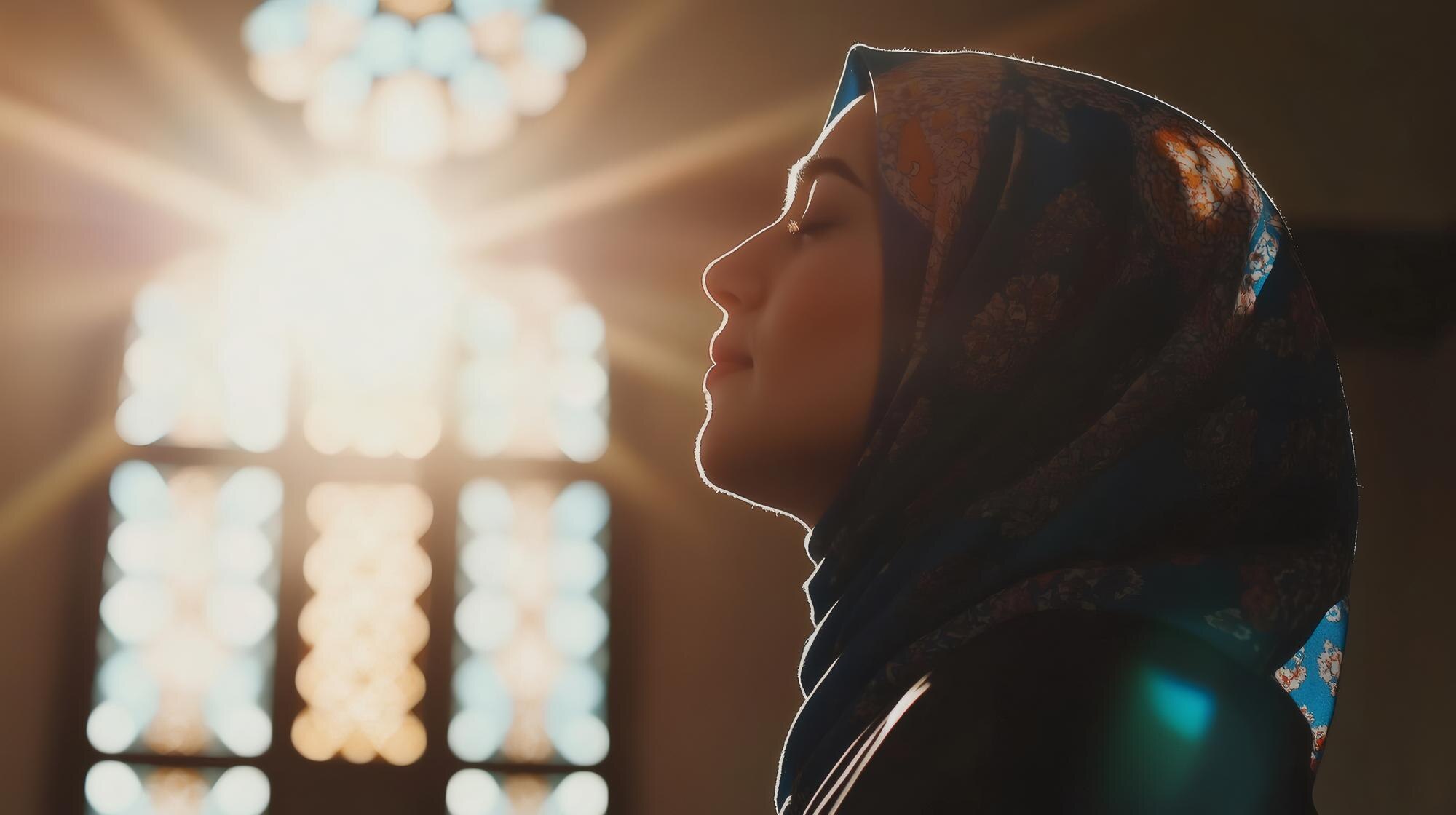
Ask a woman who’s made the journey what she remembers most and it’s rarely the crowds or the heat. It’s usually something quieter: a dawn prayer in a calm corner of the women’s section as light spread across the marble, or ten breathless minutes on the green carpet of the Rawdah in Madinah. Both of those moments sit inside systems — sections, gates, permits, stewarded queues — and the women who come home glowing are almost always the ones who understood the systems before they arrived.
So this is a practical chapter. It covers where women actually pray in the two holy mosques as things stand in mid-2026, how the Nusuk permit for the Rawdah works for women, what the visit genuinely feels like from the inside, how to choose a calmer slot, what to do about children and wheelchairs, and — because it needs saying — what to hold on to if a permit never comes your way. None of it is complicated. All of it is far easier to learn at home than at a crowded gate at four in the morning.
Women’s prayer areas in Masjid al-Haram
The first thing to understand about Makkah is that there’s no single, permanent ladies’ hall. The Grand Mosque works on flexible zoning: sections for women are marked out with movable partitions and staffed by female attendants, and their exact boundaries shift with the season, the crowd level and the endless programme of works around the mosque. What was a women’s area on your last visit may have moved fifty metres by your next. This unsettles first-timers, but it stops being a problem the moment you adopt the right habit — arrive early, look for the signage, and follow the direction of the women stewards. They reorganise the space constantly, and they know where you should be long before you do.
That said, some locations have been set aside for women reliably enough to plan around. As of mid-2026, sisters regularly pray in the designated areas on the first floor of the King Fahd expansion, in the stewarded women’s section near Gate 67, and — at quieter hours — in the small ground-floor area behind the Maqam Ibrahim, which offers a direct view of the Ka’bah that many women treasure. During peak periods such as Ramadan the roof is opened, and it becomes one of the pleasanter places for a woman to pray: breezy at night and far less compressed than the ground floor. Tawaf itself is shared space — there’s no separate circuit for women on the main mataf — which is why many sisters prefer the upper floors for tawaf at busy times, and why the chapter on dealing with crowds is worth reading alongside this one.
Timing matters more than geography. The women’s sections fill noticeably faster than the general areas before the five daily prayers, simply because the space is smaller. The pilgrim who arrives forty-five minutes before the adhan sits comfortably where she chooses; the one who arrives ten minutes before prays wherever a steward can fit her. If it’s quiet you’re after, the upper floors and the vast halls of the newer expansions are consistently calmer than ground level, and the hours after sunrise and deep into the night carry a stillness the busy periods never do. Ablution facilities and toilets for women sit around the outer courtyards rather than inside the mosque, so scout the block nearest your usual gate on your first day — you don’t want to be hunting for one twenty minutes before Maghrib.
Women’s sections in the Prophet’s Mosque
Madinah is organised quite differently, and most women find it gentler. The Prophet’s Mosque has substantial, formally designated women’s prayer halls served by their own gates, courtyards and ablution facilities, and the arrangement is far more stable than Makkah’s movable zoning. The women’s gates are clearly signposted; find the one nearest your hotel on your first evening and you’ll be using it on autopilot within a day. Inside, the halls are cool, carpeted and — outside the biggest congregations — genuinely spacious. Between prayers they’re lovely places to sit with a mushaf, and plenty of women will tell you their most peaceful hours of the entire journey happened here, not in Makkah.
The mosque also runs dedicated windows for women’s Rawdah entry. As of mid-2026, women’s access generally runs from after Fajr through the late morning, and again after Isha into the night, with men accommodated in the other windows. The exact hours move with the seasons and are reworked heavily in Ramadan, so treat your Nusuk permit — not a blog post, not a WhatsApp forward — as the final word on your entry time. Women booked for the Rawdah are usually directed to assemble at a designated gate; Gate 25 is the one most often used for women’s entry at the time of writing, but the details on your permit and the stewards on the ground override anything written anywhere else, including here.
How the Nusuk Rawdah permit works for women
The Rawdah is the area between the Prophet’s minbar and his blessed chamber, described in the authentic hadith as a garden from the gardens of Paradise. It is small, it is beloved, and millions want to stand in it — so access is managed entirely through pre-booked permits, with no spontaneous way in for women or men. The permit is free, digital and issued through the Nusuk app: open the Prophet’s Mosque services, choose the women’s Rawdah prayer option, and select from whatever slots are showing. Each woman needs her own registered profile, though you can book for companions attached to your account — which is how mothers book for daughters and groups secure matching times — and the permit arrives as a QR code tied to your identity.
Two rules shape everything. First, slots are released a limited number of days in advance and the popular ones vanish in minutes, which is why you should book from home the moment your travel dates are fixed rather than waiting until you land. Second, as of mid-2026 each person is limited to one Rawdah booking in each 365-day period, so the slot you take is, for most pilgrims, the only one you’ll get — choose it with care. The full mechanics, from release patterns to companion bookings to what to do when the app misbehaves, are covered step by step in the guide to booking your visit to the Rawdah. And if the calendar looks empty every time you check, there’s a separate set of tactics for finding a Rawdah slot that regularly rescues determined pilgrims. Read both before you travel, not after.
One tender practical note. If your cycle is likely to fall during your Madinah days, factor that into which slot you choose, because the widespread scholarly position is that a menstruating woman doesn’t remain inside the mosque’s prayer halls. The guide to menstruation and Umrah walks through the planning side, and for your own circumstances a scholar you trust is always the right address.
What the visit is actually like
The staged entry
Plan to be at your designated gate thirty to forty-five minutes before your slot, with the QR permit ready on your phone and your passport or ID to hand — security checks both. From there you won’t walk straight onto the green carpet. You’ll be guided through a sequence of holding areas: seated waiting zones in the courtyards and halls, each group moving forward as the one ahead clears. The whole staged shuffle can take an hour, sometimes more. That isn’t a fault in the system; it is the system, and knowing so in advance is the difference between waiting contentedly with your dhikr and fretting that something has gone wrong. Use the bathroom before you join the queue, carry a little water, and keep your phone charged — a dead battery means an unscannable permit.
Inside the Rawdah
You’ll be admitted as part of a large group of women, and the honest truth is that the atmosphere is intense: a press of bodies, attendants directing the flow briskly, and a sense of urgency as staff work to give as many sisters as possible their turn in a very small space. The time inside typically runs somewhere between ten and fifteen minutes, and it passes with startling speed — many women describe feeling they had barely arrived before being asked to move on. Your aim is simple: find a safe patch of the green carpet, pray two rak’ahs, and make the du’a you prepared. Prepared is the operative word. Settle before you travel exactly which salutations you wish to offer and which du’as sit closest to your heart, because the moment itself is no time to compose. Women who go in with three or four supplications ready come out fulfilled; women who plan to improvise often come out saying it all happened too fast.
Etiquette at the sacred chamber
The adab of this place has been cherished for fourteen centuries, and it survives the crowding intact if you carry it deliberately. Keep your voice low — the Qur’an itself commands lowered voices in the Prophet’s presence, and the scholars have always held that the courtesy endures at his resting place. Offer your salam to the Prophet (peace be upon him), and then to Abu Bakr and Umar (may Allah be pleased with them) beside him, with stillness rather than volume. Don’t push towards the enclosure, don’t cling to the brass screens, and don’t hold up the flow for photographs while other women are waiting to pray — the sisters behind you have ached for this moment exactly as long as you have. When the attendants signal that your time is up, leave peacefully and with gratitude rather than grasping for more. The blessing was in being there at all; it doesn’t grow with extra minutes wrung from a tired guard.
Choosing a calmer slot
Not every slot is equal, and if the booking calendar gives you any choice at all, use it thoughtfully. The pattern most repeat visitors report is that the late-night window after Isha tends to be less pressured than the period straight after Fajr, when energy and crowds are both at their peak. Weekdays are generally gentler than the surge around Thursday night and Friday, and anything outside Ramadan, the school holidays and the weeks around Hajj will be calmer than anything inside them. Book for early in your Madinah stay rather than your final day, so that a delayed flight or an upset stomach doesn’t cost you the visit entirely. And check the weather before choosing between the morning and evening windows — part of your wait happens in open courtyards, and a Madinah summer afternoon is no small thing in a queue.
Children in the women’s sections
Children belong to the women’s sections in both cities the way pigeons belong to the courtyards: everywhere, and mostly welcome. Mothers pray with babies asleep on their laps and toddlers drowsing on the carpet beside them, and the sisters around you are overwhelmingly kind about it. The practical rules are the ones every mother already knows — a fed, rested child before a long prayer; a small, silent something to occupy little hands; a spot near the back or by a pillar so you can slip out without stepping over forty worshippers. For the Rawdah, young children are generally admitted with their mothers during the women’s windows, but be honest with yourself about the maths: a staged wait of an hour or more, followed by an intense quarter of an hour in a dense crowd, is a lot to ask of a toddler. Many mothers arrange to swap childcare with a roommate or relative — one watches the children while the other visits, then trade. Pushchairs won’t come through the crowd with you, so if you must bring a baby, a sling or carrier is the sensible choice. If you’re managing all this solo, the guide for women travelling alone has more on building that kind of support on the road.
Wheelchair access and mobility help
Both mosques are better equipped for limited mobility than most first-timers expect. Wheelchairs can be borrowed at the gates of each mosque, hotels and nearby shops rent them cheaply, and lifts and ramped routes connect the floors — in Makkah, the upper levels are the standard route for wheelchair tawaf. For the Rawdah, elderly and mobility-limited women are routinely accommodated: attendants typically direct wheelchair users along their own route so they aren’t caught in the densest press, and a manual wheelchair is generally accepted through the women’s entry. Two practical cautions, though. Arrive even earlier than the standard advice, because the accessible route sometimes gathers its own queue; and confirm arrangements with the stewards at the gate on the day, since procedures shift and the person in uniform in front of you always knows more than an article written months earlier. If mum or grandma is the one you’re bringing, book your permits together on one account so you’re not separated at the door.
If no slot ever comes
Now the part some readers need most. Every season, some women register, check daily, try every tactic and still never see an open slot. If that turns out to be you, hold two facts close. The first is that visiting the Rawdah is a virtue, not an obligation: no pillar of your Umrah depends on it, no part of your pilgrimage is diminished without it, and your worship is complete and — by the mercy of Allah — accepted whether or not you ever stand on the green carpet. The second is that your salam does not need a permit. Authentic narrations describe that the salutations of the believers are conveyed to the Prophet (peace be upon him), wherever they are offered. A woman praying in the general halls of his mosque, or sitting in her hotel room across the street, or standing in her own kitchen years later, sends her salam and it arrives. So keep checking the app until your last morning — cancellations do appear — but don’t let the hunt swallow the days you actually have in his city. Pray in his mosque, give your greetings where you stand, and carry home the intention to return.
Before you travel: five things to have ready
Everything above condenses into a short bit of homework, best done in the fortnight before you fly.
- Create and verify a Nusuk account for every woman travelling, and link companions to one profile so you can book matching slots.
- Book the Rawdah slot the moment your dates allow, choosing an early-in-the-stay, off-peak window if you have any choice.
- Screenshot the permit — time, gate and QR code — and save it offline in case the app or the signal fails at the door.
- Choose your salutations and three or four du’as now, and write them on a card small enough to hold in one hand.
- Pack slip-on shoes, a shoe bag, a small water bottle and a charged power bank for the waiting stages.
Then, the night before your slot, check the permit once more, set two alarms, and lay out your clothes and your du’a card where you’ll see them — because the morning of a Rawdah visit is no morning to be searching for anything.
Leave A Comment