The Silent Storytellers: Unearthing the Living History of the Pillars of the Prophet’s Mosque
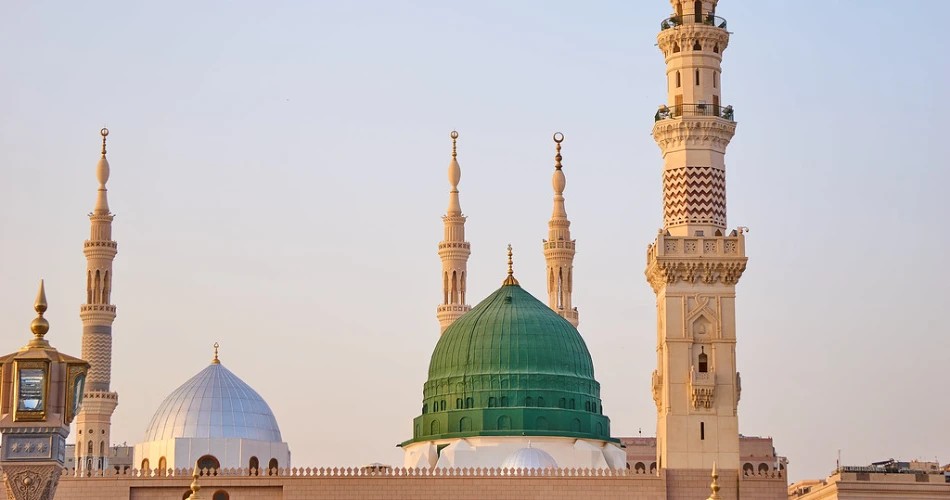
Beneath the vast, mechanically unfolding umbrellas and across the cool marble floors of the Prophet’s Mosque in Medina, there stands a silent forest of columns. To the hurried eye, they are merely structural supports, ornate and beautiful, holding aloft a ceiling of intricate design. But for those who pause, who listen with their hearts, these are not just pillars. They are storytellers, witnesses to history, and sacred anchors connecting the present to a time when Islam was just beginning to breathe. They are the Ustuwanat, the famed Pillars of the Mosque, and each one holds a universe of meaning, memory, and divine encounter.
To understand their significance, one must travel back in time, past the gleaming marble and the electric lights, to an era when this land was not yet Medina, the “City of the Prophet,” but Yathrib, an oasis of feuding tribes and simmering hopes. The story of the pillars begins not with stone, but with earth, palm trunks, and a community forged in the crucible of faith.
The Echoes of Yathrib: A Land Awaiting a Foundation
Long before the call to prayer ever echoed through its palm groves, Yathrib was a place of deep-seated division. It was a fertile but fractured landscape, home to the Arab tribes of Aws and Khazraj, and the Jewish tribes of Banu Qaynuqa, Banu Nadir, and Banu Qurayza. For generations, the Aws and Khazraj had been locked in a bitter, cyclical conflict that culminated in the devastating “Day of Bu’ath,” a war that left both sides exhausted, bereaved, and spiritually adrift. They yearned for a leader, a unifier who could extinguish the flames of tribal animosity and guide them toward a shared peace.
This was the world awaiting the arrival of Prophet Muhammad, peace and blessings be upon him, who migrated from Mecca in 622 CE in the historic event known as the Hijra. His arrival was not merely a political or social shift; it was a spiritual earthquake that would reshape the very soul of the city. The people of Yathrib, now known as the Ansar (the Helpers), welcomed him with joyous hearts. The city was reborn as Madinat an-Nabi, the City of the Prophet, and at its heart, a new kind of structure was needed—a place that would be more than a house of worship. It would be a parliament, a university, a community center, and a home for the poorest of the poor.
The Prophet’s she-camel, Qaswa, was released to wander freely, and where she finally knelt, there the mosque would be built. The divine choice fell upon a plot of land used for drying dates, owned by two young orphans, Sahl and Suhayl. The Prophet insisted on purchasing the land, refusing to accept it as a gift, establishing from the very first moment a foundation of justice and fairness. The construction that followed was a lesson in humility and unity. Companions, their robes dusty, mixed clay with water to form bricks as the Prophet worked alongside them, his hands carrying the sun-baked blocks. The foundations were stone, the walls were mud-brick, and the roof was made of palm fronds. And holding up that simple, sacred roof were pillars made from the trunks of date-palm trees.
These were the first pillars. Raw, organic, and smelling faintly of the earth, they were silent observers as the Quran was revealed, as laws were established, as a civilization was born. They absorbed the tears of the penitent, the whispers of the devout, and the powerful sermons of the final Messenger of God. Over time, specific pillars became associated with specific events, transforming them from simple architectural elements into living monuments.
Living Monuments: The Stories of the Pillars
Within the most sacred part of the mosque, the Rawdah ash-Sharifah—the Noble Garden, a space the Prophet described as a “garden from the gardens of Paradise”—stand several of these historic pillars. They are now distinguishable by their ornate golden calligraphy, but their stories are rooted in the humble palm trunks of the original mosque. Each one offers a unique window into the life of the first Muslim community.
Ustuwanah al-Hannanah: The Weeping Pillar
Perhaps the most poignant story belongs to the pillar known as Ustuwanah al-Hannanah. In the early days, Prophet Muhammad would lean against one of the palm trunks while delivering his sermons. As the community grew, the companions constructed a simple, three-stepped pulpit, or minbar, so that he could be better seen and heard. The first Friday he ascended the new minbar, a sound filled the mosque—a soft, mournful cry, like the whimpering of a camel for its lost young. The companions looked around in confusion until they realized the sound was coming from the palm trunk the Prophet had forsaken.
The sound was so filled with longing that it moved the congregation to tears. The Prophet descended from the minbar, went to the trunk, and embraced it, stroking it gently until it fell silent. He then explained to his companions that the pillar cried out of its yearning for the remembrance of God that it used to hear. He offered it a choice: to be replanted in the gardens of Medina to bear fruit once more, or to be planted in Paradise, from which the friends of God would eat for eternity. The palm trunk, it is narrated, chose Paradise. It was buried in the earth beneath where it once stood. This pillar represents a profound spiritual reality: that even inanimate objects can possess a connection to the divine, and that love for the Prophet is a force that resonates through all of creation.
Ustuwanah al-Tawbah: The Pillar of Repentance
Another pillar tells a powerful tale of human fallibility and divine mercy. It is the Ustuwanah al-Tawbah, also known as the Pillar of Abu Lubabah. Abu Lubabah was a companion from the Aws tribe who had alliances with the Jewish tribe of Banu Qurayza. During a siege against the tribe for their treachery, they asked Abu Lubabah for his counsel. Overcome with emotion and sympathy for their plight, he made a gesture toward his throat, indicating that their fate would be slaughter if they surrendered. Instantly, he was struck by the gravity of his mistake—he had betrayed the trust of the Prophet and of God.
Consumed by guilt, he did not go to the Prophet for forgiveness. Instead, he went directly to the mosque and tied himself to one of the palm trunks, vowing not to eat, drink, or untie himself until God forgave him. For six nights he remained there, his wife untying him only for prayers. His ordeal became a lesson for the entire community. Finally, while in the home of his wife Umm Salamah, the Prophet received the revelation of Abu Lubabah’s forgiveness. The Quranic verses descended: “And [there are] others who have acknowledged their sins. They had mixed a righteous deed with another that was evil. Perhaps Allah will turn to them in forgiveness. Indeed, Allah is Forgiving and Merciful.” (Quran 9:102). The companions rushed to untie him, but he insisted that only the Prophet himself could release him. This pillar stands today as an eternal symbol of sincere repentance, the shame that leads to purification, and the boundless mercy of the Creator.
Ustuwanah A’isha: The Pillar of Aisha
This pillar holds a story of hidden blessings. The Prophet once said, “In this mosque of mine, there is a spot that, if people knew its true virtue, they would draw lots for the chance to pray there.” For a time, the location of this spot remained a secret. The companions would ask the Prophet’s wife, Aisha, may God be pleased with her, to point it out. She demurred, but eventually, under the gentle persistence of her nephew Abdullah ibn al-Zubayr, she indicated a specific location. The companions marked it, and it is here that the Ustuwanah A’isha stands. It is also known as the Pillar of Qur’ah (Casting Lots) because of the Prophet’s statement. To pray beside it is to seek a special, hidden mercy, a reminder that some of God’s greatest blessings are reserved for those who earnestly seek them.
Ustuwanah al-Wufud: The Pillar of Delegations
As the influence of Islam spread, the Prophet’s Mosque became the diplomatic heart of the Arabian Peninsula. Chieftains from the deserts of Najran and tribesmen from the hills of Yemen traveled to Medina to meet the Prophet, learn about the new faith, and pledge their allegiance. The Ustuwanah al-Wufud marks the spot where Prophet Muhammad would typically sit to receive these foreign delegations. It stands as a testament to the mosque’s role as more than just a place of prayer; it was the seat of a new, just, and compassionate government. Here, treaties were forged, disputes were mediated, and the universal message of Islam was shared with people from diverse cultures and backgrounds.
From Palm Trunks to Marble Columns: A Legacy Preserved
As centuries passed, the simple mud-brick mosque underwent numerous expansions to accommodate the growing number of pilgrims. The Rightly-Guided Caliphs, the Umayyads, the Abbasids, the Mamluks, and finally the Ottomans all left their mark, expanding and beautifying the sacred space. With each expansion, a profound act of reverence took place. The original locations of the Prophet’s mosque and its hallowed pillars were meticulously preserved. When the palm trunks inevitably decayed, they were replaced with stone and marble columns erected on the exact same spots.
The Umayyad Caliph Al-Walid I, during his major reconstruction, ordered that the original dimensions of the Prophet’s mosque be preserved, and the historic pillars were rebuilt with stone. Later, the Ottoman Sultan Abdulmejid I undertook one of the most beautiful renovations, replacing the columns with pillars of red stone and adorning them with elegant calligraphy in gold, marking the names and stories of each sacred pillar. This continuous act of preservation was not merely architectural; it was a physical manifestation of the Muslim community’s deep love and desire to maintain a tangible link to the Prophet and his time.
Today, as millions of worshippers from every corner of the globe walk through the Prophet’s Mosque, they are walking through layers of living history. The pillars they see are not just supports for a roof but are supports for the memory of an entire faith. To stand by the Pillar of Repentance is to feel the echo of Abu Lubabah’s profound remorse and the relief of divine forgiveness. To pray near the Weeping Pillar is to connect with the pure, spiritual love that permeated the very air the Prophet breathed. These pillars are not relics of a dead past; they are portals to a sacred history that continues to inspire, guide, and comfort.
They stand in silent testimony, reminding every visitor that the foundations of faith are not built on grandeur or ornamentation, but on humility, sincerity, love, and repentance. They were once simple palm trunks, but through the events they witnessed and the divine grace they absorbed, they became timeless storytellers, forever narrating the birth of a community that changed the world.