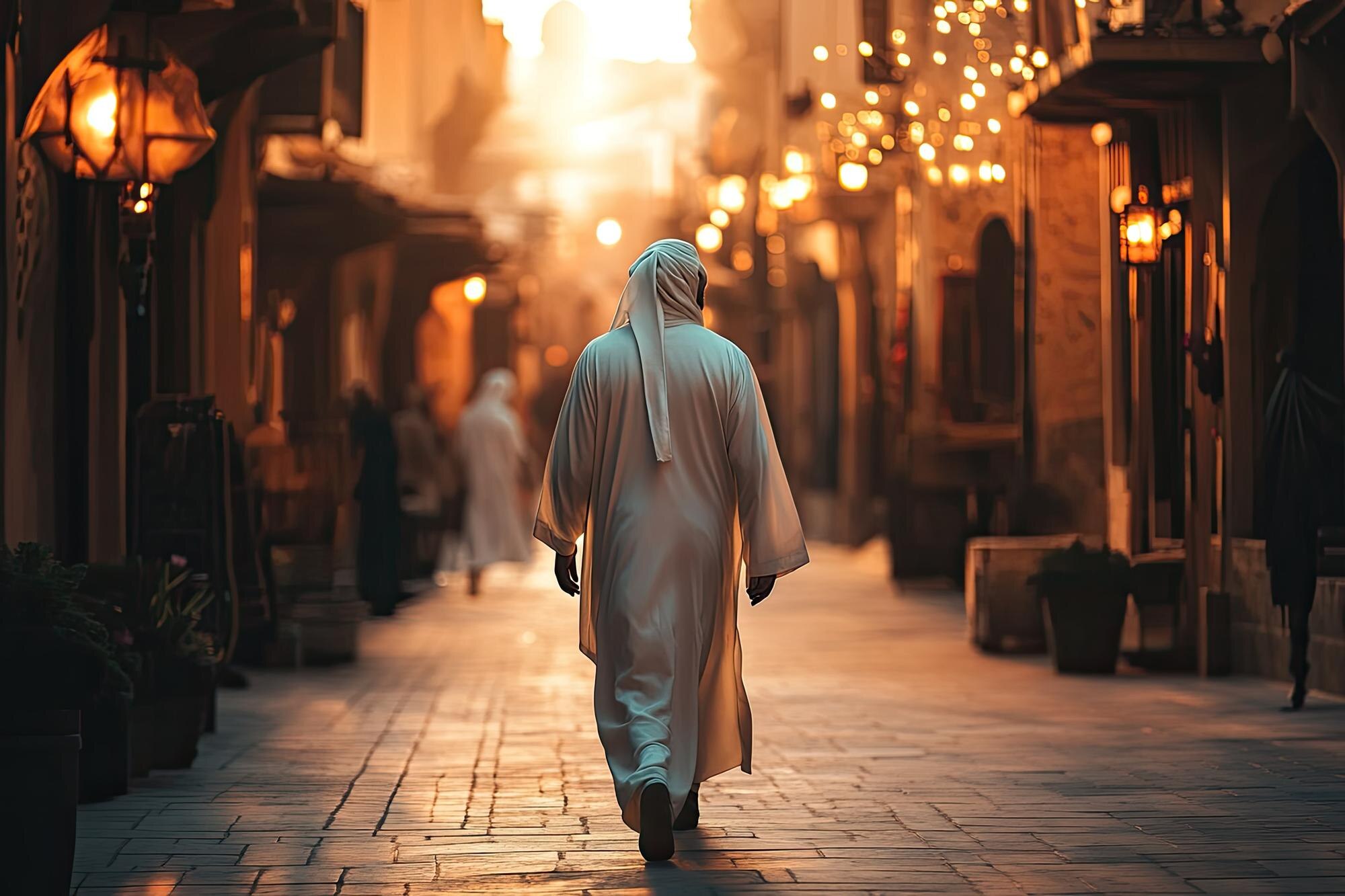
After Sa’i comes the last act of your Umrah — and it is so quiet, so humble, that you might almost miss how much it holds. The hair is cut or shaved, and with that, you step out of Ihram. After the height of Tawaf, after the tears of Sa’i, it can seem like such a small ending. But this is so often exactly how Allah works: the greatest changes come not with thunder, but with stillness.
Because when the hair falls, it is as though you are laying something far heavier on the ground for the sake of Allah — not only a few strands, but something of the old self: the pride, the restlessness, the hardness, the burdens you have carried so long you had forgotten what it was to feel light. It is as if you are whispering, as it falls: Yā Allah, I came to You as I was, with all my faults and my wounds. I came not because I was pure, but because I needed You to make me pure. Do not let me leave the way I came. And feel the beauty in this: your Umrah ends not with a declaration, but with an act — a visible mark on the body, made in the trembling hope that an invisible mark has already been made on the soul.
My brother, for you, shaving the whole head is the most complete, and there is a powerful surrender in it — letting it all fall, holding on to nothing of your appearance for the sake of Allah (trimming is also valid, but the shaving carries the fuller meaning and the greater reward). My sister, for you the sunnah is to gather your hair and cut a small amount — about a fingertip’s length — from the end; it looks like such a little thing, but Allah does not weigh the size of the act, He weighs the heart that offers it. And with that, your Umrah is complete. You have left the sacred state. What was set aside is yours again. But oh — do not let only the cloth change. Let the heart walk out lighter than it walked in.
The rites end here — but the journey was never meant to. You carried a whole life into Makkah; now you are meant to carry Makkah back into a whole life. The real danger after Umrah is not that you will forget this place — almost no one does. It is that you will slowly let your heart slip back to exactly where it was, while only the photographs are different. So before you leave, make one quiet intention to match the one you made at the boundary. There you said: I do not go merely to a place; I go because Allah let my heart answer. Here you might say: I do not return merely to my old life; I return carrying what He gave me. The softened heart, the lighter conscience, the habit of turning back quickly when you slip — these are the true souvenirs. A suitcase can hold Zamzam and dates. Only the heart can carry home what Sa’i taught it about hope, and what the cutting of the hair taught it about laying the old self down.
Leave A Comment