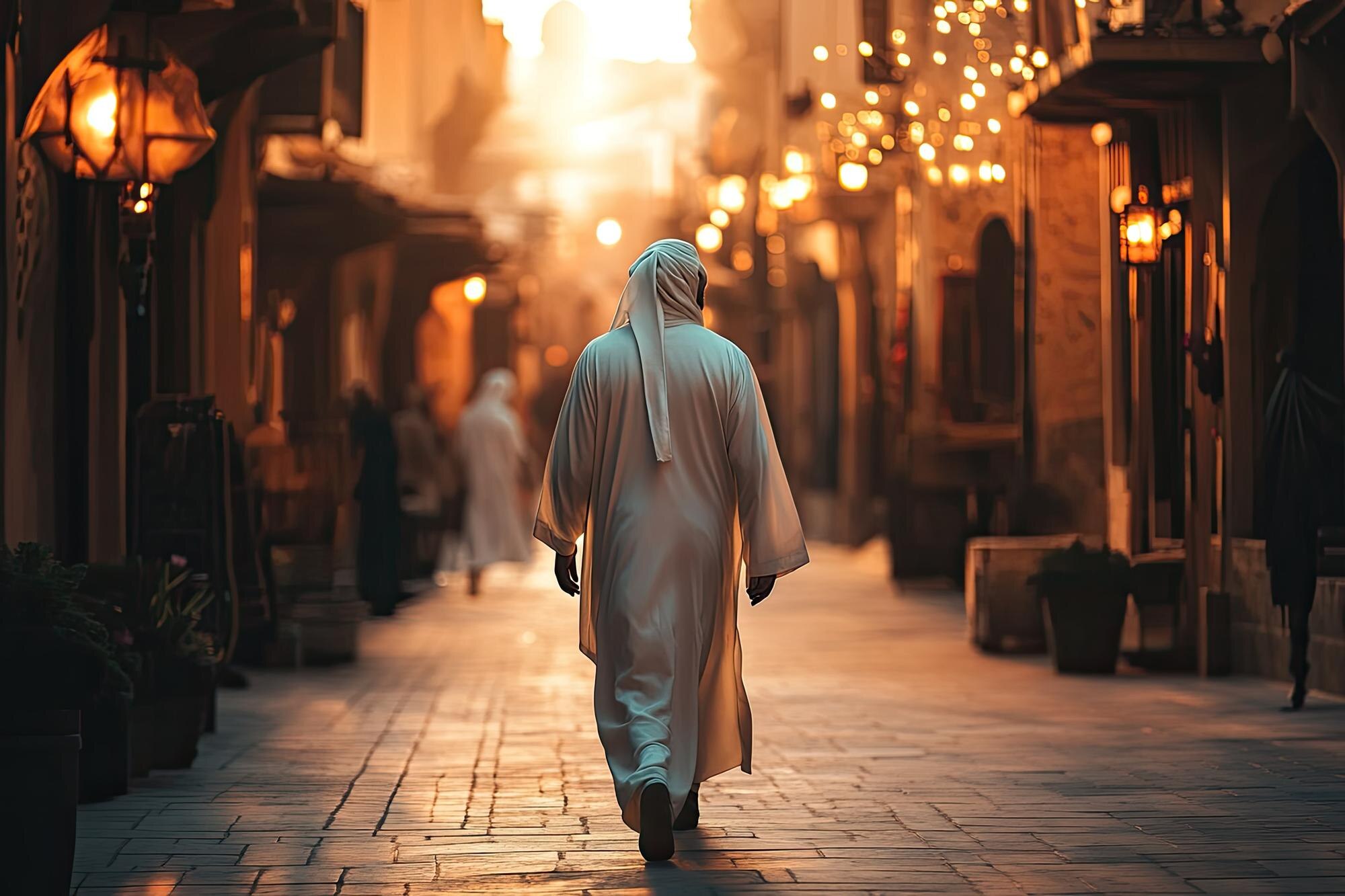
An airport hardly feels like a place of worship. It’s loud and crowded, and your whole day is run by clocks and queues. But for a pilgrim it’s the first threshold of the journey, where you leave the ordinary world behind and your heart starts turning toward Makkah. Long before you set eyes on the Ka’bah, the airport quietly tests the very things Umrah will ask more of later: patience when a line crawls, humility when you have to ask a stranger for help, and trust that what is meant for you will reach you. Handle these procedures with care and you’re doing more than organising travel. You’re protecting the time, the energy, and the presence of heart that worship is going to need.
This guide walks the journey in the order you’ll actually live it — the final checks at home, check-in, security, boarding, the flight, and the first formalities when you land — with the specific timings, baggage allowances, and document rules that apply to Umrah travellers as of mid-2026. None of it sits apart from the pilgrimage. Every detail you get right at the airport is a small mercy you hand your future self, who’ll arrive in the Kingdom that bit calmer and freer to pray.
Before You Leave Home
The smoothest airport experience is decided the night before, at home, with a bathroom scale and a folder of documents. Weigh every case. Umrah flights carry an unusual amount of baggage — pilgrims pack heavily for the trip itself and with one eye on the gifts and the sealed box of Zamzam they hope to bring home — so check-in counters run slow, and an overweight bag discovered at the airport means kneeling on the terminal floor repacking while the queue grows behind you. One weigh-in at home prevents that scene completely. Our packing guide goes through what belongs in which bag; the short version is that medication, your vaccination record, travel documents, a phone charger, and the ihram itself if you plan to change en route all belong in your cabin bag, never in the hold.
Then assemble a single documents pouch: passport, your visa (the digital copy is normally enough, though a printout costs nothing and settles nerves), your booking reference, your first hotel’s name and address, and proof of your Nusuk booking if you’ve made one. The full checklist lives in our documents guide, and if you’re still weeks out from travel, the preparation timeline tells you what to sort when. Do all of this the day before, not the morning of. A pilgrim who packed at midnight and printed nothing travels tense; a pilgrim who closed the suitcase after Isha the previous evening travels light in every sense.
Check-in: The Timings That Actually Matter
Airlines publish their deadlines plainly, yet these are the numbers that catch people out year after year. Saudia, the carrier most Umrah pilgrims fly at some point, asks passengers to arrive at the airport three hours before an international departure. Its check-in counters close sixty minutes before departure, and boarding gates close twenty minutes before the scheduled time — after that, the flight is simply gone, however valid your ticket. Some carriers and some routes are stricter still: flights to and from North America often have document-check cutoffs well before the counter deadline, and budget airlines can close bag drop earlier than you’d expect. Treat three hours as your floor for any international Umrah departure, and add more in Ramadan, in the weeks around Hajj, and whenever you’re travelling with children, elderly parents, or anyone who needs assistance.
Online check-in helps, but don’t let it lull you. Most airlines on Umrah routes open web check-in one to two days before departure, and checking in from your sofa secures your seat and shortens your queue. It doesn’t remove the queue, though: you’ll still need the bag-drop counter for your luggage, and airlines flying into Saudi Arabia routinely verify passports and visas in person before issuing or honouring a boarding pass. Check in online, then arrive as though you hadn’t.
There’s a quieter reason to come early, too. The pilgrim who arrives with time to spare prays two rak’ahs in the terminal’s prayer room, eats something unhurried, and boards composed. The pilgrim who arrives at the last minute spends the first hours of a sacred journey with a pounding heart. The three-hour rule isn’t only logistics; it’s the first act of guarding your own tranquillity.
Baggage: Know Your Allowance Before the Scale Does
Allowances vary more between carriers than most pilgrims realise, and the difference decides whether check-in is a formality or a negotiation. As of mid-2026, Saudia’s international economy allowance is two checked pieces of up to 23kg each (maximum 158cm per piece, adding length, width, and height), with business class allowed two pieces of up to 32kg. Cabin baggage in Saudia economy is a single piece of around 7kg plus a small personal item. Budget carriers work differently: flynas sells its cheapest Light fares with no checked bag at all, while its standard economy fares include a single 20kg piece — and buying extra weight online in advance costs roughly half what the same kilos cost at the airport desk. Gulf carriers such as Emirates, Qatar Airways, and flydubai each publish their own piece or weight systems, so check your specific fare class on the airline’s own site the week you fly, not a screenshot from someone’s group chat.
Two practical notes follow from all this. First, if you’re flying a budget carrier outbound, pack to the lower allowance and treat any spare kilos as room for the return journey. Second, plan the Zamzam question now rather than at the airport in Jeddah on the way home. Pilgrims departing Saudi airports may carry one factory-sealed 5-litre container of Zamzam bought from the official airport counters, and most major carriers on pilgrim routes — Saudia and flynas among them — accept it as a separate piece in addition to your normal allowance. The details, including which airlines are stricter, are in our guide to bringing Zamzam home.
The Yellow Card: Vaccination Checks
Saudi Arabia requires proof of quadrivalent meningococcal (MenACWY) vaccination from Hajj and Umrah pilgrims aged one year and above. The certificate — usually the yellow international vaccination card — must show the vaccine was given at least ten days before arrival, and within the previous five years for the conjugate vaccine (three years for the older polysaccharide type). In practice the requirement bites at two points: when your Umrah visa is processed, and occasionally on arrival, where health officials may ask to see the card, particularly during busy seasons. Airlines can also ask for it at check-in, since they carry responsibility for passengers refused entry.
So the rule is simple: the yellow card travels in your documents pouch, in the cabin, next to your passport — never in the hold. If you haven’t been vaccinated yet, book it today; the ten-day minimum is unforgiving and has ended trips before they began. Our vaccinations guide covers the full picture, including the seasonal flu and other jabs that are recommended rather than required.
Security Screening — In Ihram or Not
Standard aviation security applies to pilgrims exactly as it does to everyone else. Liquids, gels, and aerosols in the cabin respect the usual 100ml container limits, laptops and large electronics come out of the bag where the airport requires it, and you’ll walk through the scanner like any other traveller. If you’ve already entered ihram and you’re wearing the two unstitched white garments, don’t worry. Security staff at departure airports across the Muslim world, and at the big international hubs, see pilgrims in ihram every single day and handle the screening with practised ease. The archway scanner has no opinion about what you’re wearing.
A few small choices make it smoother. Wear sandals that slip off and on without a struggle, since some airports still ask for footwear on the belt. Keep your belt-free, pocket-empty state ready before you reach the front of the queue: the ihram waist pouch that holds your passport and cash goes through the X-ray with your bag, then straight back on. If you carry unscented toiletries for maintaining ihram, keep them within the liquids limit or check them in the hold. And if you’re selected for a pat-down — it happens, and it’s random — it will be done by an officer of your own gender; you can ask for a private room if you feel the garments make a public search awkward, and any airport will oblige. Take it patiently. They’re screening your body; your heart is already on its way. How to wrap, wear, and keep the garments secure through all this is covered in our guide to wearing ihram, and the question of when the sacred state must actually begin belongs to the Miqat guide.
Wheelchairs and Special Assistance
If anyone in your party has limited mobility, request assistance when you book the ticket, or at latest 48 hours before departure through the airline’s website or call centre — don’t wait to ask at the airport, where same-day requests are met on a best-efforts basis and can involve long waits. The service is free on every major carrier, and it’s far more comprehensive than people expect: an agent with a wheelchair meets you at check-in, takes you through a priority security lane, brings you to the gate, boards you first, and — if you’ve asked for it at booking — a counterpart meets the aircraft at the other end and walks you through immigration and baggage claim. At Jeddah and Madinah this arrival assistance is well drilled, because the airports handle elderly pilgrims by the tens of thousands.
Don’t let modesty stop an elderly parent from accepting the service. The distances inside modern terminals are measured in kilometres, and every step saved at the airport is strength banked for tawaf. If you use your own wheelchair, it travels free; gate-check it and it will normally be returned at the aircraft door or at baggage claim, tagged like a case.
Boarding and the Flight
Boarding an Umrah flight feels like nothing else. The excitement is real and catching, and it can tip into rushed, crowded queues at the gate. There’s nothing to be gained by pushing forward: your seat is yours, the aircraft won’t leave without its boarded passengers, and the calm you’re guarding now is part of what you’ve travelled to find. Let others go ahead if the crush builds, help a struggling traveller with an overhead bag, and board with the composure you hope to carry into the Haram itself.
In the air, the priorities are rest and water. Cabin air is exceptionally dry, and pilgrims routinely land depleted without realising it — a real problem when the rites begin within hours, as our guide to avoiding dehydration explains. Sip steadily through the flight rather than gulping at meal times. If you boarded already in ihram, keep its restrictions: no scented products, no trimming hair or nails, and keep the talbiyah quietly on the tongue as the hours pass. If you plan to enter ihram in the air, listen for the cabin announcement that the aircraft is approaching the Miqat — on flights into Jeddah it usually comes thirty to forty-five minutes before the boundary — but be changed and ready long before it, so that when the moment arrives all that’s left is the intention. The full mechanics are in the Miqat guide.
Transit Desks and Connections
If your journey involves a change of aircraft, know before you land at the hub whether your bags are checked through to Jeddah or Madinah and whether you hold both boarding passes. On a single ticket, you almost always do, and your job at the hub is simply to follow the transfer signs to the connections security check and your next gate. On separate tickets you may need to clear immigration, collect bags, and check in again — a very different undertaking with visa implications, unpacked in our guide to layovers and transit travel. Every major hub runs transfer desks airside for exactly the moments things wobble: a tight connection, a missing onward boarding pass, a delay eating your margin. Go to the desk early rather than queuing at a gate, and if a delay genuinely threatens the connection, the airline that sold you the through-ticket owns the problem — our guide to handling delays covers your rights and your moves.
When You Land
Stepping off the plane in the Kingdom can feel like stepping into a moving river. The terminals are huge, the signage is bilingual, and the stream of pilgrims never stops. Follow the signs for Umrah and visit visa holders toward immigration, keep your documents pouch in hand, and stay with your group — agree a meeting point near baggage claim before you scatter. At Jeddah, pilgrim flights arrive into a vast complex with its own rhythms, which our Jeddah airport guide maps hall by hall; Madinah’s arrival experience is smaller and gentler, covered in the Madinah airport guide. What happens at the immigration desk itself — biometrics, e-gates, customs channels — has its own chapter in our guide to Saudi immigration and customs.
If a bag goes astray, report it at the airline’s baggage desk before you leave the airport, keep the written reference, and let travel insurance do the job it was bought for. Then step out toward the transport ranks — our guide to getting from the airport to Makkah takes over from there. The hardest logistics of the journey are now behind you. Check the timings once more tonight, weigh the bags, zip the documents pouch, and set two alarms: the pilgrim who does those four things has already solved almost everything this page warns about.
Leave A Comment