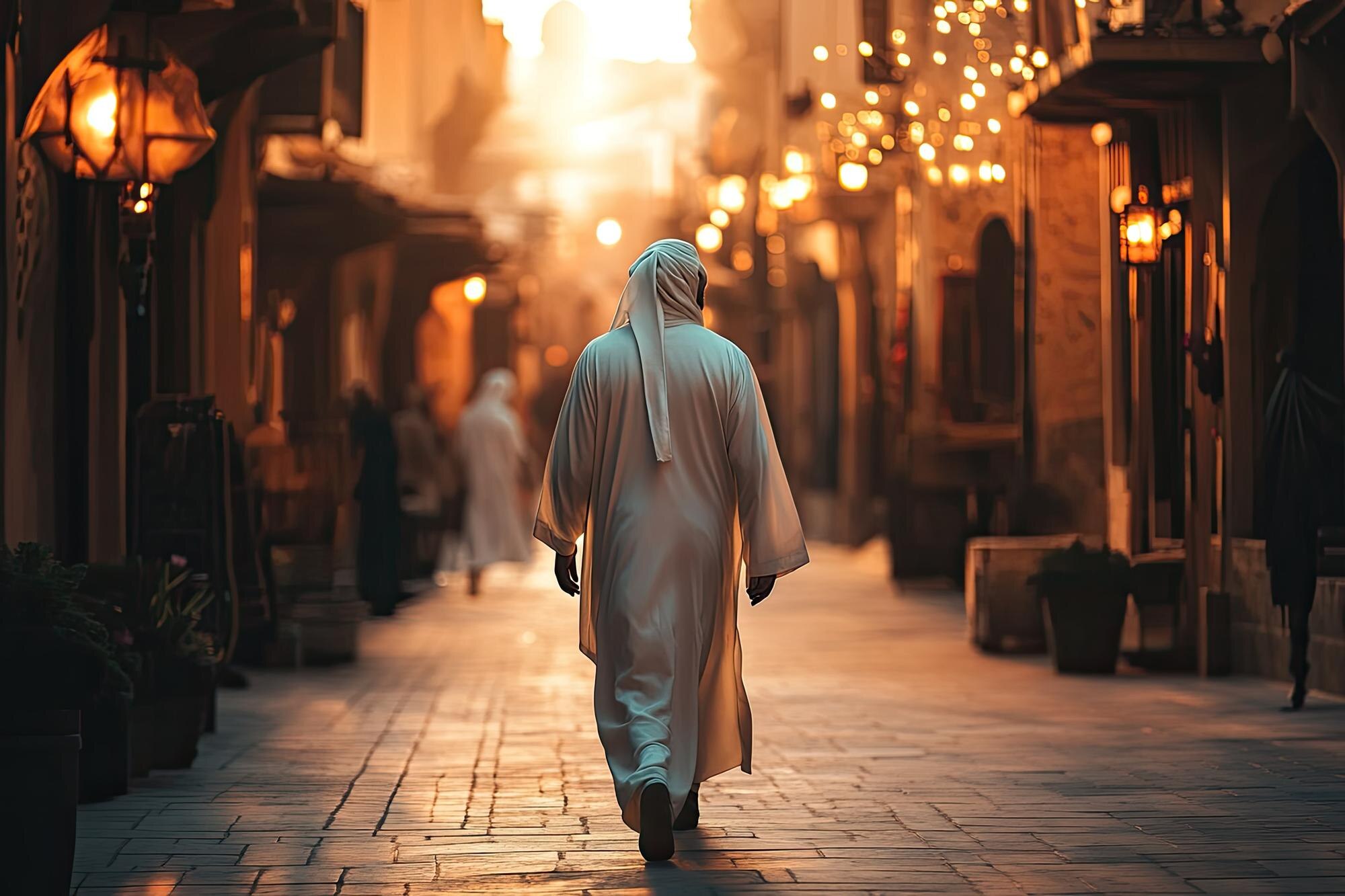
There is a peace in Madinah, that is unlike anything else on the earth — and you will feel it almost the moment you arrive. In Makkah the heart trembles; in Madinah it exhales. Something in the chest that has been clenched for years, perhaps your whole life, quietly lets go. People who could not stop weeping in the Haram find that in Madinah the tears turn soft and warm. This is the city of the one who was sent as a mercy, and his mercy still seems to hang in its very air.
And here is what I most want you to carry into his mosque, because it will change how you stand there. When you send your greeting of peace upon the Prophet ﷺ, it does not vanish into the air. It is reported that Allah has angels who travel through the earth, carrying to him the salam of his ummah — and that whenever a servant sends peace upon him, Allah returns his soul to him so that he answers the greeting. Think of what that means. When you stand near him and whisper as-salāmu ʿalayka yā RasūlAllāh — peace be upon you, O Messenger of Allah — your greeting reaches him, and it is returned to you. You are not speaking to a memory. You are greeting the most beloved of all creation, and he is answering you. So send your blessings upon him often, with a full heart:
اللَّهُمَّ صَلِّ عَلَى مُحَمَّدٍ وَعَلَى آلِ مُحَمَّدٍ
Allāhumma ṣalli ʿalā Muḥammadin wa ʿalā āli Muḥammad.
“O Allah, send Your blessings upon Muhammad and upon the family of Muhammad.”
And let your heart hold onto this, especially on the days you feel small and unknown and forgotten: the Prophet ﷺ longed for you. One day he looked at his Companions and said that he longed to meet his brothers. They asked, surprised, “Are we not your brothers, O Messenger of Allah?” And he answered: “You are my Companions. But my brothers are those who will come after me, and believe in me without having seen me.” That is you. Across fourteen centuries, before you were born, before your country had a name, he was already loving you, already longing for the ones who would believe in him with only their hearts and never their eyes. You have travelled across the world to greet him — but know that he was waiting for you long before you came.
And he will know you. He told us that on the Day of Judgement, in the crush and terror of that gathering, he will stand at his Pool — the Hawd — and recognise his ummah, knowing them by the light shining on their faces and limbs from the traces of their wudu, calling them to drink from a water whiter than milk and sweeter than honey, from which whoever drinks will never thirst again. So every time you make wudu, every drop you let fall before the prayer, you are quietly preparing the very light by which the Prophet ﷺ will know you and call you to himself on the day you will need him most. Is there any peace greater than that — to know that the one you love already knows you, and is waiting for you at the end of the road?
There is a small, aching story that shows how dearly he was loved, even by things that had no tongue. In his mosque there was a dry palm-trunk that he would lean against when he stood to teach. When at last a proper pulpit was made for him and he stepped up onto it, that old trunk — a piece of dead wood — cried. It wept aloud like a child, in front of everyone, grieving that he had left it, until the Prophet ﷺ came down, and put his arms around it, and held it until its weeping settled. If a lifeless palm-trunk could weep for nearness to him and be comforted by his embrace, then what about your heart? You have come to the city where his mercy still lives. Let your hardened, tired heart weep too, if it can. And let it be comforted, as that trunk was comforted, simply by being near him.
Leave A Comment