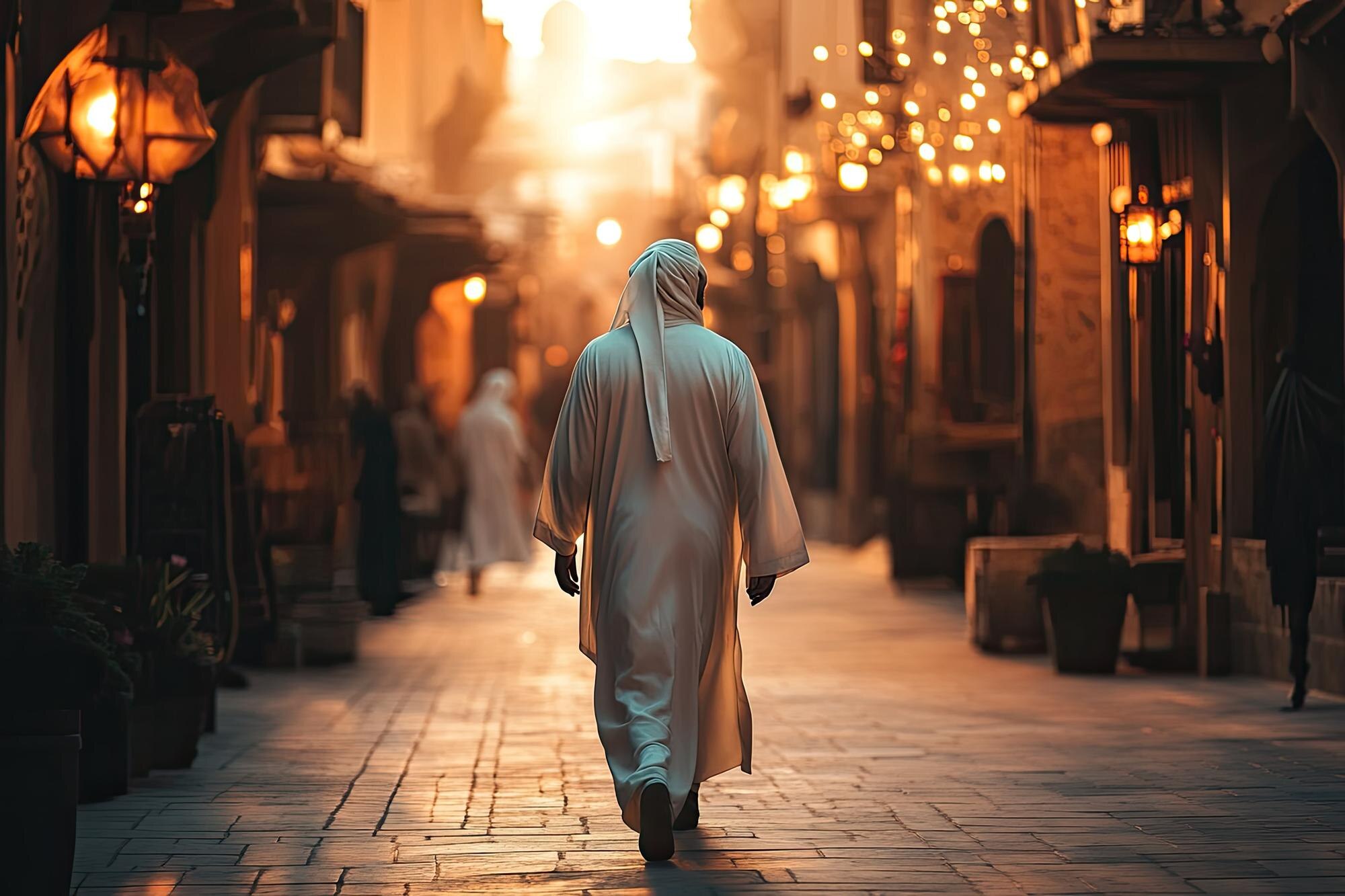
I want to ask you something, gently. You will spend weeks deciding what to pack. How many minutes have you spent deciding what to ask? This is one of the rarest opportunities of your entire life — to stand close to the House of Allah and speak to Him, with urgency, with shame, with longing, with trust. Your feet may be walking in Tawaf, but it is your heart that will be talking. Your body may be moving between Safa and Marwah, but it is your soul that will be knocking on the door of the King. So come with a list — and come, at the same time, with a wide-open heart. Write your needs, yes. But leave a space for Allah to show you the needs you never knew you had.
Begin the way a beggar who knows his King begins: with praise. Before you pour out what you want, remember Who you are speaking to — His mercy, His generosity, how near He is, how much He loves to forgive. He says to you Himself: “When My servants ask you about Me, I am near. I answer the call of the caller when he calls upon Me” (al-Baqarah 2:186). Let that verse pull the loneliness out of your du’a. You are not whispering into an empty sky. You are calling on the One who already knows every word before you say it — and who loves that you came to ask.
Then ask, first, for your faith — for sincerity, for forgiveness, for your prayer to be guarded, for a love of the Qur’an, for a heart cleaned of its hardness, for a good ending. And then ask for everything else, without shame: your parents, your marriage, your children, your health, your work, your debts, your grief, your fears, and the whole wounded Ummah. Do not imagine any need of yours is too small to bring to Allah. The manners of du’a are not to hide your needs, but to lay them down with trust, and humility, and contentment with His wisdom. And know this, when the words finally fail you and you have nothing eloquent left: sometimes the truest du’a ever made is only three broken phrases — Yā Allah, forgive me. Do not leave me to myself. Accept me.
Let the Qur’an travel with you, too — not as an app you ignore, but as a companion you turn to. Read a small, steady portion each day, and let your eyes rest especially on the verses tied to the House: Ibrahim’s prayer beside it (Ibrahim 14:37), the purifying of the House for those who circle it (al-Baqarah 2:125), Safa and Marwah among the signs of Allah (al-Baqarah 2:158). And let remembrance guard the spaces in between. The airport, the bus, the lift, the long queue — each can become either heedlessness or worship, and you decide which. Keep your tongue moist with SubhanAllah, Alhamdulillah, Allahu Akbar, La ilaha illa Allah, and blessings upon the Prophet ﷺ. A journey soaked in remembrance arrives at Makkah long before the body does.
Leave A Comment