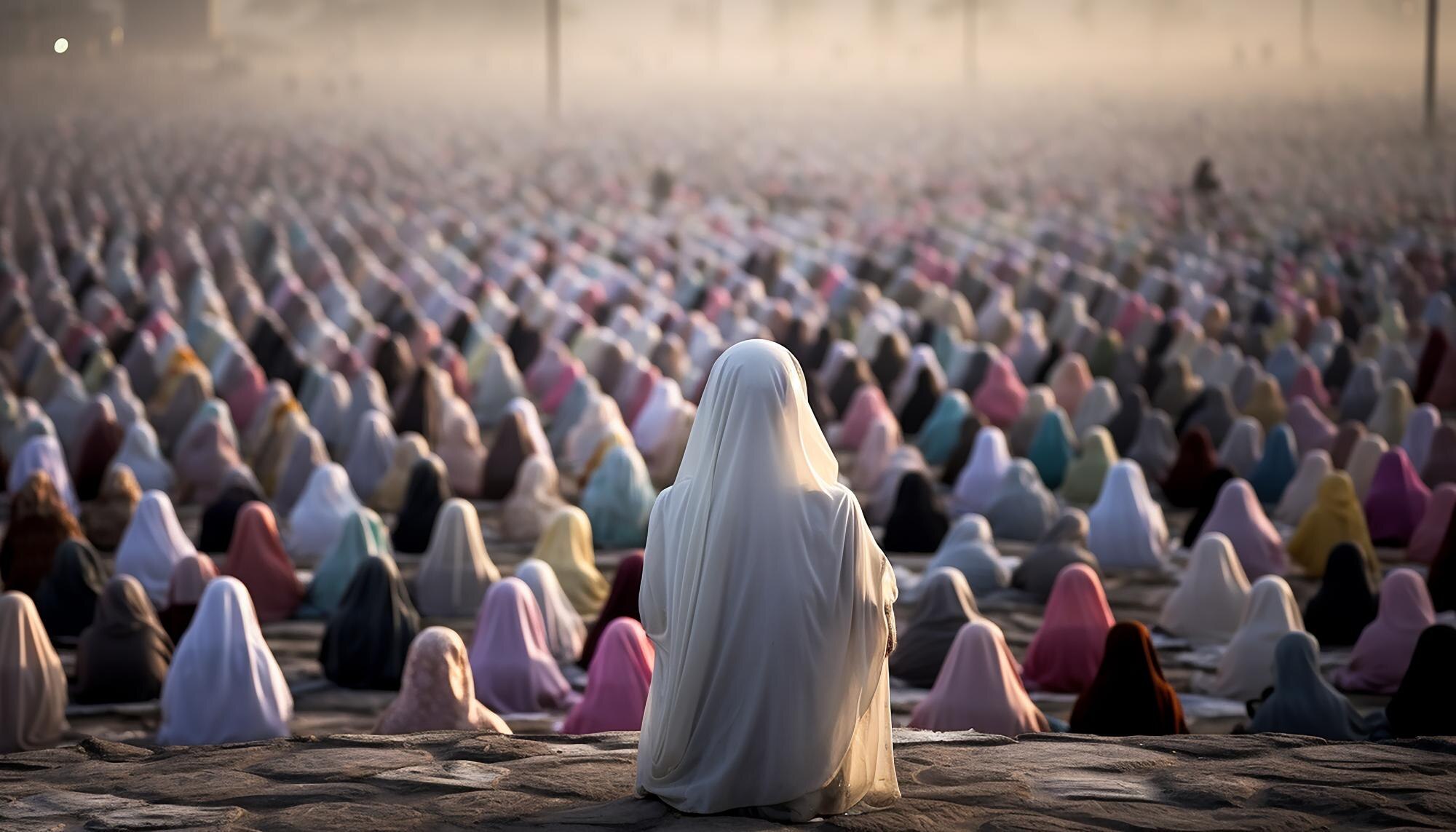
Among the questions women bring to Umrah, few cause as much hidden confusion as irregular bleeding. You have finished your period, performed ghusl, perhaps started tablets to keep your cycle out of the way — and then there is spotting. Not a period, not nothing. And immediately the doubt arrives: am I pure or not, may I pray, may I perform tawaf, or must I stop everything as if my menses had returned? That uncertainty can quietly paralyse a woman’s worship at the very moment she most wants to draw near to Allah.
Here is the reassurance first, because it changes the mood of everything that follows: istihadah — bleeding outside your normal menstrual pattern — is not menstruation, and it does not carry menstruation’s rulings. A woman in istihadah prays, fasts, and performs tawaf and sa’i. The scholars drew this distinction with great care precisely as a mercy, so that a woman neither treats impurity as purity nor, just as importantly, deprives herself of worship she is fully entitled to perform.
The subject matters more on Umrah than almost anywhere else. The change of climate, the physical exertion, the disrupted sleep of long-haul travel and, very often, menstruation-delaying medication can all trigger spotting at exactly the moment a woman is most eager to worship. This guide keeps the fiqh intact and adds the working detail around it: how to tell the two states apart, how to manage the practicalities in the Haram, and how to put a precise question to a scholar when your case is genuinely unclear.
Istihadah is not menstruation
Menstrual blood generally has recognisable characteristics: it aligns with a woman’s known cycle in its timing and duration, and it tends to have a colour and consistency she knows well. Istihadah, by contrast, is bleeding that falls outside that pattern — often lighter, often continuous spotting, often arriving on days when no period is due — and it commonly has a medical or hormonal cause, or follows the stress and disruption of travel.
The difference in ruling is the part every woman should know before she flies. A menstruating woman pauses the ritual prayer and delays tawaf, as explained in our guide to menstruation and Umrah. A woman in istihadah does neither. She is considered ritually pure for the purposes of worship: she is required to pray, she may fast, and she is fully permitted to perform tawaf and sa’i. Istihadah is treated, in effect, as an ongoing minor impurity rather than the major one of menses — a state the law accommodates rather than one that suspends her worship. Too many women hold back from prayer and from the rites out of a mistaken assumption that any bleeding bars them. It does not.
Telling your habit days from irregular bleeding
How, then, do you know which state you are in? The scholars look first at your habit — the length and timing of your normal cycle. Bleeding that arrives when your period is due, and behaves the way your period behaves, is menstruation and carries its rulings. Bleeding outside those days, or continuing well beyond your usual duration, moves into the territory of istihadah. The schools of thought also set outer limits on how long menses can last, beyond which continued bleeding is no longer counted as menstruation at all, and they weigh the characteristics of the blood itself in borderline cases.
Many scholars also do not count the yellowish or brownish traces a woman may notice after her purity is established as menstruation — a point that spares a great deal of anxiety in the days straight after ghusl. But the finer details differ between the madhhabs, particularly for women whose cycles were never regular to begin with, and this is where honesty matters: a woman with a genuinely complicated pattern should not try to resolve her case from general articles, this one included. She should describe her specific situation to a knowledgeable scholar. The section below on documenting your pattern shows exactly how to make that conversation quick and precise.
The wudu rule that carries you through
The principal practical obligation of istihadah, in the mainstream view, is this: take reasonable measures to contain the bleeding, then perform a fresh wudu for each obligatory prayer — and likewise renew your wudu before beginning tawaf. That wudu is understood to remain valid for the act of worship you made it for, even though the bleeding continues. This is the whole accommodation, and it is what allows a woman in istihadah to stand in prayer and circle the House with a settled heart while spotting carries on in the background.
The schools differ on some of the finer points, and if you follow a madhhab precisely it is worth knowing which. In the Hanafi school, a woman in this state performs wudu once the time of an obligatory prayer has entered, and that wudu serves her for as many prayers as she wishes until the prayer time ends. In the Shafi’i school, she renews her purification for each obligatory prayer after its time comes in — attending to her protection, making wudu, and praying promptly without delay. The broad and reassuring rule is the same across the board: istihadah does not stop a woman from praying or from completing her Umrah. Only the housekeeping around the wudu varies.
Starting your Umrah in istihadah
Unlike a menstruating woman, who enters ihram and then waits, a woman in istihadah has nothing to wait for. She enters ihram at the miqat in the ordinary way — ghusl for cleanliness, ihram clothing, niyyah, talbiyah — and on arrival in Makkah she may proceed directly to her tawaf and sa’i once she has attended to her protection and made her wudu. There is no delay to schedule, no rites to postpone, no anxious watching of the calendar. If anything, her main planning question is simply when to go: choosing a quieter hour for tawaf, as described below, makes the practical side considerably easier. The rest of her trip runs exactly as her companions’ trips run, with a little extra housekeeping around each prayer.
The situations women actually face
Spotting on the pill, or after period-delay tablets
By far the most common scenario on Umrah is hormonal. Breakthrough spotting is a well-known companion of the contraceptive pill — especially in the first months on a new pill, after a missed dose, or when packets are run together to skip a withdrawal bleed — and norethisterone, the tablet most often prescribed to delay a period for pilgrimage, can produce light spotting even while it holds the period itself back. In general terms, bleeding of this kind outside your habitual period days is treated as istihadah: you pray, you perform tawaf, you renew your wudu as described above. Our guide to delaying menstruation for Umrah covers the medical side in full. Where the spotting overlaps days when your real period would have been due, the picture needs more care — note the dates and ask a scholar rather than deciding alone.
Perimenopause and cycles that have stopped behaving
For women in their forties and fifties, cycles often loosen before they end: shorter gaps, longer gaps, missed months, unexpected spotting. The fiqh of habit days assumes a habit, and when the habit itself is dissolving, applying the rules becomes genuinely difficult. The general principles still hold — bleeding with the recognisable character and timing of menses is treated as menses, and irregular spotting outside it as istihadah — but a woman in perimenopause planning Umrah does well to have two conversations before she travels: one with her doctor, so that any bleeding needing medical attention is not waved away as mere irregularity, and one with a scholar, taking a written record of her recent months so the answer fits her actual pattern.
Spotting just after your period seems to end
A third familiar case: the period finishes, ghusl is performed, the rites resume — and a day later there is a faint brownish trace. As noted above, many scholars do not count yellowish or brownish discharge after purity as menstruation, in which case the ghusl stands and the worship continues, with the trace treated on the lighter rulings. Because this is exactly the kind of borderline where madhhab detail matters, treat it as a one-line question to your group’s scholar rather than a reason to abandon your tawaf plans.
Managing tawaf with confidence
Now the practical craft. A woman in istihadah performs tawaf like anyone else; she simply prepares for it deliberately. The sensible rhythm is a three-step routine done in one unbroken sequence: attend to your protection, make a fresh wudu, and go straight to your worship, whether that is the prayer or the Mataf. Choose high-quality, high-absorbency protection so that you can move through the mosque without anxiety about cleanliness — many women layer a good pad with period underwear as a second line of defence for the duration of tawaf — and carry a small discreet pouch with spares and unscented wipes. If you arrive short of anything, the Nahdi and Al-Dawaa pharmacy chains have branches near the Haram areas in both cities and stock the familiar brands; our guide to pharmacies in Makkah and Madinah maps them out.
Know the geography before you need it. The washrooms and wudu areas of Masjid al-Haram sit mostly outside the main prayer halls, at the lower levels near the major gates and plazas, with clearly marked women’s sections; in Madinah the arrangement is similar, around the courtyards of the Prophet’s Mosque. Allow a realistic fifteen to twenty minutes to get from a wudu area through the crowds to the Mataf at busy times, and plan your tawaf for a quieter window — late evening and the hours after midnight are gentler than the post-prayer surges. The ground-floor Mataf offers the shortest circuits; the upper floors are calmer but each round is far longer, which matters when you would rather keep the whole tawaf inside a single comfortable stretch.
Once your wudu is made and your tawaf begun, carry it through. The continued spotting does not undo the wudu you made for this act of worship — that is precisely the ease the ruling was designed to provide — so you do not need to keep leaving and re-entering the Mataf to check. Complete your seven circuits, pray the two rak’ahs of tawaf, and proceed to sa’i with your mind on the worship rather than the bleeding.
Sa’i itself is gentler ground. Many scholars do not make ritual purity a strict condition for sa’i at all, since the walking between Safa and Marwah takes place outside the mosque’s prayer space, so the pressure a woman may feel about her wudu during tawaf simply does not apply with the same force in the Mas’aa. Renewing wudu before sa’i remains the tidier and more cautious habit, and takes only minutes with facilities close by, but a woman who notices spotting part-way along the walkway has no reason to stop or start again. She continues her rounds, finishes at Marwah, and her Umrah rites are complete.
Document your pattern, then ask a precise question
When your case does need a scholar, the quality of the answer depends on the quality of the question — and a vague question gets a cautious, generic reply. Before you call your group’s scholar or write to an established fatwa service, spend ten minutes writing down the facts a mufti actually needs:
- Your usual cycle: how many days of bleeding, roughly how many days apart, and how regular it has been over the past year.
- The date this bleeding began, and how it compares to when your period was due.
- What it looks like: heavy or light, continuous or intermittent, and its colour compared with your normal menses.
- Any medication involved — contraceptive pill, norethisterone, hormonal coil — with dates you started or stopped.
- Whether you have performed ghusl since your last certain period ended, and on which day.
With that note in hand, your question becomes answerable in a minute: these are my habit days, this is what is happening, which state am I in and what should I do about tawaf on Thursday? Keep the answer you receive — written, if possible — so that the whispers of doubt later cannot reopen a matter a qualified person has already closed. A cycle-tracking app, or the paper diary suggested in our guide to choosing the best time for Umrah, gives you most of this record automatically.
When uncertainty means asking, not assuming
There are two mistakes available here, and both are avoided the same way. A woman who assumes her irregular bleeding is menses abandons prayer and tawaf she was obliged and entitled to perform; a woman who assumes borderline bleeding is istihadah when it is in fact her period risks worship in a state that does not permit it. Neither error is necessary, because the tradition has always honoured the woman who asks. The women of the early community put exactly these questions — blood, purity, prayer — to the Prophet (peace be upon him) and to the scholars after him, plainly and without embarrassment, and the rulings we now rely on exist because they did. Asking is not a confession of ignorance; it is how this knowledge has always moved. A discreet question to a female guide or a trusted scholar, armed with your written pattern, resolves in minutes what silent worry can spoil for a week. There is more on finding those channels in our women’s health guide for Umrah.
Refusing the whispers of doubt
Perhaps the most important counsel concerns the mind rather than the body. Once you have identified your state and taken your practical precautions, set aside firmly the whispers — the waswasah — that tempt you to keep questioning whether you are truly pure, whether the wudu has held, whether you may really pray. These whispers are a known trial, and the cure is to act on sound knowledge with confidence rather than be paralysed by endless second-guessing. The woman who has learned the ruling, made her wudu and worn her protection should step into her worship with a settled heart, trusting that she has done what Allah asks. Excessive doubt is not piety; resolute worship on the basis of correct knowledge is.
Your istihadah plan, in brief
Put the pieces together before you travel and the whole subject shrinks to a routine. Pack a proper kit — absorbent protection, period underwear if you use it, unscented wipes, spares in a small pouch that lives in your Haram bag. Write your cycle pattern down now, while it is easy, and save the contact of a scholar or fatwa service you trust. In the Haram, work in one sequence — protection, wudu, worship — timed to a quieter hour, and let each wudu carry you through the act you made it for. And the first time something genuinely unclear happens, ask that day, with your notes in front of you, so the rest of your Umrah runs on knowledge instead of worry.





Leave A Comment