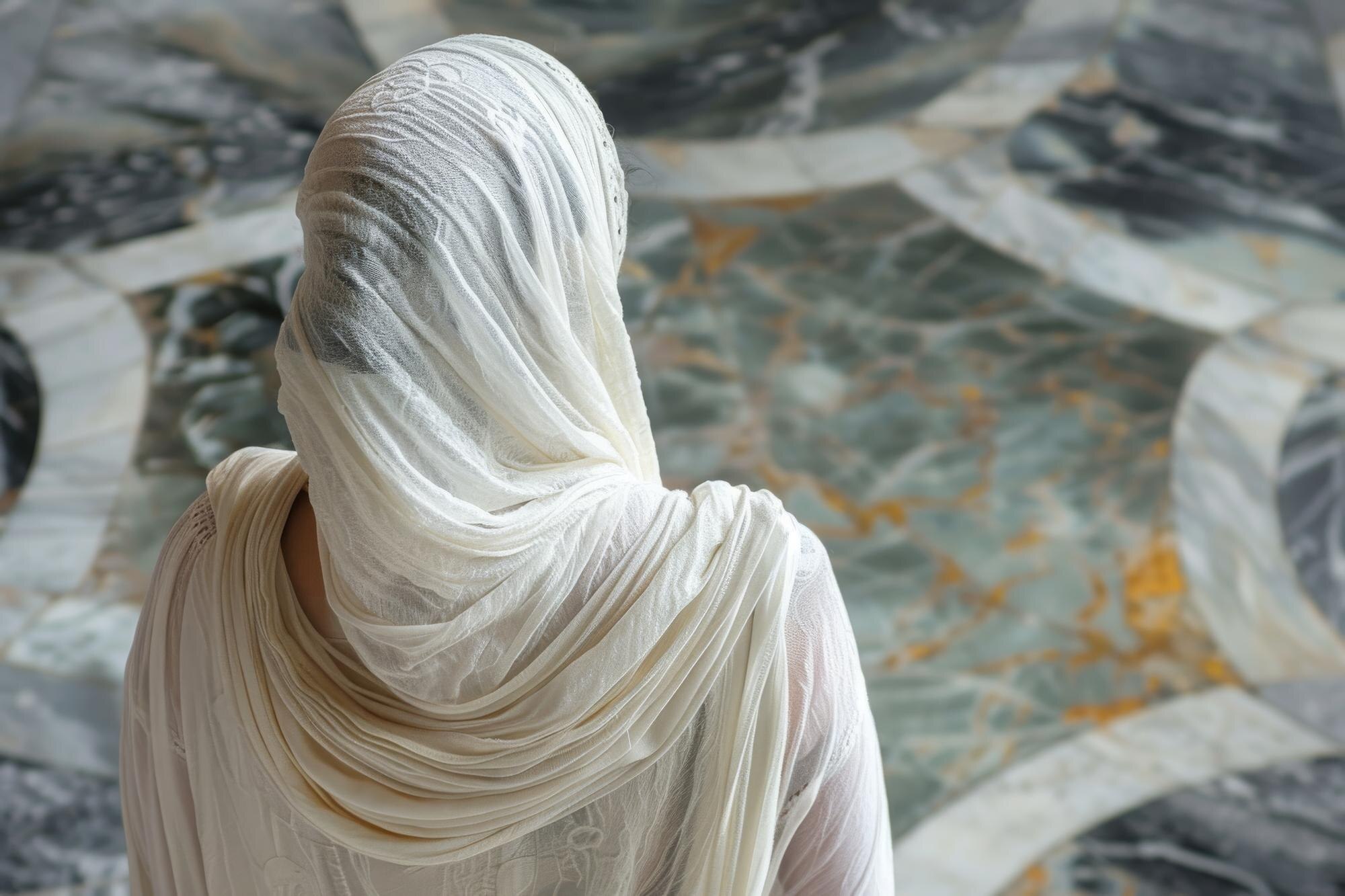
Ask a room full of women preparing for their first Umrah what worries them most, and it’s rarely the flights or the hotels. It’s ihram. What do I actually wear? Is there a uniform, the way men have their two white cloths? Must it be white — or black? And what happens to my niqab and gloves once I cross the miqat? These questions deserve straight answers, because uncertainty here has a way of shadowing the whole journey, and a woman who settles them before she travels carries far less anxiety into the most sacred moments of her life. The reassuring truth is that the rulings governing a woman’s ihram are few, merciful, and considerably simpler than the folklore that has grown up around them.
One clarification before anything else: ihram is a state, not an outfit. You enter it with your intention and the talbiyah at the miqat — the full mechanics are covered in our guide to the miqat and entering ihram — and from that moment a short list of restrictions applies until your Umrah is complete. For men, those restrictions include the famous unstitched cloths. For women, they do not. What follows is what actually changes for you, what doesn’t change at all, and how to dress for it in Saudi heat.
There is no prescribed uniform — and that changes everything
Unlike men, women have no mandated ihram garment. A woman’s ihram is simply any clean, modest clothing that covers what hijab ordinarily covers: loose enough not to trace the figure, opaque enough not to reveal what lies beneath, and covering everything except the face and hands. Stitched clothing is entirely permissible for her — the prohibition on tailored garments applies to men alone. So the abaya you already own, a jilbab, a long dress worn over trousers, a shalwar kameez with a generous headscarf: all of these are valid ihram wear, provided they meet the ordinary standard of modest covering. It is the intention and the adherence to ihram’s restrictions, not a particular outfit, that places you in the sacred state.
That single fact dissolves most of the worry. You can perform your entire Umrah in clothing you already trust — clothing you’ve prayed in, walked in, and know won’t gape when you bend or slip when you prostrate. There’s a strong argument for doing exactly that rather than debuting something new at the miqat. Long hours on hard marble, fierce heat and constant movement will find every flaw in an untested garment, and the middle of tawaf is a poor place to discover that a neckline needs constant adjustment.
Any colour you like
The belief that women must wear white in ihram — or, in some communities, black — is cultural, not scriptural. White is popular partly because it reflects heat and echoes the men’s ihram; black abayas are simply the long-standing regional norm in the Gulf. Neither is a requirement. Navy, beige, soft grey, olive, muted mauve — any colour is Islamically acceptable, and many experienced pilgrims deliberately avoid white because it shows every mark in an environment where you sit on courtyards, lean against pillars and wear the same garments for long stretches. The governing principle is the one that governs hijab generally: nothing so ornamented, fitted or striking that it pulls eyes towards you. Within that boundary, you are free.
Niqab and gloves: what the hadith actually says
Here is the ruling that causes the most concern, and it deserves precision. In an authentic narration recorded by al-Bukhari, the Prophet (peace be upon him) said that the muhrima — the woman in a state of ihram — should not wear the niqab, nor should she wear gloves. Two specific, fitted items are named: the veil tailored and fastened so that it sits on the face, and gloves shaped to the hands. The scholars explain the logic elegantly: a woman’s face in ihram is treated the way a man’s head is treated in his — just as he leaves his head bare of anything fitted to it, she leaves her face bare of anything fitted to it. The restriction belongs to the sacred state itself, and it ends the moment she exits ihram after completing her rites.
Notice what the hadith does not say. It does not say that a woman’s face must be exposed to the gaze of unrelated men, and it does not abolish her modesty for the duration of the pilgrimage. It removes one specific garment, not the principle behind it.
The drape the Companions’ wives used
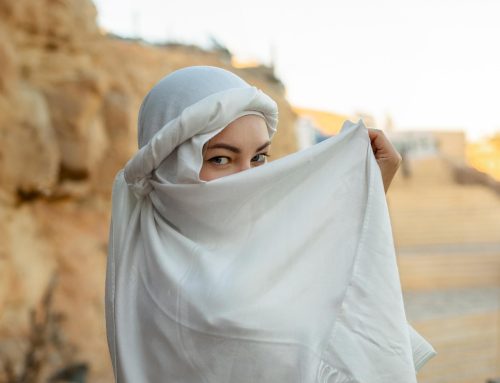
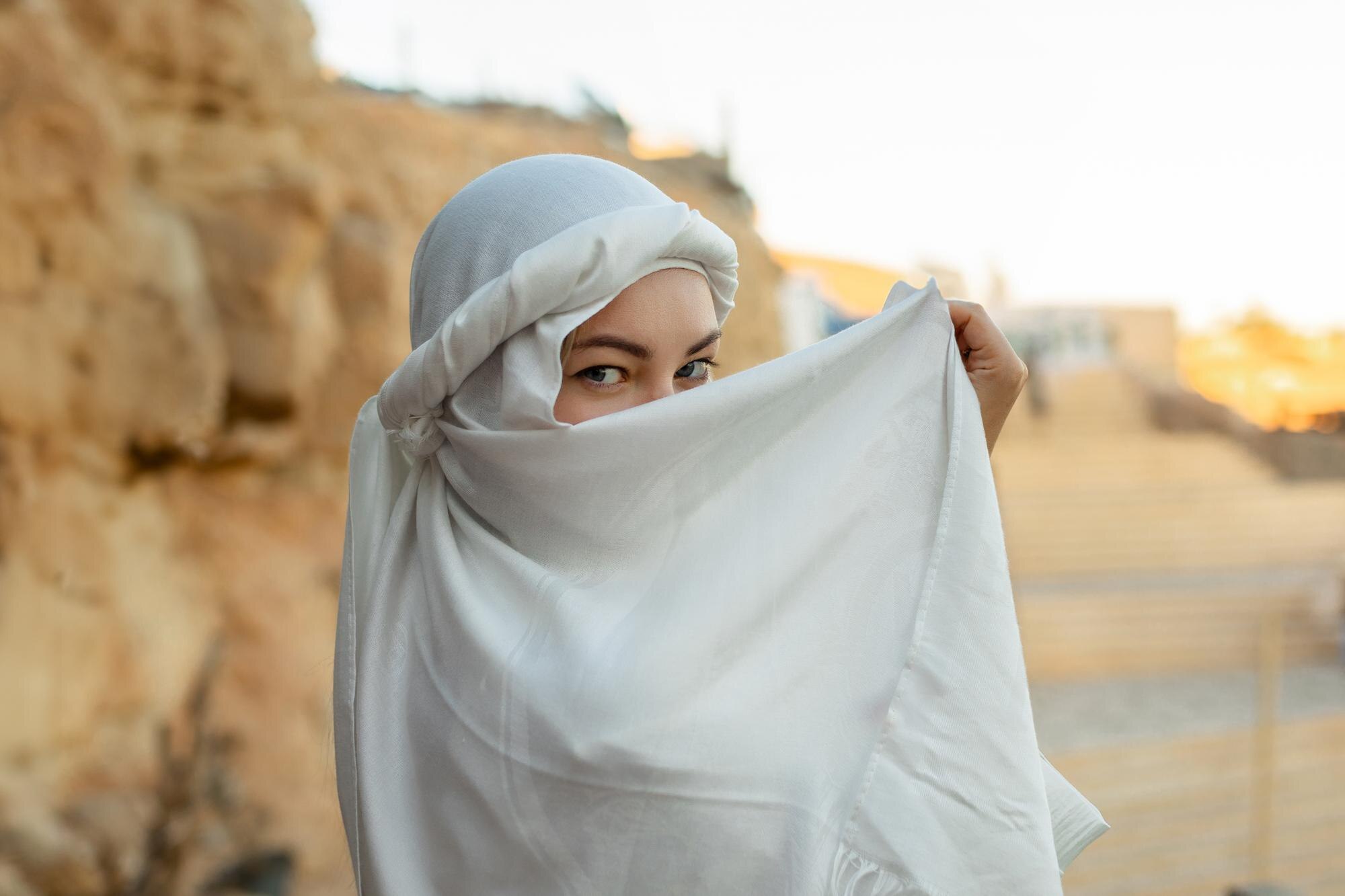
Aisha (may Allah be pleased with her) described exactly how the women around the Prophet handled this. Riders would pass by while they were in ihram with the Messenger of Allah, she related, and when the men drew near, each woman would lower her jilbab from her head over her face; once they had passed, she would uncover again. The solution, in other words, is as old as the rite itself. Fabric drawn down from above the head, hanging loosely over the face without being tied, pinned or shaped to the features, is not a niqab in the meaning of the prohibition — and it lets a woman cover in the presence of strangers while remaining fully within the bounds of ihram.
Modern pilgrims replicate the practice easily. A wide shayla or khimar can be drawn forward over the face when needed, and some women wear a small soft-brimmed cap or visor beneath the scarf so the fabric falls slightly proud of the features rather than resting on them. The finer points — whether the hanging cloth may brush the face, what precisely counts as a tied veil — are discussed differently across the four madhhabs and among contemporary scholars, so if you wear niqab as a settled part of your practice and want certainty about your own case, put the question to a qualified scholar you trust before you travel. Enter ihram with a settled heart rather than a lingering doubt.
The same logic governs the hands. It is the fitted glove that is set aside, not the covering itself; a woman who prefers her hands out of view when strangers pass can simply let a long sleeve or the edge of her outer garment fall over them.
Dressing for the heat
Makkah’s summer is unforgiving, and even in milder months the marble courtyards store the day’s heat well into the evening. Fabric matters as much as cut. Cotton, viscose, cotton blends, modal and lightweight crepe breathe and release heat; heavy polyester satins and thick synthetic abayas trap it against the skin. If you’re buying anything new, hold the fabric up to the light and crumple it in your fist — you want something with air in the weave that recovers without clinging. A pale or mid-tone colour helps outdoors, and a loose cut does more for cooling than any technical fibre, because moving air is what actually keeps you comfortable.
Bear in mind the flip side too: the interiors of the Haramain are strongly air-conditioned, and after two hours of night prayer under the vents many women are genuinely cold. A light shawl that lives in your bag solves both problems — shade outside, warmth inside. Our companion guide on what women should pack and wear for Umrah works through the full wardrobe in detail, including how few garments you actually need.
Footwear: complete freedom
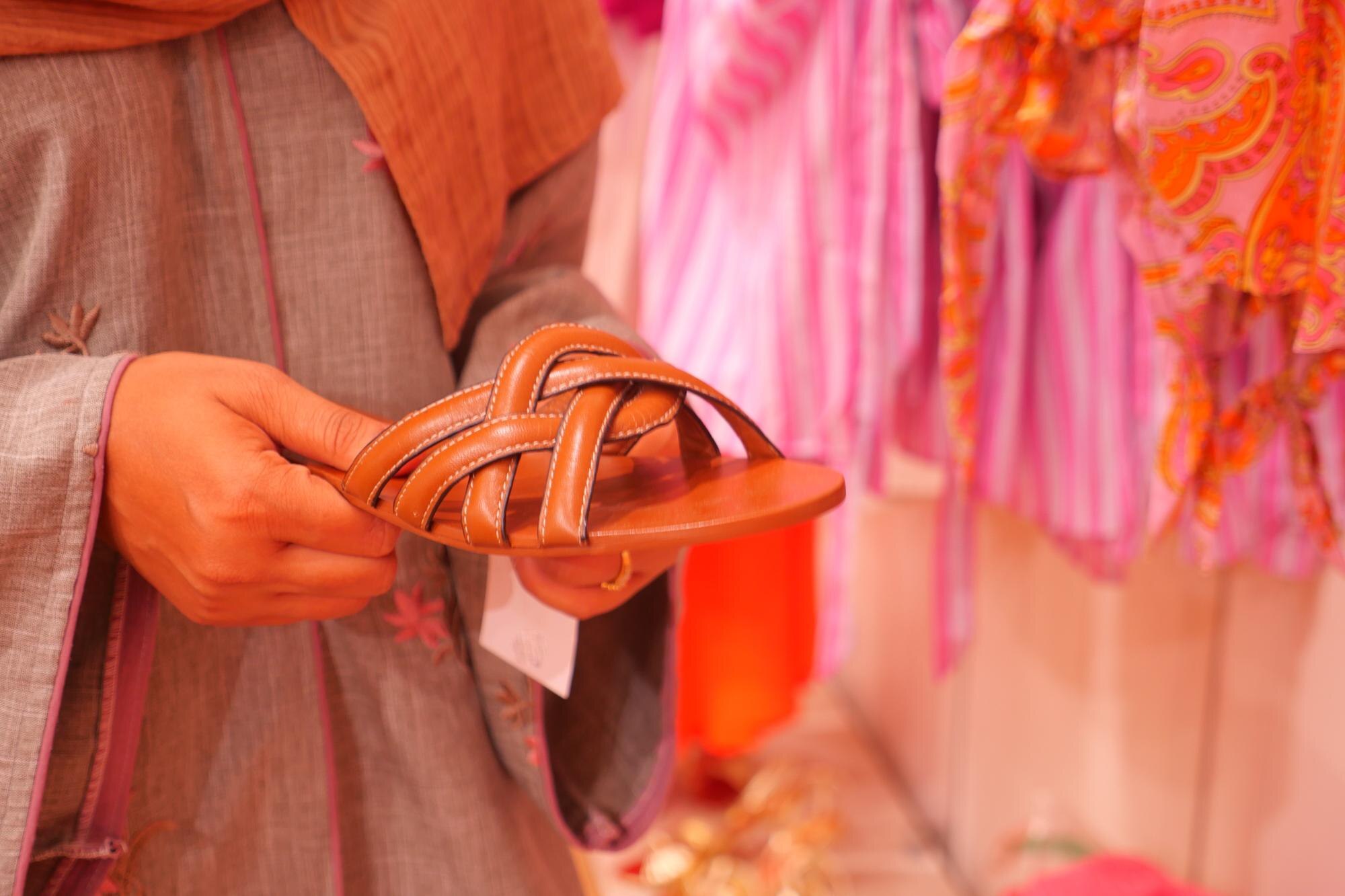
Men in ihram face restrictions on footwear; women face none. Socks, trainers, sandals, closed flats — all are permissible in ihram, so choose entirely on comfort. That choice matters more than most first-time pilgrims expect: tawaf and sa’i together involve several kilometres of walking on hard stone, often repeated across multiple visits, and unsupportive shoes are one of the commonest sources of misery in Makkah. Cushioned trainers or well-made supportive sandals earn their place, and because shoes come off at the mosque doors, slip-on styles save you fumbling with laces in a moving crowd. The polished marble can also be slick underfoot when freshly washed, so soles with some grip are a quiet blessing. For blister prevention, socks and the longer game, see our guide to foot care for pilgrims.
What breaks nothing at all
A surprising amount of anxiety attaches to things ihram doesn’t restrict for women in the first place. Jewellery is one: a wedding ring, discreet earrings beneath the scarf, a chain out of sight under the clothing — none of it affects your ihram, though ostentation sits poorly with the spirit of the state, and anything valuable is safer left at home or in the hotel safe. Glasses and sunglasses are fine, and sunglasses are close to essential against the glare bouncing off white marble at midday. A wristwatch, hair clips and elastics under the scarf, a money belt, an umbrella raised for shade — all unproblematic.
You may shower in ihram, using unscented products, and you may change your clothes as often as you like: the sacred state resides in you, not in the garment, so swapping a sweat-soaked abaya for a fresh one breaks nothing. Brushing your teeth is fine. Unscented sunscreen and unscented moisturiser are fine. And if your period arrives before or during ihram, the state itself is unaffected — you still enter ihram and make your intention, and only the tawaf waits for purity. That situation has its own detailed chapter in our guide to menstruation and Umrah, which every woman should read before departure regardless of where she expects to be in her cycle.
The unscented rule
The one restriction women share fully with men is perfume. From the moment you enter ihram until you exit it, you avoid applying scent in any form — and in practice this reaches further than a perfume bottle. Scented body lotion, perfumed wet wipes, fragranced deodorant, strongly scented soap and shampoo: all of these count as applying scent, and all of them are easy to use out of sheer habit at two in the morning in a hotel bathroom. The practical answer is preparation. Buy fragrance-free versions of your toiletries before you travel — unscented deodorant, plain soap, fragrance-free wipes — and keep them in a separate pouch that becomes your ihram kit, so the habitual reach for the familiar bottle never happens. Residual scent from perfume applied before entering ihram is a matter the scholars treat with nuance, but the rule you act on is simple: once you have made your intention, nothing scented goes onto your body or your clothes.
Designing a wudu-friendly outfit
Here is a consideration few guides mention and every woman discovers within a day: you will be making wudu repeatedly, often in crowded washrooms with wet floors and no privacy to spare, and your outfit either helps you or fights you. Sleeves are the main event. Tight cuffs that won’t push past the elbow turn every ablution into a wrestling match, so look for sleeves that roll or slide up easily and stay there — some women sew a discreet elastic loop inside the cuff for exactly this purpose. A skirt or abaya you can lift clear of a wet floor while washing your feet spares you walking around in damp hems. An underscarf keeps your hijab anchored while you wash the edges of your face. If you hope to wipe over socks rather than washing your feet each time, be aware that the conditions differ between the madhhabs, so settle the question with a scholar before you rely on it. And keep your ihram clothing manageable: two layers you control beat four layers that tangle. Practical details on scarves and underscarves that survive repeated wudu appear in our chapter on hair care for the journey.
The talbiyah, said softly
Once you have entered ihram, the talbiyah becomes your companion — in the vehicle, in quiet moments, on arrival. Here the practice differs between men and women: men are encouraged to raise their voices with it, while the established practice for women, agreed across the schools, is to say it quietly, audible to herself and those beside her. This is not a silencing but a continuation of the same modesty principle that shapes her dress; her talbiyah counts no less for being gentle. Say it often, in Arabic, and let it settle your nerves as the landscape of the journey gives way to the approach to Makkah.
Privacy and dignity in the crowds
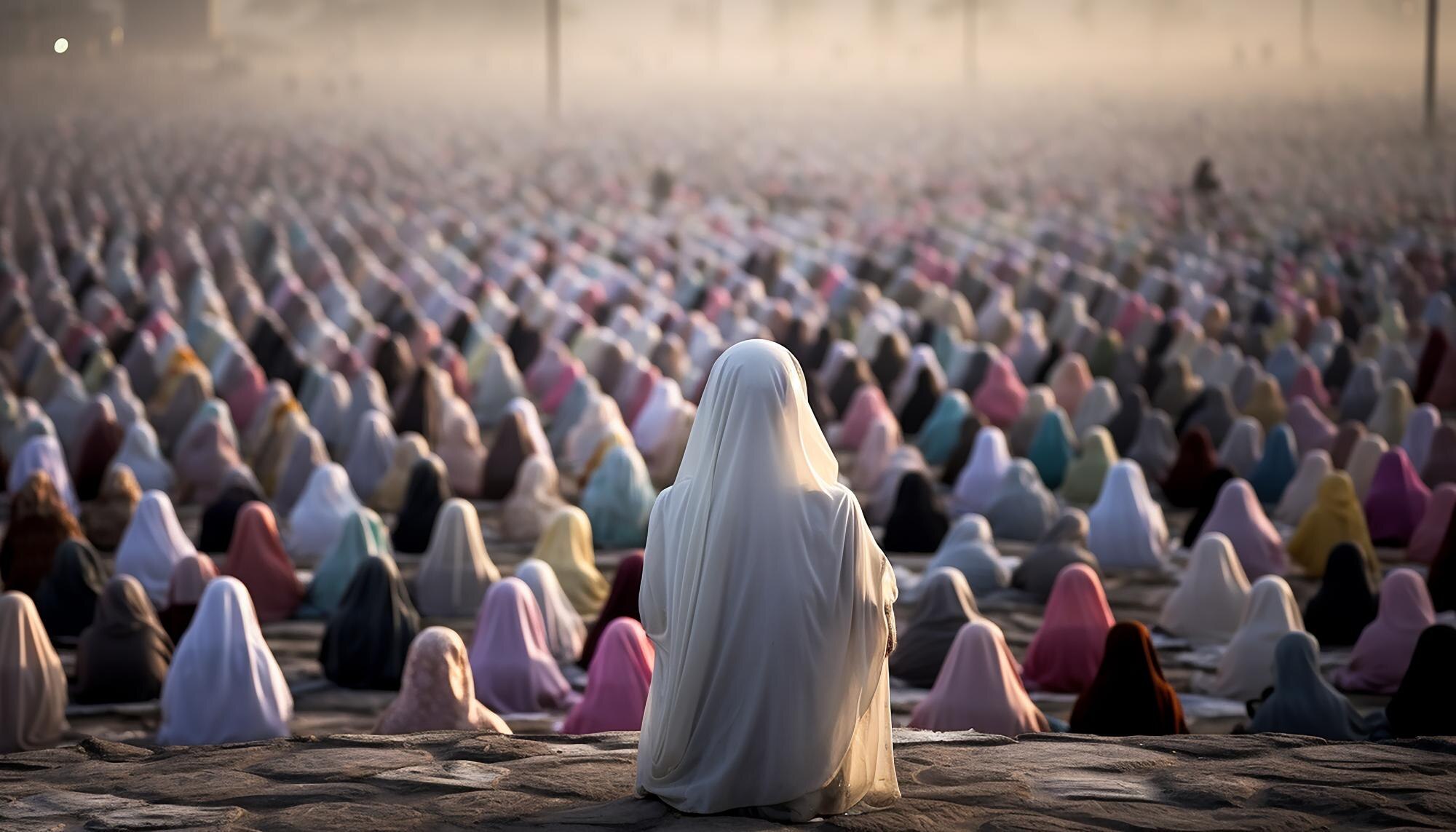
Modesty in ihram is managed by where you place yourself as much as by what you wear. Both the Grand Mosque and the Prophet’s Mosque provide designated women’s prayer areas, which spare you the crush of the mixed central spaces at congregation times. During tawaf, the mataf around the Ka’bah is shared, but nothing obliges you to circle in its densest ring: the outer edge and the upper floors offer the same tawaf with far less pressure, even though each circuit runs longer. Many women find their focus improves dramatically on the periphery, where there is room to move at your own pace and keep your drape arranged as you wish. Choosing the quieter option is not a lesser form of devotion; it is a wise use of the choices the sanctuary offers. The wider subject — moving through these spaces confidently, alone or in a group — is covered in our chapter on women’s safety in Makkah and Madinah.
Myths worth retiring
A few persistent claims deserve a plain correction. The first is the colour rule already dealt with: no, white is not required, and neither is black. The second is the marketed “women’s ihram set” — typically a two-piece prayer-dress outfit sold online with the suggestion that it is ritually necessary. It isn’t. As clothing, such sets are perfectly fine and some women find them genuinely practical; as a religious requirement, they are an invention of the marketplace. Buy one if it suits you, never because you fear your Umrah depends on it.
Third, the idea that a woman in ihram commits a sin whichever way she turns — sinning if she covers her face, sinning if she doesn’t. The sunnah resolves the dilemma completely, as we’ve seen: face uncovered as the default of ihram, a loose drape from above when strangers pass. Fourth, the notion that women in ihram must avoid stitched clothing, socks or jewellery as men avoid tailored garments — a straightforward confusion of the men’s rules with the women’s. When you hear a confident claim about women’s ihram that would make the state burdensome, treat it with suspicion and check it against a reliable scholar; the consistent character of these rulings is ease.
A note on girls and children
Mothers travelling with daughters often ask how the rules apply to children. A girl below the age of puberty may enter ihram, and her Umrah is valid, with a guardian forming the intention on behalf of a child too young to do so herself — the Prophet (peace be upon him) affirmed to a mother who lifted her child towards him that the child’s pilgrimage counted and that she would have a reward. Practically, dress a young girl for comfort: there is no hijab obligation before puberty and no requirement for a miniature abaya, so light, loose, sun-sensible clothing serves best. The ihram restrictions are observed on her behalf as far as reasonably possible — keep her toiletries unscented too — and the niqab question simply does not arise for her. An adolescent who has reached puberty observes the same rulings as any adult woman.
Before the miqat: a short rehearsal
Everything above condenses into one piece of advice: rehearse. A week or two before you fly, spend a full day at home in your intended ihram outfit. Pray in it and check nothing gapes in sujud. Make wudu in it and see whether the sleeves cooperate. Walk in it, sit on the floor in it, practise drawing the scarf down over your face and holding it with a cap or clip. Pack the outfit plus one spare in your cabin bag if there is any chance you’ll enter ihram on the plane as it crosses the miqat line — checked luggage has a habit of arriving late precisely when it matters. Put your unscented toiletries in one pouch and your ordinary scented ones in another, so the two never mix. Then close the suitcase knowing the clothing question is genuinely settled — and if a specific personal circumstance still nags at you, ask a scholar you trust before departure, not a stranger at the miqat. For the complete wardrobe and luggage plan, continue to what women should pack and wear.
Leave A Comment