The Battle of the Trench: A Saga of Faith, Fortitude, and a Lion's Roar
For the traveler whose heart is drawn to the luminous city of Medina, the story of the Battle of the Trench, or Ghazwat al-Khandaq, is etched into the very landscape. It is a tale not just of military strategy, but of profound faith, miraculous events, and individual heroism that shines with a divine light. Fought in the fifth year of Hijra (627 AD), this was not merely a battle; it was the ultimate test of a nascent community's will to survive against an overwhelming tide of hostility.
The Seeds of Conflict: From Mecca to Medina
To understand why this formidable force descended upon Medina, one must trace the origins of the hostility back to the very start of the Prophet’s mission. For thirteen years in Mecca, the Prophet Muhammad (peace be upon him) had called his people to the worship of the One God, and for thirteen years the ruling Quraysh tribe had met his message with escalating persecution.
The tension between the fledgling Muslim state and the Quraysh erupted into open warfare at the Battle of Badr in 2 AH (624 CE). Though vastly outnumbered – just over three hundred Muslims against a Quraysh force of nearly a thousand – the believers were granted a miraculous victory that stunned all of Arabia. Badr was a humiliation that the proud Quraysh could not forgive. Their most prominent leaders, including Abu Jahl, lay slain on the battlefield, and the shock of their defeat rippled across the peninsula, emboldening the Muslims and enraging their enemies in equal measure.
Burning for revenge, the Quraysh mustered a far larger army the following year and marched on Medina. The two forces clashed at the foot of Mount Uhud in 3 AH (625 CE). The battle was a painful trial for the Muslims. An initial advantage was squandered when a group of archers, stationed on a strategic hill by the Prophet himself, abandoned their post in pursuit of spoils. The legendary Quraysh cavalry commander, Khalid ibn al-Walid, exploited this gap with devastating effect, routing the Muslim flanks. The Prophet (peace be upon him) was wounded, the beloved Hamza ibn Abd al-Muttalib – the "Lion of God" and the Prophet's uncle – was martyred and his body desecrated, and for a terrible, fleeting moment, a rumor spread that the Prophet himself had been killed. Though the Muslims regrouped and the Quraysh ultimately withdrew without pressing their advantage into Medina, Uhud was a severe blow to Muslim morale and a hard-won lesson in the cost of disobedience.
The Architects of Vengeance: Why the Battle Happened
In the aftermath of Uhud, the political landscape of Medina itself was far from stable. The Muslim community coexisted with several Jewish tribes under the terms of the Constitution of Medina, a landmark treaty that established mutual rights and obligations. However, two of these tribes, the Banu Qaynuqa and the Banu Nadir, had violated the terms of this pact. The Banu Qaynuqa had been expelled after openly provoking the Muslims following the Battle of Badr. More critically, the Banu Nadir were discovered to have plotted the assassination of the Prophet Muhammad (peace be upon him) himself. When their treachery was exposed through divine revelation, the Prophet besieged their fortresses, and in 4 AH (625 CE), they were expelled from Medina, settling in the wealthy oasis of Khaybar to the north. They departed with their wealth and their caravans, but they also carried with them a burning, implacable desire for revenge.
In the year 5 AH (627 CE), the Muslim community in Medina found itself in a precarious position. The Battle of Uhud, fought two years prior, had been a severe test and a tactical setback. While the Muslims had since recovered and re-established their authority in the region, their enemies, particularly the Quraysh of Mecca, were emboldened and sought a final, decisive confrontation to eliminate the growing influence of Islam. The political atmosphere of Arabia was charged, with alliances shifting and old enmities simmering, setting the stage for a conflict of unprecedented scale.
The catalyst for this grand coalition came not from Mecca, but from the exiled Jewish tribe of Banu Nadir. It was these who became the true architects of the Battle of the Trench. Their chief, Huyayy ibn Akhtab, along with other influential figures such as Sallam ibn Abu al-Huqayq, embarked on an ambitious and tireless diplomatic campaign to unite every enemy of Islam under a single banner. Their first destination was Mecca, where they met with the chiefs of the Quraysh, including Abu Sufyan ibn Harb. The Quraysh, still smarting from the humiliation of Badr, were receptive but cautious. They asked the delegation a pointed question: whose religion was more guided, that of Muhammad, or their own? In a moment of stunning dishonesty, the leaders of the Banu Nadir – who as People of the Book knew the truth of monotheism – declared the idolatry of the Quraysh to be superior to the faith preached by the Prophet. This shameful pronouncement, condemned in the Quran (4:51):
“أَلَمۡ تَرَ إِلَى ٱلَّذِينَ أُوتُواْ نَصِيبٗا مِّنَ ٱلۡكِتَٰبِ يُؤۡمِنُونَ بِٱلۡجِبۡتِ وَٱلطَّـٰغُوتِ وَيَقُولُونَ لِلَّذِينَ كَفَرُواْ هَـٰٓؤُلَآءِ أَهۡدَىٰ مِنَ ٱلَّذِينَ ءَامَنُواْ سَبِيلًا”
Have you not seen those who were given a portion of the Scripture, who believe in superstition and false objects of worship and say about the disbelievers, “These are better guided than the believers as to the way”?
It was the price they were willing to pay to secure the Quraysh's commitment to war.
With the Quraysh committed, the delegation then turned to the powerful nomadic tribes of the Najd region. They successfully persuaded the formidable Ghatafan tribe, along with the Banu Sulaym and Banu Asad, to join the confederacy by offering them powerful incentives, such as a full year's date harvest from Khaybar. This was not merely another raid; it was the formation of a massive, multi-ethnic, and multi-religious coalition with a singular geopolitical objective: the complete eradication of the Islamic state in Medina, which they all perceived as a threat to their political, economic, and religious dominance in Arabia.
What emerged was the largest military coalition the Arabian Peninsula had ever seen: a confederation of tribes, known in the Quran as the Ahzab (the Confederates), numbering anywhere from ten to twenty-four thousand warriors, all united by a single objective, the total destruction of the Muslim community in Medina.
The Storm Descends: The March on Medina
In the month of Shawwāl–Dhū al-Qaʿdah, 5 AH (late March–April 627 CE), the storm that had been gathering finally broke. The Quraysh, led by Abu Sufyan, marched out of Mecca from the south with four thousand soldiers, accompanied by three hundred horsemen and fifteen hundred camels. Simultaneously, the Ghatafan and their allied tribes advanced from the east. This vast pincer movement, a coordinated assault designed to crush the city from multiple directions, was unprecedented in Arabian warfare. Word of their approach reached Medina through scouts and allied contacts. The Prophet Muhammad (peace be upon him) now had mere days to prepare his city for a siege that would determine the fate of Islam itself.
The goal was decisive: to crush the Medinan coalition before it could become the dominant power in western Arabia.
The Prophetic Consultation (Shura)
As soon as intelligence of the impending invasion reached Medina, brought by swift riders from the allied Banu Khuza'a tribe, the Prophet Muhammad (peace be upon him) did not act unilaterally. In a profound demonstration of Islamic leadership, he immediately convened a council of war, gathering his companions to consult on the best course of action. The memory of past battles weighed heavily on their minds. Some suggested marching out to meet the enemy in open combat, a strategy that had led to victory at Badr. Others, recalling the painful lessons of Uhud, argued for a defensive strategy from within the city's fortified houses. The community was faced with a critical decision, with their very survival hanging in the balance.
The Geography of Medina's Defence
The city of Medina was not without natural defences. To the east and west, vast expanses of volcanic lava fields – known as the "harrah" – formed an impassable barrier of jagged black rock. To the south, dense groves of date palms and the fortified homes of Medina's clans provided significant protection. The only truly vulnerable approach was from the north and north-west, where the terrain was relatively open and flat – a corridor through which cavalry could charge and infantry could advance. It was this northern front, stretching from one harrah to the other, that Salman's trench was designed to seal.
Salman's Revolutionary Strategy
It was at this pivotal moment that a companion with a unique background stepped forward. Salman al-Farsi, a man from Persia who had undertaken a long and arduous spiritual journey in search of the truth before finding it in Islam, offered a novel solution. Drawing upon the military tactics of his homeland – tactics entirely foreign to the hit-and-run style of warfare practiced in Arabia –
Salman al-Farsi, said to the Prophet (peace be upon him):
"O Messenger of Allah, when we were in Persia and feared an attack by cavalry, we would dig a trench around us."
The Angel Jibril (peace be upon him) confirmed the wisdom of this strategy to the Prophet. When the work began, a friendly dispute arose among the Muhajirin and the Ansar, each group wishing to claim Salman as their own due to his extraordinary qualities. The Muhajirin said, "Salman is one of us," and the Ansar likewise declared, "Salman is one of us." The Prophet is reported to have settled the matter by declaring: "Salman is neither Muhajir nor Ansar. He is one of us. He is one of the People of the Household (Ahl al-Bayt)." This statement elevated Salman to a unique and honoured status among all the companions.
He proposed the digging of a defensive trench, or khandaq, across the northern approach to Medina, the city's only vulnerable flank. The other sides of the city were naturally protected by volcanic rocky plains and dense palm groves, which were impenetrable to a large cavalry force. The Prophet (ﷺ) with his characteristic wisdom and openness to sound advice, immediately accepted this innovative plan.
The Herculean Task of Digging
With the enemy army only days away, the Muslims embarked on a frantic, desperate race against time. The task was monumental, requiring the excavation of a trench approximately 5.5 kilometers long, roughly 4–5 meters wide and about 3 meters deep (estimates vary by source).
Leadership in Action
The Prophet (ﷺ) did not merely supervise; he led by example, joining his companions in the grueling physical labor. He was seen carrying away the excavated earth himself, his noble chest covered in dust, working harder than anyone to inspire and motivate his followers. This act of humble, participatory leadership was the driving force that sustained the community through immense hardship. To ensure efficiency, he organized the 3,000-strong workforce into groups of ten, assigning each a specific section of forty cubits (around 20 meters) to dig. Senior companions like Abu Bakr and Umar were tasked with a quality assurance role, ensuring the trench met the required depth and width to be an effective barrier against cavalry.
A Prophet's Hunger, A Follower's Faith
The physical toil was compounded by a severe famine that had gripped Medina. Hunger was a constant, gnawing companion. The Muslims were so afflicted that they would tie flat stones to their stomachs to ward off the painful pangs of starvation. In a moment that would forever be seared into the memory of his followers, a companion, overwhelmed by his suffering, approached the Prophet and lifted his garment to show the stone he had tied to his belly. Without a word, the Prophet Muhammad (peace be upon him) raised his own blessed garment, revealing not one, but two stones strapped against his stomach. This silent, powerful display of shared hardship, of a leader enduring more than his people, sent a wave of love and renewed determination through the ranks. He was not a king demanding sacrifice from a distance; he was a brother, sharing and shouldering their every burden.
As the Muslims toiled relentlessly, digging the great trench, the pangs of hunger were a constant and cruel companion. The famine in Medina was severe, and the physical exertion pushed the men to the brink of their endurance. It was during this time of shared hardship that a young companion named Jabir ibn Abdullah looked upon the Prophet (peace be upon him) and saw in his blessed face the signs of extreme fatigue and hunger. He noticed the Prophet had tied not one, but two stones to his stomach to ward off the debilitating emptiness.
This sight filled Jabir's heart with a deep and aching love. He felt an overwhelming urge to do something, anything, to alleviate the suffering of the man he held dearer than his own family.
Excusing himself, Jabir hurried home. He approached his wife and said, "I have seen a state of hunger in the Messenger of Allah that I cannot bear. Do we have anything?"
His wife, a woman of great faith, looked at their meager provisions. "By Allah," she replied, "we have nothing but this small goat, and a little barley."
For any other household, this would barely be enough for their own family. But for Jabir, it was an offering of love that had to be made. "Slaughter the kid," he instructed his wife, "and grind the barley. We will prepare a small meal for the Messenger of Allah."
They worked together in secret. Jabir's wife ground the barley into flour to make bread, and he prepared the small goat, putting the meat in a pot to cook. Their plan was simple and discreet: to invite the Prophet and perhaps one or two of his closest companions for a quiet meal, away from the eyes of the thousand other hungry men.
When the food was nearly ready, Jabir slipped away from the digging and made his way to the Prophet. He leaned in and whispered, "O Messenger of Allah, I have prepared a little food for you. Please come with one or two men to my home."
The Prophet looked at him, his eyes filled with warmth. He asked, "How much food is it?"
Jabir, feeling a little embarrassed, told him exactly what he had: a small goat and bread from a handful of barley.
"That is good and plentiful," the Prophet replied with a reassuring smile. Then, to Jabir's utter astonishment, he turned to the thousands of exhausted men working on the trench and called out in a loud, clear voice:
"O people of the Trench! Jabir has prepared a feast for you, so let us all go!"
A wave of pure panic washed over Jabir. He had enough food for three, maybe four people at most. Now, an entire army of a thousand hungry men was heading towards his small home. He ran back to his house in a state of shock, crying out to his wife, "We are ruined! The Prophet is coming with the entire army!"
He expected her to share in his panic, to despair at the impossible situation. But his wife, with a tranquility that could only come from unshakable faith, looked at him calmly and asked a simple, profound question:
"Did you invite them, or did he?"
"He invited them," Jabir replied, still breathless with anxiety.
Her response would become a timeless lesson in trusting divine wisdom. "Then Allah and His Messenger know best," she said, her voice a soothing balm on his frayed nerves. "He will not put us to shame. Just show him the food."
Her words instantly calmed Jabir. His panic subsided, replaced by a sense of awe and anticipation.
When the Prophet arrived at the house with the sea of hungry companions, he took charge with a serene authority. "Tell your wife not to take the pot off the fire, and not to bake the bread from the oven until I come," he instructed Jabir.
He then entered, made his way to the dough, and invoked Allah's blessing upon it. He did the same with the pot of meat. The Prophet himself began to serve his companions. He would break the bread with his own hands, place a generous portion of meat upon it, and hand it to the men who filed in, group by group.
He instructed them, "Enter in groups of ten." The men ate until they were completely satisfied, then left to make room for the next group. Group after group came, ate their fill, and departed.
Jabir watched in utter disbelief. The small pot of meat continued to bubble as if it were a bottomless spring, and the dough seemed to replenish itself with every loaf that was baked. After all one thousand men had eaten until they could eat no more, Jabir looked at his provisions.
Miraculously, the pot of meat was still full, bubbling as it was when the Prophet first arrived. And the amount of dough was exactly the same as it was before the first loaf was baked.
This event was more than just a miracle of multiplying food; it was a miracle of the heart. It was a testament to the immense blessings (barakah) that flow from a sincere act of generosity, no matter how small. It was a powerful lesson that when you give for the sake of God, He provides from sources you could never imagine. And it was a beautiful, intimate display of the Prophet's deep love for his people, ensuring that in their moment of greatest hardship, they were nourished not only with food, but with a feast of faith that would strengthen their resolve for the battle that lay ahead
The Miracle of the Unyielding Boulder
During the grueling days of excavation, when cold winds bit at their bodies and hunger gnawed at their stomachs, the Muslims suddenly found their progress brought to a harsh standstill. Before them stood a massive boulder, deeply embedded in the earth, immovable and stubborn like a final test in the midst of their ordeal. Men took turns striking it with their pickaxes, but the rock would not yield. Iron heads splintered, arms grew weary, and frustration spread through the trench. Already burdened by fear, exhaustion, and the looming threat of a confederate army, the companions now faced yet another obstacle that seemed beyond their strength.
Unable to break it, they turned to the Prophet Muhammad ﷺ, their guide in every hardship and their refuge in every moment of uncertainty. He descended into the trench himself, calm and resolute. Dust clung to his blessed body, and like the rest of his companions, he bore the marks of toil and hunger. Yet his presence brought reassurance where spirits had begun to waver. Taking the pickaxe in his noble hands, he invoked the name of Allah and struck the boulder.
At the first blow, a brilliant flash burst forth from the rock, lighting the trench and the surrounding darkness. It was so radiant that it was said the Prophet ﷺ saw in it the palaces of Syria. He proclaimed, “Allahu Akbar! I have been given the keys of Syria!” The words rang out not merely as a declaration, but as a promise from heaven in a moment when worldly signs offered little hope.
He struck the rock a second time, and again a dazzling light erupted, illuminating the horizon. “Allahu Akbar! I have been given the keys of Persia!” he declared. Those who stood around him, weary and half-starved, heard not just the breaking of stone, but the breaking open of destiny itself. Before them was a Messenger who, in the middle of a trench dug for survival, spoke with certainty of the downfall of mighty empires.
Then came the third strike. With it, the boulder shattered completely, collapsing into pieces and sand, while another great flash shone forth. “Allahu Akbar! I have been granted Yemen!” the Prophet ﷺ announced. What human effort had failed to overcome was destroyed in three blessed strikes, by the permission of Allah.
This was far more than the breaking of a rock. In that trench, at a time of extreme hardship, the Prophet ﷺ shattered something even heavier than stone: despair. While the Muslims stood surrounded by enemies, weakened by hunger, and threatened with annihilation, he lifted their eyes beyond the immediate crisis and showed them a horizon filled with divine promise. The unyielding boulder became a sign – that no matter how impossible the obstacle seemed, Allah’s help could break through it, and that from the depths of struggle would emerge openings they could scarcely imagine.
In that moment, the trench was no longer just a defensive barrier around Madinah. It became the setting of a profound lesson in faith, certainty, and prophetic leadership. The Prophet ﷺ transformed a moment of exhaustion into one of hope, turning fear into conviction and hardship into a glimpse of future triumph. The flashes from the rock were not only signs of coming victories over Syria, Persia, and Yemen; they were lights cast into the hearts of the believers, reminding them that the path of Islam would not end in that trench, but would reach far beyond it.
Poetry and Morale
Throughout the ordeal, the companions kept their spirits high by chanting verses of poetry. As they worked, their voices rose in unison:
"We are those who have given a pledge of allegiance to Muhammad, to follow Islam as long as we live."
The Prophet (ﷺ) would answer them with a prayer of his own:
"O Allah, there is no good except the good of the Hereafter, so confer your blessings on the Ansar and the Muhajirah."
This exchange of poetry and prayer transformed the back-breaking labor into a collective act of worship and devotion, strengthening their resolve and unity.
The digging commenced with desperate urgency. It was a monumental undertaking, a race against the approaching horde. Every able-bodied Muslim, including the Prophet himself, took up a pickaxe and basket, toiling under the harsh sun. His direct participation, his humble laboring alongside his people, transformed the grueling task into an act of collective worship and communal resolve.
The Two Armies: A Study in Contrast
The confederate force that descended upon Medina was the largest military coalition Arabia had ever witnessed. The Quraysh of Mecca, led by Abu Sufyan ibn Harb, marched out with four thousand soldiers, three hundred horsemen, and fifteen hundred camels. They were joined by the Ghatafan confederation from the Najd – including the Banu Fazara under Uyaynah ibn Hisn and the Banu Murrah under al-Harith ibn Awf – numbering several thousand more. The Banu Sulaym contributed seven hundred fighters, the Banu Asad rallied under Talhah ibn Khuwaylid, and the Banu Kanana and other smaller clans added their strength. In all, the confederate host numbered ten thousand warriors, a fearsome force of cavalry and infantry that stretched across the horizon as they approached Medina from multiple directions.
Against this colossal army, the Prophet Muhammad (peace be upon him) could muster only three thousand defenders. They were poorly equipped by comparison – many lacked armour, and their supply of weapons was limited. Yet what they lacked in numbers and material, they possessed in faith and unity of purpose. The Prophet himself took direct command, establishing his command post on the hill of Sal', near the present site of Masjid al-Fath, from which he could oversee the entire northern front. He stationed guards at every entrance of the trench and organised patrols to watch for any attempt by the enemy to cross.
The Champion's Challenge and the Lion's Emergence
When the confederate army arrived, they were met not with an open battlefield, but with the confounding obstacle of the trench. Their greatest advantage, their cavalry, was rendered utterly useless. A frustrating siege began, a war of nerves that stretched for several weeks (estimates range from two to four weeks depending on the source). For nearly a month, the two armies were locked in a tense stalemate. Camped on opposite sides of the trench, they spent their days exchanging volleys of arrows from a safe distance and hurling insults and verses of poetry at one another. 13 This was not just a physical battle but a psychological one – a war of nerves, patience, and resolve. The Muslims, though safe behind their defenses, were under immense strain, with dwindling supplies and the constant pressure of the siege.
The Duel of Faith: Ali ibn Abi Talib vs. Amr ibn Abd al-Wud
Growing impatient and disdainful of the stalemate, the pagan's most fearsome champion, Amr ibn 'Abd al-Wudd – a giant of a man whose reputation in battle was so immense he was considered equal to a thousand warriors – sought a way to break the deadlock. He and a small group of horsemen discovered a narrow point and daringly leaped their horses across the trench. Standing on Muslim soil, clad in armor and radiating arrogance, Amr strode forward and issued the traditional Arab challenge for single combat.
A chilling silence fell over the Muslim camp. Fear was palpable. Amr's name alone was enough to quell the courage of the bravest men. He roared his challenge again, his voice laced with mockery, "Where is your Paradise which you claim you will enter if you are killed? Send out a man to face me!"
As the companions stood frozen, a young, powerful figure rose. It was Ali ibn Abi Talib, the cousin and son-in-law of the Prophet. He stepped forward and volunteered. The Prophet, knowing the immense danger, told him to sit, hoping another, more seasoned warrior might respond. But none did. Amr issued his challenge a third time, his taunts growing more insulting. Again, only Ali stood. This time, the Prophet knew it was destined. He placed his own turban on Ali's head, armed him with his own legendary sword, Dhul-Fiqar, and raised his hands in prayer: "O Allah! You took from me Ubaydah at Badr and Hamza at Uhud. Now this is my brother and my cousin. Do not leave me alone. Be his Protector, give him victory, and bring him back safely to me."
Ali's Three Choices: The Conduct of a Muslim Warrior
Before a single blow was struck, Ali ibn Abi Talib demonstrated the noble conduct that Islam demanded even in the heat of battle. Standing before the towering Amr ibn 'Abd Wudd, Ali offered him not one but three choices. First, he invited Amr to accept Islam and bear witness that there is no god but Allah and that Muhammad is the Messenger of Allah. Amr dismissed this contemptuously. Second, Ali urged him to withdraw and take his army back, saying: "Return to your people and leave this fight, for you have no cause here." Amr refused, declaring that the women of Quraysh would never say he turned his back. Third, Ali said: "Then dismount from your horse and face me on equal ground, for I do not wish to have any advantage over you."
Amr was incensed. He taunted Ali with poetry, boasting of his own prowess and mocking the youth of his opponent. He declared that he had sworn never to be offered three choices in battle and refuse them all. In a dramatic gesture of finality, Amr leaped from his horse, hamstrung the animal to show he would fight to the death or victory, and advanced upon Ali with his enormous sword drawn.
The Duel that Defined an Era: Faith vs. Falsehood
As Ali strode out to meet the champion, the Prophet uttered a profound statement that echoed across the battlefield and through the annals of history: "The whole of Faith is now going to fight the whole of Falsehood."
Amr, a veteran warrior, looked down at his young challenger with disdain. "Who are you?" he boomed. When Ali introduced himself, Amr scoffed, "Nephew! You are still a child. Your father was a friend of mine, and I do not wish to spill your blood. Send forth your elders to face me."
Ali's reply was firm and filled with unwavering conviction. "You may not wish to spill my blood, but by Allah, I feel no hesitation in spilling yours." Before the fight, demonstrating the noble conduct of a Muslim warrior, Ali presented Amr with three choices: accept Islam, withdraw from the battle entirely, or, if he insisted on fighting, to strike the first blow, as Ali would not be the aggressor.
Infuriated by this audacity, Amr let out a roar of rage. He leaped from his horse and hamstrung it, a dramatic gesture to show he intended to fight to the death. He then unleashed a furious blow with his massive sword. Ali met it with his shield, the force of the impact so great it cut through the leather and steel, inflicting a wound on Ali's head.
What followed was a maelstrom of steel and dust as the two warriors engaged in a fierce and desperate combat. They were quickly lost from sight in a swirling cloud of sand. The two armies held their breath, able to hear only the clash of swords and the furious shouts of combat. Then, an eerie silence. For a heart-stopping moment, no one knew who had fallen.
Suddenly, a cry ripped through the air, a sound of pure, triumphant faith that shook the very ground: "Allahu Akbar!" – "God is the Greatest!"
In the furious exchange that followed, Amr brought his massive sword crashing down upon Ali. The blow was of such tremendous force that it cleaved through Ali's shield and struck his head, drawing blood. But Ali, undeterred, seized his moment. He wrestled Amr to the ground and, in a decisive strike, brought Dhul-Fiqar down upon the champion of the pagans. Ali then took Amr's head and brought it to the Prophet (peace be upon him). His own sword was dripping with blood and the blood was running down from the wound on his head. As he presented the head, Ali declared: "I am Ali, son of Abd al-Muttalib. The death is better for the youth than the fleeing."
He had struck down the invincible champion of the pagans. The effect was instantaneous and seismic. A wave of jubilation and renewed faith surged through the Muslim ranks, while the confederate army was struck with panic and utter disbelief. Their morale was shattered. The remaining horsemen who had crossed with Amr fled in terror, scrambling back across the trench.
The Siege
After the killing of ʿAmr ibn ʿAbd Wudd, the momentum of the siege shifted noticeably. In the military culture of Arabia, individual champions carried immense symbolic weight, and ʿAmr was widely regarded as one of the most renowned horsemen of Quraysh and its allies. His failure to break the Muslim line, followed by his death in single combat, dealt a severe psychological blow to the confederate coalition. Yet the Aḥzāb were not defeated at once. They still vastly outnumbered the Muslims and remained committed to their objective: to crush the community in Madinah through a sustained siege and coordinated assault.
After ʿAmr’s death, the confederate forces made repeated efforts to exploit weaker points in the trench. Small detachments of horsemen attempted to leap across at narrower sections, while others approached on foot in search of a crossing point. These actions were not full-scale breaches but probing assaults designed to test the Muslim defenses and create panic. The Muslims, however, had stationed men carefully along the vulnerable stretches, and missile fire from archers, combined with rapid local counterattacks, prevented the attackers from establishing any lasting position beyond the ditch. The defenders understood that even a limited penetration could prove disastrous, since a breakthrough by cavalry into the outskirts of Madinah might unravel the entire defensive plan.
The siege then settled into a tense and protracted standoff. For the Muslims, the situation was grave. Madinah was under external pressure from a coalition composed principally of Quraysh, Ghatafān, and other allied tribes, while internal anxieties were intensified by the precarious position of Banū Qurayẓah, whose change in attitude during the crisis threatened the city from within. The Muslims were therefore forced to divide their attention between guarding the trench and protecting their homes and families. Early Islamic sources portray this as one of the most severe ordeals faced by the community up to that point: food was scarce, vigilance had to be maintained constantly, and the emotional strain was immense.
For the confederates, however, the siege also became increasingly difficult. Their alliance had been assembled for a decisive campaign, not for a long investment of a defended settlement. Tribal coalitions of this kind were formidable in attack but often fragile in endurance. The various groups were united primarily by a common objective, not by a stable command structure or long-term logistical planning. As the days passed without a breakthrough, the weaknesses of the coalition became more apparent. Maintaining provisions for men and animals grew burdensome, enthusiasm declined, and the prestige of the campaign began to erode. What had been intended as an overwhelming demonstration of force gradually turned into an exhausting war of attrition.
The strategic problem facing the Aḥzāb was clear: they had surrounded Madinah, but they could not force battle on their own terms. The trench blocked cavalry, the Muslims refused open engagement, and the defenders remained sufficiently organized to prevent infiltration. In pre-Islamic Arabian warfare, raids and pitched encounters were more common than carefully maintained sieges, and so the confederates found themselves trapped in an operational situation for which they were neither culturally nor logistically prepared. Their superior numbers became less useful the longer the deadlock lasted.
As the siege continued, environmental conditions worsened. Strong winds and cold weather battered the confederate encampments, adding physical discomfort to military frustration. Tents were disturbed, fires were difficult to maintain, and the already fragile morale of the coalition deteriorated further. At the same time, distrust spread among the allied tribes, each increasingly aware that the campaign might fail and that the costs of remaining in place were mounting. In this atmosphere, the confederate army lost the cohesion necessary for a final concerted assault.
Historically, the siege marks a turning point in the struggle between the Muslims of Madinah and Quraysh. It demonstrated that the Muslims had developed beyond a vulnerable refugee community into a politically and militarily resilient society capable of strategic defense. It also exposed the limits of Quraysh’s power: even with a broad tribal coalition, they were unable to destroy Madinah. Thus, after ʿAmr’s defeat and the failure of subsequent assaults, the siege slowly unraveled. The confederates withdrew not because they had been annihilated in battle, but because their offensive capacity had been exhausted by terrain, weather, supply strain, and the inability of a tribal coalition to sustain a long siege against determined defenders.
The Darkest Hour: Treachery from Within
While the siege raged from without, a far more dangerous threat was taking shape from within. Huyayy ibn Akhtab, the exiled chief of the Banu Nadir who had orchestrated the entire confederate alliance, now turned his cunning to the last remaining Jewish tribe in Medina – the Banu Qurayza. The Banu Qurayza had a binding treaty with the Prophet Muhammad (peace be upon him), and their fortresses lay to the south-east of the city. If they could be persuaded to break their pact and open a second front, the Muslims would be completely surrounded and utterly doomed.
Huyayy made his way to the fortress of Ka'ab ibn Asad, the leader of the Banu Qurayza. When Ka'ab heard who was at his gate, he initially refused to open it, saying, "Woe to you, Huyayy! You are a man of ill omen. I have a treaty with Muhammad, and I will not break my word to him. He has always been faithful and honest with us." But Huyayy was relentless. He pressed and flattered and promised, assuring Ka'ab that this time the Quraysh had come with ten thousand warriors and would never leave until Muhammad was destroyed. He swore an oath that if the Quraysh withdrew without victory, he himself would enter Ka'ab's fortress and share whatever fate befell the Banu Qurayza. After prolonged and insistent persuasion, Ka'ab finally relented and tore up the treaty with the Prophet (peace be upon him). The treachery of the Banu Qurayza was complete.
When rumours of this betrayal reached the Muslim camp, the Prophet (peace be upon him) sent Sa'd ibn Mu'adh, the chief of the Aws tribe, and Sa'd ibn Ubadah, the chief of the Khazraj, along with two other companions, to verify the reports. They found the worst to be true – the Banu Qurayza had renounced their alliance. The crisis was now existential. The Muslims were besieged from the north by ten thousand confederates and threatened from the south by the Banu Qurayza. Women and children huddled in makeshift shelters, terrified that the enemy would break through at any moment. It was a time of the severest trial, described powerfully in the Quran: "When they came upon you from above you and from below you, and when the eyes grew wild and the hearts reached to the throats, and you were harboring doubts about Allah" (33:10).
The Banu Qurayza's fortresses were located approximately two miles south-east of Medina, in a place known as Baeer al-Matlab. Their defection meant that the Muslim women and children, sheltered in the southern quarters of the city, were now directly exposed to attack from the rear. The Quran describes the terrifying situation that followed: "There the believers were tested and shaken with a severe shaking" (33:11). It was a moment when the very foundations of the community seemed to tremble, and the true character of every soul was laid bare.
Ṣafiyyah bint ʿAbd al-Muṭṭalib (the Prophet's aunt) was among the women sheltered in a fortress. When she noticed a spy scouting their position, she pressed for action – then, when others hesitated, she went down and killed the intruder herself. The episode underscores how real the rear threat felt, and how women participated in the city's defense under siege.
The Prophet (peace be upon him) had already been informed by divine revelation that the Arabs would form an alliance, the Jews would betray them, and severe stress would befall the believers from above and below. Yet he had also been promised that the ultimate outcome would be in his favour. He therefore dispatched two hundred men under the command of Zayd ibn Harithah and Salamah ibn Aslam to guard the southern approaches and protect the families from any attack by the Banu Qurayza.
The Behaviour of the Hypocrites
The crisis also exposed the hypocrites within the Muslim ranks. A group of them began to openly voice their disillusionment, saying, "Muhammad promised us the treasures of Persia and Rome, yet today none of us can even go out to relieve himself safely!" Others sought excuses to abandon the defence entirely, claiming, "Our houses are exposed and unprotected," though in truth their homes were not under any threat – they simply wished to flee. The Quran recorded their behaviour: "And when the hypocrites and those in whose hearts is disease said, 'Allah and His Messenger did not promise us except delusion'" (33:12). Yet amidst this wavering, the true believers stood firm, and the sight of their steadfastness only increased their faith and submission to Allah's decree (33:22).
A moment of siege diplomacy also appears in several sīrah accounts: the Prophet explored whether the Ghatafān contingent could be induced to withdraw in return for a share of Medina's date harvest. He then consulted the Medinan leaders; Saʿd b. Muʿādh and Saʿd b. ʿUbādah rejected paying what Medina had never paid in the days of unbelief, and the discussions ended – yet the episode itself deepened confederate mistrust and shows the statecraft dimension of the siege.
Nu'aym ibn Mas'ud: A Masterstroke of Counter-Intelligence
At this desperate juncture, a remarkable figure emerged from an unlikely quarter. Nu'aym ibn Mas'ud of the Banu Ashja'i, a sub-clan of the Ghatafan, had secretly embraced Islam without the knowledge of either the confederates or the Banu Qurayza. He came to the Prophet (peace be upon him) under cover of night and offered his services. "O Messenger of Allah, I have become Muslim, but my people do not know. Command me as you wish." The Prophet replied with a statement that would become the foundation of his strategy: "You are only one man among us, so go and sow discord among our enemies if you can, for war is deception."
Nu'aym set his plan in motion with brilliant precision. He first went to the Banu Qurayza, with whom he had longstanding ties of friendship. He warned them, "The Quraysh and Ghatafan are not like you. This is your land, your wealth, your families. If the battle turns against them, they will simply retreat to their own territories and leave you alone to face Muhammad's wrath. You must demand hostages from the Quraysh and Ghatafan as a guarantee that they will not abandon you." The Banu Qurayza, already nervous about their treachery, found this counsel convincing and agreed. Nu'aym then went to Abu Sufyan and the Quraysh leadership and told them, "The Banu Qurayza have had second thoughts. They regret breaking their treaty with Muhammad. They are going to demand hostages from you, only to hand them over to Muhammad as a sign of good faith." He delivered the same message to the leaders of the Ghatafan. When the Quraysh sent word to the Banu Qurayza demanding a coordinated attack, the Banu Qurayza replied that they would not fight on the Sabbath and insisted on receiving hostages first. This response, exactly as Nu'aym had predicted, convinced Abu Sufyan that the Banu Qurayza had indeed betrayed the confederates. A fatal wedge of suspicion and distrust was driven between the allies, and the grand coalition began to fracture from within.
Hudhayfah's Perilous Mission
As the siege dragged on, the cold grew more bitter, hunger gnawed at every belly, and the ceaseless threat of attack wore down the defenders' nerves. The Prophet (peace be upon him) called out to his companions one freezing night, asking for a volunteer to infiltrate the enemy camp and bring back intelligence. He called three times, but such was the exhaustion and fear that no one stood. Finally, the Prophet called Hudhayfah ibn al-Yaman by name and commanded him to go. Hudhayfah later recalled, "I had no choice but to obey when he called me by name." The Prophet prayed for his safety and instructed him not to take any aggressive action, only to observe and report.
Hudhayfah crept through the darkness and slipped into the enemy encampment. There he witnessed a scene of utter disarray. The divine wind was already tearing through the camp, extinguishing fires, overturning cooking pots, and sending tents flying. He saw Abu Sufyan himself standing among his demoralized commanders. Abu Sufyan addressed his men, saying, "O people of the Quraysh! Let each of you check who is sitting beside him, lest spies have infiltrated among us." Hudhayfah quickly turned to the man next to him and asked, "Who are you?" – thus deflecting suspicion from himself. Then Abu Sufyan declared, "O people of the Quraysh! We are not in a permanent camp. Our horses and camels are dying. The Banu Qurayza have broken their promise to us. And now you can see what this wind has done. Move out! I am leaving." With that, he mounted his camel and led the retreat. Hudhayfah rushed back and brought the joyous news to the Prophet (peace be upon him), who was deep in prayer, wrapped in a blanket against the bitter cold.
The Divine Wind and the Rout of the Confederates
As the siege stretched on and the fractures sown by Nu'aym's stratagem deepened the mistrust between the confederates and the Banu Qurayza, the Prophet Muhammad (peace be upon him) ascended to the hill upon which Masjid al-Fath now stands. Seeing the exhaustion and distress of his companions after weeks of siege, hunger, and cold, he raised his blessed hands and poured out his heart in supplication: "O Responder to the screams of the oppressed! O Answerer of the supplication of the distressed! O Remover of the great distress! You are my Guardian and my Master. Remove from us the evil of these people by Your strength and Your power."
Allah answered his prayer. The Angel Jibril descended and said: "O Muhammad! Allah has heard your supplication and has commanded a fierce wind (traditionally identified in some reports with al-Ṣabā) – along with the angels, to defeat the Quraysh and the confederates." That night, a ferocious, freezing wind tore through the enemy encampment with supernatural fury. It extinguished their fires, overturned their cooking pots, ripped their tents from the ground, and sent their horses and camels stampeding in terror. The cold was so bitter that the soldiers could not stand. Allah commemorated this divine intervention in Surah al-Ahzab: "O you who believe, remember the favour of Allah upon you when the armies came towards you, so We sent upon them a wind and armies you could not see. And Allah was always seeing what you were doing" (33:9).
Abu Sufyan, shivering beside the dying embers of a fire, stood before his demoralised commanders and declared: "O people of the Quraysh! We are not in a permanent camp. Our horses and camels are dying. The Banu Qurayza have broken their promise to us. And now you can see what this wind has done to us. Move out! I am leaving." He mounted his camel in such haste that he nearly rode off before it was fully untethered. Khalid ibn al-Walid was placed in charge of the rearguard. One by one, the tribal contingents broke camp and melted away into the night. By dawn, the vast plain before the trench was empty. The greatest army Arabia had ever assembled had been routed without a single decisive battle – defeated by faith, strategy, and the soldiers of Allah that none could see.
After this momentous victory, the Prophet declared, "From now on, we will advance against them, and they will not advance against us." It was a turning point, a promise fulfilled.
The Reckoning: The Siege of the Banu Qurayza
The confederate army had barely vanished into the desert when the Angel Jibril (peace be upon him) came to the Prophet with a new command. The Prophet announced to his companions, "None of you should pray Asr except at the Banu Qurayza." The Muslim army, exhausted from the weeks-long siege, immediately marched south to confront the tribe that had betrayed them at their most vulnerable hour. The Banu Qurayza retreated into their fortresses, and the Muslims laid siege for twenty-five days, during which Allah instilled awe and fear into the hearts of the besieged.
As the siege wore on, Ka'ab ibn Asad, the leader of the Banu Qurayza, gathered his people and presented them with three options. First, he urged them to accept the message of Muhammad, arguing that it had become clear he was a true prophet whose attributes could be found in their own Torah. They refused. Second, he proposed they put their own women and children to death so they could fight without distraction – they rejected this as monstrous. Third, he suggested a surprise attack on the Sabbath night, reasoning the Muslims would not expect it – but they refused this too, saying their ancestors were punished for violating the Sabbath. Having rejected all three options, the Banu Qurayza were left with no strategy and eventually agreed to submit to the judgment of the Prophet (peace be upon him).
Abu Lubabah's Regret
Before their final surrender, the Banu Qurayza requested that Abu Lubabah ibn Abd al-Mundhir, a companion with whom they had longstanding ties, be sent to them for consultation. When Abu Lubabah reached their quarter and saw the women and children weeping, he was overcome with emotion. They asked him whether they should accept Muhammad's judgment, and he said yes – but simultaneously made a gesture across his throat, indicating that the judgment would mean their execution. The moment he made this gesture, Abu Lubabah was seized with remorse, realizing he had betrayed the trust of Allah and His Messenger. Without returning to the Prophet, he went straight to Al-Masjid al-Nabawi and tied himself to one of the pillars, vowing not to eat, drink, or leave until Allah accepted his repentance. He remained bound for several days until, at the time of Fajr prayer, divine revelation confirmed his forgiveness, and the Prophet (peace be upon him) untied him with his own blessed hands.
The Judgment of Sa'd ibn Mu'adh
When the Banu Qurayza finally surrendered, the people of Aws, who had been their traditional allies, asked the Prophet to show leniency as he had previously done with the Banu Qaynuqa at the request of their ally. The Prophet wisely asked, "Would you be satisfied if one of your own leaders judged the matter?" They agreed, and the task fell to Sa'd ibn Mu'adh, the chief of the Aws, who had been gravely wounded during the battle by an arrow that severed a vein in his arm. A tent had been set up for him within Al-Masjid al-Nabawi so he could be closely attended. Sa'd was brought on a donkey, and as he approached, the Prophet instructed the people to stand in honour of their leader.
Sa'd pronounced his judgment: that the men of fighting age be executed, the women and children taken as captives, and the wealth distributed among the Muslims. When the Prophet heard this, he said, "You have judged according to the command of Allah." The judgment was, in fact, consistent with the laws found in the Banu Qurayza's own scripture – the Torah itself prescribed the same sentence for a besieged city that refused peace (Deuteronomy 20:12-14). The sentence was carried out, Later narrative sources differ on details and numbers for the executions; modern studies debate the scale and transmission of the account, so it is best presented with cautious wording and clear sourcing. and among those captured was Huyayy ibn Akhtab himself, the architect of the entire conspiracy who had promised Ka'ab he would share in whatever fate befell them.
The Death of Sa'd ibn Mu'adh and the Shaking of the Throne
With his duty fulfilled, Sa'd ibn Mu'adh raised his hands to the heavens and made a final, poignant supplication: "O Allah, You know that there is nothing more beloved to me than to fight in Your cause against those who rejected Your Messenger and expelled him. O Allah, if there remains any war with the Quraysh, keep me alive so I may fight them in Your path. But if You have ended the fighting, then let this wound flow and make it the cause of my martyrdom." His prayer was answered. The wound, which had stopped bleeding, suddenly reopened, and Sa'd passed away. The Prophet Muhammad (peace be upon him) said, "The Throne of Allah shook at the death of Sa'd ibn Mu'adh." It was reported that seventy thousand angels descended from the heavens to participate in his funeral prayer, and his grave gave out the fragrance of musk. His death was a fitting coda to the Battle of the Trench – the sacrifice of a man whose faith, courage, and devotion to justice shone like a beacon through the darkest hours of the siege.
The Enduring Legacy: The Seven Mosques
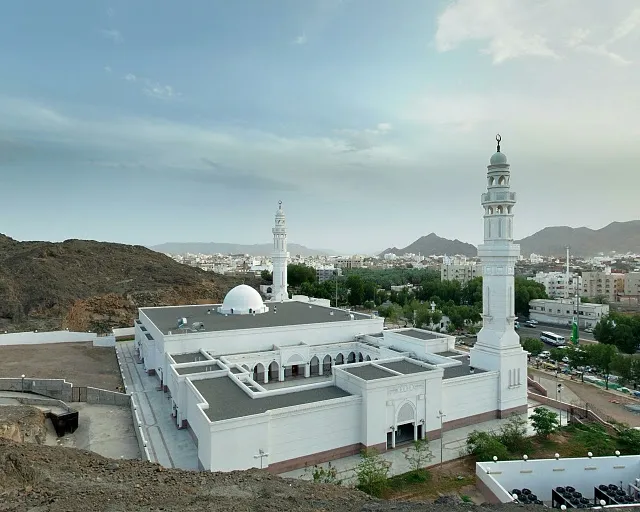
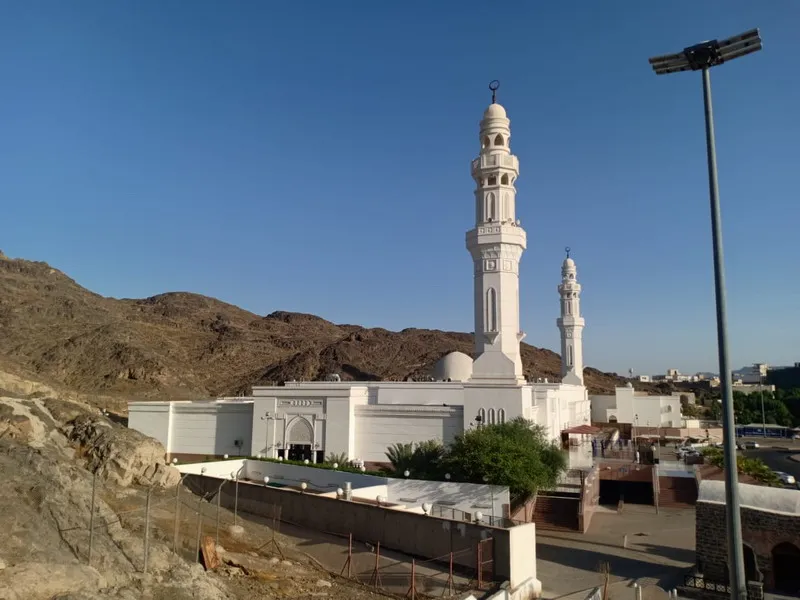
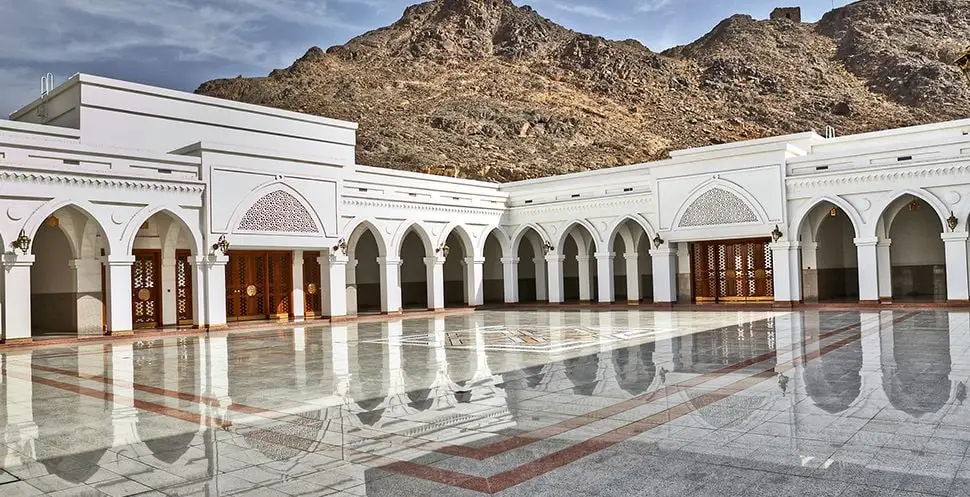
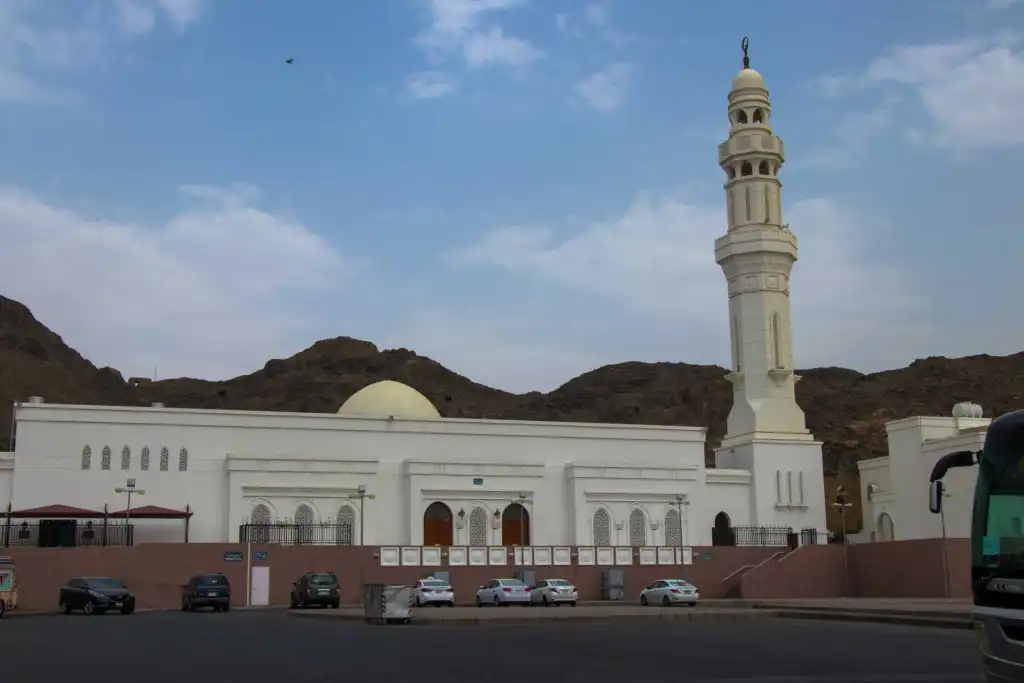
Today, as a tourist or pilgrim stands on the ground where this epic drama unfolded, a cluster of small, historic mosques serves as a powerful reminder of the battle. Known as Al-Masajid As-Sab'ah, or The Seven Mosques, these were built on the very locations where the Prophet and his senior companions held their command posts, watching over the trench. Though there are six distinct structures today, the site is famously known as seven.
The Seven Mosques: Enduring Monuments to a Miraculous Victory
Nestled at the foot of Mount Sila on the western edge of Medina, a collection of small, humble mosques stands as a powerful and enduring testament to the Battle of the Trench. Known collectively as Al-Masajid As-Sab'ah, or The Seven Mosques, these structures commemorate the strategic posts where the Prophet Muhammad (peace be upon him) and his senior companions stood guard, prayed, and commanded the defense of the city. For any visitor, to walk among them is to step back in time, to feel the gravity and the ultimate triumph of that fateful siege.
Though famously known as the "Seven Mosques," the complex today consists of six distinct buildings. The name's origin is believed to stem from an earlier period when visitors would often include the nearby and historically significant Masjid Al-Qiblatayn (the Mosque of the Two Qiblas) in their tour, bringing the total to seven. Over time, the entire historic site adopted this popular name. These mosques were not built during the Prophet's era but were constructed in later periods, likely starting during the caliphate of Umar ibn Abdul Aziz, to mark these blessed locations.
Each mosque, though modest in size, is rich with history and significance, named after the key figures who held these positions during the battle.
1. Masjid Al-Fath (The Mosque of Victory)
The largest and most prominent of the group, Masjid Al-Fath, sits perched on a small hill, offering a panoramic view of the battlefield. Its name, Al-Fath, meaning "Victory" or "Conquest," is deeply significant. It was at this very spot that the Prophet Muhammad (peace be upon him) pitched his tent and spent three consecutive days – Monday, Tuesday, and Wednesday – in intense and heartfelt supplication to God for victory over the confederate armies.
A well-known report from Jabir in al-Adab al-Mufrad states that the Prophet made duʿā' here on Monday, Tuesday, and Wednesday, and that it was answered "between the two prayers" on Wednesday. According to tradition, it was on the Wednesday, between the midday and afternoon prayers, that his prayers were answered. A wave of relief and joy was seen on his blessed face as he received the divine glad tidings of a coming victory. Soon after, God unleashed a piercing, violent wind that ripped through the enemy camp, extinguishing their fires, overturning their tents, and filling their hearts with terror, forcing their retreat. This mosque, therefore, is not just a place of prayer but a monument to the power of supplication and divine intervention.
2. Masjid Salman Al-Farsi
Located just south of Masjid Al-Fath, this small mosque honors the companion whose strategic genius was pivotal to the Muslim victory. Salman al-Farsi, a man of Persian origin, was the one who suggested the unprecedented tactic of digging a trench, a defensive strategy unknown to the Arabs at the time. This mosque stands as a tribute to his wisdom and his crucial role in protecting Medina. It is a testament to the Islamic value of consultation (shura) and the Prophet's willingness to embrace innovative ideas from his diverse followers. The structure itself is humble, with a single hall just seven meters long and two meters wide, a poignant reminder that greatness is measured not by size, but by the significance of the actions it commemorates.
3. Masjid Abu Bakr As-Siddiq
This mosque is named in honor of the Prophet's closest companion and the first Caliph of Islam, Abu Bakr As-Siddiq. It is believed to mark the spot where he commanded his portion of the Muslim forces, standing as a steadfast guardian of the trench. Some traditions also note that this was a site where the Prophet himself used to offer Eid prayers, a practice that Abu Bakr continued during his caliphate. The mosque has been renovated over the centuries, with a notable reconstruction during the Ottoman era. Its architecture includes a distinctive minaret that closely resembles the Bab as-Salam Minaret of the Prophet's Mosque in Medina.
4. Masjid Umar ibn Al-Khattab
Situated on a slightly higher elevation, this mosque marks the command post of the formidable and just second Caliph, Umar ibn Al-Khattab. Its architectural style is very similar to that of Masjid Al-Fath, suggesting they were likely built and renovated around the same period. Standing here, one can imagine Umar's powerful presence, his unwavering resolve inspiring the defenders as they faced the daunting enemy numbers. Like the other mosques in the complex, it is a simple, unadorned structure, reflecting the austerity and focus of the early Muslims.
5. Masjid Ali ibn Abi Talib
This mosque holds a particularly special place in the hearts of visitors, as it commemorates the station of the "Lion of God," Ali ibn Abi Talib. Located on a small peak, it is believed to be the spot from which Ali commanded his forces and from where he heroically went forth to face the pagan champion, Amr ibn 'Abd al-Wudd, in the legendary duel that turned the tide of the battle. The mosque is small, measuring about 8.5 meters by 6.5 meters, yet it powerfully evokes the immense courage that was displayed on this ground. It serves as an inspiring reminder of Ali's unwavering faith and his readiness to sacrifice everything for the cause of Islam.
6. Masjid Fatimah Az-Zahra
Also known as Masjid Sa'd ibn Mu'adh, this is the smallest of the mosques in the complex, measuring a mere 4 by 3 meters. It is named in honor of the Prophet's beloved daughter, Fatimah, a symbol of piety, patience, and devotion. Its presence among the command posts of the great generals and companions is a poignant reminder of the role of the entire Muslim community – men and women – in supporting the cause. The mosque, built during the Ottoman era under Sultan Abdul Majid I, is a place of quiet reflection on the virtues and spiritual strength of the Prophet's family.
Together, these Seven Mosques form a unique historical and spiritual map of the Battle of the Trench. They are more than just stone and mortar; they are enduring symbols of faith, brilliant strategy, heroic sacrifice, and the ultimate triumph of a community united under divine guidance. For any tourist, a visit here is an immersive journey into one of the most defining moments in Islamic history.
Each of these small, simple mosques tells a story of faith, resilience, and unwavering trust in God's plan. They are not just historical landmarks; they are beacons of light, commemorating a time when a small community, through brilliant strategy, profound sacrifice, and the unparalleled courage of heroes like Ali ibn Abi Talib, faced down an impossible threat and emerged not just victorious, but destined to change the course of history forever.
The Dawn of a New Era
The journey through the history of the Battle of the Trench and its commemorative mosques brings the visitor back to the present moment, standing amidst these quiet, powerful structures. The story encapsulated by this sacred landscape offers profound and enduring lessons. It is a story of leadership through consultation (Shura) and the wisdom to embrace innovation from diverse sources, as seen in the acceptance of Salman's trench. It is a story that embodies the quintessential Islamic principle of balancing supreme human effort (asbab) with absolute trust in God (tawakkul), as the companions toiled to the point of starvation to dig their defense, yet witnessed miracles when they reached the limits of their capacity.
This site is a testament to the transformative power of sincere supplication (du'a), where the Prophet's (ﷺ) heartfelt prayers at Masjid al-Fath were answered with a divine wind that scattered a seemingly invincible foe. It is a memorial to the peerless courage of individuals like Ali ibn Abi Talib, whose singular act of valor turned the tide of the battle, and to the strategic genius of men like Nu'aym ibn Mas'ud, who demonstrated that wars can be won not just with swords but with wisdom.
The Battle of the Trench was far more than a military victory; it was a spiritual, psychological, and ideological triumph that secured the future of the Muslim community. The confederacy, the largest army Arabia had ever seen, was defeated not by a superior force, but by a superior faith. The mosques that stand here today are not mere historical relics. They are living symbols of a community that, when faced with the threat of total annihilation, responded with unwavering unity, brilliant ingenuity, and a profound faith that ultimately saw the fulfillment of Allah's promise of victory. As one stands on this ground, one is invited to offer prayers and reflections, connecting a personal journey of faith to this monumental event in the history of Islam.
Frequently asked questions
Image gallery