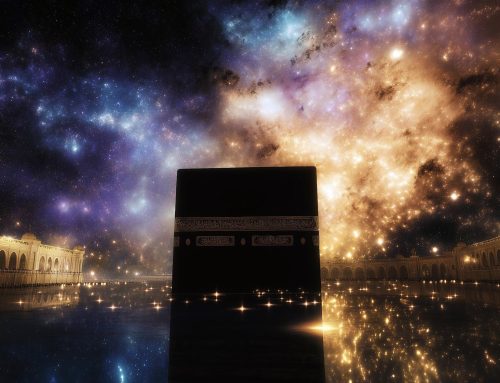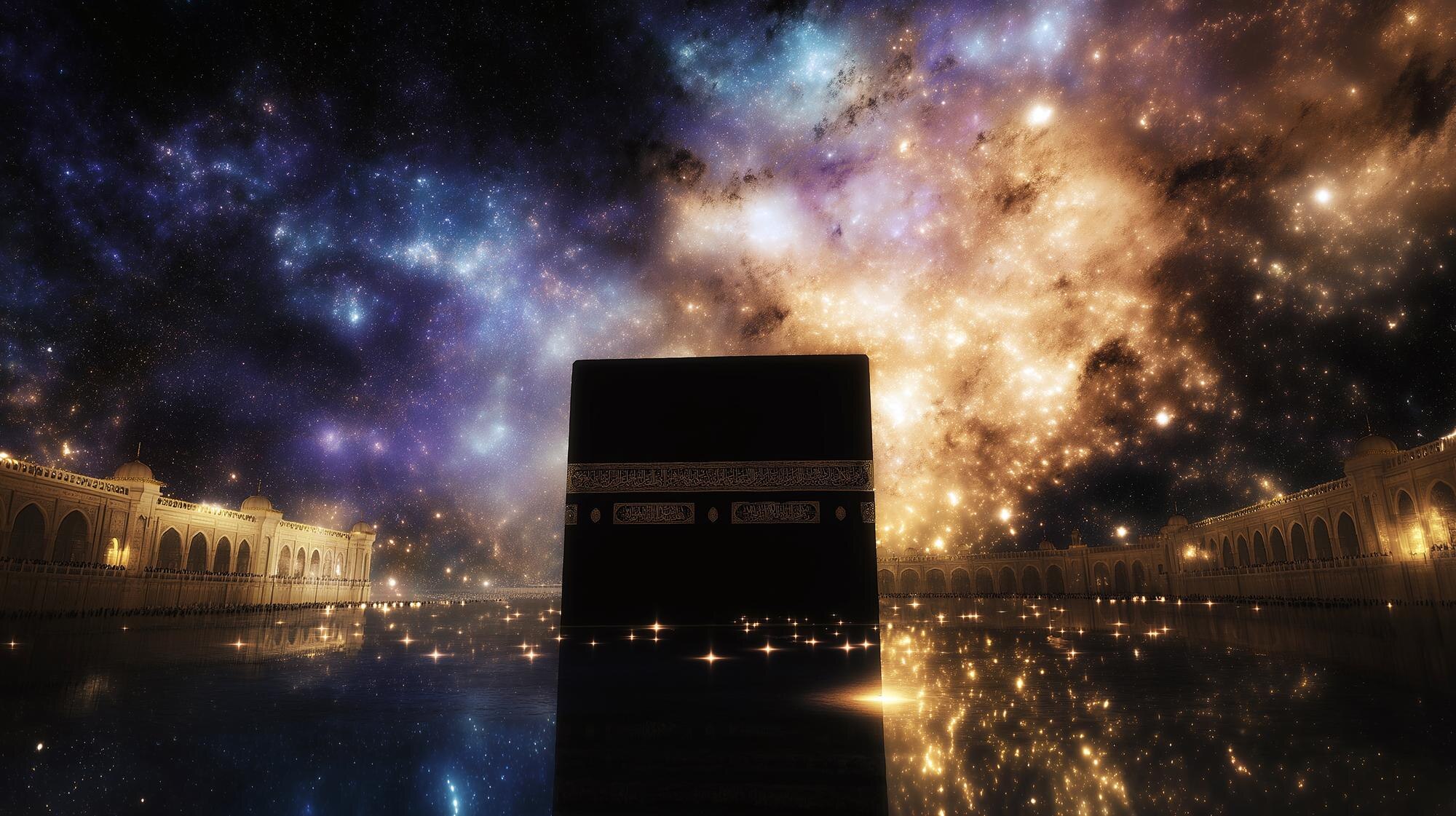
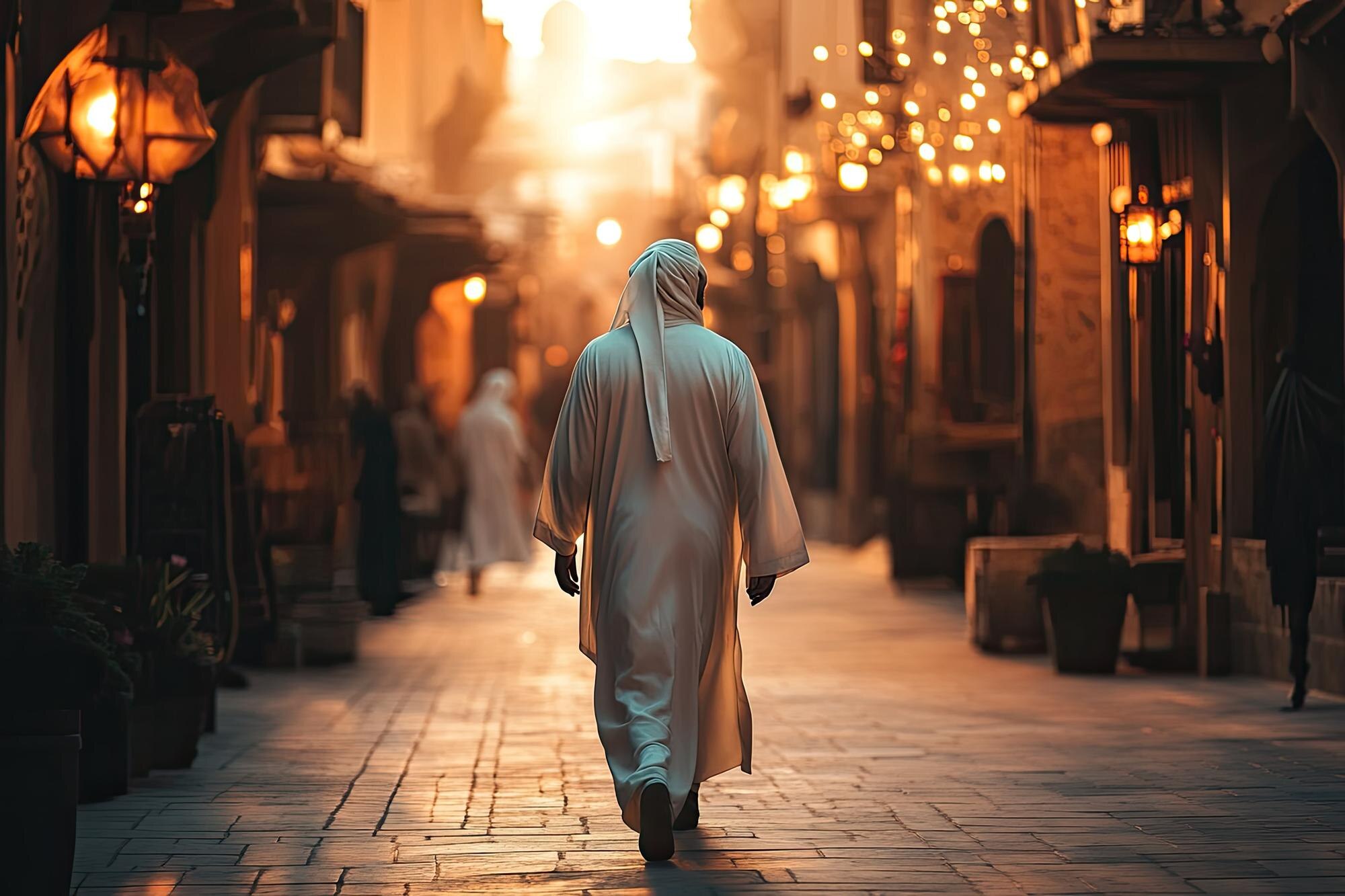
Umrah is small in what the eye can see, and vast in what it does to the soul. You will enter the sacred state before the boundary; you will answer your Lord with the Talbiyah; you will come to His House and circle it; you will pray, and drink of Zamzam, and walk between Safa and Marwah; and then you will lay down your old self with the cutting of your hair. A handful of hours — and inside them, the work of years. For Allah can fold an ocean of meaning into the smallest of acts.
He commands you, gently and clearly: “And complete the Hajj and the Umrah for Allah” (al-Baqarah 2:196). Feel where the whole matter rests — on those two words, for Allah. Your Umrah is not tourism. It is not a beautiful photograph. It is not one more achievement to collect. It is a gift, carried in your two hands and laid before Allah alone. If your body crosses the world but your heart is performing for the admiration of people, the journey has lost its centre before it began. But if your body is exhausted and your intention is pure, then even your tiredness becomes worship, and your aching feet become a prayer.
Let me give you a map you can hold in the dark. The soul of Umrah moves in five quiet steps. Ihram teaches you to surrender. Talbiyah teaches you to answer. Tawaf teaches you that your heart was made to turn around one centre. Sa’i teaches you to keep running between fear and hope. And Halq — the cutting of the hair — teaches you renewal: you leave something of the old self on the ground, so that you can walk out lighter than you came. Memorise these, before you travel. When the crowds overwhelm you and you forget where you are, come back to them like a hand finding a railing in the dark: surrender, answer, centre, effort, renewal. They are not only the steps of Umrah. They are the steps of a believing life.
And here is something I do not want you to miss. Every Umrah begins as travel — but it must not stay there. Travel only carries your body from one place to another. The real journey is when your heart travels too. It is possible, may Allah protect us, to cross the whole world, pass the boundary, enter Makkah, and stand before the Ka’bah itself while the heart is still back home — busy with comparisons, with shopping, with discomfort, with the wish to be seen. Such a one has travelled, but his heart has not yet arrived.
So come not as a tourist at a famous site, nor as a customer expecting good service. Come as what you truly are: a servant your Lord has allowed to approach His Sacred House. And watch how that one change transforms everything you touch. The airport becomes a place of remembrance. The long flight becomes a corridor of intention. The waiting — and there will be so much waiting — becomes a quiet school of patience. Your hotel room becomes a place to make wudu, lower your voice, and gather your scattered heart before you walk into the Haram.
This is why the distance you have come is never meaningless. Every mile is part of your answer. Every mile asks you the same searching question: Are you only going somewhere — or are you going to Allah? Two people can sit in the same row of the same plane, wear the same white cloth, walk the same Tawaf, and fly home on the same day — and in the sight of Allah their two journeys can be as far apart as the east is from the west. Because one came to say “I went,” and the other came, with a breaking heart, to whisper: Yā Allah, I have come home.
Before another page turns, sit with these questions, just you and your Lord: What kind of traveller am I becoming? What do I truly want from Allah? What am I finally ready to leave behind? Do not pack only the suitcase. Pack the heart — with intention, with repentance, with gratitude, with hope. Your body will reach Makkah by aeroplane. Your heart reaches it only by sincerity.