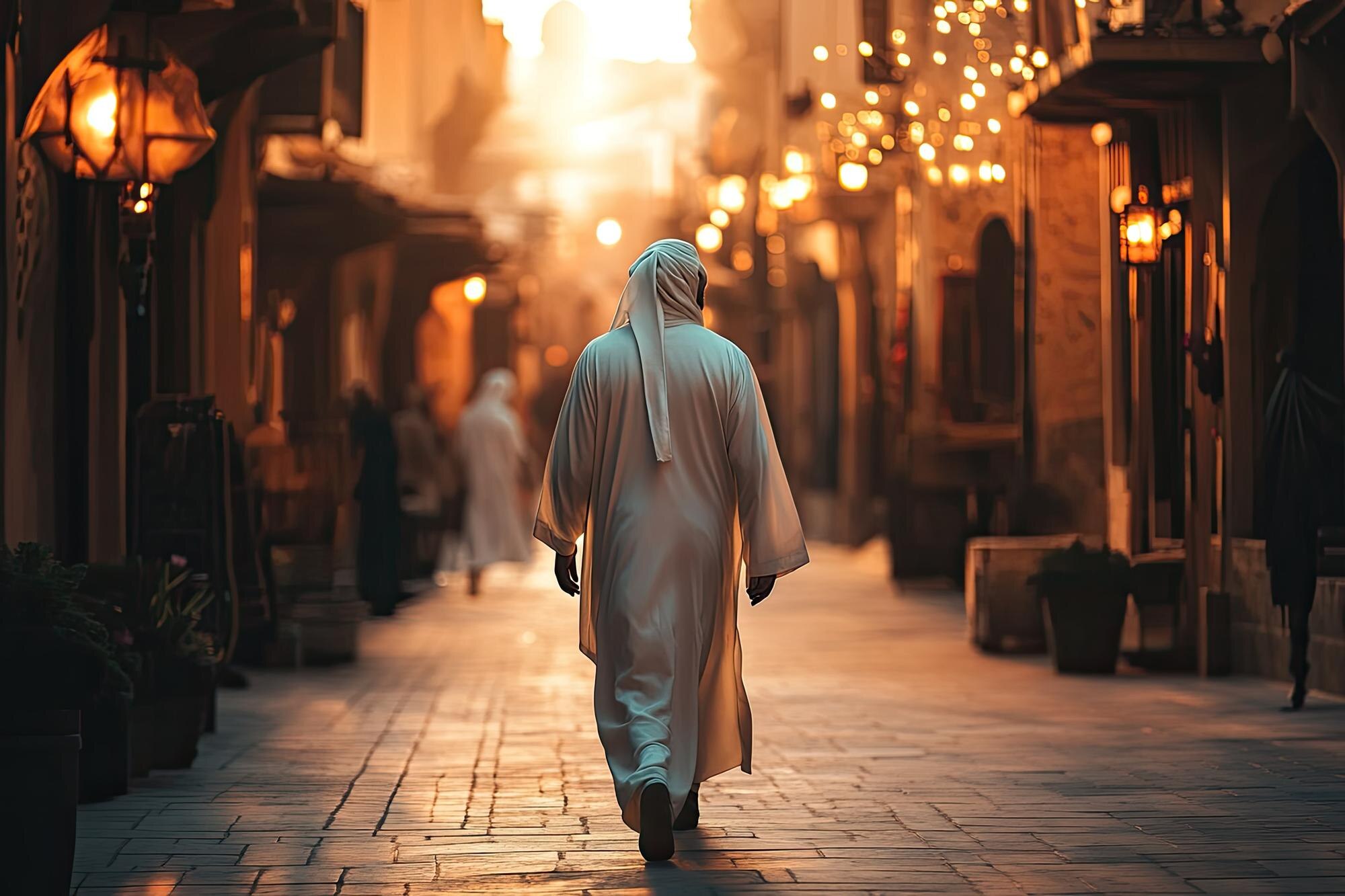
You don’t need to be an athlete to complete Umrah, but you do need a body that will carry you through ten to fifteen kilometres of walking a day, much of it on hard marble, in crowds drawn from every country on earth. The rites themselves are only part of the story — Tawaf and Sa’i together come to roughly five kilometres — and around them sit the walks between hotel and Haram, the queues at the gates, the stairs through the expansions, the broken sleep, and, in the summer months, heat that regularly pushes past 40°C (104°F). Put all of that together and it becomes obvious why so many pilgrims come home remembering the fever more vividly than the Tawaf.
It doesn’t have to be that way. Almost everything that goes wrong with pilgrims’ health during Umrah is predictable, and most of it is preventable with habits that cost a few minutes a day. The body is an amanah, a trust, and caring for it in Makkah and Madinah is not a distraction from worship; it is what makes sustained worship possible. A pilgrim who eats sensibly, sleeps deliberately and washes their hands relentlessly is a pilgrim who can stand long in prayer with a clear head and meet each day with presence rather than exhaustion.
Think of this chapter as the umbrella. The four biggest risks — respiratory infection, heat, feet and stomach trouble — each have their own deep-dive chapters, linked as we go. Here you’ll find the whole picture: what to do in the weeks before you fly, what to watch for once you arrive, and the daily routine that quietly holds a healthy Umrah together.
Start Six to Eight Weeks Before You Fly
Health during Umrah begins on the pavements of your own neighbourhood, not at the airport. If you are not used to walking long distances — and most of us, honestly, are not — start building the habit six to eight weeks before departure. Begin with twenty or thirty minutes a day at a comfortable pace, then lengthen the walks week by week until an hour on your feet feels ordinary. In the final fortnight, try two longer walks on consecutive days, because that is what Umrah actually asks of you: not one heroic effort but day after day of steady mileage. Take the stairs where you can; the Haram’s upper floors involve more climbing than first-time pilgrims expect.
This is not athletic training, and nobody is grading you. It is simply teaching your heart, lungs, joints and feet what the load will feel like, so that the first fifteen-kilometre day in Makkah is a continuation of something familiar rather than a shock. Older pilgrims and those with sedentary jobs gain the most from this preparation, and anyone living with a long-term condition should fold it into a conversation with their doctor — our chapter on managing chronic illnesses during Umrah walks through that appointment in detail, and there is separate guidance on travelling with elderly pilgrims.
Book a dental check-up in the same window. It sounds like an odd item on a pilgrimage checklist until you have watched someone spend three days of their Umrah hunting for an emergency dentist. Cabin pressure can turn a grumbling filling into real pain, cold Zamzam finds every sensitive tooth, and dental treatment abroad is an expense and a distraction nobody wants. Six weeks out gives your dentist time to finish any work before you travel.
Finally, buy your travel footwear early and break it in thoroughly on those training walks — brand-new sandals on marble are the single most reliable way to ruin your first week. The foot care chapter covers choices and blister prevention properly, and the packing guide gathers everything health-related that belongs in your bag.
Vaccinations, Paperwork and the GP Visit
One vaccination is not optional. Saudi Arabia requires all pilgrims aged one year and over to show proof of the quadrivalent meningococcal vaccine (MenACWY), given at least ten days before arrival; a conjugate vaccine certificate is generally accepted as valid for five years. As of mid-2026 this is checked at the visa stage, so it belongs at the top of your pre-travel list rather than the bottom. Meningococcal disease moves quickly through dense international gatherings, which is exactly why the requirement exists.
Beyond the mandatory jab, Saudi health authorities and travel health services such as the NHS and CDC recommend being up to date with seasonal influenza and COVID-19 vaccination, and pilgrims who are older or living with chronic conditions should ask about pneumococcal protection. Routine immunisations — measles among them — should be current too. The full picture, including timings and certificates, is in our dedicated chapter on vaccinations and health requirements for Umrah.
Use the same appointment to sort your medication paperwork. Regular medicines travel in hand luggage, in original packaging, with a copy of the prescription; and since late 2025 Saudi Arabia has required travellers carrying controlled medicines — strong painkillers and certain anxiety or ADHD drugs among them — to obtain an electronic permit from the Saudi Food and Drug Authority before flying. The chronic illness chapter explains that system step by step.
The Four Things Most Likely to Go Wrong
Decades of research on pilgrim health, much of it gathered at Hajj, point to a remarkably consistent short list of what actually lays pilgrims low. Knowing the list in advance is half the protection.
The bug pilgrims call the Umrah cough
Respiratory infection is the most common ailment of all. Coughs, colds, sore throats and hoarseness travel through the crowds with impressive speed, and few pilgrims escape entirely. It is rarely serious, but it can flatten your energy for days and follow you home. Prevention rests on hand hygiene, sensible mask use and sleep — all covered below — and our chapter on the Umrah cough deals with treatment, warning signs and when a cough needs more than lozenges.
Heat and dehydration
The Hijaz climate takes fluid from you faster than thirst can report it, even in winter, and in summer the marble courtyards become genuinely hazardous at midday. The rules are simple: drink before you are thirsty, pair water with electrolytes on heavy days, and schedule your most demanding worship for the cooler hours. The full strategy lives in the chapter on preventing dehydration, and the escalation from heat exhaustion to heatstroke — and exactly what to do about it — in the chapter on heat illness.
Your feet
Blisters end more Umrah days early than any infection. Ten to fifteen kilometres a day on polished stone, in footwear constraints set by ihram, punishes unprepared feet quickly. Broken-in sandals, moisture-wicking socks outside ihram, and a two-minute nightly foot check prevent almost all of it; the foot care and blisters chapter has the complete routine.
An unsettled stomach
New cuisine, buffet dining, irregular mealtimes and shared serving spoons add up to the classic traveller’s stomach. Most episodes are brief and self-limiting, but on a compressed itinerary even two bad days are expensive. Food discipline is covered below, and the chapter on common ailments covers treatment, rehydration and the red flags.
Hands and Masks: What the Evidence Actually Says
Mass-gathering medicine — the field that grew up around Hajj — has spent years testing what protects pilgrims from respiratory infection. The honest summary is this: hand hygiene is the most consistently supported habit, associated across multiple pilgrim studies with fewer respiratory symptoms, while the big randomised trials of facemasks at Hajj proved inconclusive, largely because hardly anyone managed to wear a mask as continuously as the protocols demanded. That is not evidence that masks are useless; it is evidence that hands are washable and behaviour is hard. Public health bodies, including the CDC in its pilgrimage guidance, continue to recommend both.
In practice: carry a small bottle of unscented sanitiser where you can reach it without rummaging — clipped to your bag strap is ideal — and use it before every meal and snack, after handrails and escalators, after crowded transport, and after returning from the mosque. Wash properly with soap whenever you make wudu; the two rituals pair naturally. Try to keep your hands away from your eyes, nose and mouth in crowds, cough into your elbow, and don’t share water cups — the Zamzam stations have disposable ones.
Masks are a completely familiar sight in both mosques and carry no awkwardness whatsoever; many pilgrims wear one in the densest crowds, on packed buses, or because they are older or immunocompromised, and take it off elsewhere. Men in ihram may wear a mask without concern. For women, face covering in ihram is a point of fiqh with differing scholarly views, so ask your group scholar; the ihram chapter touches on this. A sensible middle path — mask in crush conditions, off in open air — captures most of the benefit with none of the burden.
Sleep Around the Prayer Clock
The most underestimated threat to your health in Makkah is not the heat or the crowds but the steady erosion of sleep. The pull of the Haram is strong, and it is easy to persuade yourself that rest is time stolen from worship. Run on four broken hours a night, though, and within days your immune defences dip, your mood sours, and the Umrah cough finds you. Sleep, taken deliberately, is part of the worship’s infrastructure.
The trick is to stop expecting one long unbroken night — the prayer clock makes that unrealistic — and to build a two-part pattern instead. Anchor a solid block of night sleep after Isha, then add a genuine nap in the early afternoon, when the heat is at its worst, the streets are punishing and the mosques are at their fullest. That siesta rhythm is how the holy cities themselves have always lived. It frees you for the hours that matter most: the evening prayers and the pre-dawn stretch before Fajr, which is the quietest, coolest and most beautiful time to worship in either mosque.
Jet lag passes within a few days if you let daylight and prayer times do their work; resist the urge to fight it with caffeine late in the day, which costs you the night block. If your energy stays flat beyond the first week, the chapter on managing fatigue during Umrah looks at the deeper causes.
Eating Well When Every Meal Is a Buffet
Hotel buffets feed most pilgrims most days, and they are convenient, generous and generally safe — with caveats. Heat is your friend: choose dishes that are visibly hot and freshly replenished over anything that has sat under a lamp through a long service. Go at busy times, when turnover is fastest. Be more cautious with cold sauces, cut fruit that has been standing, and anything involving mayonnaise in a warm room. Fruit you peel yourself is always safe. And sanitise your hands after the serving spoons, not just before you reach the buffet — several hundred other guests held them first.
Rhythm matters as much as selection. Long hours of worship make it tempting to skip meals entirely, then eat one enormous late dinner — a pattern that leaves you faint in the afternoon and bloated at night. Eat something modest at regular intervals instead: dates and water are the time-honoured pilgrim’s fuel, and yoghurt, fruit, soups, bread and simple grilled dishes will serve you better than heavy, oily meals. Keep a few snacks in your bag so hunger never becomes the reason you feel dizzy mid-Tawaf. In the first days, while your gut adjusts, err plain.
Clinic, Pharmacy or Rest? Where to Go When Something Goes Wrong
Most pilgrim ailments need nothing more than rest, fluids and patience: a day of taking it gently in an air-conditioned room cures more Umrah illness than any prescription. The next tier is the pharmacy. Both cities are dense with them, they stay open late, pharmacists commonly speak English, and common remedies are inexpensive and easy to obtain — our guide to pharmacies and medication in Saudi Arabia explains what is available and what to ask for.
For anything beyond that, the system is more generous than many pilgrims realise. The fee paid with an Umrah visa includes basic health insurance, and emergency treatment at government hospitals is provided to pilgrims without charge. During the busy seasons the Ministry of Health scales up an extensive network of hospitals, health centres and seasonal clinics across Makkah and Madinah — including facilities close to both mosques — precisely so that visitors can be seen quickly. As of mid-2026, provision during Ramadan and the pilgrimage months runs to hundreds of facilities across the two cities. Nobody should sit in a hotel room getting worse out of worry about cost.
Two numbers are worth saving before you fly. The Ministry of Health’s 937 line offers round-the-clock medical advice, with consultations available in several languages including English and Urdu, and the Sehhaty app provides similar virtual care. For genuine emergencies — chest pain, collapse, confusion in the heat — call 997 for an ambulance (911 also works in the Makkah region) and see our chapter on handling emergencies during Umrah for exactly what to say and where the nearest help sits.
A Day That Keeps You Well
Pulled together, a healthy Umrah day has a simple skeleton, flexible enough to bend around your worship rather than compete with it:
Wake before Fajr and drink water before anything else. Eat breakfast rather than skipping to lunch. Do your longest worship early, while the day is cool and the crowds thinner. Retreat between late morning and mid-afternoon for food, a shower and a real nap. Return for the evening prayers with water in hand. End with the two-minute routine: wash and dry your feet, check them for hot spots, set out tomorrow’s water, sanitise your hands and sleep.
None of it is complicated, and after two or three days it stops feeling like discipline and becomes simply how you live there. Get the walking done at home, arrive vaccinated with your certificate in your carry-on, guard your hands, your sleep and your feet, and know where the 937 line and the clinics are before you need them. Then the health chapter of your Umrah stays exactly where it belongs — in the background. For what happens the moment you land, carry on to our guide to performing Umrah after arrival.
Leave A Comment